The States With More Farmland Than People
United States Department of Agriculture (USDA) Economic Research Service data show that nearly 1.2 billion of the country's 2.26 billion land acres were used for agricultural purposes in 2022, the latest year with comprehensive national land-use data. That broad measure includes cropland and grazing land. For the state comparisons below, this article uses a narrower USDA National Agricultural Statistics Service measure, namely acres operated by farms in 2025. Eight states stand out because farm operations cover more than half of their land while population density remains below 100 people per square mile.
Each state on this list meets two requirements. First, acres operated by farms in the USDA's 2025 State Agriculture Overviews must equal more than half of the state's 2020 Census land area. Second, each state must have had fewer than 100 residents per square mile in the 2020 Census. Using the same Census year for land area and population density keeps the geographic comparison consistent. The percentages below are calculated from 2025 USDA farm-operation acreage and 2020 Census land area, and the states are ordered from the highest farm-operated share to the lowest.
Nebraska

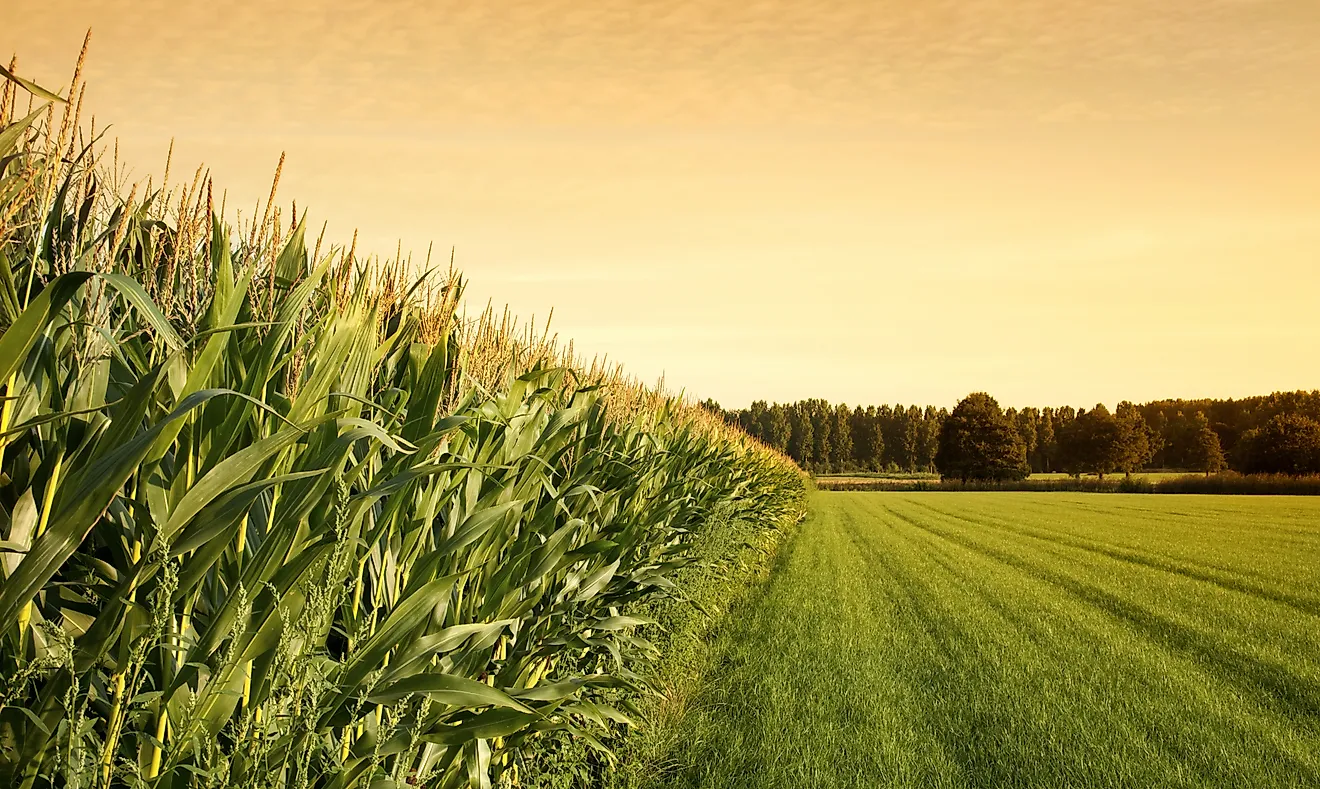
Nebraska had 43.9 million acres operated by farms in 2025. That is about 89.3% of the state's land area, the highest share among the eight states in this article. Nebraska's population density was 25.5 people per square mile in the 2020 Census. Corn led Nebraska with 10.75 million planted acres in 2025. Soybeans followed at 4.85 million acres, and wheat covered 950,000 planted acres. USDA valued the state's 2025 corn production at more than $8.3 billion.
A great deal of that corn grows under center-pivot irrigation, and Nebraska has more irrigated cropland than any other state. The pivots draw on the Ogallala Aquifer, roughly two-thirds of whose stored water lies beneath Nebraska. A standard pivot sweeps a quarter-section circle, which is why so much of the state resolves into a pattern of green discs when seen from a passing plane. Livestock is another major part of Nebraska agriculture. USDA counted 6.15 million cattle and calves in the state at the beginning of 2026. Corn supports both livestock production and the state's ethanol industry, giving the crop a major role across Nebraska agriculture.
North Dakota
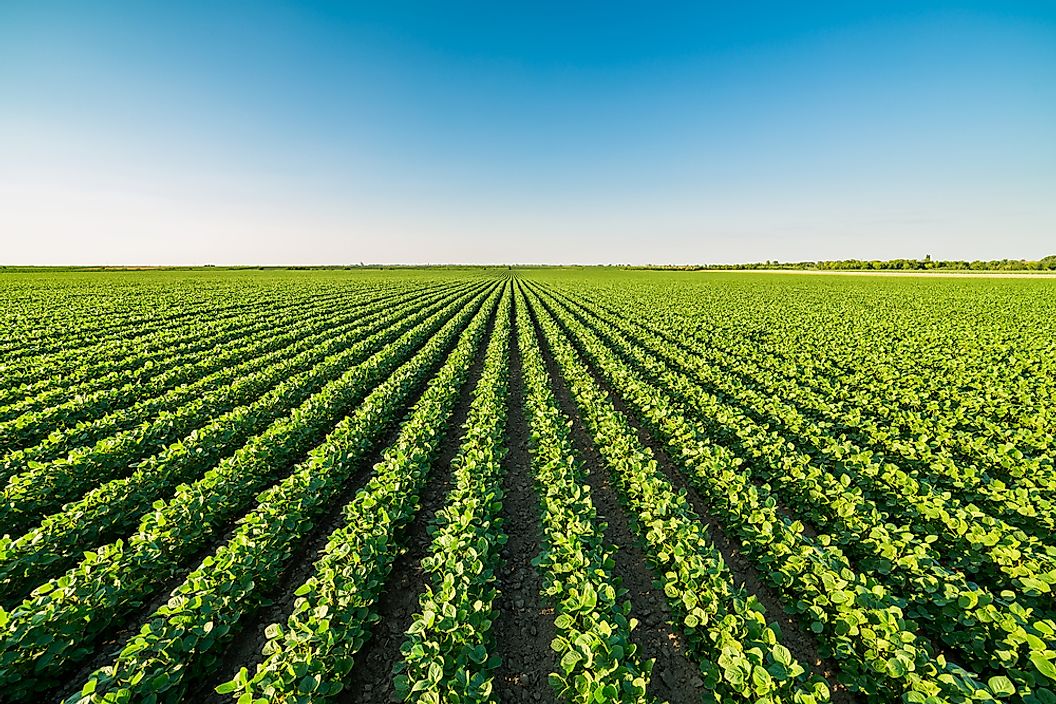
In 2025, farm operations covered 38.5 million acres of North Dakota. That represents about 87.2% of the state's land area. The 2020 Census recorded 11.3 residents per square mile. Soybeans had the largest planted acreage in North Dakota in 2025 at 6.55 million acres. Wheat followed closely at 6.43 million. Corn covered 4.7 million planted acres. Canola accounted for another 1.81 million.
North Dakota is the country's dominant canola producer. In 2025, the state produced about 3.816 billion pounds of canola. That was about 82% of U.S. production. Canola seed contains roughly 40% oil by weight, making the crop an important source of edible vegetable oil. North Dakota farmland supports a quieter industry as well. The state also led the nation in honey production in 2024, accounting for about 27% of the U.S. total.
South Dakota

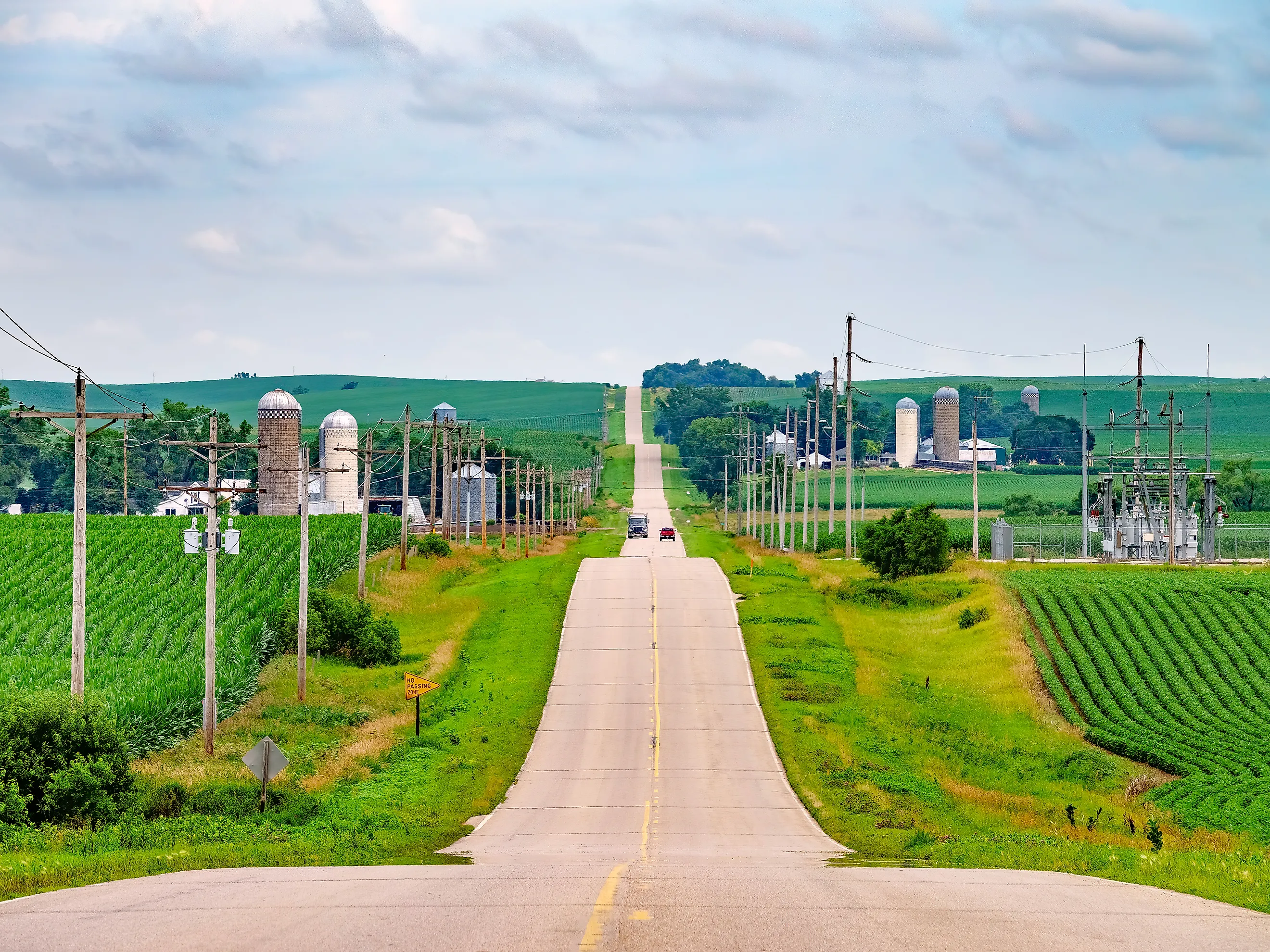
Farm operations covered 42.2 million acres of South Dakota in 2025. That equals about 87.0% of the state's land area. Its 2020 population density was 11.7 people per square mile. Corn accounted for 6.85 million planted acres in 2025, while soybeans covered 5.1 million. Agriculture also extends far beyond crops. USDA counted 3.55 million cattle and calves in South Dakota at the beginning of 2026.
That livestock inventory was several times larger than South Dakota's 2025 population estimate of 935,094, which amounts to nearly 4 cattle and calves per resident. Corn also has a highly visible cultural connection in Mitchell, South Dakota. The Corn Palace is redecorated each year with naturally colored corn and other plant materials, so the building a visitor sees in one summer is not the building anyone saw the summer before. Its murals alone use 12 colors or shades of corn.
Kansas

In 2025, Kansas had 44.6 million acres operated by farms. That represents about 85.2% of the state's land area. Kansas had 35.9 residents per square mile in the 2020 Census. Wheat covered 7.3 million planted acres in 2025, while corn covered 6.85 million. Soybeans occupied 4.1 million planted acres. Sorghum covered another 3 million.
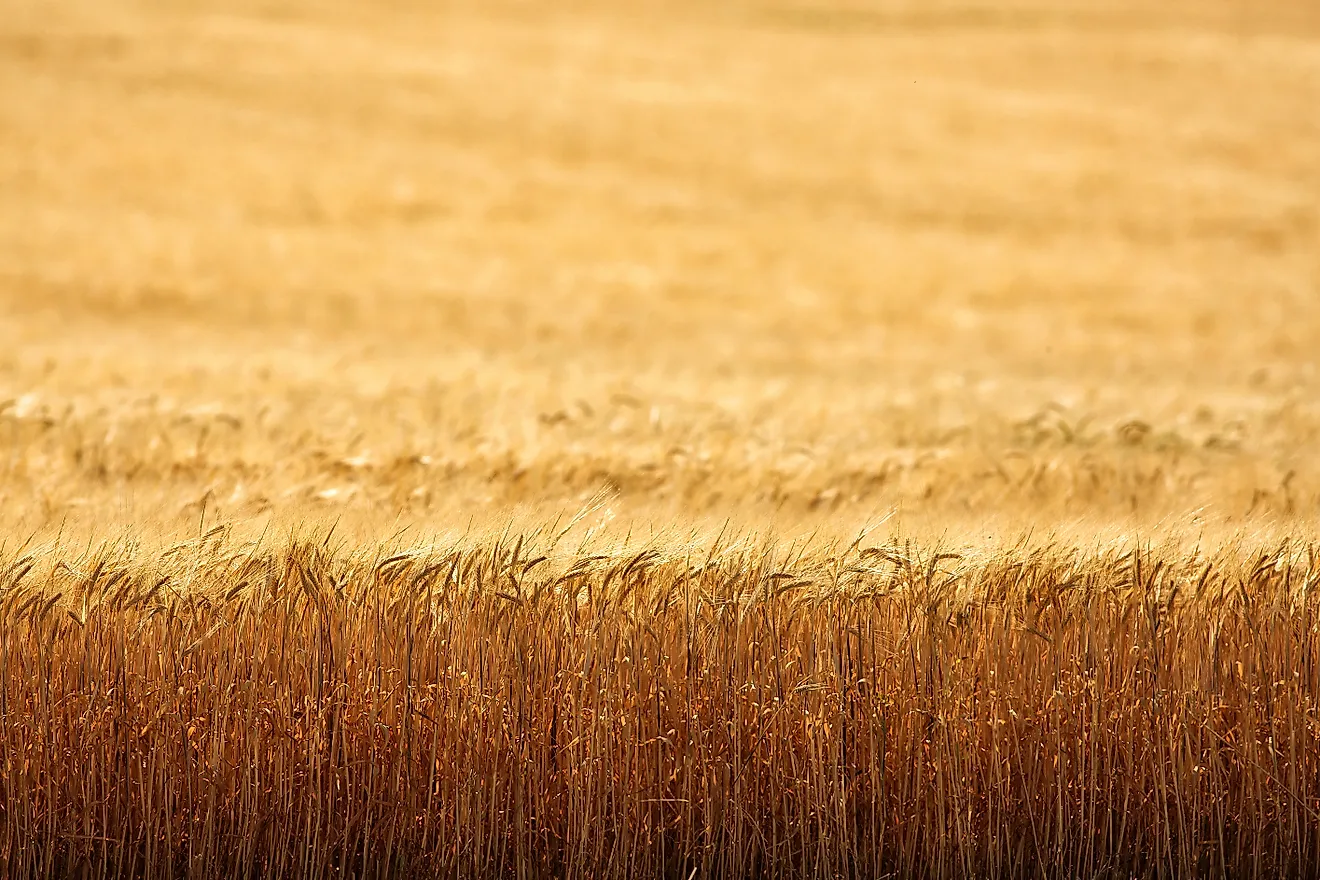
Kansas remains strongly associated with hard red winter wheat. Mennonite immigrants from Russia are traditionally credited with bringing Turkey Red wheat to Kansas in 1874. The Kansas Historical Society notes that the exact account of the introduction is debated. The variety nonetheless became highly important to the state's wheat industry. Bringing that crop in still runs on migration. Custom-cutting crews contract with farmers to harvest wheat, starting in the southern plains in late spring and working north as the crop ripens, with some outfits running routes that stretch from Texas toward the Canadian border. The agreements between cutters and the farmers they work for are nearly always verbal, renewed season after season.
Iowa

Farm operations covered 29.9 million acres of Iowa in 2025. That equals about 83.6% of the state's land area. Iowa had 57.1 residents per square mile in the 2020 Census. Corn led Iowa crop acreage in 2025 with 13.55 million acres planted. Soybeans followed at 9.45 million acres. USDA valued Iowa corn production at more than $11.3 billion for the year. Soybean production exceeded $6 billion.
Agricultural education has also been closely connected with Iowa's farming history. Iowa Agricultural College and Model Farm, now Iowa State University, was established in 1858. President Abraham Lincoln signed the Morrill Act into law in 1862. Iowa became the first state legislature to accept its provisions that year. The college formally opened to students in 1869.
Farming also holds a civic place in the state. The Iowa State Fair has displayed a life-size butter cow since 1911, built on a frame of wood, metal, and wire from about 600 pounds of Iowa butter and kept in a cooler held at 40 degrees Fahrenheit. It stands roughly five and a half feet tall, only five sculptors have shaped it in more than a century, and much of the butter is recycled and reused for up to a decade.
Oklahoma

Oklahoma had 32.8 million acres operated by farms in 2025. That works out to about 74.7% of the state's land area. The 2020 Census recorded 57.7 residents per square mile. Wheat had the largest planted acreage among Oklahoma's major field crops in 2025, at 4.15 million acres. Hay covered 3.335 million harvested acres. Corn accounted for 540,000 planted acres. Sorghum accounted for 440,000.
Winter wheat has deep roots on the southern Great Plains. Mennonite immigrants from Russia helped introduce Turkey Red wheat to Oklahoma in the late 19th century. The hardy variety became an important part of wheat farming as settlement expanded across the western parts of the territory. Large-scale wheat farming in Oklahoma Territory took hold after the Land Run of April 22, 1889, when homesteaders claimed parcels in the space of a single afternoon.
Montana

Montana had 57.3 million acres operated by farms in 2025. That is about 61.5% of the state's land area. Its 2020 population density was only 7.4 people per square mile, giving Montana the third-lowest density among the 50 states. Wheat dominated Montana's crop acreage in 2025, with 5.29 million acres planted. Farmers harvested 2.16 million acres of hay. Lentils covered 830,000 planted acres, while barley covered 780,000.
Montana sits at the northern end of the custom cutting circuit, among the last stops before the combines are parked for the year. The state was also the country's leading lentil producer in 2025. It grew 7.884 million hundredweight, roughly three-quarters of U.S. lentil production. Lentils are legumes that work with nitrogen-fixing rhizobia in their root nodules. This process can reduce the crop's need for nitrogen fertilizer.
Missouri

In 2025, farm operations covered 26.6 million acres of Missouri. That equals about 60.5% of the state's land area. Missouri had 89.5 residents per square mile in the 2020 Census, making it the most densely populated state on this list. Soybeans covered 5.6 million planted acres in 2025, while corn covered 3.8 million. Wheat accounted for 640,000 planted acres. Upland cotton accounted for another 355,000 acres.
That cotton grows in one corner of the state. The crop is confined to the Bootheel, the boot-shaped wedge of southeastern lowlands that juts down into Arkansas, where flat ground and the Delta's alluvial soils suit it. A handful of counties there account for the entire state crop.
Cotton has a long history in Missouri agriculture. Enslaved people worked on Missouri farms that produced cotton before the American Civil War. The boll weevil reached Missouri around 1913 and later became a serious cotton pest. Missouri's boll weevil eradication effort began in 2001 and lasted seven years. Modern cotton production also uses Bt varieties to control pests such as cotton bollworms.
The Breadbaskets of America
These eight states devote a remarkable share of their land to farming while maintaining relatively low population densities. Nebraska opens the list with farm operations covering close to nine-tenths of its land. Montana and Missouri close it at about three-fifths. Across the group, crops such as corn and wheat occupy millions of acres. Livestock production also uses large stretches of pasture and range. Their agricultural output supports food production across the United States and supplies major markets for animal feed and fuel.