The Last Coal Plants Still Running In America
Coal once supplied more than half of the electricity generated in the United States, but its contribution has fallen considerably over the past two decades. Despite this decline, coal remains one of the country's most important sources of electricity. According to the US Energy Information Administration (EIA), coal accounted for approximately 17% of utility-scale electricity generation in 2025, ranking third behind natural gas and nuclear power. Hundreds of coal-fired generating facilities operate across the country, particularly in the Midwest, Southeast, and Appalachian region. Many have operated for decades, and some are now expected to stay open longer than previously planned.
The Slow Death of Coal

Coal's declining role in American electricity generation has several causes. Environmental concerns have contributed to its reduced use, particularly because coal combustion releases carbon dioxide, sulfur dioxide, nitrogen oxides, and particulate matter. These emissions contribute to climate change and air pollution. Federal environmental regulations have required power plant operators to install pollution-control equipment, while some utilities have determined that retiring older coal units is more economical than upgrading them. Environmental concerns have also influenced decisions about constructing new generating facilities.
However, competition from natural gas has been one of the most important factors behind coal's decline. Advances in horizontal drilling and hydraulic fracturing increased domestic natural gas production during the 2000s and 2010s, making gas-fired electricity increasingly competitive. Modern combined-cycle natural gas plants can also convert fuel into electricity more efficiently than conventional coal-fired plants. Burning natural gas generally produces substantially less carbon dioxide than burning coal for the same amount of energy, although methane emissions during production and transportation affect its overall environmental impact.
Natural gas overtook coal as the leading source of US electricity generation in 2016 and has maintained that position. In 2025, natural gas supplied approximately 41% of utility-scale electricity generation, compared with 17% from coal. Nuclear power accounted for about 18%. Renewable sources have also expanded, adding competition in regions where wind and solar generation are increasingly available. Coal remains significant, but the combination of changing fuel economics and environmental requirements has fundamentally altered the American electricity industry.
Where Does the United States Get Its Coal?

The United States has extensive domestic coal reserves, and the overwhelming majority of coal consumed in the country is produced domestically. According to the EIA's Annual Coal Report, the country produced about 512.5 million short tons of coal in 2024, down 11.3% from 2023. This was the lowest annual production since 1964. Wyoming remained the leading coal-producing state, accounting for approximately 37% of national output. West Virginia ranked second, followed by Pennsylvania, Illinois, and Montana. Together, these five states produced about 73% of the country's coal.
Coal production is concentrated in three principal regions identified by the EIA. The Western coal region includes Wyoming, Montana, North Dakota, and several other states. Its most productive area is the Powder River Basin of Wyoming and Montana, where large surface mines extract substantial quantities of coal. In 2024, the Western region produced approximately 271 million short tons, accounting for more than half of national output. Wyoming's Black Thunder and North Antelope Rochelle mines are among the largest coal mines in the country.

The Appalachian coal region extends through West Virginia, Pennsylvania, eastern Kentucky, and several neighboring states. It produced about 158 million short tons in 2024. West Virginia is the region's leading producer, with underground mining playing an especially important role. The Interior region includes Illinois, Indiana, western Kentucky, and parts of the central and southern United States. It produced approximately 83 million short tons in 2024, with Illinois accounting for a substantial share. These regions differ in their geology, mining methods, and transportation costs, which influence where coal can be produced economically.
Appalachia dominated US coal production for much of the industry's early history, but Western production expanded considerably in the late 20th century. Large surface mines in the Powder River Basin benefited from extensive coal deposits and comparatively low extraction costs. Demand for lower-sulfur coal also helped the region gain market share as utilities responded to air pollution requirements. Appalachian producers faced additional competition as mining costs increased in some established coalfields. Although the industry has contracted nationally, coal mining remains economically important in several communities across all three regions.
Where Does Coal Still Reign as King?

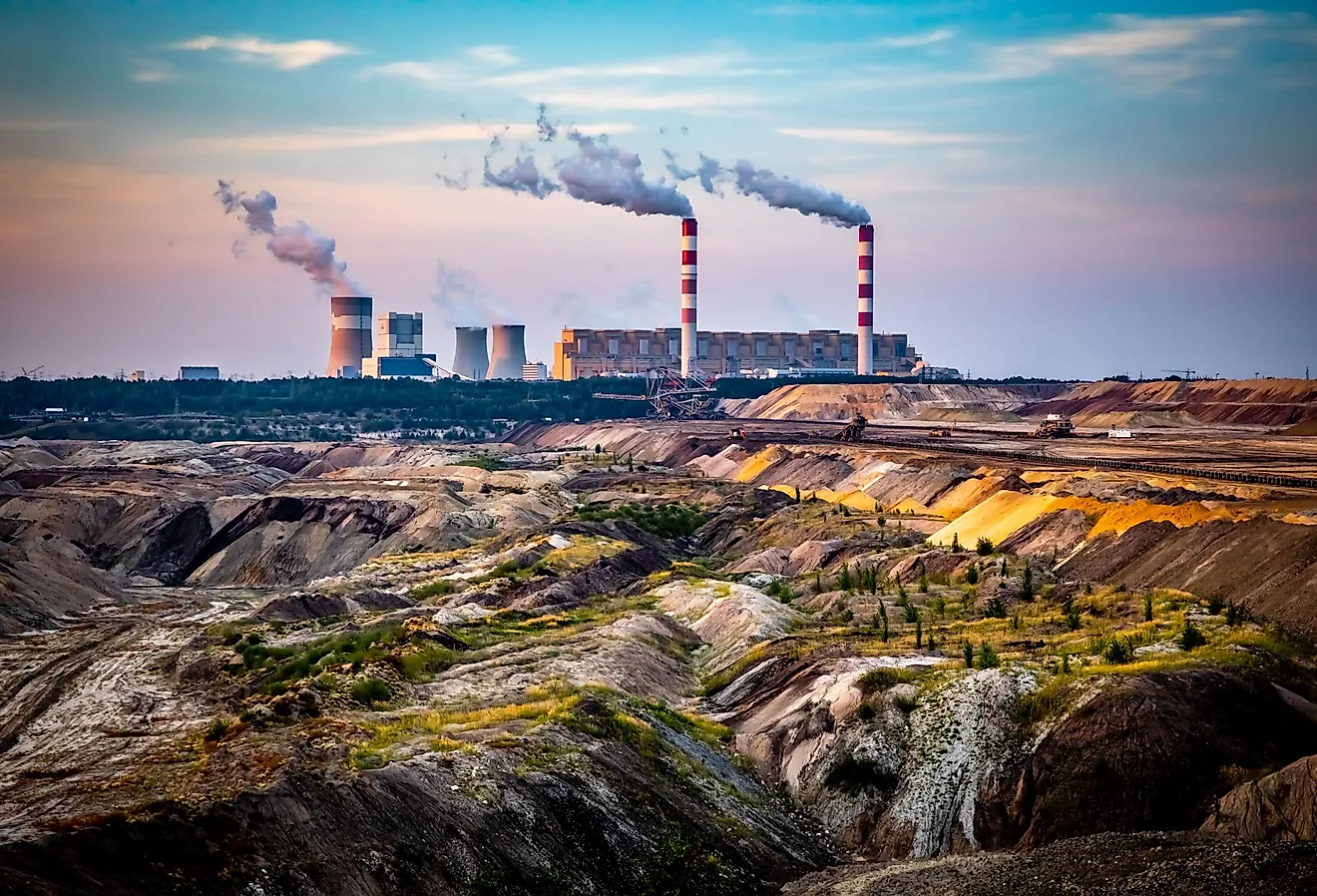
Coal-fired power plants are widespread in the United States, although their distribution differs from the geography of coal mining. An independent power plant inventory based on EIA records identified approximately 205 active coal plants in 2026, with a combined generating capacity of about 180,400 megawatts. Significant concentrations remain in the Ohio and Tennessee river valleys, the Upper Midwest, and parts of the Great Plains. Many of these facilities were constructed between the 1950s and 1980s, when utilities were expanding large generating stations to meet growing electricity demand.
Georgia's Plant Bowen, near Cartersville, is among the largest operating coal-fired power stations in the United States. Its four generating units entered commercial service between 1971 and 1975 and have a combined generating capacity of approximately 3,160 megawatts. The plant supplies electricity through Georgia Power's generating system and serves as an important resource for the southeastern grid. Although its retirement was previously under consideration, Georgia Power's 2025 resource planning called for extended operation and additional environmental-control investments. The company's approved planning assumptions include continued operation of Bowen's first two units through at least 2035. Growing electricity demand has contributed to the decision to retain coal-fired capacity.

Indiana is another major center of coal-fired generation. The Gibson Generating Station, near Owensville, is one of the country's largest coal-fired facilities, with multiple generating units serving customers in Indiana and neighboring areas. Other substantial facilities operate in the eastern half of the country, including the Monroe Power Plant in Michigan and the John E. Amos Power Plant in West Virginia. These stations illustrate the continuing importance of coal in states with established electricity infrastructure and historical connections to coal mining. Their operating schedules and retirement plans vary according to utility decisions, regulatory requirements, and regional electricity needs.
Coal power is also important farther south and west. Texas has several large coal-fired generating stations, including Martin Lake in East Texas. In North Dakota, lignite-burning power plants operate close to local coal mines, reducing the distance fuel must travel. Wyoming and other Western states also retain coal-fired facilities despite the region's expansion of wind and solar generation. These examples show why the largest coal-producing states are not necessarily the largest coal-consuming states. Electricity demand, transportation networks, and the availability of other generating resources all influence where coal plants operate.
The Future of American Coal

The long-term outlook for American coal remains uncertain. Coal-fired electricity faces competition from natural gas and renewable energy, while older plants may require expensive maintenance or environmental upgrades. However, recent developments have complicated expectations of continued rapid retirements. According to the EIA, approximately 2.6 gigawatts of coal-fired generating capacity retired in 2025, the lowest annual total since 2010. Several utilities have delayed previously planned closures as electricity demand increases and grid operators seek to maintain reliable generating capacity.
Plant Bowen illustrates this changing situation. Rather than closing in response to growing electricity demand, the facility has been retained in Georgia Power's planning to help meet that demand. Other utilities have also reconsidered the timing of coal retirements, particularly where replacement generating capacity is not yet available. These decisions do not eliminate the economic and environmental challenges facing coal, but they show that the industry's future will differ across regions. Some facilities are expected to close, while others may continue operating beyond their earlier retirement dates.
Coal's contribution to US electricity generation is substantially smaller than it was two decades ago, yet the industry remains important in states such as West Virginia, Indiana, and Wyoming. Large power stations continue to operate, supported by established infrastructure and regional electricity demand. The coming years will determine how quickly utilities replace this generating capacity and which facilities stay economically viable. For now, coal is still a significant part of America's electricity supply, even as the country's energy mix shifts.