Cities That Are Also Their Own County
Local government in the United States is typically structured with cities nested inside counties. Two unique groups of exceptions exist, however, in which a city and a county become one and the same, or where the county layer is completely absent. Cities that function as their own counties generally fall within two categories. They are either consolidated city-counties, in which a city and county have intentionally merged their governments into a single entity for administrative purposes, or independent cities, historically politically separate entities that do not belong to any county at all.
According to the National Association of Counties, there are 42 city-county consolidations, each of which carries both municipal and county authorities. Additionally, per the U.S. Census Bureau, four states have 41 cities that are independent of any county and act as county equivalents for statistical purposes. Some of these independent cities are considered county governments, as well. Read on to more fully understand this somewhat perplexing topic.
Consolidated City-Counties
Consolidated city-counties are municipalities and county governments that decided to merge their administrative operations and boundaries. This was done to cut duplicate spending, manage rapid growth, and streamline services for the people living within their boundaries. These merged city-counties made the collection of taxes easier and simplified the planning of infrastructure over broad areas. Here are some of the most prominent city-counties in the US.
New York City, New York

This is an anomaly among city-counties, but one that should be noted. In 1898, the county governments of the New York City boroughs consolidated with the New York City government. This brought together previously independent cities, counties, and villages, creating a city-county consolidation that counts as one county government but five county geographies for the purposes of the U.S. Census statistics. The city was merged over five separate counties (New York, Kings, Queens, Bronx, and Richmond). Greater New York City covered 60 square miles on the eve of consolidation and 360 square miles the day after. Today, major municipal services are run by New York City, not individual counties. It is unlike any other city-county, as the five distinct counties still legally exist.
Denver, Colorado

The capital and largest city in Colorado, the city of Denver separated from Arapahoe County in 1902 and became the consolidated City and County of Denver under Article XX of the state constitution. Known as a "Home Rule" city, Denver is self-governed. It can write its own charter, pass local laws, and manage internal affairs without asking permission from the state legislature. The U.S. Census Bureau notes that the City and County of Denver now covers almost 155 square miles.
San Francisco, California

The city of San Francisco consolidated with San Francisco County in 1856 under the Consolidation Act, forming a completely integrated government. It is the only consolidated city-county in the state of California. Reasons behind the consolidation include the desire to combat corruption in San Francisco City's municipal government and eliminate bureaucracy. Originally, San Francisco County was much larger than it is today. The consolidation actually cut San Francisco County into two pieces. The northern tip of the peninsula, roughly 47 square miles of land, became the unified City and County of San Francisco. The southern part formed a new entity, San Mateo County.
Honolulu, Hawaii

A 1907 municipal charter consolidated Honolulu City and County into one jurisdiction covering the island of Oahu, in order to simplify delivery of services to residents and centralize its regional government. The city of Honolulu was merged with Oahu County, forming a combined government with all outlying Oahu communities, towns, and minor islands under one single elected mayor and city council. The City and County of Honolulu spans 600 square miles today and is the capital of Hawaii.
Philadelphia, Pennsylvania

The city of Philadelphia consolidated with Philadelphia County in 1854. The merger absorbed 28 independent municipalities into the Philadelphia City government and expanded the city beyond its original two square miles to nearly 130. This was done to integrate law enforcement and tame crime that was running rampant in that part of Pennsylvania, as well as to bring the infrastructure of 29 separate governments under one municipal administration.
Anchorage, Alaska

Alaska does not have counties. It has boroughs. Before 1975, the Greater Anchorage Borough and the City of Anchorage were separate. They fused into one municipal entity to fill service needs under the approval of residents, who voted in a special election to unite the borough and the city. Now, the Municipality of Anchorage covers 1,961 square miles. Seven of Alaska's 19 organized boroughs operate as consolidated city-boroughs today, among them Juneau, Sitka, and Wrangell. Only Georgia, with eight consolidated city-counties, has more.
Independent Cities
Independent cities are completely separate from any county. They are treated as county equivalents by the U.S. Census Bureau, but answer directly to their state governments. Independent cities are found within just four states: Maryland, Virginia, Missouri, and Nevada. Of the 41 independent cities in the US, 38 are in Virginia.
Baltimore, Maryland

In 1851, Baltimore City separated from Baltimore County and became the most populous independent city in the U.S., a distinction it still holds. During the 19th and 20th centuries, the city of Baltimore annexed land that had been part of Baltimore County and increased its size. As a result, parts of what is now known as Baltimore City were once Baltimore County. Now, Baltimore City is almost 81 square miles in area and is considered by the U.S. Census Bureau to be the smallest county-equivalent in Maryland.
St. Louis, Missouri

Since 1876, St. Louis has operated as an independent city, not part of any county. At that time, what historians call the "Great Divorce" occurred, and the city split from St. Louis County. Today, it is the only independent city in Missouri, occupying about 62 square miles and operating distinctly from the surrounding county.
Carson City, Nevada

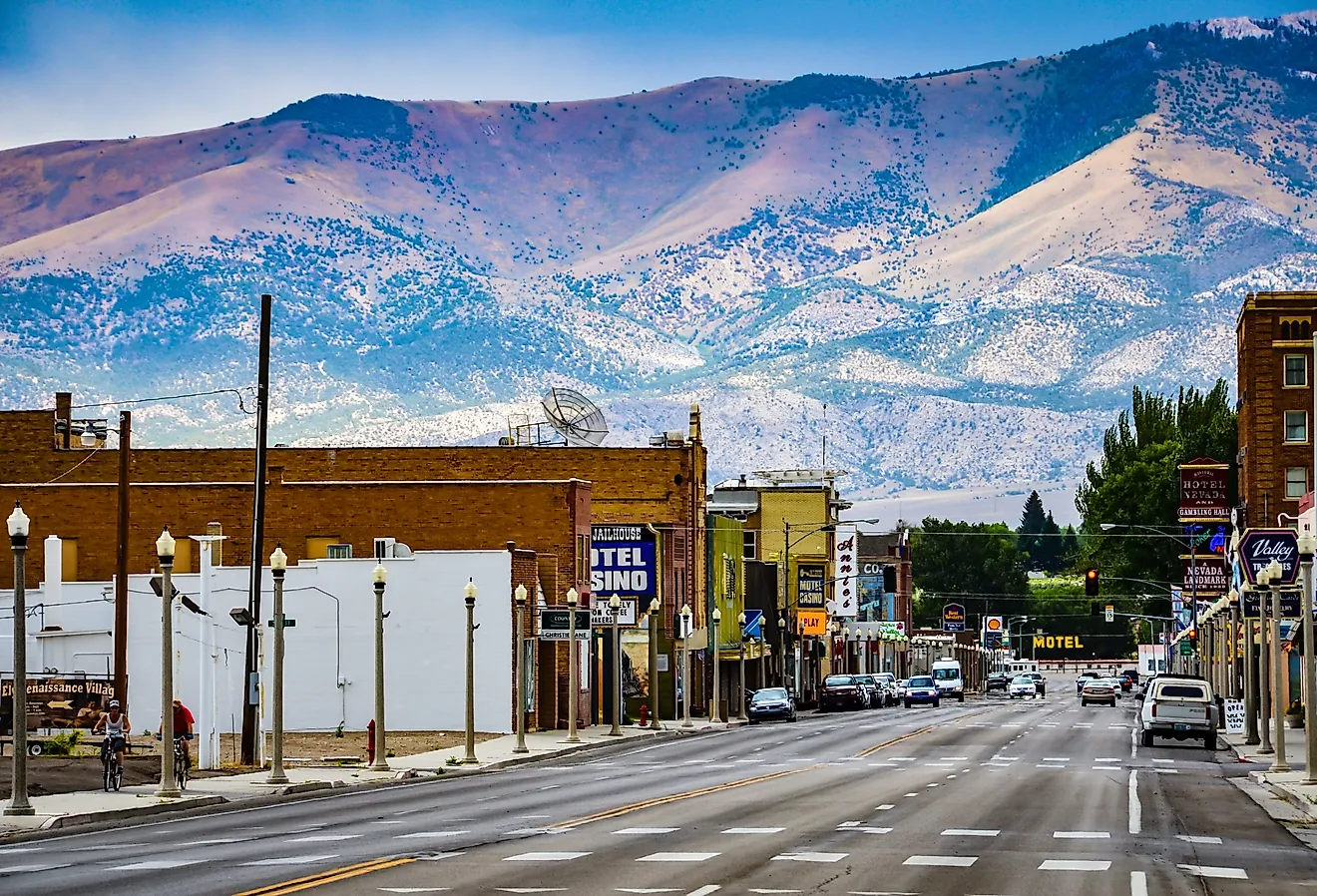
The capital of Nevada, Carson City is an independent city that does not belong to any county. Carson City was established in 1858, and was the county seat of Ormsby County as well as the capital of Nevada. In 1969, that county was dissolved and Carson City merged with the lands of what was formerly Ormsby County to form one single, 157-square-mile municipality that is treated by the U.S. Census Bureau as a county-equivalent jurisdiction.
All Incorporated Cities in Virginia

Under the Virginia Constitution of 1971, incorporated cities operate independently from counties and are not under county jurisdiction. There are 38 independent cities in Virginia, including Alexandria, Richmond, Virginia Beach, Norfolk, and Williamsburg, which received a royal charter as a "city incorporate" in 1722 and became the first city chartered in Virginia. Towns in Virginia, on the other hand, are not independent and are legally considered part of the counties in which they are located.
Cities, Counties, or Both?
City-counties and independent cities are two types of combined jurisdictions in the US, representing a fascinating idiosyncrasy of American cartography and local governance. Municipal boundaries have evolved over the years to solve regional challenges, including duplicate services, wasteful spending, urban and suburban sprawl, regional planning, and tax equity. The roots of independent cities trace back to historical and colonial times. Whether they were created through modern consolidation or a historical break for autonomy, these unique dual-status jurisdictions endure as evidence of the pragmatic, always evolving nature of local governance in America.