The Most Beautiful Desert Towns In New Mexico
New Mexico's desert towns embrace and celebrate their dramatic backdrops, drawing inspiration for the art and architecture the region is known for. Here, the somewhat harsh daylight and elevation changes create gorgeous desert scenes, such as those on the Colorado Plateau and in the basins of the Chihuahuan Desert. Settlements like Abiquiu sit along river valleys overlooked by giant mesa walls. Places like Acoma Pueblo rise from the desert floor to stand atop clifftops. New Mexico's building materials come from the surrounding earth, so it is natural for the terrain and the construction lines to blur, adding to the towns' aesthetic appeal. It's tough to narrow it down, but these six are among the most beautiful desert towns in New Mexico.
Abiquiu

The tiny town of Abiquiu sits among yellow, gray, and dark red sandstone cliffs. Abiquiu itself is located on a tall shelf from where people can look over the Chama River Valley, more than 6,000 feet above sea level at the point where the Colorado Plateau meets the Rio Grande Rift. Looking southwest, one can see the dark summit of Cerro Pedernal rising nearly 10,000 feet into the sky. During the fall, the sandstone cliffs' red hue intensifies as the surrounding cottonwoods and aspens turn a deep shade of gold.
The colors envelop those hiking the Ghost Ranch Trails. The Plaza Blanca near the Abiquiu Mosque features white stone formations that look as if they belong on another planet. But there are proper 'Earthly' scenes along the Abiquiu Lake Trails, where the water seems to turn bluer in fall, and the golden cottonwoods continue to create a glorious sight. Those who want to enjoy the water during summer can head to Abiquiu Lake for fishing and kayaking. There is also the nearby Monastery of Christ in the Desert to explore in the Chama Canyon, where the red rock cliffs and trees seem to enfold both the stone monastery and the deep silence.
Acoma Pueblo

Referred to as the 'ancient city in the sky', Acoma Pueblo sits on top of the 357-foot-tall Acoma Rock on the Colorado Plateau within the High Zuni Plateau sub-region. Surrounding the rock are miles of desert grass and low bushes, which allow the cliff walls to stand out starkly above the valley floor. Acoma Pueblo is one of the oldest, still-occupied communities in America and has also been designated a National Historic Landmark. This means the ancient adobe house and plazas have been in continuous use for nearly a thousand years.
The adobe and stone buildings are laid out in three straight rows, facing south to catch the winter sun. Those who live here use ladders to climb up to the second and third floors of the adobe dwellings. They have also carved deep basins into the stone floor to collect rainwater, since there are no natural springs atop Acoma Rock. The community has no power lines or water pipes, allowing the rocky surface to remain virtually unchanged since people first settled here. Today, the town offers 'Sky City' tours so visitors can see the buildings constructed out of materials hauled up the cliff. At the 17th-century San Esteban del Rey Mission, a massive adobe church, the images of traditional Acoma culture can still be seen. The locals also hold a Feast Day on September 2 every year to celebrate its patron saint, St. Stephen. Members of the tribe sing, dance, and prepare traditional foods in one of the country's oldest native settings.
Madrid

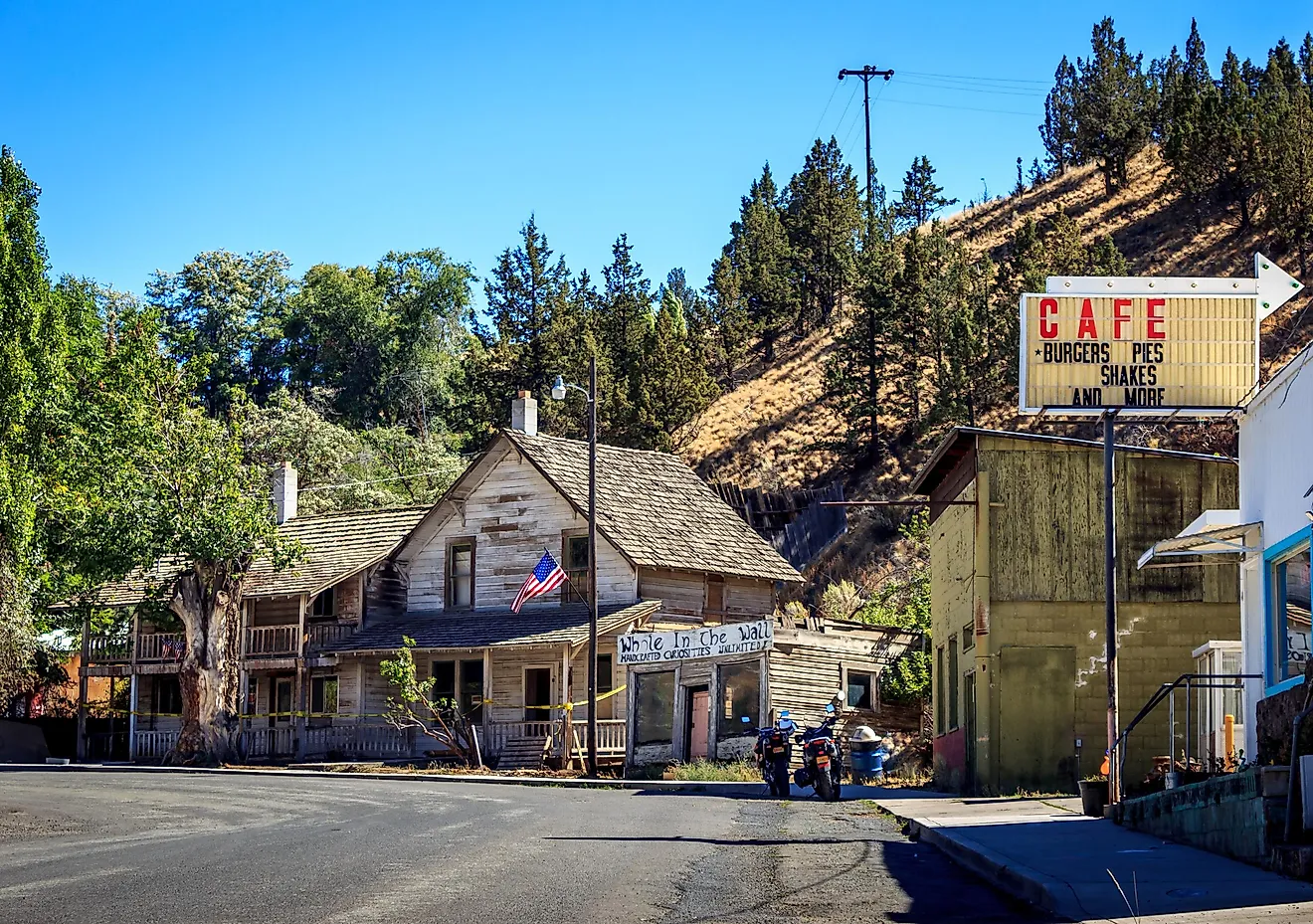
Along Highway 14 in the High Desert of the Galisteo Basin/Ortiz Mountains, tin-roof cottages and old wooden cabins painted in turquoise, ochre, and red line a narrow mountain ravine. They sit right along the main road, and their gardens feature terraces filled with cacti and stone paths. Madrid, located in the Land of Enchantment along the Turquoise Trail National Scenic Byway, ensures its colors blend with the surrounding landscape. Turquoise, in particular, is a color of choice, whether it is added to jewelry or forms the background of a painting in one of the many art galleries here.
The Gypsy Gem sells turquoise jewelry as well as pottery. The turquoise is hand-mined in the Cerrillos Hills. Color also plays a major role in highlighting Madrid's historic streets. There are fewer tan adobe buildings, and instead, the town's historic wooden miner's cabins have been painted in all the colors of the rainbow and converted into homes and galleries. Those heading out on the Turquoise Trail can stop by the Indigo Gallery to browse the unusual sculptures and canvases. Some of the town's art is displayed outdoors, fitting in nicely with the surrounding desert landscapes.
Chimayo

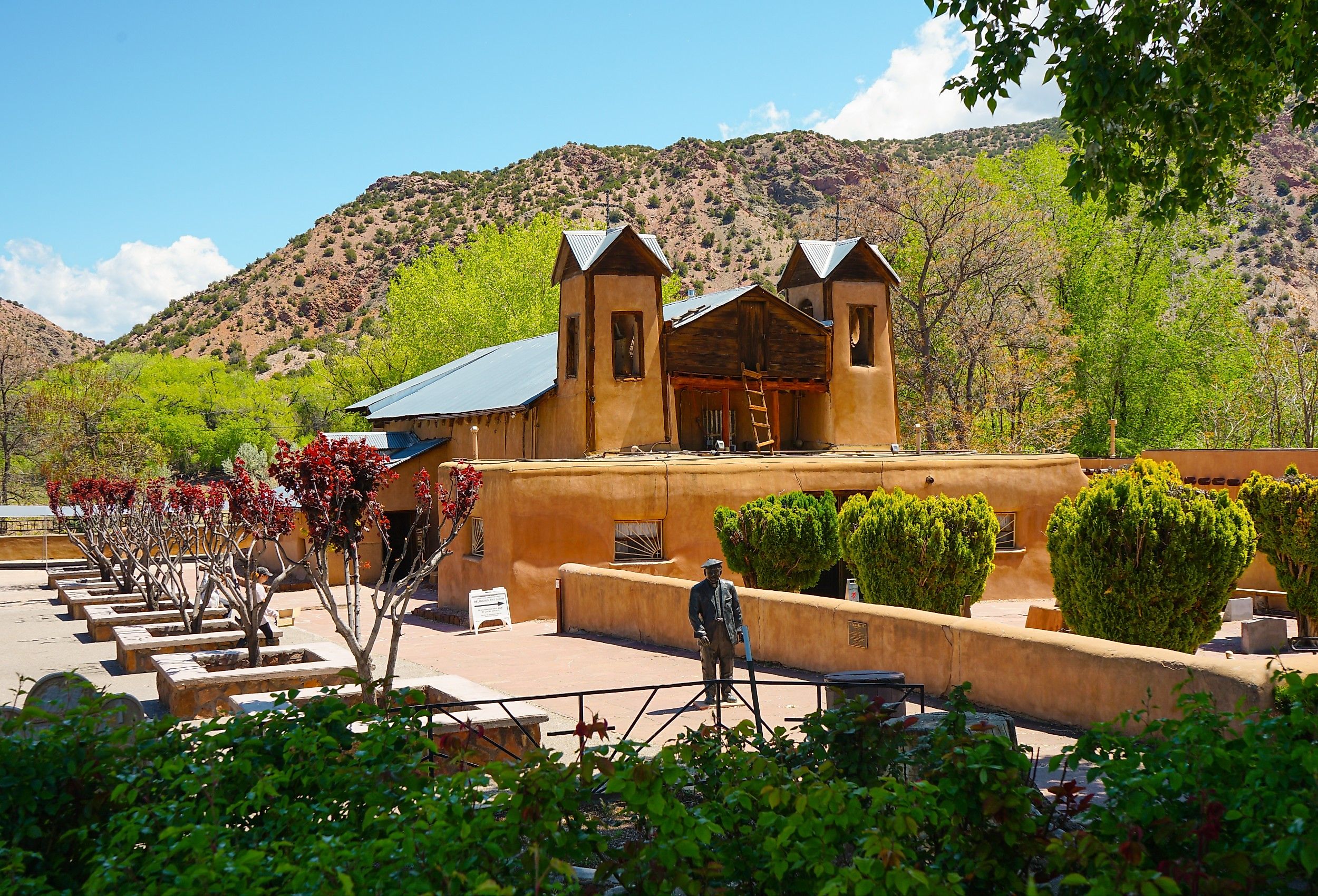
The adobe buildings make a return in Chimayo, a small High Desert village that lies at the base of the Sangre de Cristo Mountains. These dwellings are surrounded by historic fruit orchards and red clay hills in the zone where desert scrub meets mountain pine forest. The Chimayo Museum fits in with the landscape around the Plaza del Cerro, with its log ceiling matching the colors of the sandstone cliffs. The arch over the wooden gate at El Santuario de Chimayo resembled the tan hills one would find in a desert region. El Santuario is also one of the most popular pilgrimage sites in the U.S. for its reputation for being 'miraculous.' Chimayo is home not only to desert cliffs and historic sites, but also to Santa Cruz Lake, which mirrors the mountains. And, the Santa Cruz River flows down from the mountains to water the green apple orchards and chili patches that grow up against the edge of the clay hills.
Jemez Springs

Rock formations are everywhere in the High Desert where Jemez Springs sits, with red sandstone cliffs and volcanic rocks that tower 1,000 feet above the houses. One set of formations (unheimlich landforms) is located in the Jemez Volcanic Field and was created by a volcanic eruption around 7 million years ago. These formations look like white teepees and can be seen from an observation point accessible via a hiking trail just over an hour from the town. The volcanic field area around the town itself is famous for the Valles Caldera and red sandstone formations.
Those hiking near the Jemez Mountains will come across a clearing with a single formation called Tea Kettle Rock. Even though it is slightly out of place, its colors fit perfectly with the surrounding tall trees. Just outside of town, the mysterious Giusewa village is filled with hundreds of farolitos (paper lanterns) every year. The event is part of the celebration of the Light Among the Ruins and also features traditional dances. The site is lit up in an almost eerie glow, reminiscent of the lava flows in the area millions of years ago. The desert region that Jemez Springs is located in also features several primitive hot springs, such as Spence Hot Springs and McCauley Hot Springs. Visitors can enjoy these hot springs along the local hiking trails as they make their way to the Jemez River, which flows through the village and is filled with rainbow trout.
Reserve

Reserve is elevated nearly 5,800 feet in the high southern desert in the San Francisco River valley, overlooked by the Tularosa and San Francisco mountains. Across the region, there are grassy flats and massive cottonwood trees that line the riverbank. From its location on the northern boundary of the Chihuahuan Desert, the town spreads out far away from highways and big cities. It also sits on Road 12, which splits between the Gila National Forest and the Apache National Forest, providing essential greenery in the desert. The Gila National Forest surrounds the village and enriches its history with ancient Mogollon and Anasazi ruins and petroglyphs. The San Francisco River flows nearby, completing the desert-town picture and offering the chance to fish for catfish and trout.
Desert Towns Worth Exploring
New Mexico's desert towns fit seamlessly into the landscape surrounding them. Those atop high cliffs and those along highways alike feature natural wonders and historic architecture found only in this part of America. River walks, art galleries, and historic sights all add to the state's allure, while giving residents and tourists alike some of the country's most beautiful scenes to enjoy.