10 Ideal Nevada Destinations for a 3-Day Weekend in 2026
These destinations have earned their reputations as popular weekend getaways, set along the Colorado River and against the Ruby Mountains. Bighorn sheep come down into a Boulder City park most days, with Lake Mead minutes from town. Caliente has a lawn on a canyon floor in the middle of the desert, and Eureka's Main Street is a destination unto itself. In Tonopah, the Milky Way steals the show most nights at the stargazing park without a telescope. Nevada's small towns have more than enough to fill a three-day weekend in 2026.
Boulder City

Boulder City does not allow gambling. The federal government wrote that rule into place when it laid out the town in 1931 to house Hoover Dam crews, and residents have voted to hold on to it ever since, leaving Boulder City and the Lincoln County town of Panaca as the only two communities in Nevada where the machines are illegal. The dam sits 26 miles southeast of Las Vegas, about half an hour by car. Its Art Deco intake towers stand close enough to study from the walkway, with Black Canyon and the Colorado River below.
Bighorn sheep come down off the River Mountains into Hemenway Park and graze the watered grass with Lake Mead behind them. Above town, Bootleg Canyon Mountain Bike Park holds the dirt. A full day on a bike covers the technical descents and the cross-country trails, and a half day covers the smoother track along the volcanic ridges. In downtown Boulder, the Boulder Dam Hotel has stood on Arizona Street since 1933. The white-columned Dutch Colonial building went up for officials visiting the dam site and was added to the National Register in 1982. Its first floor houses the Boulder City-Hoover Dam Museum, which tells the story through the men and women who built one of the largest public works projects the United States undertook during the Great Depression.
Caliente

Highway 93 gives up nothing for a long stretch north of Las Vegas, and then the road drops into Meadow Valley, and Caliente appears with canyon bluffs on both sides and cottonwoods along the wash. Kershaw-Ryan State Park is just south of town in a box canyon fed by springs, which is why there is lawn on a canyon floor in the middle of the desert. The Overlook Loop climbs the rim for the view down onto that grass and the rock walls around it. Lower down, the shaded gardens sit among wild grapevines and fruit trees.
The Shady Motel is on Front Street, a few minutes' walk from everything downtown worth seeing. Across from it stands the Caliente Railroad Depot, built in 1923 with broad stucco arches and red-tile roofs, and worth the stop for the building alone. The Caliente Heritage Boxcar Museum is next door, and its old photographs and railroad memorabilia cover the years when this was a Union Pacific town. Meals happen at the Knotty Pine Restaurant and Lounge, which opens at six in the morning for omelets and serves black Angus burgers until eight or nine at night.
Pioche

The courthouse in Pioche was budgeted at $26,400 in 1871. Cost overruns and refinanced bonds pushed the total past $800,000, and Lincoln County did not retire the debt until 1938, some years after the building had been condemned. The Italianate building is now a museum. Original ironwork cells and old mining equipment sit among the exhibits at the Million Dollar Courthouse. The town around it sits 25 miles north of Caliente and bills itself as Nevada's liveliest ghost town, which is a joke about the abandoned silver camp it used to be rather than a description of the present.
Boot Hill Cemetery is up the hill, where the graves of accused murderers and outlaws have weathered down to almost nothing. From that hillside, the Pioche Aerial Tramway is visible overhead, its wooden towers and rusted iron buckets still hanging on the cable that carried silver ore a century ago. Thompson's Opera House on Main Street was restored and still books live music and community theater, and it screens films. The Overland Hotel and Saloon is on the same street. Room 10 is the one to ask for, allegedly haunted and featured on the Travel Channel's Ghost Adventures.
Ely

The Nevada Northern Railway laid its first track in 1905 to haul copper ore out of the mines west of Ely, and when the diesels arrived in 1952, nobody cleared out the steam yard. That is why the East Ely complex became a National Historic Landmark in 2006, designated as the best-preserved and least-altered main yard remaining from the steam era. Over 70 buildings stand there, belt-driven lathes, enginehouse, and storehouse left roughly as the crews left them. The 90-minute excursion behind a century-old locomotive is what most people come for, and seasonal trips include the Haunted Ghost Train and the Polar Express.
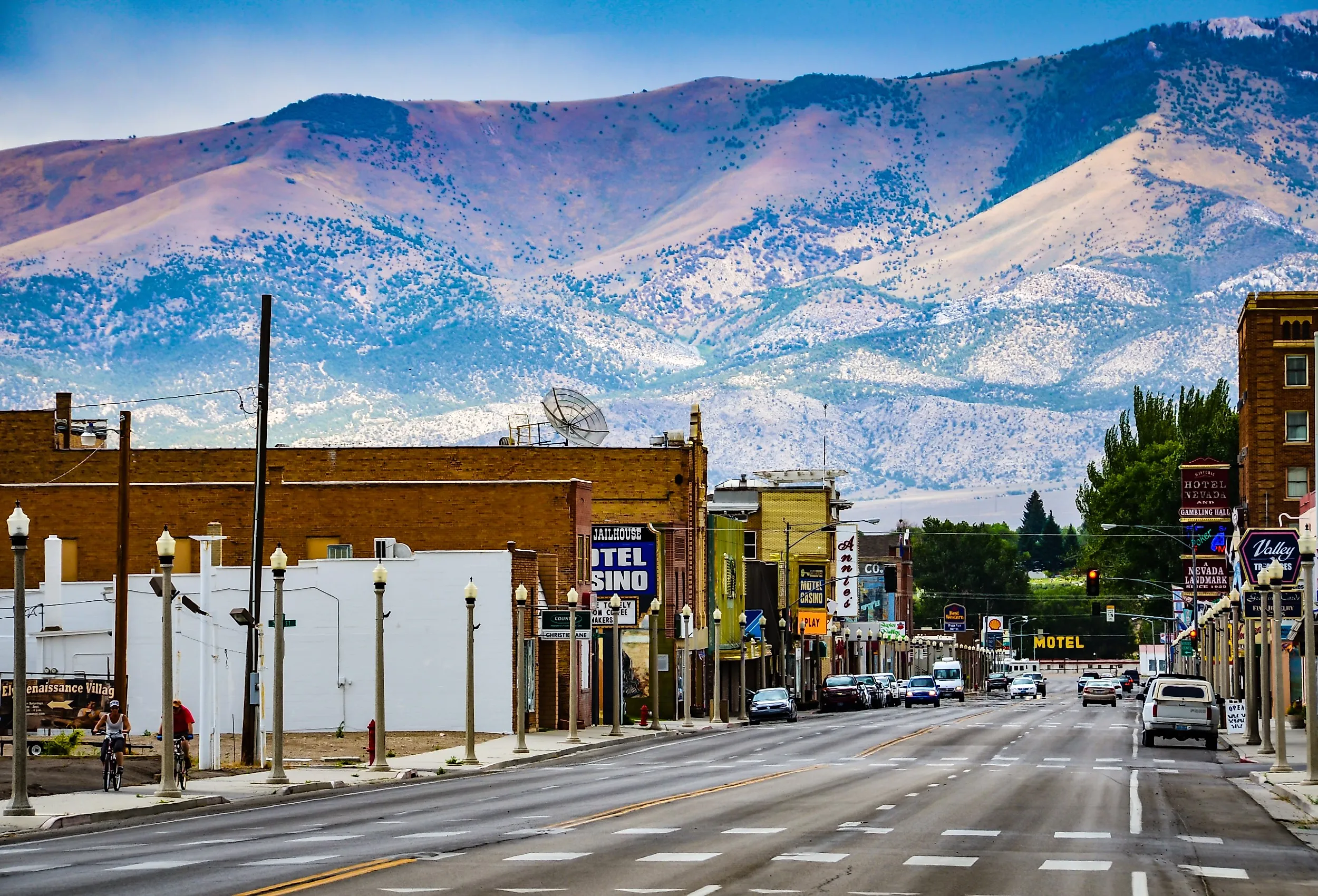
Downtown, the Hotel Nevada and Gambling Hall opened on Aultman Street on July 7, 1929. Its six stories made it the tallest building in the state until Reno passed it two years later. The 64 rooms and suites sit above a floor of slot machines and a digital blackjack table. Racks Bar and Grill is across Aultman, open from eleven in the morning, and the homemade soups and burgers are what regulars order. The Ely Renaissance Village fills an afternoon with houses, each restored to a particular period. Broadbent Park is the quiet stop, a lawn and an hour with a coffee before the drive out.
Eureka

Main Street in Eureka is a short stretch of brick and stone that the fires and the decades never quite took, which is how a town this size in Nevada ended up calling itself the Friendliest Town on the Loneliest Road. Almost everything sits inside the Eureka Historic District, so a long weekend here rarely requires a car. The Jackson House Hotel has stood on Main Street since 1877, rust-colored, with eight restored rooms upstairs. The Eureka Opera House is next door and hosts the town's concerts and plays. Its 1924 hand-painted stage curtain still hangs inside, along with the signed photographs of performers who worked that stage.
The Eureka Sentinel printed its last issue long ago, but the press room in its 1879 building was never emptied out. The Eureka Sentinel Museum occupies the old office, and the room still holds printing equipment, old posters, Linotype machines, and vintage typewriters. Eureka Park on Buel Street is the green space for the end of a walking day.
Tonopah

Tonopah does its best work after sundown. The nearest city lights are a long way off in every direction, and on a moonless night, the Milky Way shows up over the Clair Blackburn Memorial Stargazing Park without a telescope. Back downtown, the Mizpah Hotel has been on Main Street since 1907, built while the silver was still coming out of the hills and finished to match. Two restaurants operate inside: the Jack Dempsey Room for a full dinner and the Pittman Cafe for something quicker.
Daylight belongs to the Tonopah Historic Mining Park, which covers more than 100 acres on the site where four original mining companies operated. Rusted machinery sits among the tunnels and ore shafts. The Central Nevada Museum explains how Tonopah came to be called the Queen of the Silver Camps, with Native American artifacts and military relics alongside. A reconstructed Old West town out back walks visitors past miners' cabins and a blacksmith shop, with an old saloon in between.
Pahrump

Grapes should not grow in the Mojave Desert, but Pahrump defies the odds. The vineyard was founded as Pahrump Valley Vineyards in 1989 and reopened under new ownership as Charleston Peak Winery, with nine acres at the base of Charleston Peak, offering mountain vistas on every side. The high-desert list includes a Symphony White and an Amargosa Red Blend. Wine Ridge RV and Resort handles the night, with rental cottages and casitas alongside the RV spaces on a compound holding two swimming pools and a clubhouse.
The Pahrump Valley Museum takes the next morning. Pioneer cabins and a recreated general store occupy the grounds alongside a one-room schoolhouse, with a small cactus garden out back and indoor exhibits covering early Anglo settlers and farming equipment. Discovery Park occupies a former golf course. It is green space now and draws birdwatchers, with a paved 2.7-mile trail looping past a pollinator garden and a pond, and sculptures set along the way.
Genoa

The oldest permanent settlement in Nevada dates to 1851, when Mormon pioneers built a trading post at the foot of the Sierra Nevada, about 50 minutes south of Reno. Mormon Station State Historic Park holds the reconstruction of that post, with a blacksmith shop of early tools and a set of historical wagons on the grounds. The Genoa Bar and Saloon has been serving since 1853 and calls itself Nevada's oldest thirst parlor, its walls carrying enough 19th-century decor and memorabilia to read like a small museum. The White House Inn in Genoa is over a hundred years old, with four rooms with fireplaces and balconies.
The Genoa Trail System covers just over 17 miles above town, open to walkers and bikes, the paths climbing through wooded stretches into the canyons of the Carson Range. The Genoa Courthouse Museum sits in an 1865 brick building and holds a restored courtroom and the original county jail, along with Pony Express artifacts. Anyone here on the last full weekend of September finds the town given over to the Candy Dance, a fundraiser the women of Genoa started in 1919 to buy street lights and then had to hold every year afterward to cover the electric bill.
Fallon

Fallon is farmland because of a decision made in Washington in 1903. The Newlands Project was among the first authorized under the Reclamation Act, and the canals it cut brought Truckee and Carson River water into the Lahontan Valley, which is where the Oasis of Nevada nickname comes from. The Churchill County Museum on Maine Street holds more than 16,000 objects from its history, including the tule duck decoys that serve as Nevada's state artifact. Pioneer wagons and the tools left by the valley's earliest inhabitants sit alongside them.
The Oats Park Art Center took over a former schoolhouse and shows contemporary visual art, live music, and screens independent films. Twelve miles east on Highway 50, the Grimes Point Archaeological Site is a field of basalt boulders left along the old Lake Lahontan shoreline, many of them bearing petroglyphs that may date back 8,000 years. A quarter-mile interpretive trail loops through them. The Grid Market + Brewery sits a few blocks off Maine Street, an open-concept indoor market with unpretentious dinners and regional craft beer. The Best Western Fallon Inn and Suites is a central, affordable place to stay.
Elko

Elko fills up in January. The National Cowboy Poetry Gathering has been held there every winter since 1985, a week of poets, musicians, and ranch families in a town otherwise given over to mining and cattle, and the Western Folklife Center produces it from the old Pioneer Hotel building at Railroad and Idaho streets. For the rest of the year, the center hosts a 300-seat theater and a rotating gallery, plus the seasonally open saloon downstairs with its 1890 Brunswick mahogany back bar. The Ruby Mountains stand behind all of it, jagged on the southeast horizon.
The Northeastern Nevada Museum has over 200 taxidermy mounts in its wildlife wing and regional artists in its gallery. The Cowboy Arts & Gear Museum is the more particular of the two, with antique saddles, silver-engraved spurs, and craftsmen working in traditional Western trades on site. Shutters Hotel Elko is the craftsman-inspired place to stay, with a pool for the afternoon. Main City Park makes the last stop before the drive out, with pickleball courts and room for a morning picnic.
The Small-Town Side Of Nevada
The Mojave Desert in the south and the Carson Valley in the west leave these Nevada towns far enough apart that no two long weekends feel alike. Pahrump grows wine grapes on nine acres of desert ground, and Genoa turns its main street over to a candy sale on the last full weekend of September. Ely sends century-old locomotives out on ninety-minute excursions, and Elko fills with poets and ranch families every January. Three days suits each of them, which is what earns these ten a place on a 2026 calendar.