8 Most Hospitable Towns In Indiana
Indiana’s most hospitable towns earn their warmth through hubs built for gathering. Madison leads visitors from its Farmers Market to the Heritage Trail, while Shipshewana puts buggy rides and a 40-acre flea market at the center of town. Corydon raises the curtain at Hayswood Theatre. Wabash screens films and stages shows at Eagles Theatre. Greenfield keeps James Whitcomb Riley close at his Boyhood Home and Museum. Newburgh faces the Ohio River on its Rivertown Trail, while Tell City gathers for Schweizer Fest, and Nashville opens onto Brown County State Park. These communities make history and scenery feel like a personal invitation.
Madison

Locals welcome visitors into their lively Madison community, whether they are joining year-round community gatherings or touring the preserved landmarks and green spaces. The Madison Farmers Market has been a place to support local vendors and enjoy the community atmosphere since its beginnings in 1809. Local seasonal goods and handcrafted art are abundant even as the temperatures dip, when Indiana's oldest farmers market shifts to its winter schedule.
Madison has a rich history that locals are eager to share with visitors, including the sights along its green spaces. The challenging Heritage Trail, roughly a mile and a quarter of paved pathway, follows the old railroad route past the Madison Railroad Incline Cut and stone arch bridge as it climbs toward the hilltop. The rail line it traces once carried the steepest standard-gauge grade in the country.
Architecture plays a significant role in giving Madison the appeal that attracts residents, including the Lanier Mansion State Historic Site, which stands in the Madison Historic District. The Greek Revival-style building was designed by local architect Francis Costigan and completed in 1844, then designated a National Historic Landmark in 1994. Today, after being restored to its original colors and filled with artifacts that beckon historians, the mansion hosts seasonal events for families.
Shipshewana

As a strong part of the Amish community in the US, Shipshewana encourages visitors to take part not only in its unique local businesses but also in its culture. Visitors looking to indulge themselves in the community's traditional handmade goods will want to make time to browse the town's flea market. The outdoor market fills 40 acres with more than 600 vendor spaces selling a mix of goods, herbs, and vintage products. It sets up on Tuesdays and Wednesdays between May and the end of September.
Shipshewana Buggy Rides on Harrison Street takes visitors through town, out into the surrounding countryside, and onto a working Amish farm. Riding past working Amish farms and fields, guests are invited to learn a little more about how the community thrives. The farm trip ends at a dairy barn, where riders can milk a cow by hand and help feed the calves.
Explore the town's heritage further at the Shipshewana Historical Society Museum, which occupies the renovated one-room Farver schoolhouse downtown. Artifacts from Chief Shipshewana and the town's early days are free to view during the museum's May through early November season. More locally made artwork can be found at The Art House on Morton, a Shipshewana gallery showcasing work by more than a dozen local artists.
Corydon

Local art is a cornerstone of the Corydon spirit that it shares with its visitors. Corydon was Indiana's first state capital, and local artists who have established roots in the town for generations carry on that sense of community pride. Visitors need look no further than Zimmerman Art Glass, a shining example of the town's heritage, as it is considered the "second oldest family-run studio glass factory in the United States." Founded in 1942, the studio has been producing handblown art glass ever since, and interested visitors can even watch a glassmaking demonstration.
Another place in Corydon to see artistry at work is at the Hayswood Theatre. Established in 1969, Hayswood Theatre first performed in the First State Capitol Building in 1970 and later staged published plays at Harrison Grange Hall. The company has run its own house on South Capitol Avenue since 1971. The building in which it began still stands as the Corydon Capitol State Historic Site, where visitors can explore the original Capitol. It served as the Harrison County courthouse until the current courthouse was completed in 1929, and was then restored and opened as a state memorial the following year.
Wabash

For visitors looking to carry on the artistic spirit they found in Corydon, Wabash has plenty of venues where they can join the audience and enjoy beautiful displays. Built in 1906, Eagles Theatre is a highlight of the town. Live performances take place in the theater, while other features in the five-story building include the Parkview Ballroom and an additional movie theater. A $16 million restoration reopened the building in 2020 and brought the fourth-floor ballroom back into use after roughly eight decades.
Outdoors, visitors are enticed to enjoy the nature that Wabash's citizens have worked to preserve. At Charley Creek Gardens, visitors take a deep dive into the conservation of native and exotic plants at the horticulture center. For those seeking a little more adventure in nature, Charley Creek Falls is one of the town's highlights, easily accessible to visitors who stop to unwind at nearby picnic tables. A trip to Asherwood Nature Preserve is the occasion to lace up hiking boots. The ACRES Land Trust property west of town carries 2.4 miles of trail winding through wetlands, ravines, and forest. Among the woodland is a stand of sugar maples, and in late winter, metal buckets hang from the trunks to collect sap.
Greenfield

Visitors exploring Greenfield will discover the town's affection for 19th-century poet James Whitcomb Riley, a local artist who found acclaim for reciting his locally inspired poems. Nicknamed the "Hoosier Poet," he is memorialized in the James Whitcomb Riley Boyhood Home and Museum. Located in his childhood home, the collection of family objects and replicated pioneer-era aesthetic transports visitors to life in the 1850s. Combining it with a trip down the Riley Arts Trail paints a better picture of the poet. Finished in 2025, the downtown loop stretches less than a mile. His poetry is etched into the concrete sidewalk and carved into ten limestone benches, and sculptures along the way show how integral the poet is to the city's identity.
Greenfield's heritage is also closely tied to the surrounding nature, giving visitors a chance to slip away into green spaces. In the Thornwood Nature Preserve, wildlife, such as birds and native plants, are the stars of the show. There are several trails to traverse in the 40-acre preserve, plus a suspension bridge over Little Brandywine Creek and a campground that opens on weekends when a staff member is on site.
Newburgh

Hospitality and a friendly community are ingrained in Newburgh's core. Local councilman B. Gene Aurand spent years building a friendship with the village of Newburgh in Lancashire, England, and the two councils signed their sister city agreement in January 1994. To celebrate this distinct relationship, visitors can snap a photo in front of the town's unique Red Telephone Box monument, presented in 2006 and doubling as a memorial to Aurand.
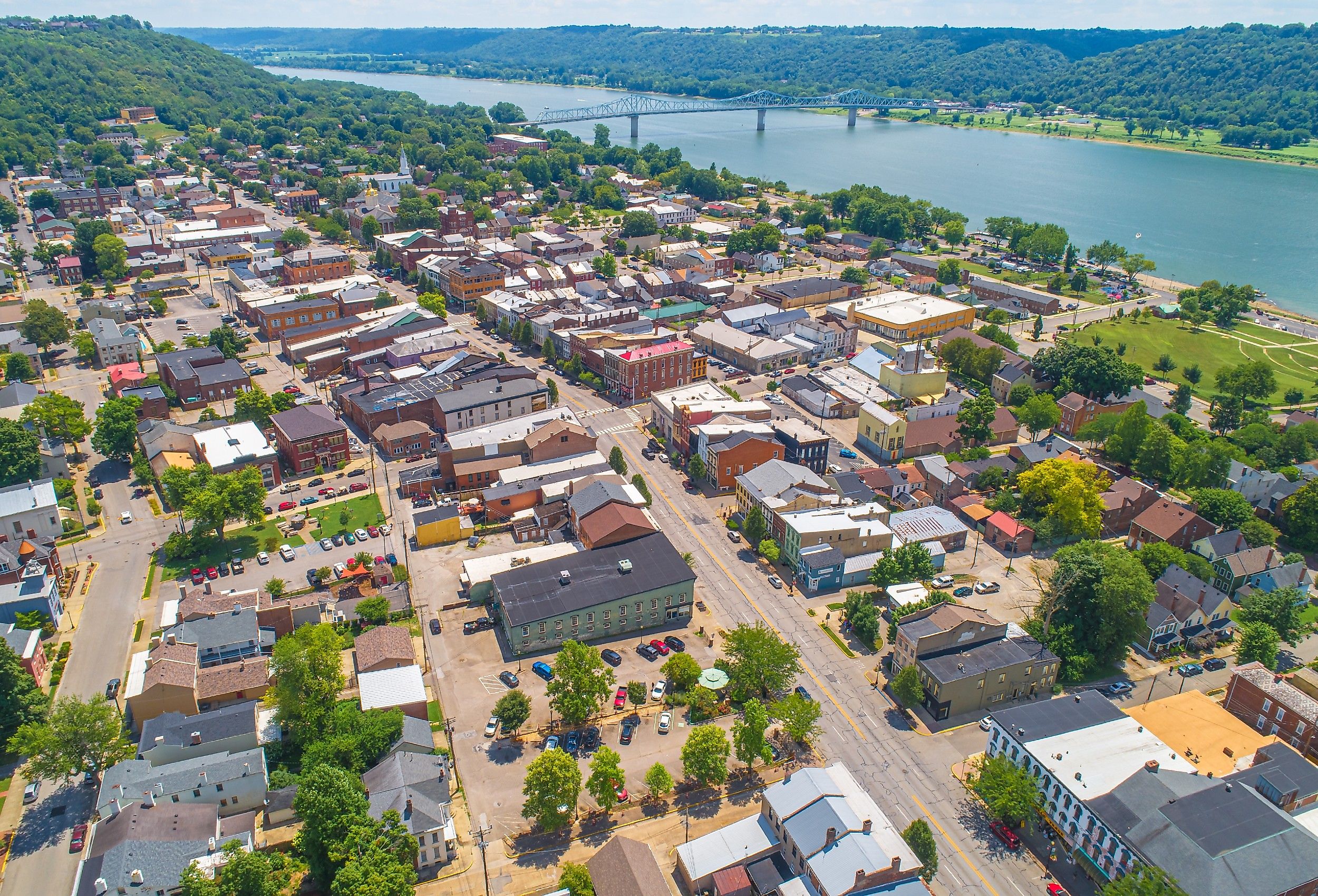
There is a lot more to the storied town than just this single monument located in front of the Town Hall building, though. Newburgh sits along the Ohio River, something that the town has made even easier for travelers to access on the Newburgh Rivertown Trail. The trail runs the length of the town, and beside it are parks for resting.
The town has multiple buildings on the National Register of Historic Places. Among them are structures in the Italianate, Greek Revival, and Classical Revival styles. The best place to dig deeper into its history is the Newburgh Museum, where a collection of artifacts covers the town's founding and its Civil War years.
Tell City

Towns like Tell City honor and preserve the heritage of immigrants who came to establish their own communities through community-wide festivals and visitor-friendly spaces. A tranquil day in town can be had at Sunset Park, which overlooks the Ohio River. The park is extra notable for the Floodwall Mural, a colorful installation by local artists that hails the town's long-standing heritage.
Tell City really comes alive during its annual celebrations that combine its Swiss-German roots with a party atmosphere. Visitors can attend the Tell City Schweizer Fest each August, an annual festival launched in 1959 after the success of the town's 1958 centennial celebration. The event honors the settlers who brought their vision for Tell City to life and features free, community-wide entertainment. In December, the town also throws itself into Silvesternacht (German for "New Year's Eve") festivities. The celebration features a giant illuminated apple drop at City Hall Park, accompanied by fireworks and live music. The apple is a nod to William Tell, the Swiss marksman the town is named for.
Nashville

The town of Nashville is a refuge for historians and nature enthusiasts. The Brown County History Center tells the story of the town and the county through exhibit halls and reconstructed rooms, including a cozy log cabin complete with a fireplace. By far the most attractive part of the experience is venturing into the Pioneer Village across the street. Its 19th-century buildings include a restored log cabin, a working blacksmith shop, and the 1898 office of a country doctor. An 1837 log jail stands alongside them.
Aside from the historical, there is an abundance of natural landscapes for visitors to roam. Not too far from town is Brown County State Park, the largest state park in Indiana. It's nearly 16,000 acres of forested hills, ridges, and valleys. Visitors can challenge themselves on moderate trails, like the mile-and-a-half loop around the shores of Ogle Lake, or fish for bass and bluegill in Strahl Lake.
Moving At Your Own Pace
In the most hospitable Indiana towns, visitors can set their own pace as they explore some of the best local attractions and experience a taste of local life. A visitor searching for something leisurely might book a buggy ride through the countryside of Shipshewana. Others seeking something livelier might dive into the celebratory nighttime atmosphere during Silvesternacht in Tell City. No matter which pace someone chooses, the locals embrace visitors' interest in their markets and way of life with open arms.