The 10 Hottest States in the US
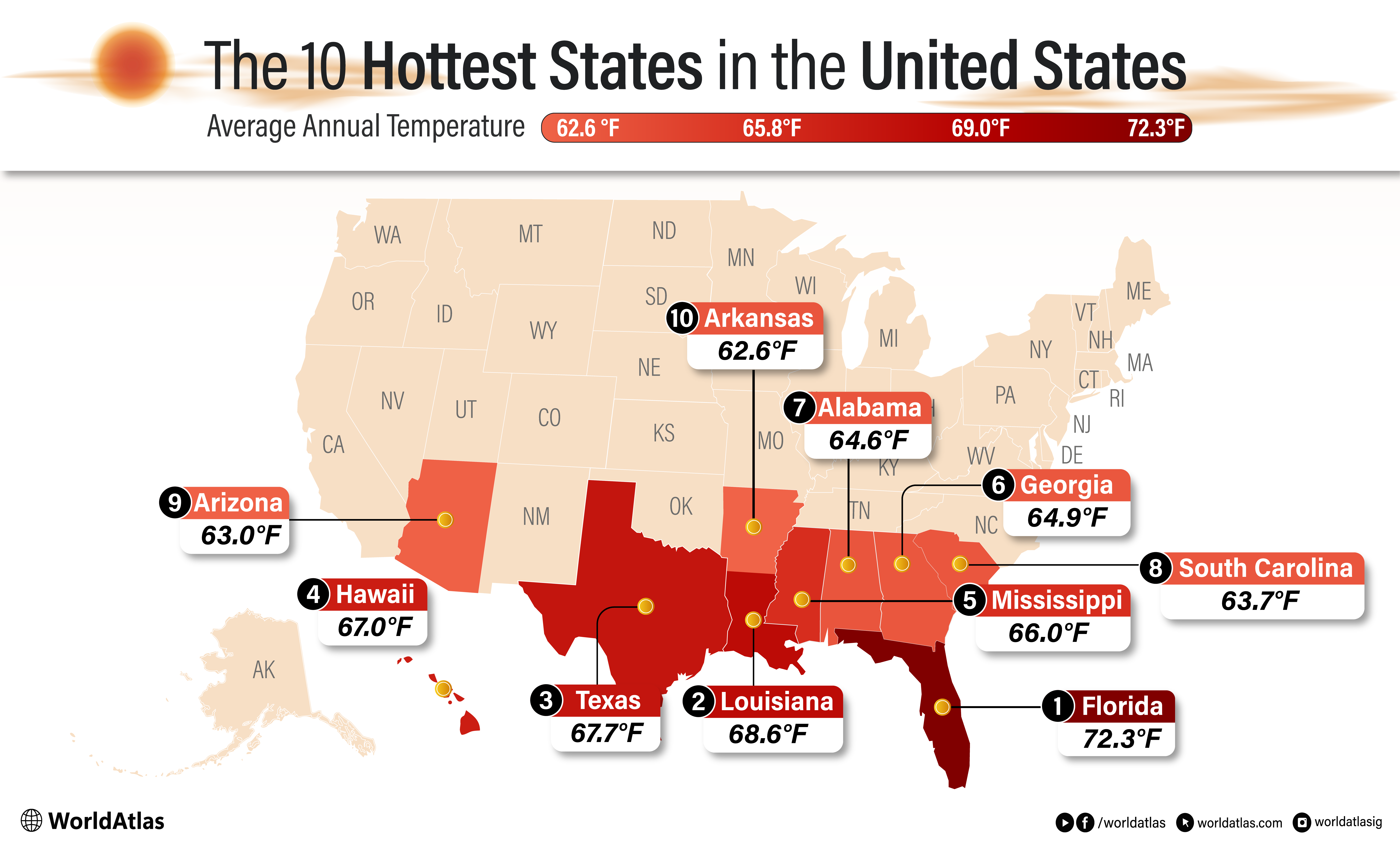
When it comes to heat, the South dominates. Nine of America's ten hottest states sit below the Mason-Dixon line, with only tropical Hawaii breaking the pattern. Florida tops the list at 72.3°F in 2025, and every state here is warmer than it was 30 years ago. The contiguous US averaged 54.6°F in 2025 and ranked fourth-warmest in NOAA's 131-year record. Here are the 10 hottest states in the United States.
1. Florida - 72.3°F

The hottest state in the US, Florida had an average temperature of 72.3°F in 2025. As the southernmost state in the contiguous US, Florida has a subtropical climate in its northern and central regions, while southern Florida experiences a tropical climate. Mild winters and hot, humid summers are the norm in Florida. The Florida Climate Center notes that the state's hottest month is July. July 2024 set records in cities such as Tallahassee, with an average temperature of 85.1°F (2.6°F above normal), and Orlando, where the average temperature was 85.5°F (2.9°F above normal). Since 1995, the average state temperature in Florida has risen 1.5°F from 70.8°F to 72.3°F.
2. Louisiana - 68.6°F

From 1995 to 2025, Louisiana's average temperature rose 1.8°F from 66.8°F to 68.6°F. Traditionally, its hottest month is August, with typical highs across the state in the high 80s and low 90s. AccuWeather notes that the highest temperature in southern Louisiana in 2025 was recorded on August 17, in New Orleans, at 99°F. In northern Louisiana, a high temperature of 104°F was recorded in Shreveport on August 18, 2025. Louisiana's climate is described as sub-tropical and, as the state is on the Gulf of Mexico, its humidity levels remain high.
3. Texas - 67.7°F

Texas' average temperature of 67.7°F places it third among the hottest states in the US in 2025. This is up 2.5°F from the average temperature 30 years ago, 65.2°F, in 1995. The climate in Texas is divided. Its eastern portion experiences a sub-tropical climate, with high humidity and precipitation. Western Texas is drier and usually experiences the state's hottest temperatures. Texas experiences extreme temperature swings across the state because it receives warm, humid, sub-tropical air from the Gulf of Mexico and cold, dry continental polar air from Canada. The Dallas/Fort Worth area recorded a high temperature of 104°F on July 31, 2025.
4. Hawaii - 67.0°F

Hawaii's average temperature as of 2025 was 67.0°F, up 0.8°F from 1995's average of 66.2°F. Hawaii's latitude places it at the northern edge of the tropics, meaning that it receives intense, direct sunlight year-round. It is bordered by the Pacific Ocean, which keeps temperatures warm. Northeast trade winds have been weakening in recent years, contributing to higher temperatures in the state. Mountains on the Hawaiian Islands also contribute to the climate, with lower temperatures and higher rainfall. The National Weather Service notes that the highest temperature ever recorded in Hawaii occurred on April 27, 1931, on the Big Island at Pahala, where it reached 100°F. Station-level peak data for 2025 had not been published at the time of writing.
5. Mississippi - 66.0°F

In 2025, Mississippi's average temperature of 66.0°F ranks it fifth among the nation's hottest states. This is an increase of 2.4°F from 1995's average temperature of 63.6°F. The state's low latitude, prevailing southerly winds that pull moisture from the Gulf of Mexico, and subtropical climate account for its temperate winters and long, hot summers. Northern Mississippi experiences cooler temperatures, central Mississippi is more moderate, and southern Mississippi, including the Gulf Coast, typically experiences the state's highest temperatures. Gulfport's high temperature of 97°F on July 22, 2025, is likely among the highest of the year in the state.
6. Georgia - 64.9°F

Georgia's average temperature in 2025 of 64.9°F is a 1.4°F increase from the state average 30 years ago of 63.5°F. The state has a humid subtropical climate, shaped by its southern latitude, warm air pulled north from the Gulf of Mexico, and the moderating influence of the Atlantic Ocean along its coastline. The northern areas of Georgia experience milder summers, while the southern areas reach higher temperatures. Summers in Georgia can reach highs of 95°F. In 2025, the hottest temperatures were recorded on July 29, at 100°F in Atlanta and 102°F in Columbus.
7. Alabama - 64.6°F

As of 2025, Alabama's average temperature was 64.6°F, up 1.6°F from the 1995 average of 63.0°F. This southeastern state has a warm, humid climate, with the Gulf of Mexico moderating some of the summer heat by absorbing solar energy. The northern parts of the state experience cooler temperatures than the southern regions. Mild winters and hot summers are found in Alabama. In 2025, the hottest temperature was recorded on July 15 in Dothan (101°F).
8. South Carolina - 63.7°F

The eighth-hottest state in the US as of 2025, South Carolina's average temperature that year was 63.7°F, up 1.2°F from its 1995 average of 62.5°F. The state experiences a subtropical climate due to its proximity to the Atlantic Ocean and the Gulf Stream. Milder winters and longer, hotter summers are found in its eastern and southern regions. Northwestern South Carolina, however, has colder winters, especially at higher elevations. On July 27, 2025, Columbia, South Carolina, recorded its highest temperature of the year at 107°F. This was also the highest recorded temperature on the East Coast in summer 2025.
9. Arizona - 63.0°F

In 2025, Arizona's statewide average temperature was 63.0°F. This is an increase of 2°F from the average 30 years ago of 61.0°F. Arizona's unique combination of subtropical latitude, low desert elevations, lack of moisture, and surrounding mountain ranges that trap dry air creates an oven-like effect, as the sun hits the ground directly and heats the air. The hottest temperature recorded in 2025 was 118°F at Phoenix Sky Harbor International Airport on July 9.
10. Arkansas - 62.6°F

The 10th-hottest state in the US in 2025 is Arkansas, where the average temperature was 62.6°F, up 2.1°F from 60.5°F in 1995. The state has a humid, subtropical climate, with hot, humid summers and milder, drier winters. Temperatures in Arkansas are influenced by warm, moist air funneling in from the Gulf of Mexico. Its inland location also contributes to higher temperatures. The state's all-time record high was 120°F, recorded on August 10, 1936.
The 10 Hottest States in the US
| Rank | State | Average Temperature |
|---|---|---|
| 1 | Florida | 72.3°F |
| 2 | Louisiana | 68.6°F |
| 3 | Texas | 67.7°F |
| 4 | Hawaii | 67.0°F |
| 5 | Mississippi | 66.0°F |
| 6 | Georgia | 64.9°F |
| 7 | Alabama | 64.6°F |
| 8 | South Carolina | 63.7°F |
| 9 | Arizona | 63.0°F |
| 10 | Arkansas | 62.6°F |