9 Best Small Towns To Retire In Spain
Spain has long topped the list of places Americans and Britons consider for retirement, and it's not hard to see why, with a Mediterranean climate, a public healthcare system that ranks among the best in Europe, and a slower pace of life that leaves room for good wine and better company. The country's headline retirement destinations, like Alicante or Málaga, or the Costa Blanca's biggest resort towns, aren't the only options, especially since they are not always the most affordable or the most authentic. This list turns instead to nine small towns, each under 50,000 residents, spread between the Basque coast and the Andalusian sierra. These towns were chosen because they pair walkable, historic centers with accessible recreation, including coastal paths, mountain trails, canoeing rivers, and reservoirs a short drive from the front door. According to idealista, Spain's largest property portal, the average asking price for homes for sale nationwide was €2,933 per square meter as of July 2026, a useful yardstick for comparing the towns below. Get your papers in order, brush up on your Spanish, Basque, or Galician, and see which corner of Spain might be worth calling home.
Sitges, Catalonia

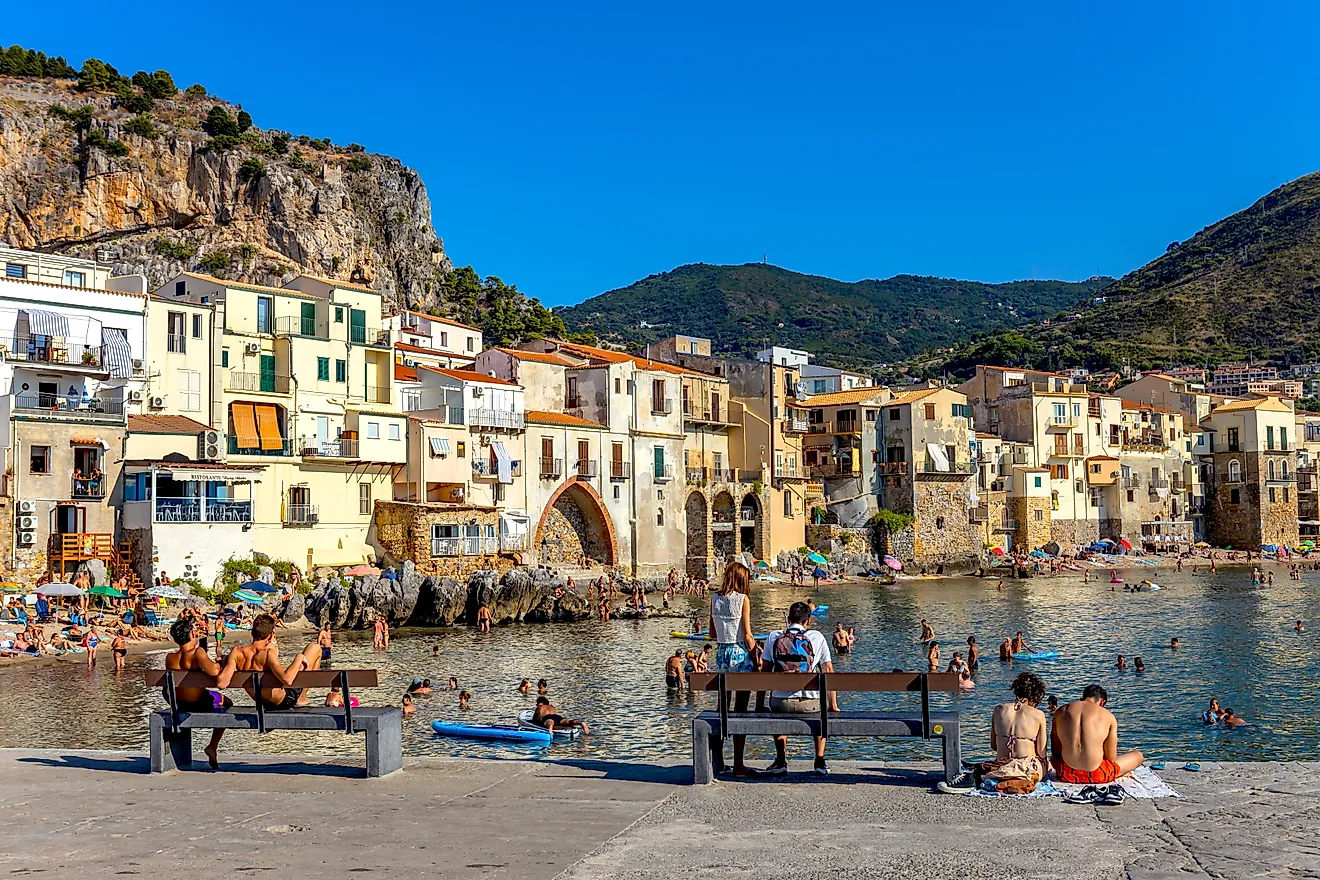
Just half an hour down the coast from Barcelona by train, Sitges has 32,405 residents as of January 2024, making it the largest town on this list. The town's 17 beaches are its calling card, but its cultural pedigree runs deeper. The Cau Ferrat Museum, once the home and studio of painter Santiago Rusiñol, houses his collection of Catalan modernist art and ironwork, while the Maricel Museum, set in a clifftop mansion built for an American art collector, majestically overlooks the sea. For recreation, the Camí de Ronda coastal footpath runs along the cliffs to neighboring Vilanova i la Geltrú, and the Terramar Golf Club, designed in 1922, sits right at the edge of town. Home prices here run well above the national mark, with idealista listing an average of €5,321 per square meter as of July 2026, reflecting Sitges' proximity to Barcelona and its long-standing popularity with international buyers. It's a pricier entry than most on this list, but retirees drawn to Catalonia's mix of beach, culture, and big-city access nearby will be hard-pressed to find a better base.
Comillas, Cantabria

With just over 2,100 residents, Comillas is one of the smallest towns on this list, tucked along Cantabria's Costa Verde coastline. Its best-known landmark is El Capricho, a whimsical villa designed by a young Antoni Gaudí in 1883, covered in sunflower-patterned tiles and topped with a slender minaret-like tower. Nearby, the Palacio de Sobrellano and its adjoining pantheon-chapel were built for the Marquis of Comillas, and the former Universidad Pontificia Comillas, now a University of Cantabria campus, adds another slice of 19th-century architecture to the town's compact center. For recreation, Comillas has its own golden-sand beach beneath the Cabrero cliffs, and Rovacías Golf Comillas, part of the Costa Verde golf circuit, sits just outside town. Home prices averaged €3,722 per square meter as of July 2026 per idealista, above the national figure but still a fraction of what comparable coastal property costs on the Costa del Sol. Comillas doesn't show up on most Spain retirement lists, which makes it a genuine find for retirees chasing green hills and empty beaches over the country's more crowded resort towns.
Cangas de Onís, Asturias

Cangas de Onís, population 6,316 as of January 2024, is best known as the historic gateway to the Picos de Europa National Park, Spain's oldest national park and a range of dramatic limestone peaks. The town's most photographed landmark is the so-called Puente Romano, a hump-backed medieval bridge over the Sella River. The bridge dates to the 14th or 15th century, not Roman times, with a replica of the Cross of Victory hanging from its central arch. The Santa Cruz Church, built atop an ancient dolmen, and a statue of King Pelayo round out a historic core that gives Cangas de Onís the kind of time-capsule feel other small Spanish towns are known for. For outdoor recreation, outfitters run canoe and kayak descents of the Sella River right from town, and the Lagos de Covadonga, two glacial lakes inside the national park, draw hikers year-round. Home prices remain low at €1,623 per square meter as of June 2026 per idealista, well under the national average. It's a compelling option for retirees who want mountains and water sports over Mediterranean beaches.
Hondarribia, Basque Country

Hondarribia sits at the mouth of the Bidasoa River in Gipuzkoa province, with a population of 16,929 as of January 2024. Directly across the water from France, this town soaks in the same cross-border Basque culture found further inland at towns like Saint-Jean-Pied-de-Port on the French side. The Castle of Charles V, a 10th-century fortress later reinforced under the Holy Roman Emperor's namesake, now operates as a state-run Parador hotel overlooking the old town's walled streets. Just below it, La Marina, the old fishing quarter, is lined with brightly painted houses and pintxo bars serving grilled fish and local txakoli wine. For recreation, Jaizkibel Mountain rises just outside town with hiking and cycling trails leading to coastal viewpoints, and Hondarribia's own beach along Txingudi Bay offers calmer water than the surf breaks further along the coast. Home prices run high at €5,286 per square meter as of July 2026 per idealista, among the priciest towns on this list, a reflection of its popularity with both Spanish and French buyers. Retirees drawn to the Basque Country's distinct language and food culture, without the price tag of San Sebastián itself, will find Hondarribia hard to beat.
Baiona, Galicia

Baiona, population 12,380 as of January 2024, sits on Galicia's Ría de Vigo, and holds a specific claim to fame. It was the first place in Europe to learn of Columbus's voyage, when the caravel Pinta arrived here in 1493. A full-scale replica of the ship floats in the harbor today. The Monterreal Castle, a fortress whose walls enclose most of the old town's peninsula, now houses a Parador hotel with sweeping Atlantic views, and the Monte Real Yacht Club, founded in 1965, hosts popular international sailing regattas each summer. For recreation, the Ruta dos Miradoiros coastal walking trail links a string of viewpoints around the peninsula, and ferries connect Baiona's harbor with the Cíes Islands, part of the Atlantic Islands of Galicia National Park, for day trips to some of Europe's best-rated beaches. Home prices averaged €2,505 per square meter as of July 2026 per idealista, below the national mark. Baiona offers a version of coastal Galicia that pairs Camino de Santiago history with genuine beach-town recreation, at a price most Mediterranean resort towns can't match.
Cambados, Galicia

Cambados, population 13,752 as of January 2024, sits on the Ría de Arousa in the heart of the Rías Baixas wine region and is widely considered the capital of Albariño, Galicia's signature white wine. The Pazo de Fefiñáns, a 16th-century manor house whose vineyards still produce wine today, anchors the town's grand main square, while the ivy-covered Ruins of Santa Mariña de Dozo, a roofless Gothic church on the town's edge, is one of the most photographed spots in the region. Every year, the Festa do Albariño wine festival draws thousands to the town's tents and stalls the first weekend of August. For recreation, Cambados has its own beaches on the estuary and a maritime promenade for walking or cycling, with the vineyard-covered hills of the wider Rías Baixas region easily explored by bike. Home prices ran to €1,432 per square meter as of July 2026 per idealista, comfortably below the national average. For retirees who want their retirement town to double as a wine region, Cambados is worth raising a glass to.
Grazalema, Cádiz

Grazalema, population 1,998 as of January 2024, is the smallest town on this list and one of Andalusia's most striking white villages, with whitewashed houses stacked against the cliffs of the Sierra del Pinar. It's also, somewhat famously, the rainiest municipality in Spain, receiving roughly four times the national average in annual rainfall thanks to Atlantic moisture trapped by the surrounding peaks. The town is home to Artesanía Textil de Grazalema, a wool mill still producing the traditional blankets and ponchos the region has made for centuries. For recreation, the surrounding Sierra de Grazalema Natural Park offers some of Andalusia's best hiking, including the El Pinsapar Trail, a permit-required route through one of Europe's last stands of Spanish fir. Home prices are among the lowest on this list at €1,293 per square meter as of June 2026 per idealista, a fraction of the national average. It's an unusual pick for a retirement list, wetter and more mountainous than most of Spain, but for retirees who want serious hiking and a genuinely traditional pueblo blanco at rock-bottom prices, it's hard to match.
Arcos de la Frontera, Cádiz

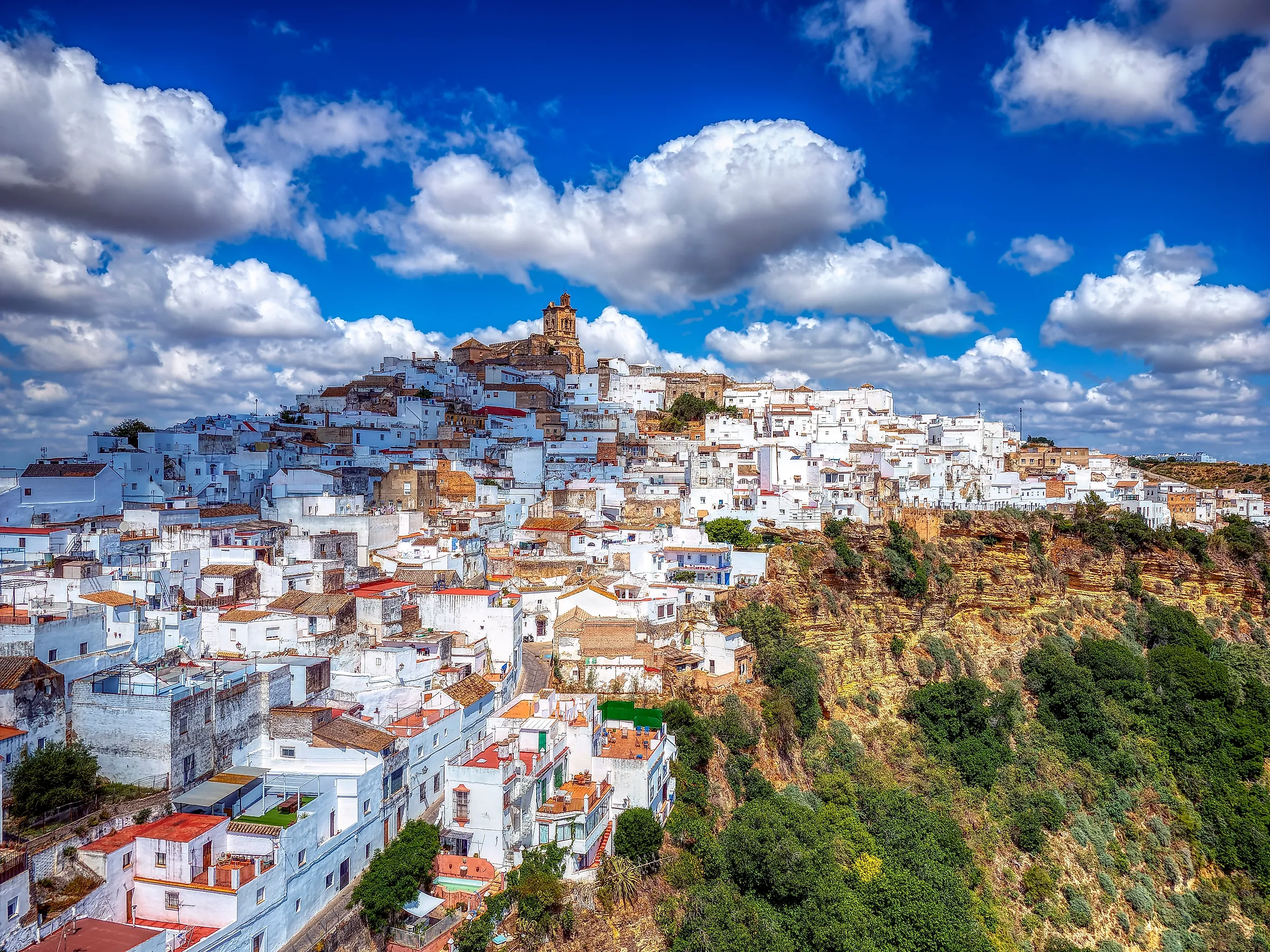
Arcos de la Frontera, population 31,046 as of January 2024, is built along a dramatic sandstone ridge above a bend in the Guadalete River, its whitewashed houses crowding right up to the cliff edge, not unlike nearby Ronda, though considerably less discovered. The Basílica Menor de Santa María de la Asunción, built over the remains of a Visigothic temple and later a mosque, anchors the Plaza del Cabildo, the town's main square, alongside the ruins of the Castillo de Arcos, an 11th-century fortress now in private hands. For recreation, the Arcos Reservoir below town offers kayaking and paddleboarding through several local outfitters, and the surrounding Sierra de Cádiz countryside is popular with cyclists and hikers. Home prices are notably low at €1,250 per square meter as of July 2026 per idealista, well under the national average. For retirees who want a classic pueblo blanco with water sports on the doorstep rather than just mountain views, Arcos is a rare combination.
Trujillo, Extremadura

Trujillo, population 8,619 as of January 2024, is a walled Renaissance town in inland Extremadura, best known as the birthplace of conquistador Francisco Pizarro. His Statue of Francisco Pizarro, an equestrian bronze by American sculptor Charles Rumsey, dominates the grand, sloping Plaza Mayor, ringed by Renaissance palaces built with New World fortunes, including the Palacio de Piedras Albas and the palace of the Marquis of the Conquest. The hilltop Trujillo Castle, a Moorish-era fortress later expanded by Christian rulers, has doubled as a filming location for Game of Thrones and House of the Dragon. Storks nest on nearly every rooftop and church tower in town, and Trujillo makes a workable base for birdwatchers, with Monfragüe National Park, one of Europe's premier sites for vultures and eagles, about 48 kilometers and a 40-minute drive away. Home prices are the lowest on this list at €717 per square meter as of June 2026 per idealista, a fraction of the national average and a reflection of Extremadura's status as one of Spain's least-visited regions. For retirees willing to trade coastline for landlocked history and genuine affordability, Trujillo is worth a serious look.
Nine Ways To Retire In Spain Without The Crowds
Skip the Costa del Sol's high-rises and the Costa Blanca's timeshare towers, and Spain still has small towns where a modest retirement budget stretches a long way, whether that means a whitewashed hilltop village in the driest, sunniest south or a rain-soaked green valley in the north. Across Sitges' clifftop museums and Trujillo's stork-topped rooftops, these nine towns share a population under 50,000, home prices at or well below the national average, and, crucially, something to actually do once the unpacking is finished: a coastal path, a wine festival, a mountain trail, or a river to paddle. For readers still weighing bigger cities against small-town life, WorldAtlas's 8 Best Places To Live In Spain In 2026 is a useful next stop, but for the friendliest, smallest-scale version of Spanish retirement, the small towns celebrated for their warmth are hard to beat, and these nine belong firmly on that list.