8 Fairy-Tale Small Towns In Spain
When people think of Spain, visions of memorable cuisine, respected wine traditions, and sun-soaked beaches often come to mind. That impression, however, captures only part of what the country offers. Beyond famous landmarks and well-known destinations lies a Spain shaped by welcoming communities, regional food markets, and architecture rooted in centuries of local history. Between rolling countryside, clear coastal waters, and mountain landscapes, smaller towns host long-standing festivals and daily rituals that continue to shape local life. Cobblestone streets pass by centuries-old homes, plazas serve as gathering places, and traditions remain woven into everyday routines. These small towns offer a slower and more intimate way to experience Spain, inviting travelers to look beyond the usual routes and engage with places where culture and history remain closely tied to the present.
Hondarribia

The Basque town of Hondarribia, located near the French border, is known for its brightly painted buildings and compact historic center. Stone walls enclose the old town, where Arma Plaza functions as the main square and a gathering place for residents and visitors. Narrow streets lead past preserved medieval structures, many of which house restaurants and local shops. Rising above the town, the Hermitage of Guadalupe remains visible from many vantage points. Dedicated to the town’s patron saint, the 16th-century sanctuary plays an ongoing role in local traditions, including an annual pilgrimage through the surrounding fields.
Closer to the water, Playa de Hondarribia offers a relaxed shoreline lined with cafés and bars, particularly in the Marina neighborhood. This area blends everyday life with seasonal tourism, creating a setting where fishing boats, seaside promenades, and outdoor dining coexist. Hondarribia’s mix of fortified history, religious tradition, and coastal access gives it a strong sense of place shaped by centuries of cross-border influence.
Trujillo

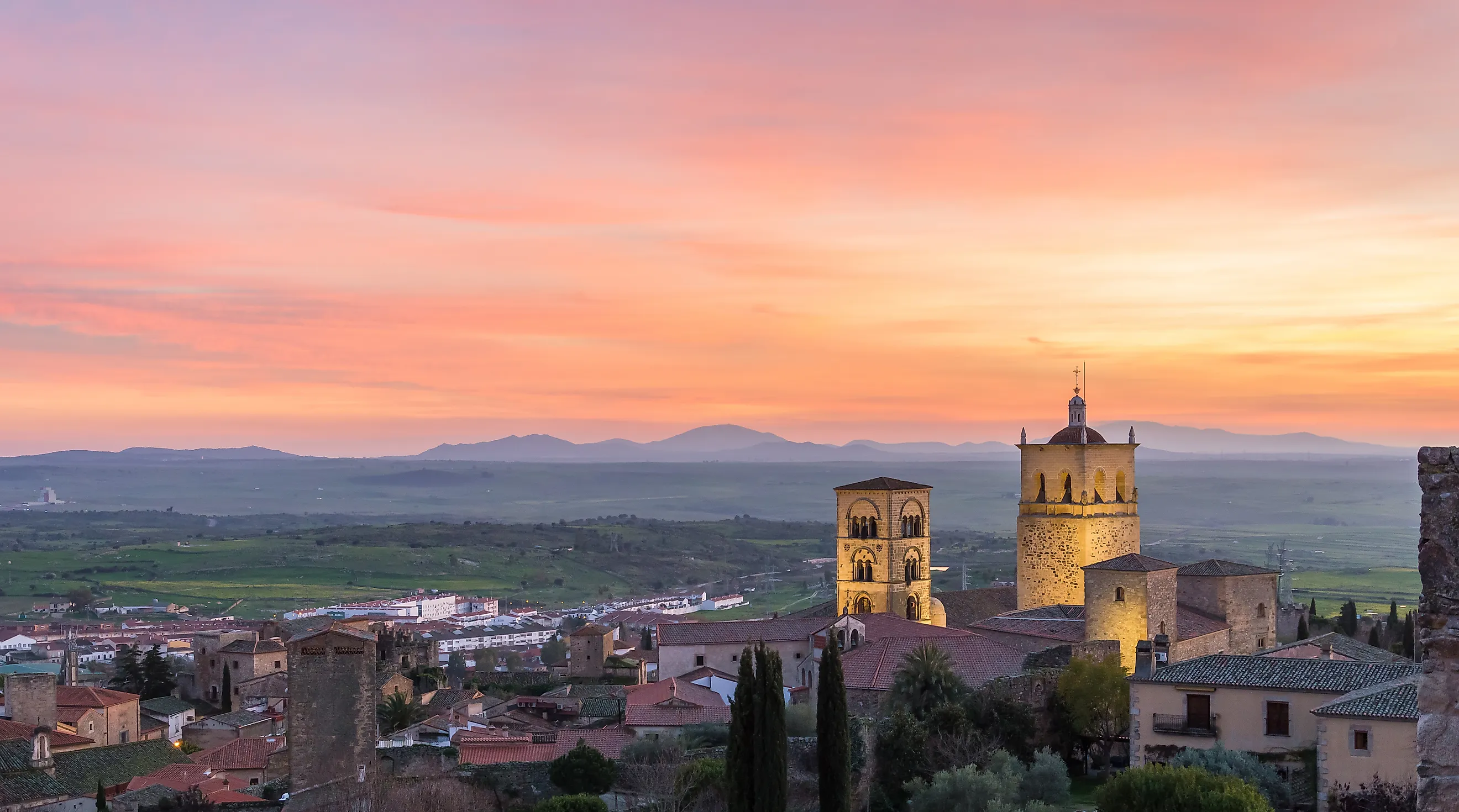
The town of Trujillo, set in Extremadura, is defined by its concentration of historic landmarks and elevated setting. Plaza Mayor serves as the focal point of town life, anchored by the equestrian statue of Francisco Pizarro. Surrounding the square are arcaded buildings, churches, and former palaces that reflect Trujillo’s importance during Spain’s colonial era. Cafés and small shops now occupy many of these structures, allowing visitors to move easily between historical sites and modern uses.
Overlooking the town, the Castillo de Trujillo, also known as the Alcazaba, stands on a hilltop reached by a steep climb. Built during the Moorish period, the stone fortress includes defensive towers and characteristic horseshoe arches. Its elevated position provides wide views across the surrounding plains and has drawn attention as a filming location for historical television productions. Together, the castle and the plaza create a strong visual link between Trujillo’s medieval past and its role in later chapters of Spanish history.
Peñíscola

Peñíscola sits along the Mediterranean coast, where a fortified peninsula extends into the sea. Dominating the skyline is the Castell de Peñíscola, a medieval fortress associated with Pope Benedict XIII. The castle hosts exhibitions and guided visits that explore its religious and military history, while its elevated position allows visitors to look out across the coastline and town below.
Near the fortress stands the Peñíscola Lighthouse, a longstanding navigation point that remains a popular stop for views over the water. Within the old town, El Bufador draws attention as a natural blowhole formed in the rock, where waves force air and water through narrow openings beneath surrounding buildings. Adding a different dimension to the visit, the Magic Museum Yunke presents exhibits and performances focused on the history of illusion and stage magic in Spain. Peñíscola balances coastal scenery with layered cultural experiences tied to its maritime past.
Cudillero

Cudillero is a fishing village along the Cantabrian Sea, recognized for its steep hillside layout and curved harbor. Houses painted in varied colors rise above the port in tiers, creating a natural amphitheater facing the water. Daily life remains closely connected to fishing traditions, and the harbor continues to function as a working space as well as a social center.
Visitors often take to the water through guided excursions offered by local operators such as Cudillero Aventura, which explore nearby cliffs and sea caves. A short distance away, the Pedreru de la Concha de Artedo provides a beach setting of rounded stones and sand that is frequently noted for its upkeep. After time outdoors, harborfront restaurants serve seafood dishes sourced from local waters. Dining along the port offers views of boats returning at dusk and reinforces the town’s close relationship with the sea.
Santillana del Mar

Santillana del Mar is known for its preserved medieval streets and concentration of cultural institutions. Stone buildings, historic churches, and small museums line the town’s core, creating a setting shaped by centuries of religious and civic life. Nearby, the National Museum and Research Center of Altamira introduces visitors to the region’s early inhabitants through exhibits connected to the famous cave paintings discovered in the area.
The museum includes a detailed replica of the Altamira Cave, allowing close viewing of Paleolithic art while protecting the original site. Within the town itself, the Museum of Torture and Inquisition presents historical displays focused on judicial practices and punishment methods used in earlier periods. Together, these institutions offer varied perspectives on human history, combining archaeological study with social history. Santillana del Mar presents a concentrated look at how art, belief, and power shaped daily life across different eras.
Frigiliana

Frigiliana sits in the hills of southern Spain near Málaga and Nerja, offering elevated views over the surrounding countryside and coast. The village is marked by whitewashed buildings, narrow stairways, and visible Moorish influences in its layout. One of its most notable sites is El Ingenio, the Renaissance Palace of the Counts of Frigiliana. Built in the late 16th century, the structure incorporates stone from an earlier fortress and once housed a sugar cane honey factory that continues to operate in traditional form.
Outdoor activities extend beyond the village center. Hikers often follow routes along the Río Higuerón, tracing parts of the river through a landscape that opens toward the Mediterranean. Back in town, small artisan shops line the streets, while cafés such as Cafeteria Almijara offer seating on terraces overlooking the rooftops below. Frigiliana combines historical industry, local craftsmanship, and outdoor access within a compact hillside setting.
Setenil de las Bodegas

Setenil de las Bodegas is distinguished by homes and streets built directly into overhanging rock formations. Streets such as Calle Cuevas del Sol and Calle Cuevas de la Sombra pass beneath massive stone ledges, where buildings blend natural rock with constructed walls. This distinctive layout developed as residents adapted architecture to the terrain rather than altering it.
In the town center, Bar La Tasca operates beneath the cliffs, offering a dining experience shaped by its unusual setting. Above the town, the remains of the Castillo de Setenil de las Bodegas sit on higher ground. The fortress ruins provide elevated views over the clustered white buildings and the surrounding landscape. Setenil’s integration of geology and daily life creates an environment where natural formations play a constant role in how the town functions.
Morella

Morella is a fortified hilltop town enclosed by stone walls and approached through steep streets. The Castell de Morella rises above the settlement, forming one of the most imposing historic structures in the region. Interpretive plaques throughout the site explain the fortress’s long history, which includes Roman, Moorish, and Christian periods.
Within the town, narrow streets connect churches, civic buildings, and small museums. Temps de Dinosaures introduces visitors to regional paleontology and geology through fossil displays and educational exhibits. Outside the town walls, Saltapins Adventure Park offers rope courses and elevated walkways set among forested terrain. Morella combines defensive architecture, educational attractions, and outdoor recreation within a compact mountain setting that reflects its strategic past.
Where History and Daily Life Intersect

Across Spain, small towns often preserve layers of history that remain visible in everyday routines. In these communities, castles overlook modern streets, museums sit beside working harbors, and religious traditions continue alongside contemporary life. Rather than relying on well-known destinations alone, exploring these towns reveals how regional identities developed and endured over time. Architecture, foodways, and local customs remain closely tied to place, shaped by geography and shared memory. Together, these towns illustrate a side of Spain rooted in continuity, where history is not confined to monuments but remains present in how people live, gather, and move through their surroundings.