8 Nicest Small Towns In Spain
Spain’s small towns reveal some of the country’s most distinctive landscapes and historic settings. In these places, medieval streets wind past stone churches and hilltop fortifications, fishing boats still line protected harbors, and vineyards climb the slopes above old villages. Their compact centers make it easy to experience centuries of architecture, regional traditions, and everyday life within just a few walkable blocks.
The following eight towns represent some of the nicest small communities across Spain, each known for a defining setting or landmark. From whitewashed coastal villages to fortified medieval towns in the interior, these destinations highlight the quieter side of Spanish travel beyond the country’s largest cities.
Albarracín

If you only have time to visit one town while in Spain, let it be Albarracín. This medieval village is as pretty as they come, home to a breathtakingly stunning cathedral and a massive castle, the Castillo de Albarracín. Albarracín is known for its abundant water, and the Romans also built an aqueduct here. You can visit the Albarracín-Cella aqueduct today, as well as the cathedral that was built over an ancient mosque. After exploring the mosque, you can visit the castle, which was built in the 10th century, and see the beautiful houses constructed around it. As you pass by these places, you will also notice the medieval walls of the town everywhere. You can make your way along these walls and climb the old defensive tower, the Torre del Andador, to get a magnificent view of the village. Other things to do include taking a lovely walk along the Guadalaviar River or hiking in the Rodeno Pine Forest Natural Area, a couple of miles away.
Cadaqués

Scenic Cadaqués is an authentic, whitewashed town in Catalonia's Costa Brava. This beautiful village inspired many a 20th-century artist, and it is not hard to see why. Salvador Dali chose it for his home, as did several others, and the town is featured in some of their works. When you arrive, you follow in some of these artists’ footsteps, walking where they did when they explored the streets of Cadaqués. Stroll along the Avinguda Victor Rahola for great views of the historic center of town. Or, take a leisurely walk down the seafront promenade.
There are gorgeous hiking opportunities too, including the coastal trail that takes you from town to the Far de Cala Nans and back. You will see the trail markers near the Church of Santa Maria. Keep in mind that there are some narrow, slippery sections, so take care when climbing over the rocks and coves. At the end of the trail, before you turn back to town, you can explore the historic lighthouse and take in the wonderful views of the ocean. In the Cap de Creus Natural Park, you will find both coastline and mountains. And, if you want to explore some more of the town itself, you can head to the Salvador Dali House-Museum, where the surrealist painter once lived.
Cudillero

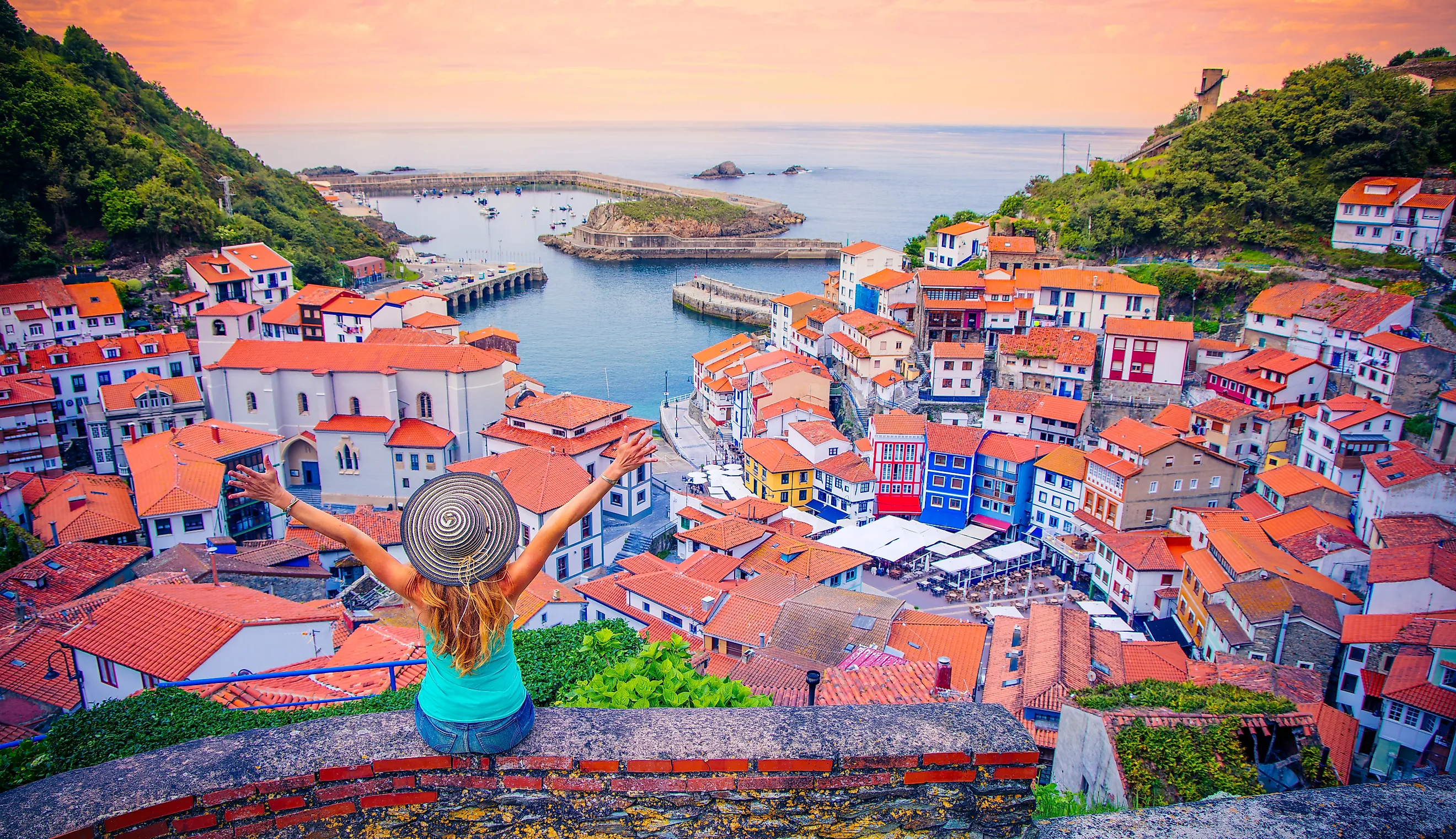
Cudillero is another nice Spanish town shaped like an amphitheater that lies on the northern coast in the Principality of Asturias. Cudillero is popular for its beauty and mild temperatures, especially when the summer heat is overwhelming in big cities like Madrid. During your visit, you can make your way to the ‘amphitheater’ where you will find several lookout points where you can enjoy the views of the Bay of Biscay. At around ten kilometers long, the Ruta de los miradores will take you past each of the well-known lookouts.
Cudillero also has a small promenade next to the sea for views from a different angle. When you explore the town, remember to stop by the Capilla del Humilladero, a Gothic chapel dating back to the 13th century. It is the oldest building in town, and several of its ancient vaults were rediscovered during its 2000 restoration. And, if you want to take a couple of selfies using an impossibly gorgeous backdrop, take the twenty-minute drive to the incredible Playa del Silencio.
Combarro

The historic village of Combarro sits in the province of Pontevedra, Galicia, in the northwestern region of the country. Like so many other nice towns in Spain, Combarro is considered one of the most picturesque. Combarro is home to more than 60 hórreos (traditional stone granaries), of which around thirty are lined directly with the shoreline. These structures were built in the 18th and 19th centuries and are raised on stone pillars or stilts to protect grain from moisture and pests. So, when the tide is high, these granaries appear to float above the water, making for a spectacular sight.
The town is also known for its granite cruceiros (wayside crosses) within the old quarter. The crosses were erected in the 18th century and feature the figure of the Virgin Mary facing the sea (to protect the fishermen) and the figure of Christ facing inland towards Combarro. After seeing these monuments, you can head out to sea on a mussel boat tour that departs from the local marina. The tour includes tastings of fresh mussels and regional wine.
Valldemossa

If you want to visit a nice town that is also historic and located on an island, Valldemossa is the place to be. Valldemossa is a historic village that sits on the island of Mallorca in the heart of the Serra de Tramuntana mountains. The village is around 20 minutes away from Palma de Mallorca and home to the Carthusian Monastery, where Chopin once spent an entire winter. You can visit the monastery, learn more about Chopin’s retreat, and climb the tower to look out over Valldemossa. The monastery was once a 14th-century palace for King Sancho, so it is absolutely saturated in Spanish history. You can make your way to the Tramuntana hills for hiking in valleys and cliffs. As the day winds down, drive to Port de Valldemossa, thirty minutes away, where you can watch a spectacular sunset.
Santillana del Mar

The medieval town of Santillana del Mar is situated inland from the Cantabrian Sea in the Cantabria region of northern Spain. It is a simply stunning historic place with cobbled streets and Romanesque architecture. The centerpiece is the Collegiate Church of Santa Juliana. The church is a prime example of Romanesque design, and its cloisters are covered with historic carvings. More history awaits at the Torre de Don Borja, a medieval tower that helped protect the town during the Middle Ages. If you want to see the religious art for which much of Spain is known, visit the Regina Coeli Diocesan Museum, located in a former Dominican convent. Here, you will find several paintings and sculptures that are being protected from deterioration.
Go even further back in time at the Altamira Cave, where you will find evidence of the Magdalenian people who created some of the best prehistoric artwork that has ever been discovered. Most of their paintings are of bison and were created more than 14,000 years ago. You can see the cave only from the outside as it is closed for preservation. But you can see a faithfully detailed replica of these paintings at the National Museum and Research Center of Altamira.
Besalu

Besalu is another medieval town that is famous for Romanesque structures. Located in the La Garrotxa comarca of the Girona province, Besalu is famous for its gorgeous 12th-century Romanesque bridge. The bridge, which provided access to the county villa's forts, features seven arches. It is one of the most beautiful structures classified as a national cultural heritage in the country. When you explore the rest of the town, you will see iron chairs hanging from staircases on buildings along Maestro Abraham des Catllar Street. These chairs are actually sculptures created and installed by artists in 1994.
As you continue your walk through the town’s medieval streets, you will come across the Rocafort Gate on Rocafort Street. The gate is the historic entrance to the town and sits at the point where a 12-meter wall once began, surrounding Besalu. Other sights include the ruins of the Church of Santa Maria de Besalu and the Castle of Besalu, built in the 10th century. For something a little different, you can make your way to Prat de Sant Pere Square to visit Circusland. This museum features exhibits on the circus that was previously the Museum of Miniatures and Microminiatures of Besalu.
Vejer de la Frontera

Finally, the last of the nice towns on this list is the whitewashed hilltop town of Vejer de la Frontera. This historic town sits 200 meters above sea level, on the right bank of the River Barbate in the province of Cadiz, Andalusia. During your visit, you can see the four arches that were once the main gateways into the town. These are Arco de la Villa, Arco de la Puerta Cerrada, Arco de la Segur, and Arco de Sancho IV. The most well-known is Arco de la Villa, and you can follow the road from the arch, which will take you from Plaza de España into the old town.
Near the Arco de la Puerta Cerrada, you will find the statue of La Cobijada. The statue depicts a woman wearing a Vejer costume, which consists of a cloak and skirt. These costumes are still worn during the annual Vejer festivals. If you visit the Arco de la Segur, you can also stop by the Iglesia Divino Salvador. This church was built on the site of an old mosque and dates back over 400 years. Wind down the perfect day in the perfect Spanish village by relaxing in the Casa del Mayorazgo, where flowers and plants adorn the walls, and you can climb a tower to enjoy the views over the town and towards the sea.
Take a Historic Journey into the Heart of Beautiful Spain
Spain is one of the world’s most popular tourist destinations. When you visit this country, you can have various experiences, including exploring big cities like Barcelona or Madrid, or getting lost in the history of the towns that beautify the landscape. Whether you are after artistic inspiration or you want to learn more about the prehistoric history of this part of the world, you will find this and so much more as you make your way through each town or village. Once you leave the busy centers behind, you will discover the charm that makes Spain one of the most enchanting places on Earth.