2026's Best Small Towns To Visit On The Chesapeake Bay
Almost every town on the Chesapeake Bay has a working waterfront and a museum in an old packing shed. That is the price of admission here, not what earns a place on a list like this one. These twelve made it on the odd stuff, the one detail each town is a little famous for and nobody nearby can copy. A cannonball is still lodged in a house wall in St. Michaels, a souvenir of the night in 1813 the town fooled a British fleet. In Crisfield, locals swear the whole downtown sits on a bed of old oyster shells, and in Cape Charles the streets carry fruit names a railroad man handed out in 1883. You almost certainly have a town in mind already, and it either earned a place here or it did not.
Cape Charles, Virginia

Railroad investor William L. Scott laid out Cape Charles, Virginia, in 1883 as the southern end of his New York, Philadelphia and Norfolk railroad, and he named the north-south streets for fruit grown on the Eastern Shore. Peach Street is still the main drag, and Peach Street Books fills a restored 1930 Pure Oil station with more than 10,000 new and used titles.
The town leans artistic for its size. Lemon Tree Gallery shows paintings and sculpture, At Altitude sells only aerial photography by landscape photographer Gordon Campbell, and the Local-Ish gallery carries work from two dozen area artists. At the edge of town, the Cape Charles Museum parks full-size vintage railcars and locomotives in a yard beside its dioramas and old industrial equipment.
Onancock, Virginia

In the 1880s, Baltimore steamers loaded sweet potatoes by the hundreds of barrels at the Onancock, Virginia, wharf. That same waterfront now runs recreational boats and the seasonal Tangier-Onancock Ferry out to Tangier Island.
Ker Place anchors the old port, which was chartered as Port Scarborough in 1680. Built between 1799 and 1806 for merchant John Shepherd Ker, it is one of the finest Federal mansions on Virginia's Eastern Shore and now houses the Eastern Shore of Virginia Historical Society, with a silver collection and a 1904 oystering log canoe inside. A few blocks on, the Samuel D. Outlaw Blacksmith Shop ran as a working smithy between 1927 and 1991 under its African American master blacksmith and now offers guided tours, while the Crockett Gallery and the North Street Playhouse keep a small arts scene going year round.
Crisfield, Maryland

Local lore in Crisfield, Maryland, holds that the "Seafood Capital of the World" paved its downtown over a bed of old oyster shells. The claim is hard to prove, but the seafood is not, and Chesapeake Seafood & Steaks on West Main Street serves soft shell crabs, clams, and mussels.
The J. Millard Tawes Historical Museum downtown traces the workboats of Tangier Sound and the evolution of the wooden duck decoy. Each fall the Crisfield Heritage Festival takes over the waterfront with crab-pot and net-making demonstrations, and the Ward Foundation runs its decades-old Chesapeake Challenge decoy competition on the grounds.
Cambridge, Maryland

Golden Girls star Bea Arthur grew up in Cambridge, Maryland, where her parents ran Frankel's department store, now Craig's Drug Store on a block of independent shops. Across Race Street, the Harriet Tubman Museum and Educational Center tells the abolitionist's story through exhibits, films, and walking tours of downtown.
Two traditions pull visitors back. Since 1934, the Rescue Fire Company has built the RFC Train Garden each December, billed as the country's oldest continuously running fire-department display and complete with a model of the Cambridge drawbridge. On Cambridge Creek, the Richardson Maritime Museum keeps a four-acre boatbuilding campus that now shelters the former presidential yacht Sequoia, in for a years-long restoration.
Oxford, Maryland

Oxford, Maryland, was one of colonial Maryland's two official ports of entry, named a seaport in 1683 and nearly bankrupted a century later when the Revolution cut off British trade. It trades in sailboats now, and the Tred Avon Yacht Club has raced on the river since 1931.
The Oxford Museum began in 1964 after residents dug up 18th- and 19th-century bottles and pottery shards around town, and its collection has grown past 2,000 artifacts. Nearby, the Water's Edge Museum uses art, photography, and historic maps to tell African American stories from the surrounding Tidewater.
St. Michaels, Maryland

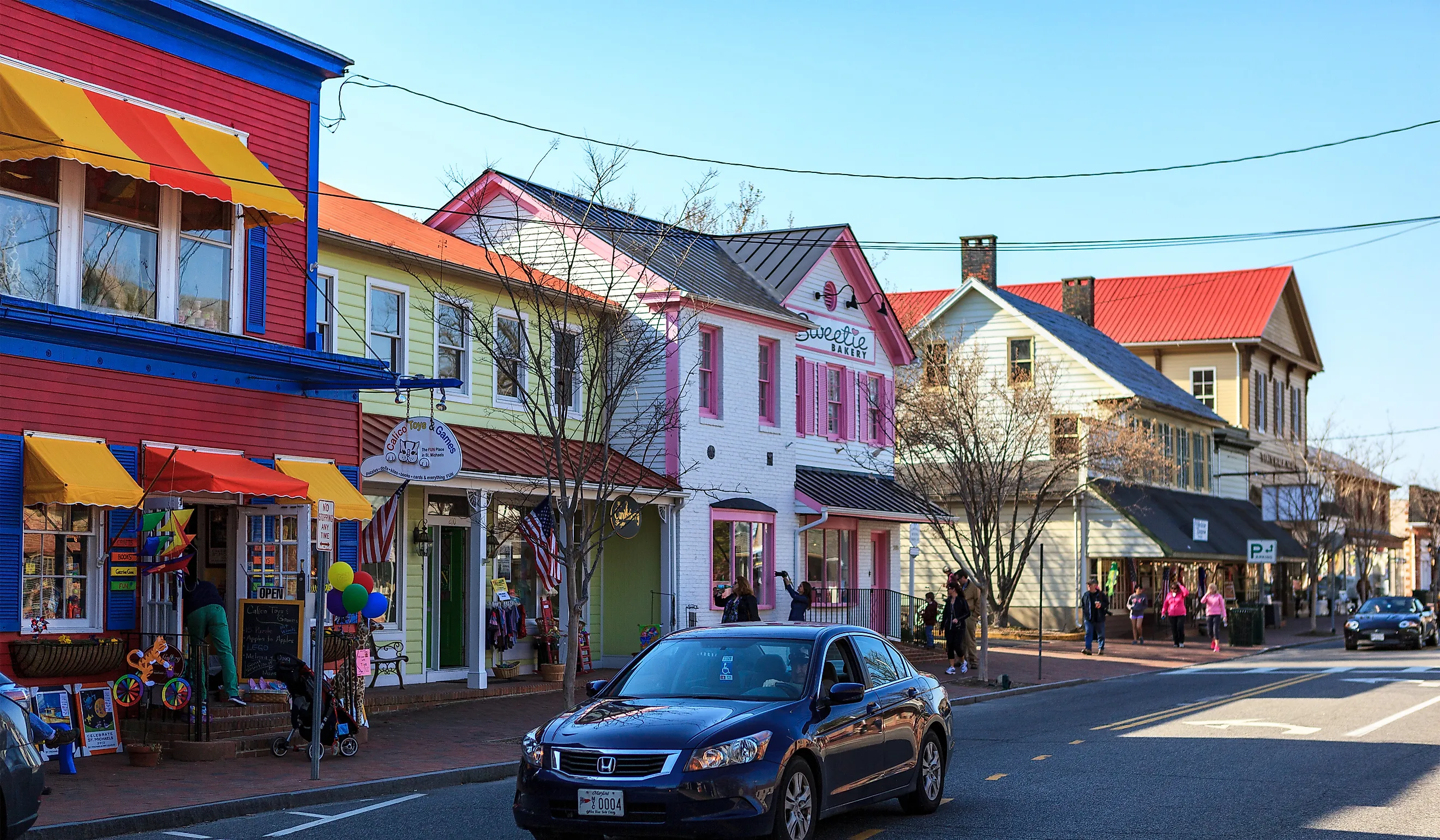
St. Michaels, Maryland, calls itself "the town that fooled the British." On an August night in 1813, residents hoisted lanterns into the trees so British gunners aimed high, though at least one cannonball still found a house. The St. Michaels Museum lays out that night alongside exhibits on Frederick Douglass and the town's Black community.
The Chesapeake Bay Maritime Museum spreads across 18 waterfront acres, with the Hooper Strait Lighthouse, a working boatyard, and an OysterFest each fall. A few blocks inland, the Classic Motor Museum shows restored vintage cars and holds outdoor pop-up shows in warm months.
Chesapeake City, Maryland

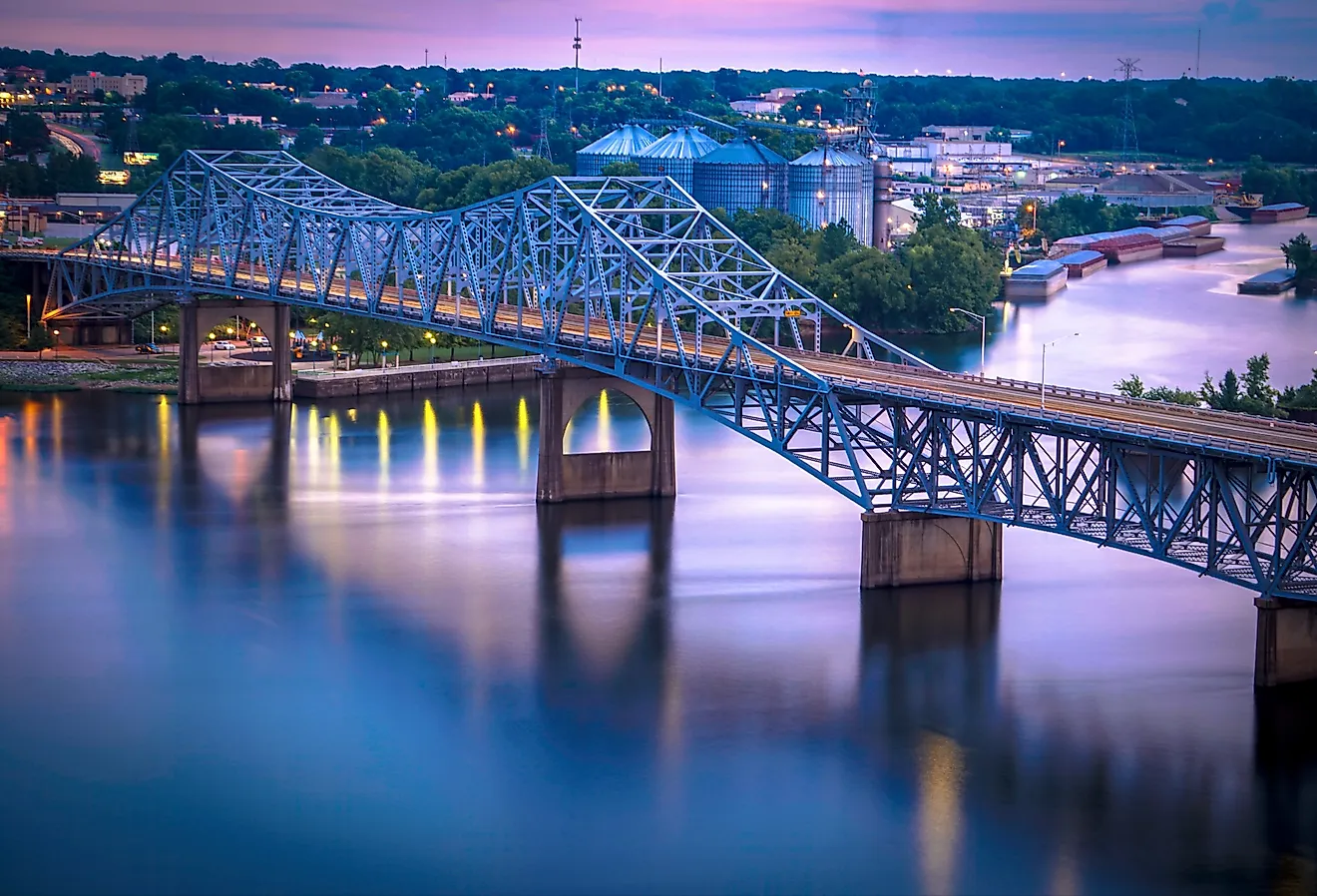
The Chesapeake & Delaware Canal cuts straight through Chesapeake City, and it is the only 19th-century American canal still working as a major shipping route. It opened in 1829 as a narrow lock canal, 66 feet wide at the surface, and the 1927 conversion to a sea-level channel ended the cargo transfers that kept the town busy, which left its 19th-century district frozen in place.
The C&D Canal Museum occupies the original stone pump house on the south shore, with the machinery that once raised the water level. The historic blocks around it hold Bayheads Brewing Company, the Tap Room Crab House for steamed blue crabs by the bushel, and Chesapeake Candy Works, which opened in a former bank in 2024.
Havre de Grace, Maryland

John O'Neill became the first keeper of Concord Point Lighthouse in Havre de Grace, Maryland, after firing the town's cannon alone against a British raid in 1813 and then talking his way out of capture. Visitors can climb the light in season and tour the Keeper's House across the street.
The lighthouse sits in Concord Point Park where the Susquehanna River meets the bay, at one end of a boardwalk promenade. The Havre de Grace Decoy Museum nearby displays working and decorative wooden ducks and runs the Decoy & Wildlife Art Festival each May. Anglers can fish the Congress Street pier and part of Tydings Memorial Park without a state license after a free registration.
Annapolis, Maryland

The Annapolis, Maryland, State House dome is held together with wooden pegs and iron straps, not a single nail, and the building is open to self-guided tours daily. The grounds include the restored Old Treasury Building, which dates to the 1730s and is the oldest in the complex.
Across Spa Creek, the Annapolis Maritime Museum runs Chesapeake exhibits and launches boats to the Thomas Point Shoal Lighthouse, an 1875 screw-pile light and National Historic Landmark that still guides traffic. Tours go inside on summer and fall Saturdays and sell out fast. For something lighter, Pirate Adventures sails the harbor with water cannons and a treasure-hunt story for kids.
Solomons, Maryland

Oyster merchant Isaac Solomon put a cannery on this sandy island in the 1860s and gave Solomons, Maryland, its name. The University of Maryland now runs the Chesapeake Biological Laboratory on the island's southern tip.
The Calvert Marine Museum covers the region's oystering past and keeps the 1883 Drum Point Lighthouse and an 1899 bugeye on its grounds, along with the J.C. Lore Oyster House, a 1934 packing plant and National Historic Landmark down the road. Out front, the Riverwalk follows the Patuxent, and dragon-boat teams race it each fall. The Pier serves the local oysters raw, fried, or steamed.
Urbanna, Virginia

Urbanna, Virginia, hosts the state's official oyster festival every November, when the streets close for a fireman's parade and a shucking contest. Off-season, the Urbanna Pearl Oyster Tavern serves them raw or roasted with Virginia beer and wine.
The town's visitor center and museum fill the James Mills Scottish Factor Store, a 1766 brick building where growers once swapped tobacco for cash and goods, and the last restored factor store of its kind standing. On the waterfront, Carefree Boat Club lets members reserve boats after a safety course.
Yorktown, Virginia

Cannonballs are still embedded in the brick of Thomas Nelson Jr.'s house in Yorktown, Virginia. Nelson signed the Declaration of Independence and, as wartime governor, reportedly ordered American gunners to fire on his own home after Cornwallis took shelter there. The National Park Service opens the house on a limited seasonal schedule, but the scars show year round.
The American Revolution Museum at Yorktown recreates a Continental Army camp and an 18th-century farm beside galleries on the war. From there, the Riverwalk follows the York River past the Watermen's Museum, which teaches boatbuilding, to the shops and restaurants of Riverwalk Landing.
A Working Bay, Still on Display
Half of these towns made their money packing oysters, and the packing houses are now the museums. The J.C. Lore Oyster House in Solomons, the Richardson campus on Cambridge Creek, and the Tawes museum in Crisfield all sit on the same waterfronts where the shucking happened. Urbanna and St. Michaels still serve the oysters at festivals each fall, and Havre de Grace and Crisfield still judge the decoys. The towns differ in scale, Annapolis with a state house and Onancock with a single playhouse, but each one keeps a piece of the bay's working past within a few blocks of the water.