Spain's 11 Best Retirement Towns Ranked
For a growing number of retirees, coffee on a terrace above the Mediterranean is a typical day in Spain. The appeal is partly financial, with everyday expenses roughly 25% lower than in the United States and rent nearly 40% cheaper. Most North Americans relocate on Spain's non-lucrative visa, which lets non-EU citizens live here without working if they show about €2,400 a month in passive income and carry private health insurance.
The climate ranges from the hot, dry summers of the southern coast to the cooler, greener north. Whether you lean toward sun-baked beach towns or misty coastlines, the 11 towns ranked below share what any retiree needs: accessible healthcare, a welcoming community, and plenty of natural beauty.
Nerja, Andalusia, Costa del Sol

Watch the sun set from the Balcón de Europa, Nerja's clifftop promenade, and it's easy to see why so many retirees never leave. This Costa del Sol town offers the postcard version of southern Spain without the flashy price tag. Burriana Beach is where locals spend their mornings, its chiringuitos serving fresh seafood at spots like Rincón del Sabor, while the nearby Nerja Caves open onto an archaeological site over 30,000 years old.

Healthcare runs on three tiers: Centro de Salud Nerja for public care, the English-speaking Nerja Medical Center for expats, and Hospital de La Axarquía a short drive away. For long-term care, Casa Residencia Hermanas del Buen Samaritano pairs senior residency with daily programming, while Costa Angels brings assisted-living help into residents' own homes. As for an active social life, Club Internacional de Nerja runs bridge, Scrabble, and art classes, AIC Nerja hosts mixers for American expats, and the Pabellón Municipal de Deportes keeps you moving with pools, yoga, and tennis.
Jávea (Xàbia), Costa Blanca

Few Costa Blanca towns pack in as much variety as Jávea, with an Old World historic district, Michelin-caliber dining at Tula Restaurante, and coves like Cala La Granadella that still feel undiscovered. Spend days in the walkable Old Town, its whitewashed tosca-sandstone buildings surrounding the Church of San Bartolomé, which once doubled as a fortress. Browse the produce and tapas stalls of the Municipal Market next door. Down at the coast, turquoise coves make for easy snorkeling, and inland the Costa Blanca Walkers organize hikes through Montgó Natural Park.

Jávea's retiree community is exceptionally well organized. The local U3A (University of the Third Age) chapter runs book swaps, language classes, and day trips, a built-in social calendar for newcomers, and come summer the Fiesta de San Juan brings bonfires, fireworks, and bull-running. Jávea Pueblo Health Center handles routine visits and 24/7 emergencies, and the private San Carlos Medical Centre near Arenal Beach is another option, while Hospital de Dénia is 20 minutes away. Jávea is also home to Bon Retir, a family-run residential and respite community with round-the-clock staff.
Peñíscola
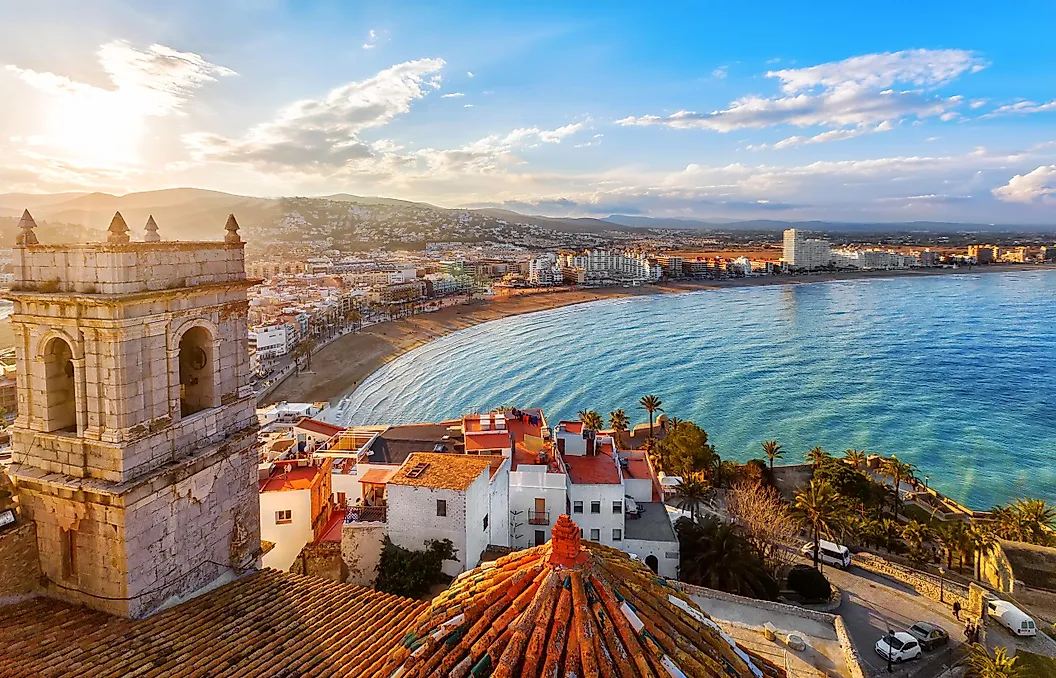
Rising from a rocky peninsula on the Costa del Azahar, Peñíscola looks straight out of the movies. Its fortified old town is wrapped in medieval castle walls, with the Mediterranean Sea lapping at it on three sides. The centerpiece is Peñíscola Castle, above pedestrian-only cobblestone streets that lead past white houses and restaurants like El Pescador Ermitaño. Playa Norte stretches just beyond the walls, while inland the Sierra de Irta Natural Park offers miles of open countryside for hiking and biking.

Medical care is comfortingly simple. The 24/7 Centre de Salut de Peníscola sits in Old Town, Hospital Comarcal de Vinaròs is a 20-minute drive, and the private Quirónsalud group handles complex care and international patients. Retirees after an affordable, service-rich residence can look at Residencia Benedicto XIII, which covers cooking, cleaning, and hairdressing. Culturally the town punches above its size, with the Peñíscola International Social Film Festival, a Patron Saint's Day Fiesta of dancing and fireworks, and casual meetups like weekend language exchanges listed on Eventbrite.
Ronda

Ronda doesn't ease you in. The stone Puente Nuevo bridge spans the 300-foot-deep El Tajo Gorge right at the heart of town, joining Old Town to New Town with views that stop first-timers cold, and it's one of the more affordable mountain retreats in Málaga province. New Town centers on the 18th-century Plaza de Toros de Ronda, considered the birthplace of modern bullfighting. Old Town is all Moorish architecture, cliffside gardens, and eateries like La Barfina Ronda. The tree-lined Alameda del Tajo is ideal for daily walks, with the Sierra de Grazalema Nature Reserve and the vineyards of the Serranía de Ronda just outside town.

Community life has a cultural feel, best seen at the annual Ronda Romántica Festival of concerts, period costumes, and craft fairs. For everyday care, Médicos de Ronda is a private multi-specialty clinic covering cardiology through physiotherapy, and Serranía de Ronda Emergency Hospital handles serious cases. Two retirement options serve the area: Seniors Residencia Ronda, a residential and day center three minutes from town, and Residencia Hogar Parra Grossi, which adds day programs and home care for those staying independent longer.
Mahón (Maó), Balearic Islands Province

History runs deep in Mahón, capital of Menorca in the Balearic Islands, where settlement dates back thousands of years. Carthaginian, Roman, and British influences sit side by side around Mahón Harbor, one of the largest natural ports in the Mediterranean. The old village of Trepucó holds prehistoric monuments, the 13th-century Gothic Church of Santa Maria is the centerpiece of the medieval core, and just outside town Es Grau Beach and the reserves at Illa d'en Colom and Cap de Favàritx draw locals for kayaking and birdwatching.

As with much of Europe, daily life revolves around markets and slow mornings. Craft vendors line the pedestrian Carrer Nou, while Mercat des Peix and Mercat des Claustre serve tapas and artisan goods under one roof, and a tasting at the historic Xoriguer Gin Distillery is practically a rite of passage. Mahón is also the reputed birthplace of mayonnaise and namesake of Mahón cheese, so culinary specialties abound. Healthcare includes the public Hospital Mateu Orfila, the private Clínica Juaneda Mahón, and the Dalt Sant Joan Health Center, and for senior care both Residencia Geriátrica Asistida del Ayuntamiento de Mahón and Residencia Quarter de Santiago serve residents 60 and up.
Altea, Costa Blanca

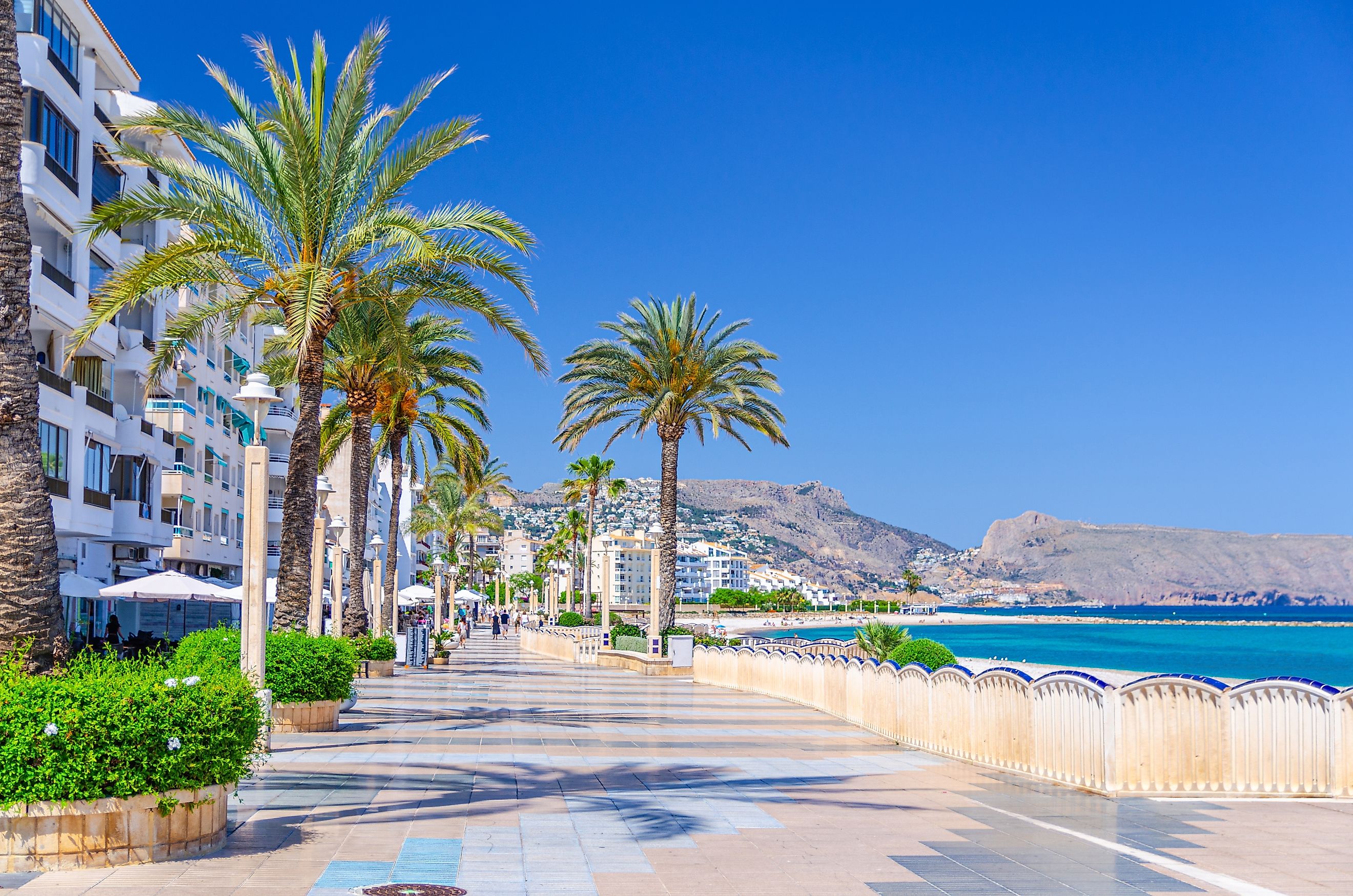
The blue-domed Church of Nuestra Señora del Consuelo is the first thing most visitors notice about Altea, its tiled roof visible from nearly every angle of this whitewashed hillside town. It suits a place built around calm, with pebbled beaches and an unhurried pace even in peak season. Playa El Bol and the coves nearby stay uncrowded, their calm water good for kayaking and diving, while the seaside Paseo Marítimo Joaquín Planell runs past popular restaurants like Mood. The climb into Old Town rewards you with the Bellaguarda Watchtower, galleries left from Altea's artist-colony days, and small museums like the Casal del Festero.

Socially, Altea keeps residents active. Inspire Altea organizes yoga, tapas walks, and hikes, the Altea Life Facebook group runs coffee meetups, and the Altea Hills Tennis Club invites a bit of friendly competition. Healthcare is well distributed, with Altea Medical Centre in the town center, the multilingual private EuroClínica La Mar, and two nearby hospitals - IMED Levante with 24/7 emergencies and Hospital Clínica Benidorm with an international patient department. For residential care, Villa de Altea Les Boqueres Residence offers a quiet setting attentive to residents' medical, social, and personal needs.
Calpe (Calp)

Dominated by the towering silhouette of the Peñón de Ifach, Calpe pairs dramatic scenery with a walkable center and a welcoming expat community. Climb or simply admire the 332-meter (1,089-foot) limestone rock at the Peñón de Ifach Natural Park, one of the most recognizable landmarks on Spain's eastern coast. Wander the Old Town, once ringed by 15th-century walls built against pirate raids, past the Torreó de la Peça defense tower and the parish church of Nuestra Señora de las Nieves, then head to the Blue Flag Arenal-Bol Beach or to Las Salinas de Calpe, the former salt flats turned birdwatching wetland.

Calpe's healthcare is well equipped for its growing population. Centro de Salud de Calp is the main public center, the newly permanent La Fossa Medical Center serves the La Fossa area, HCB Calpe covers private specialty care, and IMED Hospital Teulada is a 15-to-20-minute drive. Senior living is strong, too. The Colina Club offers independent-living apartments in the hills with sea views, an on-call alarm, and a free minibus, while Residencia para Mayores Calpe and Colisée Calp provide fuller care. The town also has one of the Costa Blanca's most active English-speaking retiree scenes, with U3A Calpe meeting monthly at the Casa de Cultura, plus lawn bowls at the Calpe Promenade Bowls Club and walking groups on the Peñón.
Mojácar

Perched at the foot of the Sierra Cabrera mountains, Mojácar Pueblo is a maze of whitewashed houses, narrow lanes, and hidden courtyards that still carries the imprint of centuries of Moorish rule. Climb the tiered streets to the Mirador del Castillo for wide Mediterranean views, then drop to the Fuente Pública de Mojácar, the historic public fountain whose 14 spouts have supplied the town for centuries. Its plaza saw the famous 1488 exchange between the town's last Muslim mayor and an envoy of the Catholic Monarchs. At sea level, Playa de Mojácar runs for miles of golden coastline, while the Sierra Cabrera offers quiet hiking and biking inland.

Healthcare is well covered. Consultorio Médico Mojácar Pueblo and Consultorio Mojácar Playa handle public care, private options like Mojácar Medical Center offer bilingual, English-friendly service, and Hospital La Inmaculada in nearby Huércal-Overa provides fuller services. Residencia de Mayores Jardín de Mojácar, the town's first dedicated retirement home, sits 328 yards from the beach. Socially there's golf and tennis at the Marina de la Torre resort, the early 20th-century Casa Canana museum, and live music at terrace venues like Ankara Beach Terrace. Come summer, don't miss the Night of the Candles Festival (Noche de las Velas), when the Pueblo cuts its electric lights and glows by candlelight beneath the Perseid meteor shower.
Cudillero

Set above a tight horseshoe of cliffs on Spain's Costa Verde, Cudillero is a working fishing village where brightly painted houses stack up the hillside toward the sea. Its cooler climate, dramatic landscape, and close-knit community suit retirees trading crowded coastlines for something quieter, a point made clear the moment you look down at Cudillero Harbor, still a working port. Follow the marked trail up to the Cudillero Lighthouse, part of a signposted route of miradores that passes the Mirador de la Garita, or make the trip to Playa del Silencio, a secluded shell-shaped cove reached by a cliffside staircase near Castañeras.

Healthcare is led by Centro de Salud de Cudillero, a 24-hour public center, with the Oviñana and San Martín de Luiña clinics serving outlying villages and Hospital San Agustín a 25-minute drive for complex needs. For long-term living, Residencia Casa del Mar offers sea-view living with 33 residences, and the Centro de Día de Cudillero provides day programs without a full move. The social calendar runs on tradition and food, featuring a Friday artisan market, and, down in Plaza de la Marina, seafood and cider tastings, with caldereta fish stew and cider poured Asturian-style from a height. Guided village trails marked with sailboat and anchor symbols wind up to viewpoints like the lighthouse.
Luarca

Known locally as "the white village," Luarca curves around an S-shaped cove between steep green cliffs, its whitewashed houses tumbling toward the sea. Good quality of life, a scenic harbor, and accessible healthcare make this Asturian town worth a look, starting with a walk along Luarca Harbor, still home to a working fleet and cafés like Muelletres. Climb to the Luarca Lighthouse and the chapel of La Atalaya for views over the cove, and don't miss the clifftop cemetery carved into the rock, resting place of Nobel laureate Severo Ochoa. Down by the beach, a wooden-step trail leads through the woods to the Fonte Baxa Gardens, a private botanical oasis of centuries-old trees and fountains, before an afternoon on Playa de Luarca.

For everyday care, Centro de Salud de Luarca is the public center, while Asistencia Médica Occidental S.L. (Hospital de Luarca) provides private specialty care and Hospital Comarcal de Jarrio is a 15-minute drive for larger needs. For long-term senior care, Hospital Asilo de Luarca Gestión Privada has deep local roots. Founded in 1895, it runs today as a private non-profit residential center with nursing, physiotherapy, and psychological support. Luarca's biggest social draw is the Fiestas de San Timoteo each August, when fireworks and an open-air verbena give way to a procession of pilgrims in traditional dress, led by bagpipers, up to the hermitage of San Timoteo.
Villaviciosa, Asturias, Costa Verde

Curling around the tidal wetlands of the Ría de Villaviciosa, this Asturian town pairs an affordable cost of living with a walkable center, strong local healthcare, and an active community calendar, set against some of the greenest countryside on Spain's northern coast. The Ría ris a nearly 4-square-mile partial nature reserve of tidal flats that ranks among the Principality's most important wintering grounds for European waterfowl. In the cobbled Old Town, arcaded buildings frame lively squares, while the pre-Romanesque Church of San Salvador de Valdediós, consecrated in 893, survives just outside town with horseshoe arches and mural paintings across its three naves. For beach days, Blue Flag-certified Rodiles Beach backs its sand with dunes and woodland.

Local healthcare centers on Centro de Salud de Villaviciosa, a public clinic regional officials have called a benchmark for Asturias, with the Hospital Universitario de Cabueñes and private Hospital Begoña in nearby Gijón about 20 minutes away. Residencia Nuestra Señora del Portal is a municipally owned care home with on-site nursing. The social calendar runs on cider and community. Locals gather Wednesdays at the Plaza de Abastos market, and the town sits at the heart of Asturian cider country, whether you tour the century-old Sidra El Gaitero or the family-run Sidra Castañón. Summer brings the Festival de la Ría concert series at the Iglesia de Santa María de la Oliva, and September's Fiestas del Portal fills the streets with a tortilla-and-empanada competition, rural sports, and parades.
Live your golden years in beautiful Spain
Ronda's Puente Nuevo and the candlelit streets of Mojácar during the Night of the Candles prove that retiring in Spain doesn't mean choosing between beauty, affordability, and community. You can have all three, whether it's the Mediterranean warmth of Nerja's Burriana Beach, the cider country around Villaviciosa, or the misty calm of Luarca's harbor. Each town offers its own version of the good life, with healthcare, housing, and social connection built in.
No two retirements look the same, and the right town comes down to choices and priorities, like a milder Mediterranean climate versus the green Asturian coast, or a lively expat scene versus a quieter local pace. But with a manageable cost of living, a clear path to residency through the non-lucrative visa, and no shortage of scenery, Spain remains one of the most rewarding places in the world to spend your next chapter. All that's left is deciding which landmark you'll admire from your new front porch.