8 Best Places To Live In Spain In 2026
Americans keep landing in Spanish towns where you can sell the car and walk to everything. The public healthcare here routinely ranks among the world's best. Winters stay mild enough to skip the heavy coat. Spain closed its golden-visa program in April 2025. Most newcomers now arrive on a non-lucrative or digital-nomad visa. These eight towns each solve a different puzzle. Some put you on a warm beach. Others drop you into terraced wine country or a walkable old quarter with deep history.
Nerja

Roughly 3 kilometers up the coast from Nerja, in the hills above the village of Maro, the Nerja Caves hold the widest natural column on record, a 32-meter formation that has held a Guinness World Record since 1989. That draw sits at one end of a town that has kept its whitewashed Andalusian character while the resorts farther west sprawled. Nerja anchors the eastern end of the Costa del Sol, about an hour's drive east of Málaga, and it trades the crowds of the western coast for a slower rhythm and open coastline.
Life here leans outdoors. Residents walk the Balcón de Europa, a clifftop promenade built on the site of an old watchtower, and drop down to Burriana Beach for calm water and seafront restaurants. Each summer the caves host the International Festival of Music and Dance, staged for the natural acoustics of the chambers. For serious medical needs, the Hospital Comarcal de la Axarquía sits about 25 minutes away in Vélez-Málaga, with a public health center and pharmacies in Nerja itself.
Ronda

A 120-meter gorge splits the town of Ronda in two, and the Puente Nuevo bridges it. Completed in 1793 after more than three decades of work, the stone span is the defining image of this plateau town in the Andalusian interior. On the far side sit cobblestone streets, palace courtyards, and the Plaza de Toros, a 1785 bullring widely counted among the oldest in Spain. Wineries and olive groves ring the Serranía de Ronda beyond the town, which makes the area a genuine draw for anyone who cooks and drinks well.
The eating is a reason to stay. Tragatá turns out inventive tapas from chef Benito Gómez, Bodega San Francisco pours Serranía de Ronda wines in a converted cellar, and smaller kitchens across the old town serve regional cooking built on local goat cheese, game, and wine. When the appetite settles, residents walk the tree-lined Alameda del Tajo, a 19th-century park that runs to a balcony at the very lip of the gorge.
Priego de Córdoba

The Barrio de la Villa in Priego de Córdoba is a maze of narrow whitewashed lanes, flower-covered balconies, and small plazas, and its Moorish street plan has survived largely intact. That old quarter sets the tone for a town of the Subbética mountains that rewards living on foot. Boutiques, cafés, churches, and museums all sit within a walk of one another, which makes daily errands a stroll rather than a drive.
The surrounding olive groves are more than scenery here. Priego sits at the center of a protected olive-oil denomination, and its markets are stocked from the groves at the town's edge. The Fuente del Rey, an 18th-century fountain with dozens of water spouts and long benches, is the town's gathering point for an afternoon walk. Families settle here for the practical mix of schools, health services, and parks packed into a compact, low-traffic town.
Dénia

Denia Castle looks down on the harbor from a hill in the town center, and residents pass beneath it on the daily walk to the water. This is a working port town on the northern Costa Blanca, not a resort strip, and it keeps a grounded, year-round feel. It is also flat and compact enough to cross on foot, with open-air markets and old streets that stay busy outside the tourist season.
Walkers who want more than the promenade head for the trails of the Montgó Natural Park, the mountain that rises just west of town. Dénia is also the healthcare hub for this stretch of coast: the public Hospital de Dénia, run by Marina Salud, serves the whole Marina Alta region and is well regarded among Costa Blanca hospitals, and the town has private clinics with English-speaking staff.
Monforte de Lemos

The Monastery of San Vicente do Pino crowns the hill at the heart of Monforte de Lemos, a Galician town wrapped around the river Cabe in the province of Lugo. This is the green, rainy Spain that surprises visitors who only know the sunny south. Monforte is the capital of the Ribeira Sacra wine region, whose terraced vineyards climb the steep canyon walls of the nearby Sil River.
Town life centers on a main square lined with cafés, shops, and pharmacies, close enough together that most errands are a short walk. The draw for many newcomers is the wine: the Ribeira Sacra's Mencía reds and Godello whites anchor the local economy and fill the tables of the town's restaurants. Between the vineyards, the river walk along the Cabe, and the medieval towers on the hill, Monforte offers a low-cost, low-traffic base in a corner of Spain most Americans never think to look.
Jávea

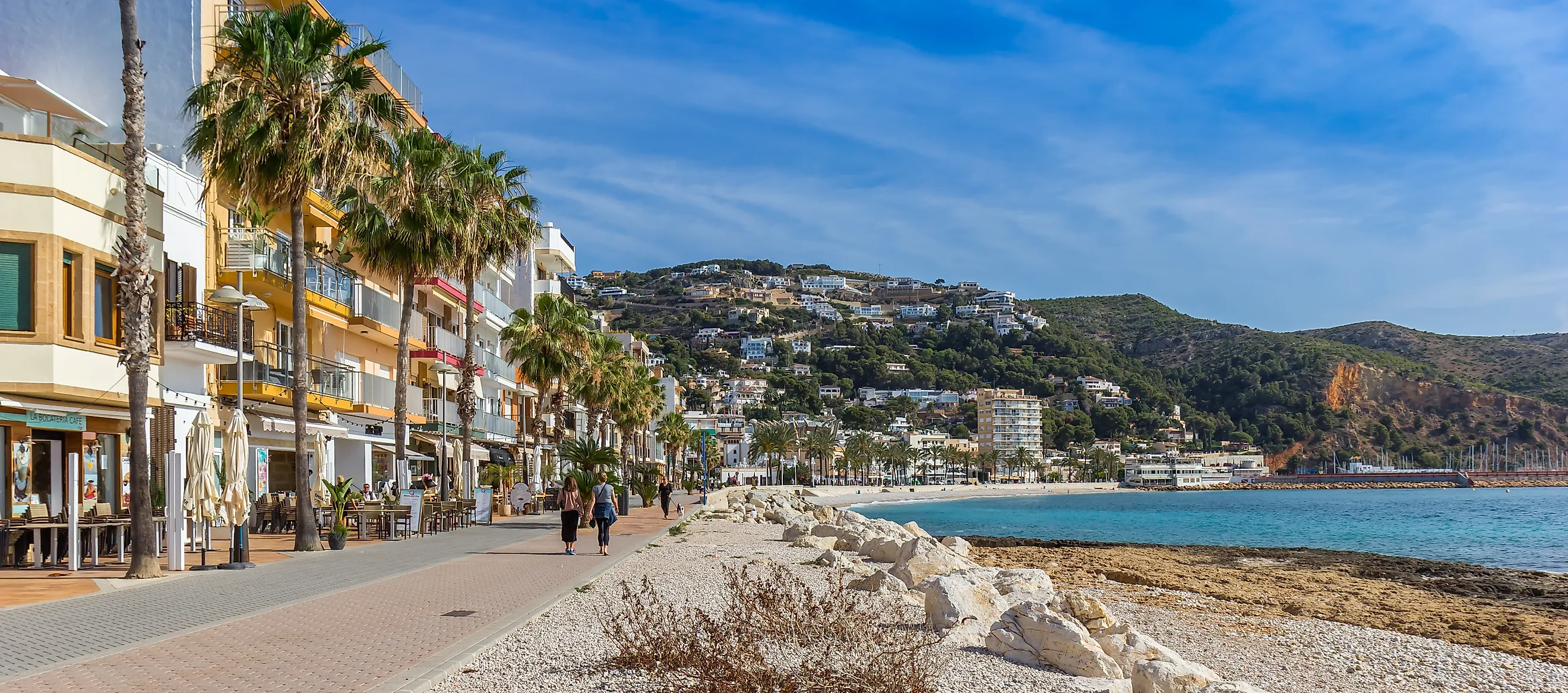
The Church of San Bartolomé anchors the old town of Jávea, a fortress-church begun around 1304 and rebuilt in Isabelline Gothic style through the 16th century, when coastal towns needed a stronghold against pirate raids. Around it runs a historic center of whitewashed houses built from the local golden sandstone. Jávea, known as Xàbia in Valencian, sits between cliffs and coves on the Costa Blanca and keeps the mild, even climate that first drew its large international community.
Arenal Beach is the town's social hub, with a promenade along calm water, while walkers climb north to Cabo de San Antonio for wide views over the Mediterranean and the Montgó massif. Healthcare is well covered: the Marina Salud hospital in nearby Dénia serves the area, and Jávea itself has clinics and outpatient centers, many with English-speaking staff given the size of the foreign population.
Antequera

The Antequera Dolmens are some of the oldest megalithic monuments in Europe, and their UNESCO World Heritage listing sits at the center of this Andalusian town's appeal. Antequera holds a rare position in southern Spain: it is close to both Málaga and Córdoba, so residents get big-city amenities within easy reach while keeping a small-town pace at home. Beyond the dolmens, the hilltop Alcazaba fortress and a cluster of baroque churches fill out a deep historical center.
The everyday draw is a walkable core built around the Plaza de San Sebastián, where cafés set out tables under the morning shade. Weekly outdoor markets stock local produce, olive oil, and goat cheese, and the town's central location makes it one of the easiest inland bases in Andalusia for anyone who still wants the coast and the cities within a short drive.
Peñíscola

A Templar castle on a sea-girt rock gives Peñíscola its skyline. Built by the Knights Templar between 1294 and 1307, it later became the seat of Pedro Martínez de Luna, the Aragonese antipope Benedict XIII, who held out here from 1417 until his death in 1423, still claiming the papacy. Fans of a certain HBO series will recognize the fortress too: Peñíscola stood in for the city of Meereen in Game of Thrones. The town sits on the Costa del Azahar, where a medieval walled quarter tumbles down to the waterfront.
Below the castle, sandy beaches and a coastal promenade stay open year-round, and outdoor types can pick up trails and cycling routes in the Sierra de Irta natural park just south of town. The clincher for many is price. Housing in Peñíscola runs notably cheaper than comparable spots on the Costa del Sol or Costa Blanca, which makes it one of the more affordable coastal footholds on this list.
Finding Your Place in Spain
The right town comes down to what you want your days to look like. Nerja and Jávea put the beach and an established international community within reach, while Dénia pairs the coast with the region's main hospital. Ronda and Monforte de Lemos suit anyone drawn to wine country, one in the sun-baked Andalusian hills and the other in green, rainy Galicia. Priego de Córdoba and Antequera reward those who want a walkable inland town with deep history and easy access to bigger cities, and Peñíscola offers the coast at a lower price than its better-known neighbors. Across all eight, the through-line is the same: walkable streets, strong medical access, and a slower daily pace than most of the places Americans are leaving behind.