10 Spain Small Towns With Unmatched Friendliness
Spain’s small towns build their identities around festivals, and the festivals don’t hold back. One village in Galicia celebrates locals who survived near-death experiences with a coffin parade through the streets. A town in Castile and León runs bulls every August in a tradition documented since 1215, while another nearby stages a “baby jumping” festival far more wholesome than it sounds. Near València, a Moorish-walled town stages a tomato food fight that turns its streets red every August. By the time the harvest reaches a small village at the southern end of the country, Spain has cycled through enough of these to make any other small town in Europe look quiet.
Cangas de Onís, Asturias

Up in the rugged mountains of Asturias in north-western Spain, travellers will discover the soaring heights of Cangas de Onís. In mid-June, the Fiestas de San Antonio de Padua celebrates the imminent summer season and local heritage with traditional Asturian wardrobe, folk music (including bagpipe bands), the “joguera” (or nighttime bonfire ritual), and plenty more festivities. To better understand this area’s backstory, folks can head out to the Cueva del Buxu and view the Paleolithic era carvings inside this cave, then head back to town and admire the Puente Medieval de Cangas de Onís that’s stood over the Sella River since the Ancient Roman era. And then, for some natural wonders, it’s a short journey south to the Parque Nacional de los Picos de Europa, a UNESCO Biosphere Reserve that extends over 67,000 hectares, includes the limestone massifs of the Cantabrian Mountains, and protects critical habitat for native wildlife like Cantabrian brown bears, Iberian wolves, Cantabrian chamois, and bearded vultures.
Between the main village and the national park, guests can check into La Casona de Torió and experience warm local hospitality with cosy private rooms, a central living room and library area, and a full breakfast every morning.
As Neves, Pontevedra

Many cities and towns have a strong passion for life, but there’s one special town in Galicia (about 148 kilometres, or 92 miles, north of Porto, Portugal) that takes it to such a level that they celebrate the great escape from death. In late July, the town of As Neves holds the Fiesta de Santa Marta de Ribarteme, which celebrates their local matron saint of resurrection (Saint Martha) and the locals who managed to survive near-death experiences with live music performances, plenty of local food, and even a coffin parade. The town also has a year-round sculpture monument at the Miradoiro do Miño park that commemorates the local community surviving a major fire in 2017. For a deeper dive into local history and heritage, it’s worth the trek north to the Petróglifos da Coutada, or petroglyphs carved into rocks that date as far back as the Neolithic era. And up at the nearby Vértice geodésico de San Nomedio, visitors will find panoramic views of the local mountains.
Over at the Hotel Nande da Natureza, guests can enjoy another kind of celebration of life, where they can rest and recharge at the hotel’s sleek and soothing rooms and suites, savour the authentic Galician flavours of the Horta e Viño restaurant, and take in the views of this beautiful region.
Cuéllar, Segovia

While the Navarre city of Pamplona has become famous for their Running of the Bulls, the tradition may have actually begun some 342 kilometres (or 213 miles) south west in the Castile and León town of Cuéllar. Written records of their local Running of the Bulls date as far back as 1215, and the tradition continues every August with the main event alongside live music, dance performances, and kid-friendly festivities. Whenever folks make their way here, they can also check out the Castillo de Cuéllar and wander around this well-preserved castle that began to rise in the 11th century and showcases the architecture of the later Gothic and Renaissance eras. Mere steps away from the castle, the Iglesia de San Martín is a major highlight of 12th century Mudejar style design. Just outside of town, the Senda de los Pescadores is part of the “Sea of Pines” that extends across much of the larger Segovia region and preserves another key tradition of lush, natural pine forest.
Returning to town, guests will find a comfortable home-like environment at Apartahotel Santa Marina, which offers apartment-style units with private bathrooms, working kitchens, and a shared laundry area.
Castrillo de Murcia, Burgos

Baby jumping… What even is this? Up in the open backcountry of Castile and León, the village of Castrillo de Murcia hosts the El Colacho Festival in mid-June, which includes a 400-plus-year-old tradition of men jumping over infants to symbolise good defeating evil and the divine protection of god’s children from the whims of the devil. Year-round, the Monumento al Colacho in town honours this special custom that can only really be found here. In the surrounding area, travellers will encounter other unique wonders, such as the Romanesque Arco de San Miguel de Mazarreros that serves as a monument to the now-vanished medieval village of San Miguel de Mazarreros, and the Museo Salaguti dedicated to the local artist Carlos Salazar Gutiérrez and his playful postmodern style.
Once one’s ready to call it a day, it’s worth spending the night at the Hotel Santa Coloma del Camino. This boutique hotel features cosy, comfy, and pleasantly homey guest rooms, along with a tasty restaurant on site and a convenient location near the region’s most striking ancient and modern monuments.
Berrostegieta, Álava

Just south of the Basque Country’s capital city of Vitoria-Gasteiz, the town of Berrostegieta knows how to welcome its visitors. For those who desire peace and quiet, the Armentiako Basoa provides walking trails through mature forest. Right by the forest sits the Castillo de Eskibel, the curiosity-sparking remains of an 18th century signal tower. And a little farther south, the Montes de Vitoria is a rugged expanse of wilderness for hiking and exploring. A short drive west leads to the Hotel Agroturismo Abaienea, a country farmhouse-style inn with rooms and apartments suitable for groups large and small.
Berga, Barcelona

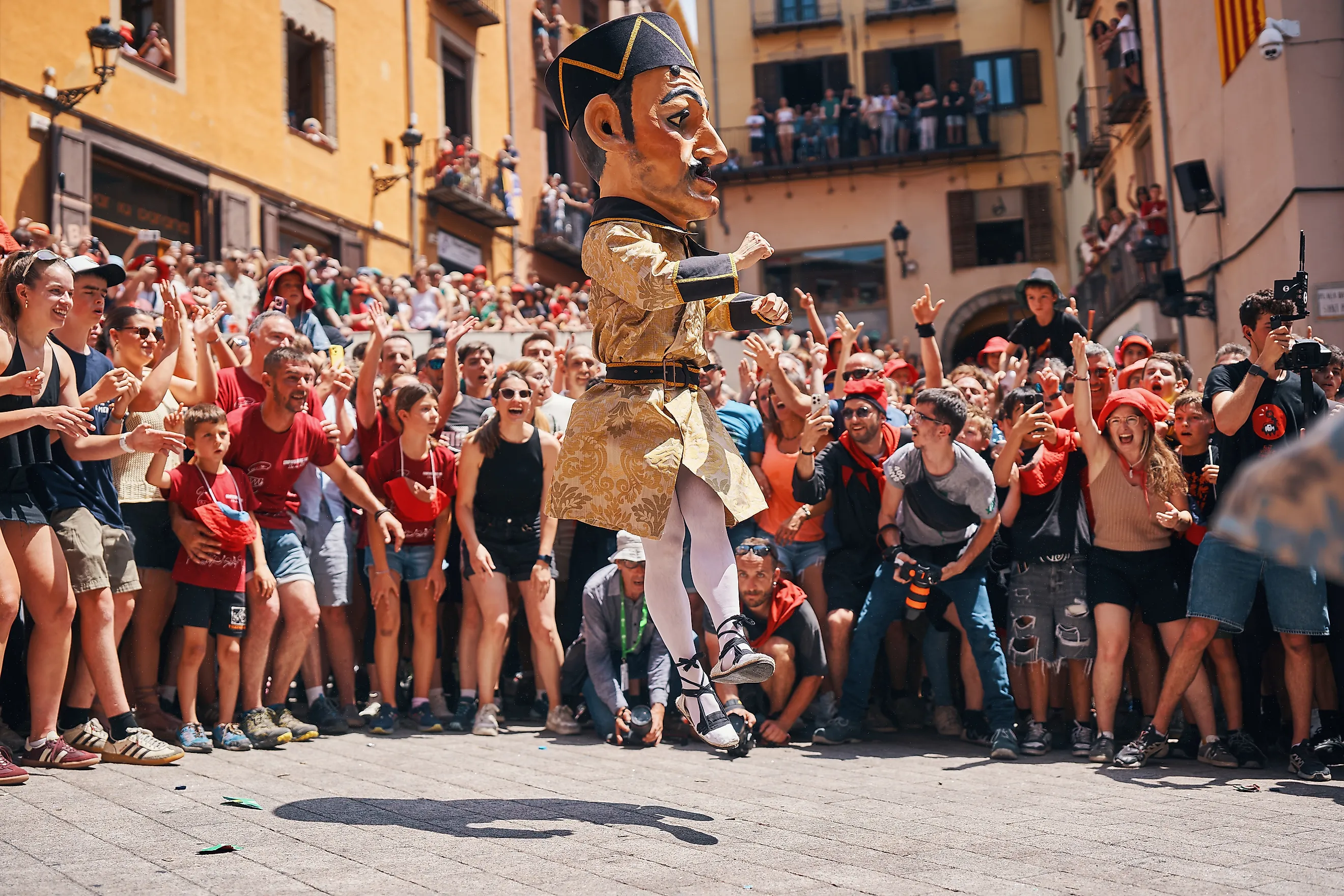
Around 109 kilometres (or 68 miles) north of the city of Barcelona lies Berga, a Catalan town in the foothills of the Pyrenees with a saintly festival that lifts spirits. Typically coinciding with the feast of Corpus Cristi around late May to mid-June, La Patum continues over six centuries of local traditions with elaborate ceremonials, lively parades, and many more community events that combine Catalonia’s religious heritage with their civic pride. For another combination of history and spirituality, the Església Sant Joan still serves the community as a Catholic church, and it features a striking blend of Romanesque and Gothic medieval era design. Then, to the east of town, the Serra de Picancel Protected Natural Area protects the pious La Portella monastery and the mountain wilderness that’s perfect for hiking, biking, and wild mushroom foraging. To the north, the Serra d'Ensija-els Rasos de Peguera Protected Natural Area presents a higher alpine landscape with grassy pastures and verdant pine forests.
Whether one comes to Berga for the holy ceremonies or the soaring mountains, it’s easy to keep the ethereal vibes going while staying at the Hotel La Cabana Berga. This cute and cosy boutique hotel offers chalet-style rooms and suites with deluxe bedding, bathrooms with rain head showers, and lovely town and mountain views outside.
Benicàssim, Castellón

Situated on Spain’s sunny Costa del Azahar coast, some 86 kilometres (or 53 miles) north of València, is the balmy beach town of Benicàssim. In the middle of July, the Festival Internacional de Benicàssim brings some of the biggest names in rock, pop, electronica, and indie music here and makes for the ultimate beach party experience. For some quality time at the beach, Platja Torre San Vicente is a family-friendly beach in town, while Platja de Bellver to the north provides a quieter and more secluded-feeling entry point to the Balearic Sea. To the west of town, the Desert de les Palmes natural park preserves a great expanse of Catalan Mediterranean mountains and historic treasures like a 13th century Carmelite monastery and spiritual retreat.
Heading back down to the seashore, Hotel Voramar offers guests a prime beachfront location alongside an intimate assortment of “beachy chic” rooms and suites and three fantastic restaurants on site.
Buñol, Valencia

Spain abounds in fiestas, but the Valencian town Buñol (about 41 kilometres, or 25 miles, west of the city of València) has one that’s full of flavour to savour. The Tomatina Festival began as a casual and friendly food fight in the 1940s, and the Spanish military dictator Francisco Franco tried to ban it out of existence the following decade, but the food fight continued, and it’s now a big draw to town every August. For anyone who can use a calmer scene to take in, Cueva Turche has a massive limestone bluff with a waterfall that drops 60 metres to form a refreshing natural pool. For another oasis of tranquility, folks can venture to El Roquillo and enjoy this zen-like atmosphere by a local creek. Or, for some more local history, travellers can stay in town and explore the Castillo de Buñol that the Moors first built in the 11th and 12th centuries, and Spanish Christian forces re-designed after they conquered the region in the 15th century.
A short distance outside of town, Molino Galán sits in the midst of a lush forest, and it’s a former flour mill and farmhouse that transformed into a secluded collection of apartments perfect for larger groups, and for those who simply want a lot more room to roam.
Guadix, Granada

Perched in the northern foothills of Andalucía’s Sierra Nevada mountain range is the town of Guadix, a rich historic outpost with quite the fighting spirit. Every September, the Fiesta de Cascamorras amounts to a wide-scale reenactment of local lore regarding the alleged theft of the Virgen de la Piedad statue and subsequent relocation to Baza in the 15th century. To better understand the backstory behind this curious custom, it’s worth visiting the Alcazaba de Guadix that Muslim Moorish forces established in the 11th century, and where local Christians later opened a seminary late in the 16th century. For even more of a throwback, visitors can pop over to the Teatro Romano that Ancient Roman rulers built all the way back in the first century CE. And at the Centro de Interpretación Comarca de Guadix, visitors can learn more about Guadix’s 2,000-plus-year history and heritage.
Mere steps away from several of Guadix’s historic landmarks, Hotel YIT Abentofail is a great place for travellers to complete their own stories and enjoy a comfortable stay at the hotel’s recently renovated rooms fully equipped with air conditioning and flat-screen satellite TVs.
Iznate, Málaga

Near the southern end of Spain, around 174 kilometres (or 108 miles) north east of Gibraltar (United Kingdom), the small village of Iznate always seems to be growing something good. Early in August, the town holds the Fiesta de la uva de Moscatel, when they celebrate the coming harvest season and the Moscatel grapes they use to craft their signature Málaga wines. To get a fuller taste of what this place has to offer, visitors can grab a table at the Hermanos Tejada and BAR Andalucia IZNATE restaurants and feast on some authentic Andalusian food and drinks. Then, they can mosey over to the historic Iglesia de San Gregorio VII and take in the sights of this 16th century church that houses plenty of striking works of religious art.
Just above the historic village sits Casa Mirador Las Claras, a country house with mountain and vineyard views, along with three full bedrooms, two private bathrooms, a full kitchen, and even a swimming pool in the back yard.
From Fun Fiestas to Soothing Siestas
With so much to experience across this country, it’s no wonder why Spain remains a top tourism destination. Beyond the nation’s most visited cities, there’s so much more to explore. High in the mountains of Asturias, Cangas de Onís invites visitors to experience their unique local culture and ancient history. Over in Castile and León, the town of Cuéllar continues the time-honoured tradition of the running of the bulls that actually pre-dates the more famous event in Pamplona. To the west of Barcelona, the Catalan village of Berga looks and feels downright ethereal with its religious and natural landmarks. Then there’s the Valencian town Buñol and their delightfully quirky Tomatina tomato-tossing festival. And at the foot of the Sierra Nevada mountains, Guadix now celebrates a six-century mystery of a missing religious relic. These are just a few of Spain’s fabulously friendly small towns that exude a great sense of hospitality.