5 Most Rattlesnake Infested Areas on the Gulf Coast
The Gulf Coast of the United States, spanning from the Mexican border to the southern tip of Florida, features some of the highest rattlesnake concentrations in the southeastern corner of the country. Massive and lively wetlands, swamps, barrier islands, forests, delta systems, and more, each provide favored territory primarily for eastern diamondback and timber rattlesnakes.
Variations in elevation, flooding cycles, and prey density shape further snake distribution in this mainly sub-tropical environment, creating predictable areas for anyone looking to catch a glimpse of these venomous, cold-blooded predators. This article highlights five Gulf Coast locations with consistently high rattlesnake populations and examines the habitat features and behaviors that contribute to their prevalence.
Brazos Bend State Park, Texas

Along the upper Texas coast, Brazos Bend State Park stands out as a highly reliable destination if you are looking to encounter rattlesnakes. Sitting just outside of the busy streets of Houston, this 5,000-acre park’s surprisingly wild mix of bottomland forest, wetlands, and open prairie creates an ideal habitat for the western diamondback rattlesnake, the dominant species here. The western diamondback typically grows 3 to 5 feet (0.9 to 1.5 m) long and is known for its bold black-and-white tail bands. These snakes are frequently observed along levees, off trails, and near rodent-rich grasslands, especially during warm mornings and late afternoons. Timber rattlesnakes have also been documented in more wooded sections, though they are far less common.
Brazos Bend’s high prey density, with numerous rats, mice, and small rabbits, further supports a stable predator population, including raptors, rattlesnakes, alligators, and more. Seasonal flooding typically also pushes snakes and their prey onto higher ground, increasing visibility along trails. Despite steady human traffic from the nearby Houston metro area, conservation has made this spot one of the most dependable Gulf Coast locations for wildlife activity in general.
Big Cypress National Preserve, Florida

Deep in southern Florida, Big Cypress National Preserve supports one of the highest concentrations of rattlesnakes anywhere on the East Coast. Covering over 720,000 acres, it forms one of the largest protected swamp ecosystems in the southeastern United States. This sizable preserve’s vast expanse of cypress swamps, pinelands, and wet prairies provides prime habitat for eastern diamondback rattlesnakes, the largest species in North America.
The average adult can reach 3.5 to 5.5 feet (1.1 to 1.7 m) in length, although some have been known to exceed 7 feet (2.1 m). These snakes favor elevated, drier ground within the swamp system, often appearing along sandy trails, firebreaks, and road edges. For sustenance, pig frogs, marsh rabbits, and cotton rats are local favorites and supply a steady prey base.

Run-ins usually increase during the dry season, when receding water levels concentrate both prey and predators into smaller areas, allowing rattlers to come down from their favored higher elevation zones. Big Cypress also frequently overlaps with other large reptiles, including American alligators, creating a dense, competitive ecosystem.
Mobile-Tensaw Delta, Alabama

The Mobile-Tensaw Delta in Alabama forms one of the most biologically dense regions in all of the Deep South, and rattlesnakes play a big part in it. Spanning roughly 260,000 acres, it is often called “Alabama’s Amazon” due to its biodiversity and dense wetland network. This sprawling network of rivers, bayous, and swamps primarily supports eastern diamondback rattlesnakes, particularly along natural levees and slightly raised forest edges that stay above flood zones.
Unlike more open water bodies, visibility here is limited, and resident snakes tend to remain concealed in the area's thick understory or along debris-lined banks. Small mammals, wading bird colonies, and seasonal fish die-offs create a steady, varied food supply within this system as well. Access routes, like boat launches, logging cuts, and raised roadbeds, serve as the main encounter zones for people. In many wetlands, fluctuating water levels regularly compress wildlife into narrower bands of dry ground, increasing the likelihood of incidental sightings in otherwise dense cover.
Atchafalaya Basin, Louisiana

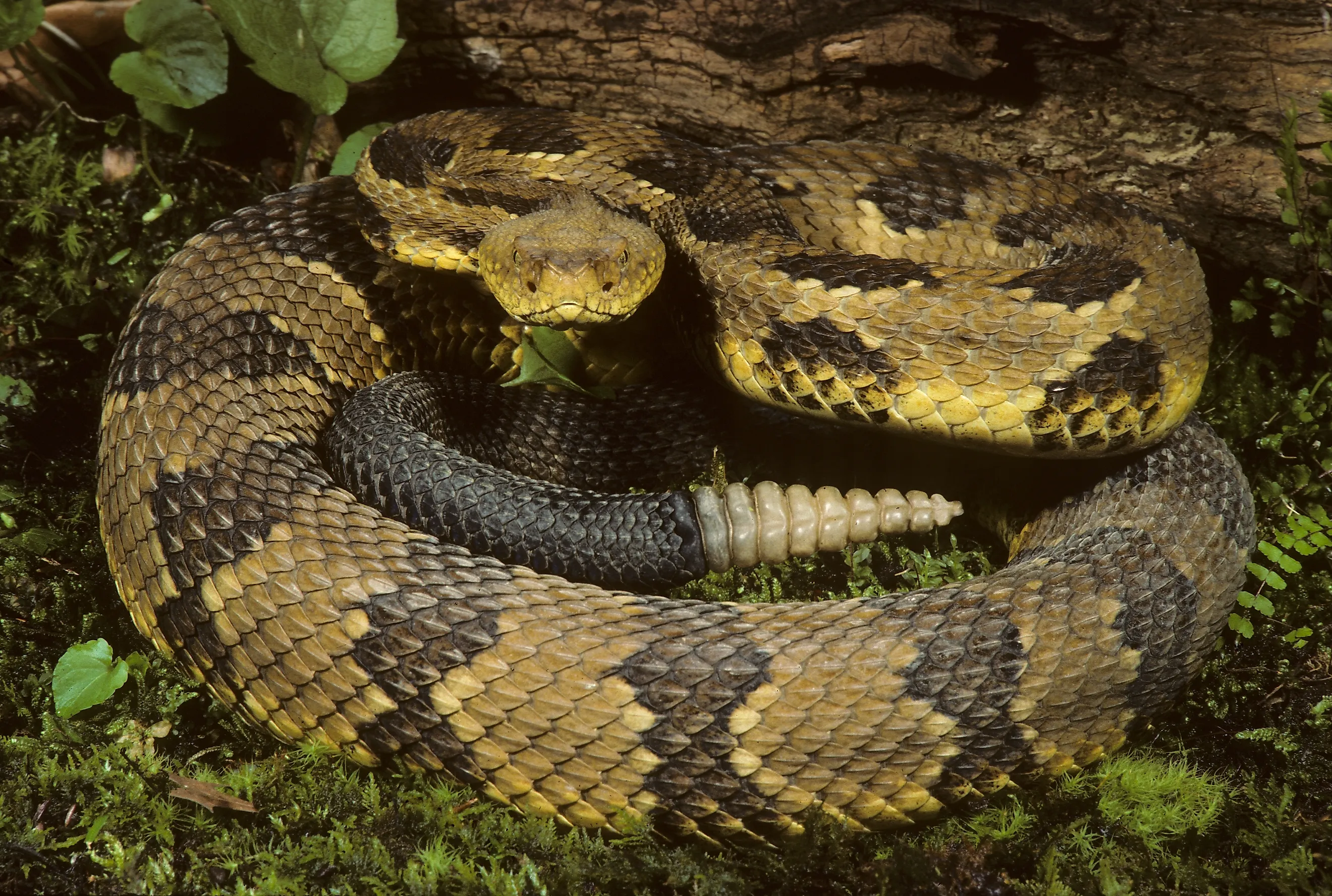
Moving back west to Louisiana, the Atchafalaya Basin houses a healthy yet often overlooked rattlesnake population. As the largest swamp system in the United States, covering more than one million acres, it provides extensive habitat for timber rattlesnakes, particularly along natural levees, forested ridges, and spoil banks that remain above seasonal floodwaters. As in Big Cypress, these elevated strips concentrate snakes and their prey into tighter areas, with prey species here usually including swamp rabbits, nutria, and large rodents.

The timber rattlesnakes here are more commonly encountered near the basin’s edges, where access roads and oil infrastructure create a variety of natural and manmade travel corridors. Timber rattlesnakes usually measure 3 to 5 feet (0.9 to 1.5 m) and vary in color from gray to yellow with dark crossbands. Prolonged heat and humidity also extend active periods well into the night in Atchafalaya, increasing rates of human-snake encounters, especially for hunters and anglers staying in the park after sundown. And while much of the basin is difficult to access, areas near boat launches and raised roads also regularly produce sightings.
Gulf Islands National Seashore, Mississippi

As a major part of Mississippi’s chain of barrier islands, the Gulf Islands National Seashore offers a bit of a different kind of rattlesnake habitat from those inland. The protected area stretches around 160 miles of coastline and barrier islands across Mississippi and Florida. On larger islands, eastern diamondback rattlesnakes occupy dry maritime forests, scrub, and dune systems rather than swamps. These snakes are heavy-bodied and easily identified by their bold diamond pattern and loud, well-developed rattle, often blending into sandy and grassy coastal terrain. They use the local palmetto thickets and driftwood piles for cover, often staying close to slightly elevated ground above storm surge zones.
For food, rodents and ground-nesting birds provide a steady food source, particularly during nesting season. Moreover, limited freshwater forces wildlife into predictable pockets; areas best avoided without careful awareness. Human access is quite restricted in the park, especially when compared to mainland sites. This has helped maintain stable populations, not just for snakes but also for the diverse flora and fauna that similarly call the islands home.
Keep An Eye Out For Rattlesnakes In These Sun-Soaked Wildlands
Rattlesnake populations along the Gulf Coast thrive where wetlands, forests, and a range of other wild landscapes intersect with abundant food sources and long dry seasons. Each hotspot above reflects these unique habitat conditions that concentrate many different snakes, from swamps and delta levees to maritime forests. Understanding these patterns highlights both the ecological role of rattlesnakes in this southern region of America and the areas where human encounters are most likely.