Where Did The Ottomans Come From?
Around 1281, a Turkoman warrior named Osman inherited a small frontier principality at Söğüt, a beylik his father Ertuğrul had held under the fading authority of the Seljuk Sultanate of Rûm. It was an unremarkable patch of Anatolia on the edge of Byzantine territory, and nothing about it announced a coming empire. Yet from that beylik, Osman and his descendants would build a state that eventually spanned Southeastern Europe, Western Asia, and North Africa. Its beginnings lay in the raids, alliances, and slow consolidation of one ghazi's territory. Understanding where the Ottomans came from means starting at Söğüt, with the people, the tribe, and the man who gave the dynasty its name.
What Was the Ottoman Empire?

At its peak, the Ottoman Empire stretched over vast territories. Most of southeastern Europe was subject to Ottoman administration, with the empire's expansion reaching the gates of Vienna. This reign was over present-day Hungary, the Balkan region, Greece, and parts of Ukraine. Ottoman rule extended to what is now Algeria, Egypt, Israel, Iraq, and Syria, along with large parts of the Arabian Peninsula. This empire encompassed diverse languages, religions, and cultures.
Holding that range together required a complex bureaucracy, one that kept the Ottoman Empire in power for roughly six centuries. At the top of the administrative organization was the Sultan in a centralized monarchy. His second-in-command was the Grand Vizier. All administrators, family, military, clergy, provincial governors, and citizens answered to the Sultan's rule. Hierarchical layers of administrators, clergy, and military supported the monarchy.
Origins in Söğüt
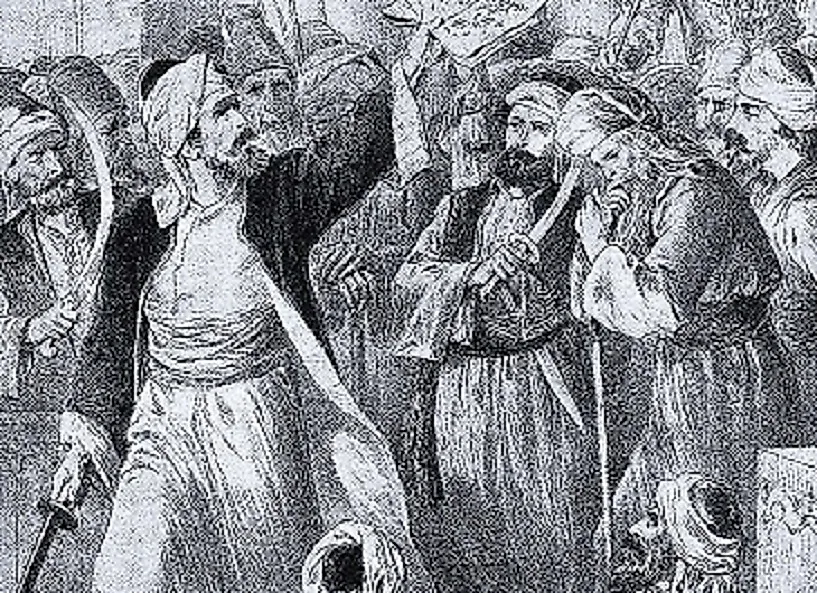
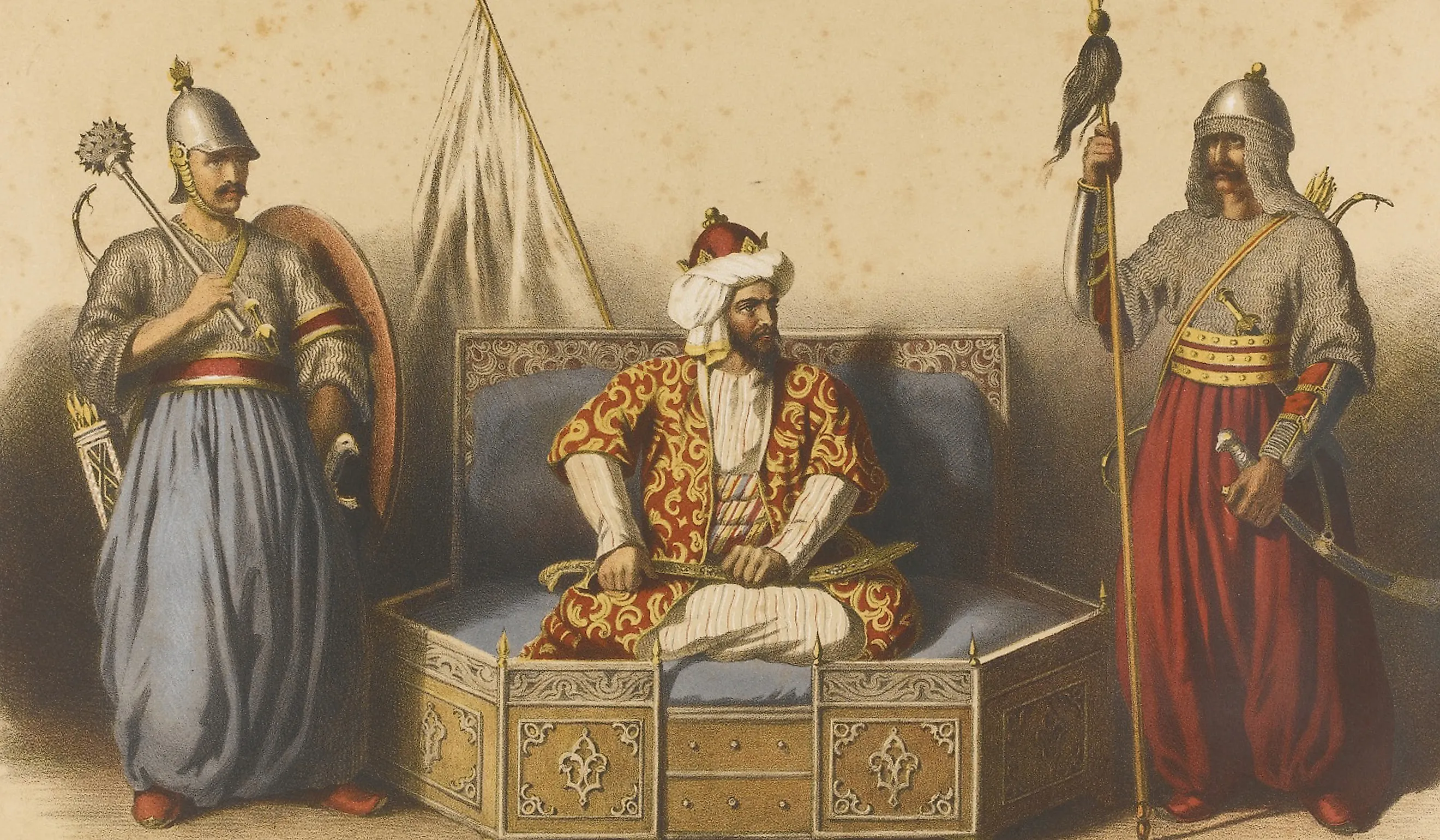
While the Ottoman Empire was powerful and far-flung in reach, its reign had modest origins. The beginning of the Ottoman Empire started with a nomadic people who had established a small Turkoman beylik, or principality, at Söğüt in Anatolia. In this region, Osman I (born c. 1258, died 1324 or 1326) was born, descended from the Kayı tribe of Oghuz Turks. Some scholars dispute this origin, putting his tribal affiliations in the realm of legend. The name "Ottoman" came from the Arabic form of Osman I's name, "Uthman."
What is known about the founder of the Ottoman Empire is that his father, Ertuğrul, started an Anatolian beylik in Söğüt under the authority of the Seljuk Sultanate of Rûm. With the death of his father, the beylik passed to Osman around 1281. As a young Islamic warrior called a ghazi, Osman fought against the Christian Byzantine Empire to expand Islam and his territory. This territorial expansion led to the formation of the Ottoman Empire.
Osman's Rise to Power

In expanding the small beylik, Osman's victories did not come early in his campaigns. His forces laid siege to the city of Nicaea in 1299 CE. However, the city proved too strong, and the siege ended in defeat two years later. Persisting, Osman pressed on against faltering Byzantine rule. In 1302 CE, after grueling years of battle, Osman and his forces vanquished the Byzantines at Bapheus, near the Sea of Marmara in present-day Türkiye. From this victory, Osman consolidated power and gradually absorbed small settlements into his beylik. His descendants further absorbed settlements and principalities to strengthen the empire.

While Osman's success owed much to his military strength, the sultan also demonstrated the political and bureaucratic skills necessary to build an empire. From a decentralized beylik, Osman built an administrative state. The first sultan created a taxation system, appointed governors to oversee outlying principalities, and encouraged his citizens to settle in the conquered lands. Spiritual alliances further aided the transition from a nomadic culture to a centralized state. His affiliation with Islamic scholars and dervishes provided the sultanate with sacred legitimacy, and these connections attracted a steady flow of warriors who sought personal gain and religious achievement.
Osman did not finish his life's work, falling ill before the final military campaign at Bursa. Instead, his son Orhan was victorious on April 6, 1326. According to tradition, Osman died after hearing news of his son's victory. Orhan built on his father's legacy, using Bursa as the center of the empire. Building mosques, appointing judges, and creating a structured military from loosely affiliated mercenary raiders were essential to the reign.
Notable Rulers of the Ottoman Empire

The descendants of Osman I were noted for their military prowess, administrative strength, and mercilessness toward their enemies, both domestic and foreign. Osman's grandson, Murad I (born 1326, died 1389), permitted conquered populations to retain local governors loyal to the empire, a policy that preserved regional cultures and economies. In exchange for loyalty, Murad I assured local officials and populations their lives, properties, religion, and customs. This approach helped the Ottoman Empire govern without building a costly administrative structure.
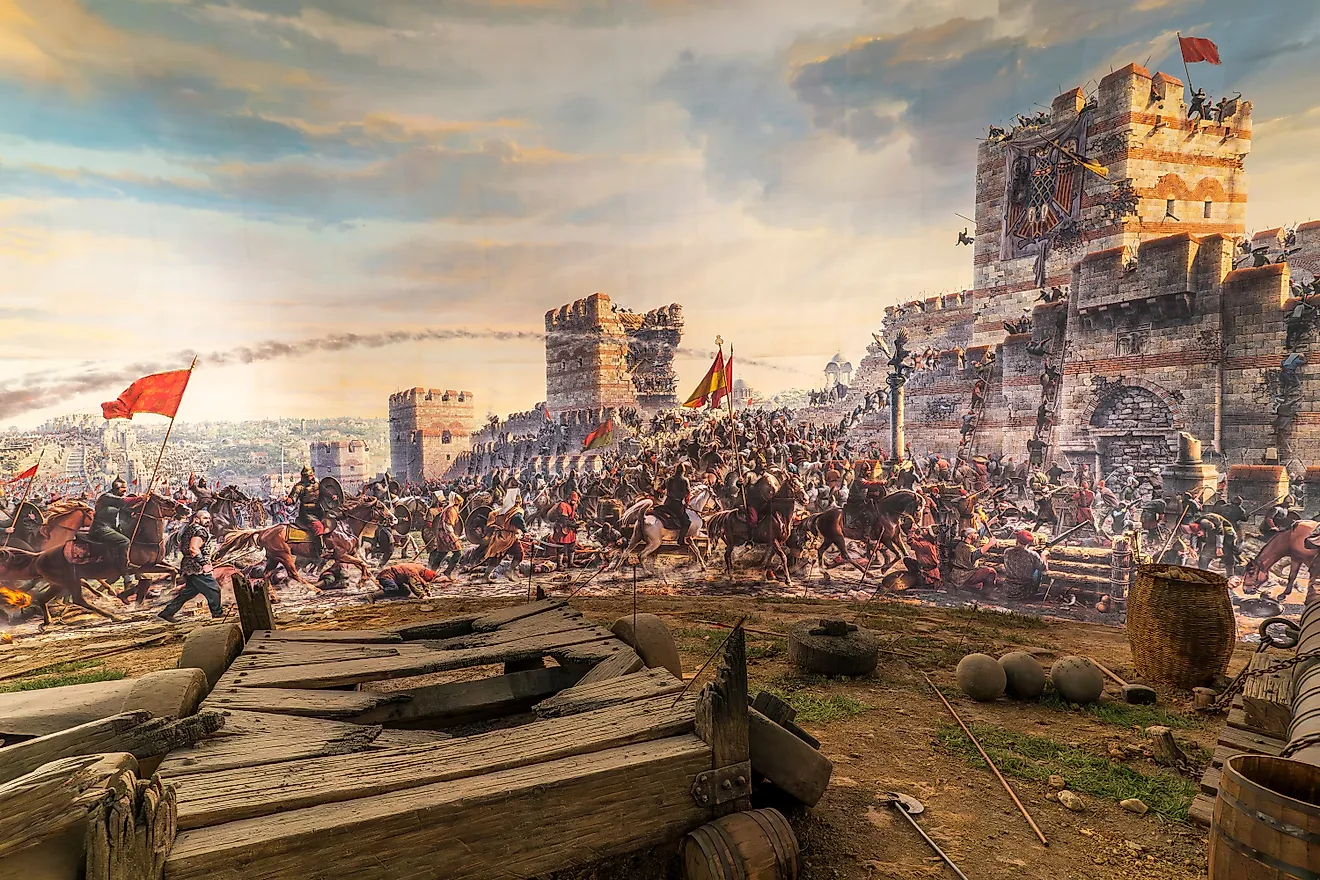
Mehmed II (born 1432, died 1481) was sultan in 1444-46 and again in 1451-81. His father, Murad II (born 1404, died 1451), abdicated in favor of Mehmed when his son was 12 years of age. Murad II reclaimed the throne two years later to guide the empire during a Christian Crusade. Upon his father's death, Mehmed regained the throne, conquering Constantinople and renaming it Istanbul. He was also instrumental in codifying criminal and civil law into a single legal entity.

The rule of Süleyman the Magnificent (born 1494 or 1495, died 1566) is considered the peak of Ottoman civilization. The reign of Süleyman witnessed the building of mosques that served as schools, poor relief, and places of worship. Bridges and aqueducts were constructed and maintained across the empire. His court became a center of culture through his support of poets and legal scholars. As a sultan and warrior, he was fearless, capturing Belgrade and Rhodes and securing territory in Hungary, while his navy controlled the Mediterranean Sea. That success came with ruthlessness. His reign saw the execution of close administrators, two of his sons, and the sons' male children. A deep traditionalist who followed Islamic law, he broke with custom by marrying the concubine Hurrem (died 1558) as his official and only wife.
Decline and Legacy of the Ottoman Empire

The empire that began at Söğüt eventually declined under weak sultans, abrupt leadership changes, and poor political alliances, a slide often traced to Selim II (born 1524, died 1574) and worsened by the kafes system, which confined potential heirs to the harem and produced rulers ill-prepared to govern. It ended with Mehmet VI (born January 14, 1861, died May 16, 1926), who came to the throne in 1918 after a lifetime of confinement and reigned only until 1922, when the sultanate was abolished, and the empire's territory was carved into separate countries. Its legacy still endures in Ottoman architecture that blends Byzantine, Islamic, and Persian influences; in foods like baklava and kebabs; in the coffee house it helped popularize; and in the modern political fault lines of the Balkans and the Middle East that trace back, in part, to the empire's breakup.