The Most Valuable Goods of the Ancient World
Ten thousand sea snails for one gram of dye. Three thousand pounds of pepper to call off a Visigoth siege of Rome. A Tyrian purple cloth still holding its colour after decades in storage. The ancient world ran on a handful of commodities priced steeply enough that empires went to war for them, kings were buried wearing them, and merchants spent their lives moving them across deserts. The list below is the elite tier: the trade goods whose prices financed governments, paid armies, decorated tombs, and stitched together long-distance trade networks thousands of years before anyone called it a global economy.
Silk

Smuggling silkworm eggs out of China was punishable by death. The penalty existed because silk was the single most valuable manufactured export of the ancient world, and the production secret (sericulture, the cultivation of mulberry-fed silkworms and the unwinding of their cocoons into thread) was a Chinese state monopoly that began as early as 2700 BC. Roman buyers, downstream of centuries of caravan and ship handlers, often had no idea where silk came from; serious writers speculated that it grew on trees or was harvested from exotic animals.
By the late 1st century BC, Han China, the Parthian Empire, and the Roman world were linked by trade networks running through Central Asia, and silk had become the universal currency of elite display. Roman senators wore it; Roman moralists hated that they did. The Emperor Tiberius reportedly tried to ban men from wearing silk on the grounds that the material was both wildly expensive and immodestly transparent. (The senate ignored him.) In China itself, silk was not just a luxury but a currency: Han governments paid soldiers in bolts of silk, sent enormous quantities north to buy peace from the Xiongnu confederation, and used silk as the standard tax payment.
The same routes carried more than silk. Religions, crops, technologies, artistic styles, and disease all moved along them. The Antonine Plague that swept the Roman Empire from AD 165 onwards and killed millions arrived through these same trade channels.
Gold

In the 14th century BC, foreign kings wrote to Egypt's pharaoh complaining that the gold they had been promised was overdue. They had heard, they pointed out, that gold was "as plentiful as dust" in Egypt. The exchange survives in the Amarna Letters, a clay-tablet archive from the court of Akhenaten that documents the diplomatic side of Bronze Age gold flows. The Nubian gold mines south of Aswan were the foundation of Egyptian wealth, and Egypt's status as the regional gold producer let it bankroll temples, military campaigns, and the elaborate burial economies of the New Kingdom.
The dynastic Egyptian obsession with gold is best known through the 1922 discovery of Tutankhamun's tomb by Howard Carter, which contained roughly 5,400 objects, most of them gold-clad. Tutankhamun's outer coffin alone weighed 110.4 kilograms of solid gold. He died at about 19, was a minor pharaoh, and ruled only nine years; what kings on the same throne for sixty-odd years were buried with can only be guessed at, because their tombs were robbed in antiquity.
Around 630 BC, the kingdom of Lydia in western Anatolia struck the first coins, using electrum (a naturally occurring gold-silver alloy from the Pactolus River) and stamping each piece with a guaranteed weight. The technology spread fast: Greeks, Persians, and Romans all adopted standardised coinage within a few generations, and gold-coin systems eventually let states pay soldiers, collect predictable taxes, and run interregional trade without weighing metal at every transaction. Roman gold coins recovered at south Indian and Sri Lankan archaeological sites show those networks reached thousands of miles beyond the Mediterranean.
Tyrian Purple

Producing one gram of Tyrian purple required killing somewhere between 10,000 and 12,000 sea snails by hand, which is the main reason an emperor's robe could cost more than a Mediterranean villa. The pigment came from the mucus glands of two Mediterranean sea snail species, Bolinus brandaris and Hexaplex trunculus, and had to be extracted within hours before the glands decomposed. The Phoenician city of Tyre, in present-day Lebanon, was the production capital; the Greek name for the wider region (Phoenicia) literally translates as "the land of purple."
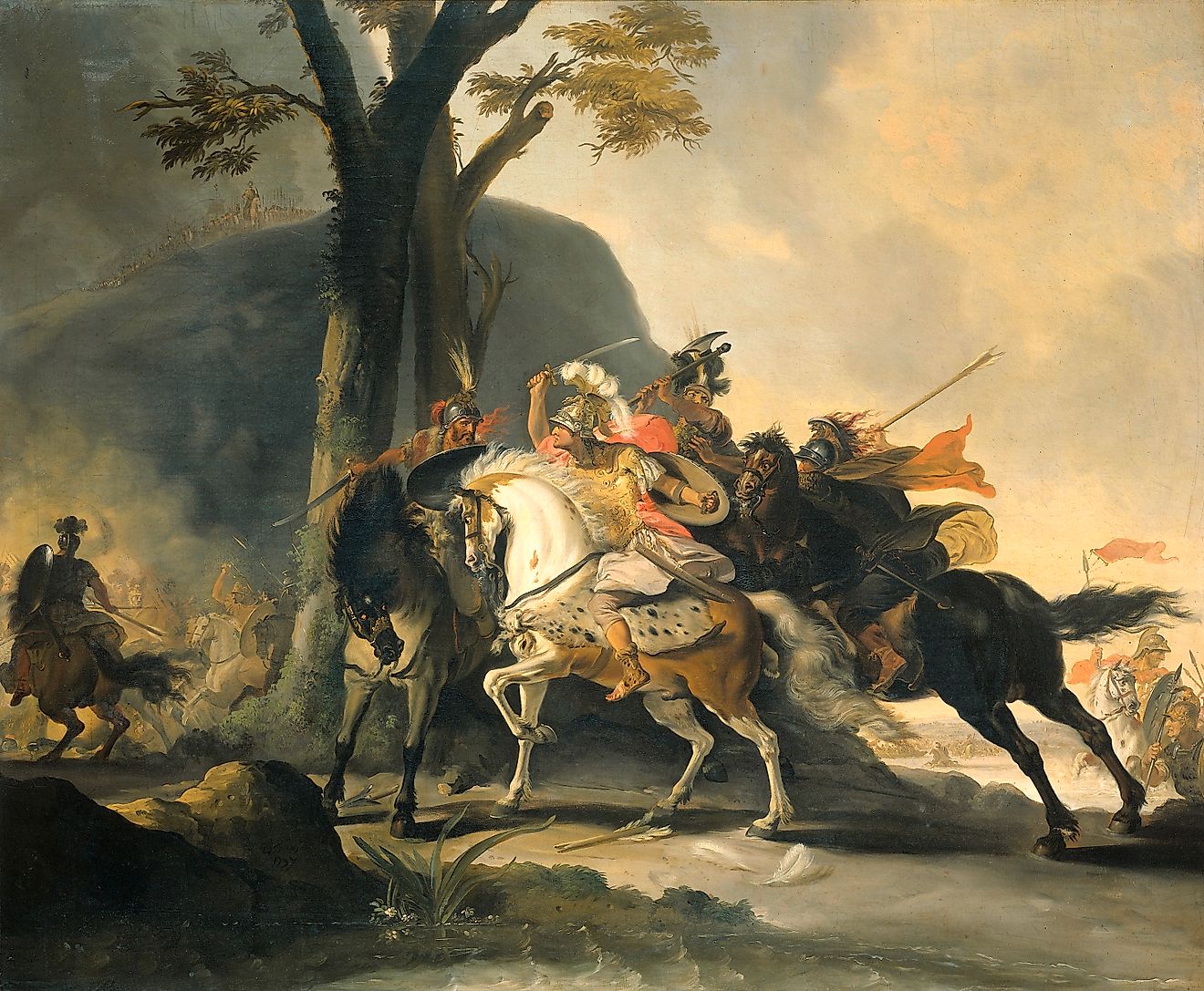
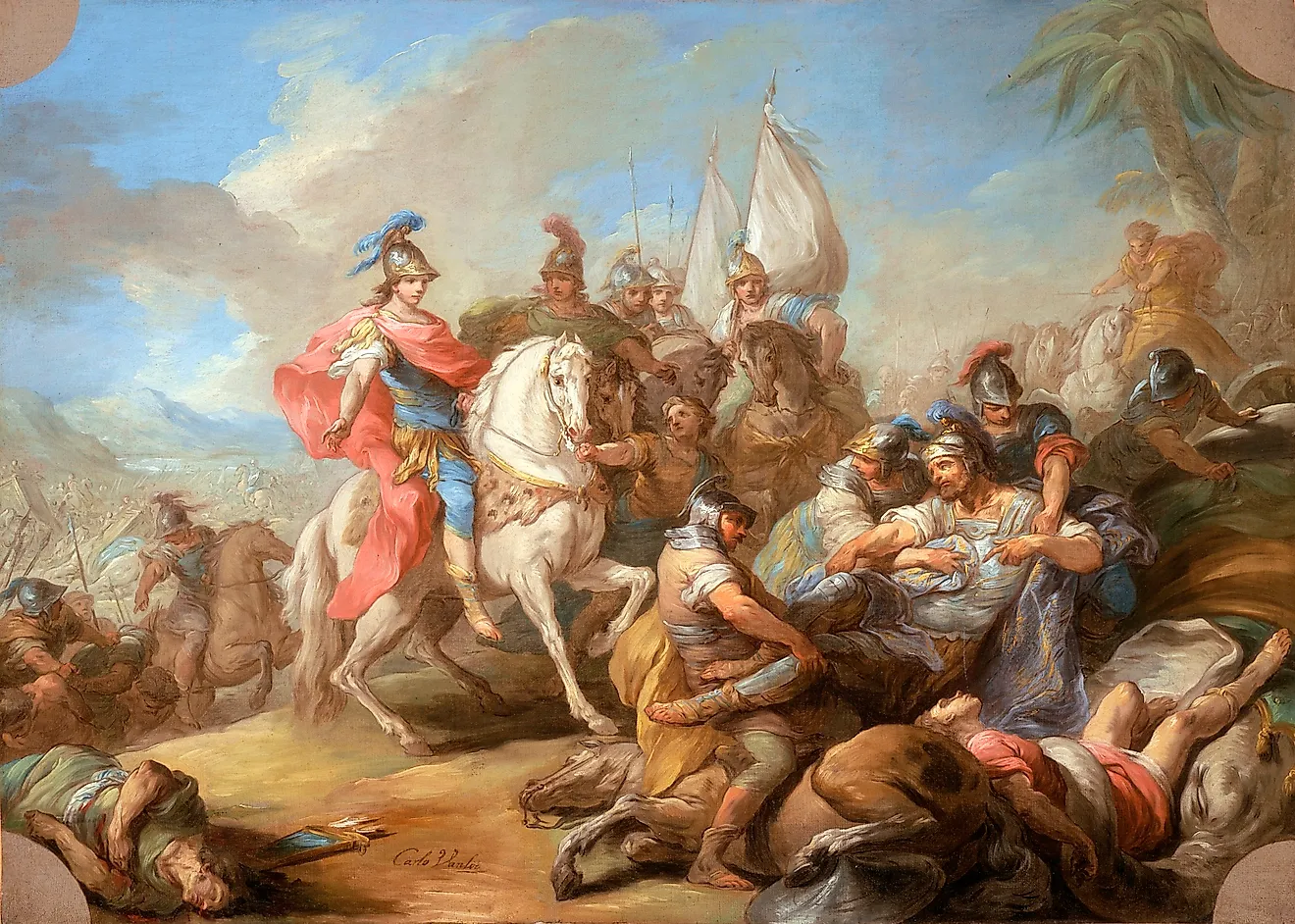
The Romans treated purple as a status indicator with the force of law. Senior magistrates wore the toga praetexta, with a wide purple border. Triumphal generals wore the all-purple toga picta. By the imperial period the right to wear pure purple had been restricted essentially to the emperor; Diocletian's later sumptuary edicts attached the death penalty for civilians attempting it. The dye's reputation for durability was extreme even by ancient standards. When Alexander the Great captured Tyre in 332 BC after a seven-month siege, he reportedly found bolts of purple cloth in the Persian royal storehouses that had retained their colour through 190 years of storage. The Phoenicians' dye-vats have been confirmed archaeologically along the Lebanese and Israeli coasts, identifiable by the millions of crushed shell fragments dumped alongside them.
Spices

Pliny the Elder, writing in the AD 70s, calculated that Romans were spending 100 million sesterces every year on imports from the east. Most of that went to spices, particularly pepper, cinnamon, and cardamom, and Pliny was furious about it. He thought the empire was hemorrhaging silver to barbarian growers for what amounted to seasoning. He was correct about the scale: archaeological evidence from the Red Sea port of Berenice shows that single shipments of Indian pepper arriving in Roman Egypt could weigh tonnes.
Spices entered the Mediterranean by two channels: overland through Persia and the Levant, and by ship across the Indian Ocean to India's Malabar Coast. The Periplus of the Erythraean Sea, an anonymous Greek navigational manual from the 1st century AD, lists the relevant ports, cargoes, sailing seasons, and exchange rates with surprising commercial precision. Roman merchants exploited the monsoon wind cycle to make the India return voyage in about a year and were eventually sailing directly to India to cut out the Arabian and Persian middlemen. Excavations at Arikamedu, near modern Puducherry on India's southeastern coast, have produced Roman amphorae, glassware, and coins associated with this trade.
Pepper retained its value into the early medieval period with remarkable stability. When the Visigoth king Alaric besieged Rome in AD 408, his initial ransom demand reportedly included 3,000 pounds (1,360 kg) of pepper alongside 5,000 pounds of gold and 30,000 pounds of silver. The Romans paid. (Alaric came back two years later and sacked the city anyway.)
Frankincense and Myrrh

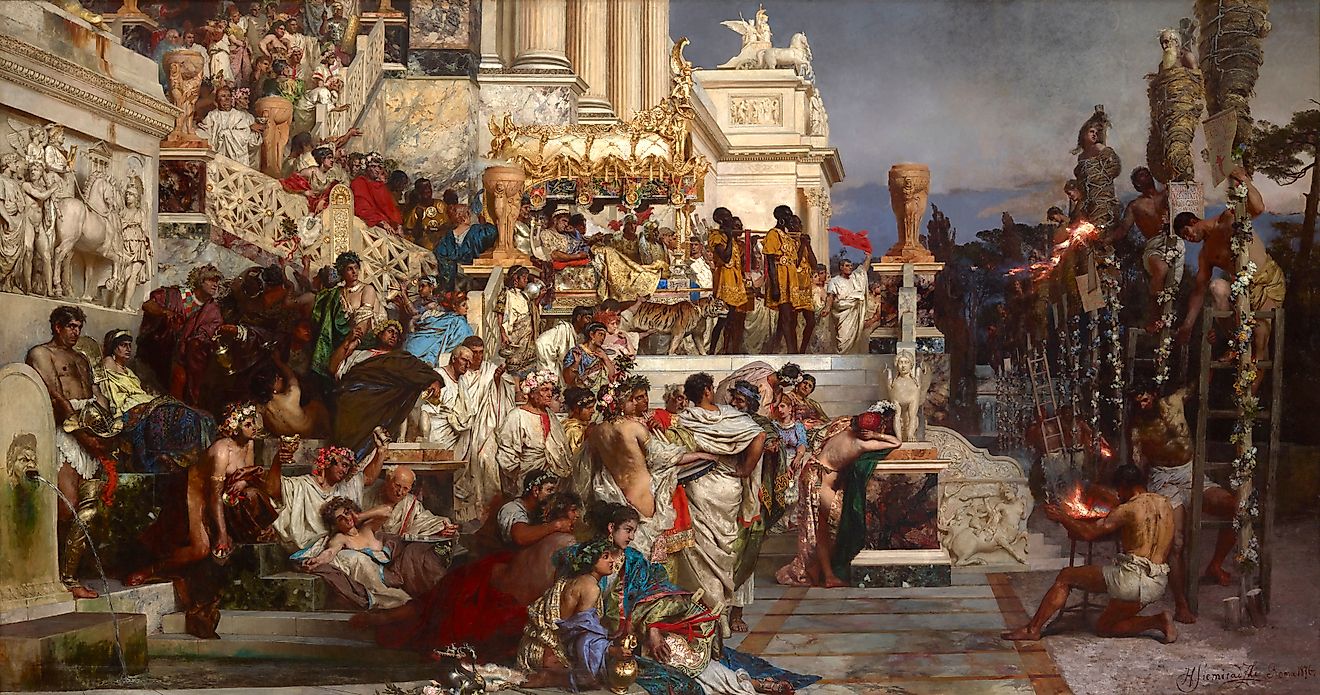
When the Emperor Nero's wife Poppaea died in AD 65 (according to ancient sources, kicked by Nero himself in a fit of rage), he ordered a funeral that reportedly burned through a year's entire production of Arabian incense in a single ceremony. The figure is probably exaggerated, but the scale of the gesture indicates what frankincense was worth: an aromatic resin tapped from Boswellia trees that grew only in southern Arabia, the Horn of Africa, and a narrow band of South Asia. Its counterpart, myrrh, came from Commiphora species growing in roughly the same regions, and the two were valuable enough to be coupled with gold as the gift the magi brought in the Christian nativity tradition.
Egypt was the largest early customer. Around 1470 BC, the female pharaoh Hatshepsut sent a major sea expedition to the Land of Punt, almost certainly somewhere on the Horn of Africa, and returned with shiploads of incense plus living myrrh trees for replanting in temple courtyards. The expedition is depicted in relief at her mortuary temple at Deir el-Bahari. Myrrh was a standard component of Egyptian embalming and mummification oils; frankincense was the standard ceremonial offering at Egyptian, Mesopotamian, Greek, and Roman religious rituals.
The Arabian end of this trade made the Nabataean Arabs, masters of the caravan routes from Yemen north into the Mediterranean, into one of the wealthiest peoples of the late Hellenistic world. Their rock-cut capital at Petra in present-day Jordan, built almost entirely on incense-trade profits, remains one of the most striking archaeological sites on the planet.
Lapis Lazuli

Essentially every piece of lapis lazuli used in the ancient Mediterranean and Mesopotamian worlds came from one mining region: Sar-i-Sang, in the Badakhshan province of present-day northeastern Afghanistan. Traders were already moving the deep blue stone west across mountains and deserts by 3000 BC, predating the Silk Road by nearly three thousand years and demonstrating that long-distance interregional trade was running at scale before writing was widespread.
The stone's blue is so saturated and so stable that it became the canonical signifier of divine and royal status in the ancient Near East, ranking just below gold. The eyebrows and eyelid inlays on Tutankhamun's golden death mask are lapis lazuli, as are the eyes of many high-status Egyptian funerary statues. Mesopotamian sources are equally lapis-obsessed: the Epic of Gilgamesh, the oldest surviving major work of literature, describes the horns of the Bull of Heaven as carved from lapis lazuli as a marker of supernatural value. Archaeological lapis recoveries trace continuous Badakhshan-sourced trade flows to Egypt, Mesopotamia, and the Indus Valley civilisation between roughly 3000 BC and 500 BC. The mine at Sar-i-Sang has been continuously productive for around 6,500 years and is still operating.
Tin

Bronze is roughly nine parts copper to one part tin, and the tin is the hard part. Copper was available in the eastern Mediterranean and Near East (Cyprus alone gave the metal its English name, since the island's Greek and Latin name was the source of the word "copper"). Tin was not. It hid in a few specific veins in Cornwall, the Iberian Peninsula, the Erzgebirge mountains of central Europe, and far Central Asia, none of which were anywhere near the major Bronze Age civilisations that needed it. Egyptian, Mesopotamian, Mycenaean, and Hittite bronze-smiths therefore depended on supply lines stretching halfway across the known world.
This is why the Bronze Age, roughly 3300 to 1200 BC, is also one of the earliest documented periods of true globalisation. Tin ingots from the Uluburun shipwreck (a Late Bronze Age trading vessel that sank off southern Turkey around 1320 BC) have been chemically traced to mining regions in Tajikistan, Uzbekistan, and the Anatolian Taurus mountains, demonstrating that a single hull was simultaneously carrying tin from across the Eurasian continent. When supply lines broke down (which happened catastrophically around 1200 BC as the Late Bronze Age collapse hit the eastern Mediterranean), bronze production fell, weaponry shifted, and entire civilisations went into decline. The recovery, when it came, was based on a different metal entirely: iron.
Salt

Salt is the only commodity on this list that is also a biological necessity. Humans need sodium to live, and before refrigeration, salt was the only way to keep meat, fish, butter, and most other proteins from rotting. That made it less glamorous than purple or lapis but vastly more strategic: every society needed it, and societies that could control its production could tax everyone else.
The Roman state ran salt as an instrument of imperial logistics. The Via Salaria (literally "the Salt Road") was one of the first paved Roman roads, running 242 kilometres from Rome up the Adriatic coast to the salt pans of the Picenum region, and was probably already old when the Republic formalised it. Roman legionaries received an allowance called the salarium for purchasing salt and other staples, a payment-system term that became the modern English word "salary." In China, the Han Dynasty formally nationalised salt production in 119 BC under Emperor Wu, using the resulting state monopoly revenue to finance the long Xiongnu wars; the salt monopoly remained a backbone of Chinese state finance for the next two thousand years. In medieval West Africa, salt mined from the Saharan deposits at Taghaza was traded south to the gold-rich Sahel at literal weight-for-weight parity with gold, demonstrating just how valuable a daily necessity could become when controlled by a distant authority.
Trade That Built Empires

None of these were trinkets. They were the materials that ancient governments taxed, the things armies were paid in, the things kings were buried with. The trade networks they generated connected Europe, Asia, and Africa for thousands of years before the Age of Exploration, and they carried more than merchandise: religions moved along them (Buddhism east-to-west, Christianity and later Islam in multiple directions), as did technologies (papermaking, gunpowder, the compass), languages, scripts, agricultural crops, musical instruments, artistic conventions, and pathogens. The Silk Road and its Mediterranean and Indian Ocean equivalents weren't oddities of premodern history. They were the rule, and the modern world is what eventually grew out of them.