Who Was Alexander The Great? The Rise Of History’s Greatest Conqueror
As one of the most well-known leaders and conquerors in world history, Alexander the Great's most discussed feats are often those that occurred after he became King of Macedonia. However, to truly understand who he was as a person, one must analyse Alexander's early life and rise. Indeed, looking at his education, early experience governing and commanding the military, and how he gained power provides insights into how Alexander became a pre-eminent historical figure.
Early Life

Alexander was born in 356 BCE to Phillip II, the king of Macedonia, and Olympias of Epirus, a Molossian princess (the Molossians were an ancient tribe that lived in northwestern Greece and southwestern Albania). This lineage mattered since Alexander, despite being the main candidate to succeed Phillip, still faced questions about his legitimacy because his mother was not Macedonian. At the same time, Olympias herself was very religious and ambitious, thereby imbuing Alexander with the notion that he was destined for "great things". When combined with Phillip's own ambition that transformed Macedonia into the hegemon of Greece, Alexander grew up surrounded by power and doubt. This undoubtedly shaped the man that he became.
Alexander's Education

A core component of Alexander's early life was his education. In his childhood, he was trained like a traditional Macedonian noble, learning basic combat, reading, and writing skills. However, when he became a teenager, Phillip II hired the philosopher Aristotle to tutor him. Aristotle taught Alexander about critical thinking, ethics, politics, and leadership. This proved crucial later in Alexander's life, as he drew on these lessons when trying to blend Persian and Greek cultures in the territories he conquered. Aristotle also introduced Alexander to works of Greek literature, like Homer's Iliad. Perhaps more than anything else, this literature shaped Alexander, as he became obsessed with figures like Achilles and believed that he too was destined for greatness. He also allegedly carried a copy of the Iliad with him on the battlefield. In short, Alexander's education with Aristotle fundamentally shaped the young prince's self-perception and gave him tools that helped him rule a multicontinent empire.
Regent and Commander

At the age of 16, as Phillip was off waging war in southern Greece, Alexander was made regent of Macedonia. Almost immediately, he faced a revolt by a Thracian tribe called the Maedi. Therefore, Alexander led a campaign to defeat them, which he did fairly easily after destroying their stronghold. Afterward, he found a city in the region called Alexandropolis. As his first real test leading a state, Alexander passed with flying colours. Rather than waiting to defend, he went on the offensive and expanded Macedonian territory. This gave the Macedonian military and the political elite confidence in his leadership.
At the age of 18, Alexander's leadership was further tested when he was made commander of the Companion Cavalry, an elite unit, in a battle against a coalition of Greek states led by Athens and Thebes. The two sides fought bitterly until Alexander's unit eventually broke through. With this, the Theban and Athenian formations fell apart and quickly surrendered. Alexander had thus further proven his capabilities, both as a leader and on the battlefield. Moreover, this battle ended up being decisive in Macedonia's wider conquest of Greece. Indeed, Phillip created the Corinth League soon afterward, which formally established Macedonian hegemony in the region.
Securing the Throne

In 336 BCE, on the eve of his planned invasion of Persia, Phillip II was stabbed to death by his bodyguard, Pausanias of Orestis, at a major celebration in the city of Aegae. While some theorise that Alexander and his mother were responsible, most historians agree that the motive behind the assassination was personal grievance. Pausanias was Phillip's former lover who was angry when the king turned his attention to younger men. The bodyguard was further enraged when Phillip failed to punish Attalus, an uncle of another one of Phillip's other wives, Cleopatra, for sexually assaulting him. Historians thus argue that all these factors led to Paunsanias assassinating Phillip.
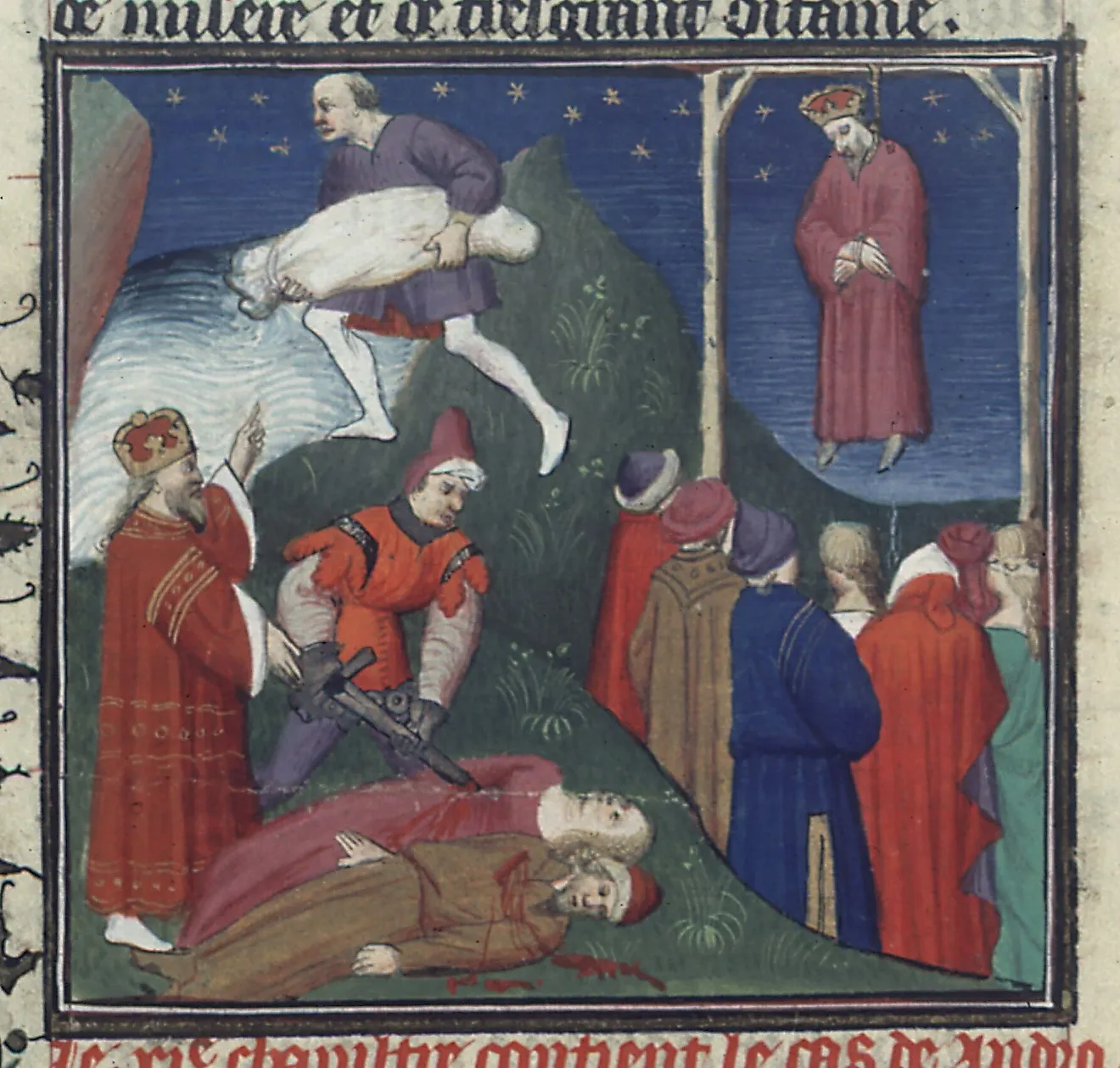
Despite likely having no direct involvement in the murder, both Olympias and Alexander took advantage of the situation and quickly moved to secure Alexander's position. For instance, Olympias allegedly had Cleopatra and her newborn son, a pure Macedonian, killed, which eliminated the main threat to Alexander's claim to the throne. As for Alexander, his military and leadership achievements meant that most of the army already supported him. However, there was one problem. Attalus, the aforementioned uncle of Cleopatra, commanded an advance force that was supposed to lead the invasion of Persia. Therefore, to ensure that he controlled the entire army, Alexander had Attalus executed in 336 BCE.
Now secure in his position as king, Alexander went about reaffirming Macedonia's position in the region. Facing a potential invasion from the north, Alexander repeated the strategy he had utilised as regent and went on the offensive, thereby crushing the Thracians and Illyrians. Afterward, Alexander turned his attention south, since several Greek city-states were rebelling. Fearing the wrath of the Macedonian army, most cities immediately submitted, except for Thebes. Alexander subsequently decimated the city, enslaving and killing thousands in the process. With this act of brutality, he established himself as both the leader of Macedonia and the broader Greek world.
Impact and Legacy
Alexander's rise provides insights into who he would be as a ruler. Indeed, his parents were equal parts ambitious and ruthless, characteristics that came to define Alexander. Nonetheless, his education under Aristotle also gave him loftier ambitions beyond mere conquest. Finally, his early experience in governance and the military gave him both practical experience and respect amongst the upper echelons of Macedonian society. All these factors combined allowed Alexander to quickly seize power once his father died.