Why Did Egyptians Build Pyramids?
The pyramids of Egypt have been standing for almost 5,000 years, which is a long time for any structure to keep its shape, let alone hold its grip on the popular imagination. The reason they were built turns out to be more interesting than the standard "tombs for pharaohs" answer most people learn in school. The pyramids were religious instruments, designed to ferry deceased pharaohs into the afterlife and physically connect them with the sun god Ra. They were also political infrastructure, paid construction projects that organized thousands of free workers under the banner of the early Egyptian state and produced monuments visible across miles of desert that broadcast the pharaoh's authority. The combination is what made Egypt one of the most powerful kingdoms of the ancient world.
Background
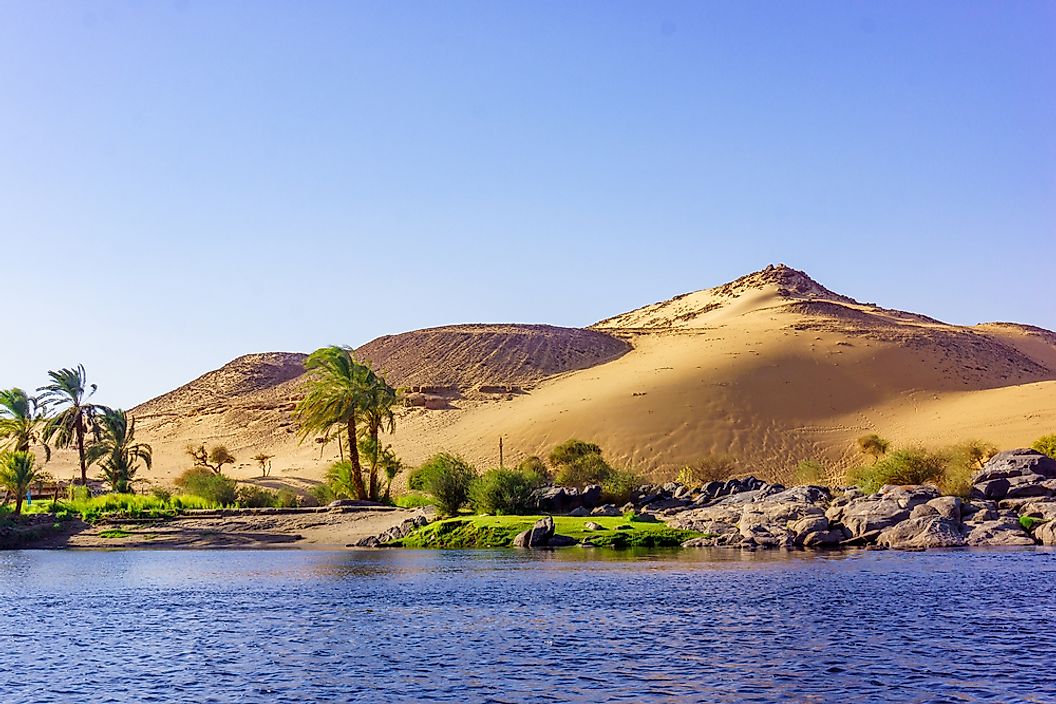
The foundation of ancient Egyptian civilization was the Nile River. It flooded predictably every year, leaving the surrounding land covered in fertile silt that made the Nile valley one of the most productive farming regions on the planet. Settlements began to grow along its banks between 5000 and 4000 BCE. They were not yet politically unified. Prehistoric Egypt was divided into two regions, Upper Egypt in the south and Lower Egypt in the north (named for the flow direction of the Nile), each with its own culture, power centers, and rulers.
This changed under the leadership of Narmer. The first pharaoh of unified Egypt, Narmer conquered the Nile Delta around 3100 BCE and established the city of Memphis at the apex of the delta, which made it the natural midpoint between Upper and Lower Egypt. With the Nile under his control and a central seat of political power established, Egypt was effectively unified, marking the beginning of what historians call the dynastic period.

Over the next 500 years, the core elements of the Egyptian state took shape and formalized. The pharaoh came to be recognized as the supreme political and religious ruler, and authority became highly centralized. A sophisticated state bureaucracy emerged to manage agriculture, taxation, and labor. Religious beliefs also evolved. In the early periods, there were many localized variants of animism, the belief that all things (animals, plants, rocks) carry a soul or consciousness. Over the centuries, specific animistic gods rose to Egypt-wide prominence, often in alignment with the personal devotions of the ruling pharaoh.
Religious Reasons

By the Old Kingdom period (2686 to 2181 BCE), Ra was among the most prominent deities in Egypt. Considered to have been the first pharaoh in the mythological tradition, Ra was the god of the sun, of cosmic order, of kings, and of the sky. Egyptians believed in an afterlife and that deceased pharaohs joined Ra in the heavens upon their deaths. To make sure that transition happened, the pharaoh's body needed to be preserved and his journey supported.

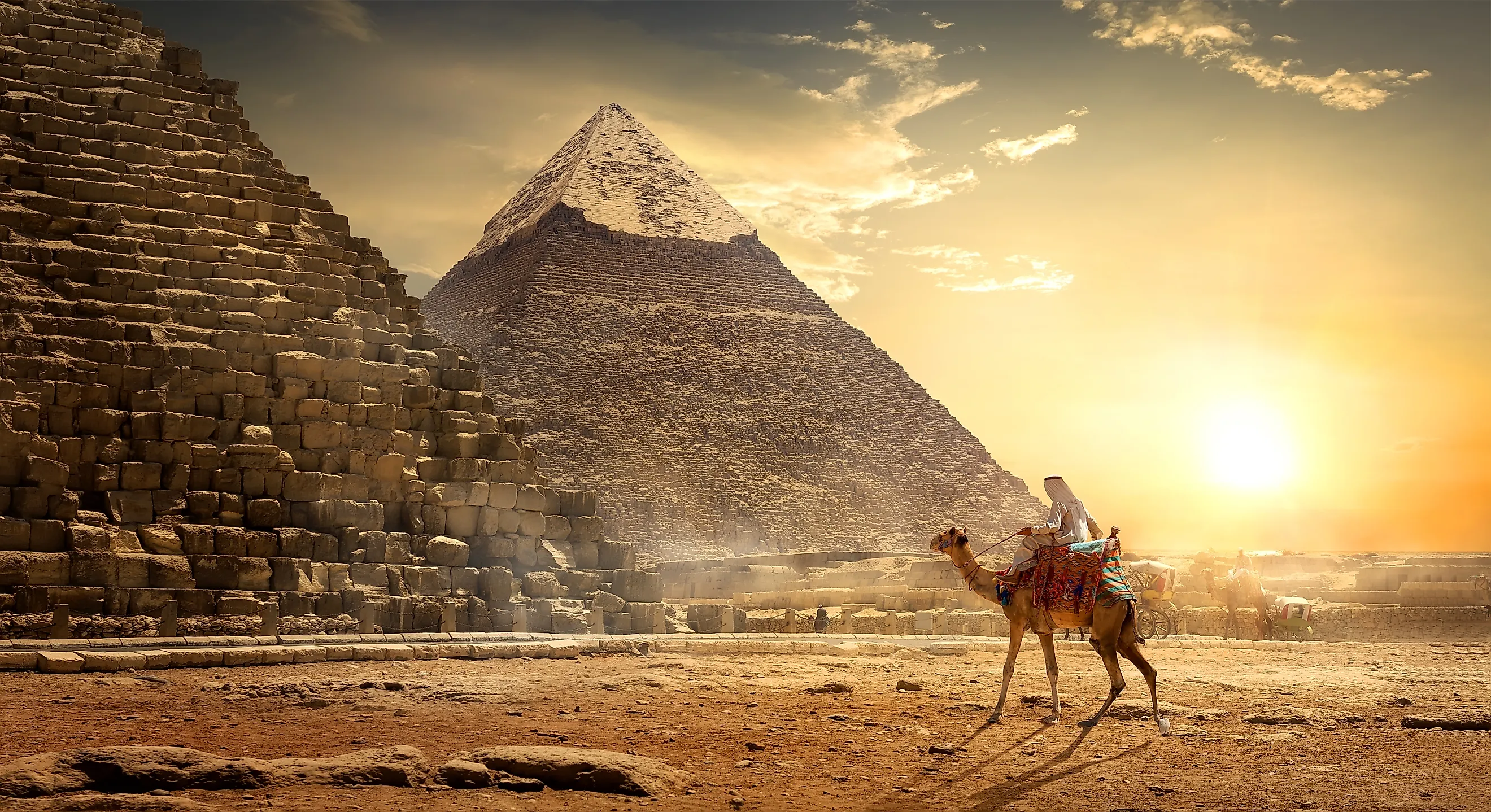
This is what the pyramids were for. They served as tombs to preserve the pharaohs' bodies. They functioned as ritual gateways to help the pharaohs ascend to the heavens. And their immense scale was meant to bring the pharaohs literally closer to the sun, connecting them with Ra. Each pyramid was, in religious terms, a piece of working ritual architecture for the pharaoh's transition into divinity.
Political Unification

The religious functions of the pyramids did not preclude political ones. Building them required enormous resources and centralized coordination: architects had to plan them, stone blocks weighing several tons each had to be quarried at sites like the Giza limestone plateau and the granite quarries at Aswan, the blocks had to be transported by river barge, and the structure itself had to be assembled with extraordinary precision. Contrary to the still-widespread popular belief, this was not slave labor. Archaeological evidence at the workers' villages near Giza, including bakeries, breweries, and medical facilities, confirms that the pyramids were built by paid free workers who were housed, fed, and treated for injuries by the state. The expenses were enormous, but providing employment, food, and shelter to thousands of workers built genuine loyalty to the pharaoh and organized Egyptian society around a national project. The completed pyramids then stood as visible monuments to the pharaohs (and the gods), a permanent advertisement for the political order they represented.
The Evolution Of Pyramid Building

Pyramid building changed substantially over time. The first true pyramid, the Step Pyramid, was built under the pharaoh Djoser between roughly 2670 and 2640 BCE at Saqqara, the necropolis serving Memphis. Designed by the architect Imhotep (later deified for his work), it began as a traditional flat-roofed mastaba and was modified upward into six stacked steps. The next century brought experimentation: the Bent Pyramid and Red Pyramid at Dahshur, both built under Sneferu, are the surviving evidence of architects working out how to build a true smooth-sided pyramid. The "Golden Age of Pyramids" then arrived during Egypt's Fourth Dynasty in Giza. The largest and most famous pyramids belong to this period, including the appropriately named Great Pyramid of Giza, built around 2560 BCE as the tomb of Khufu and the tallest human-made structure in the world for nearly 4,000 years.
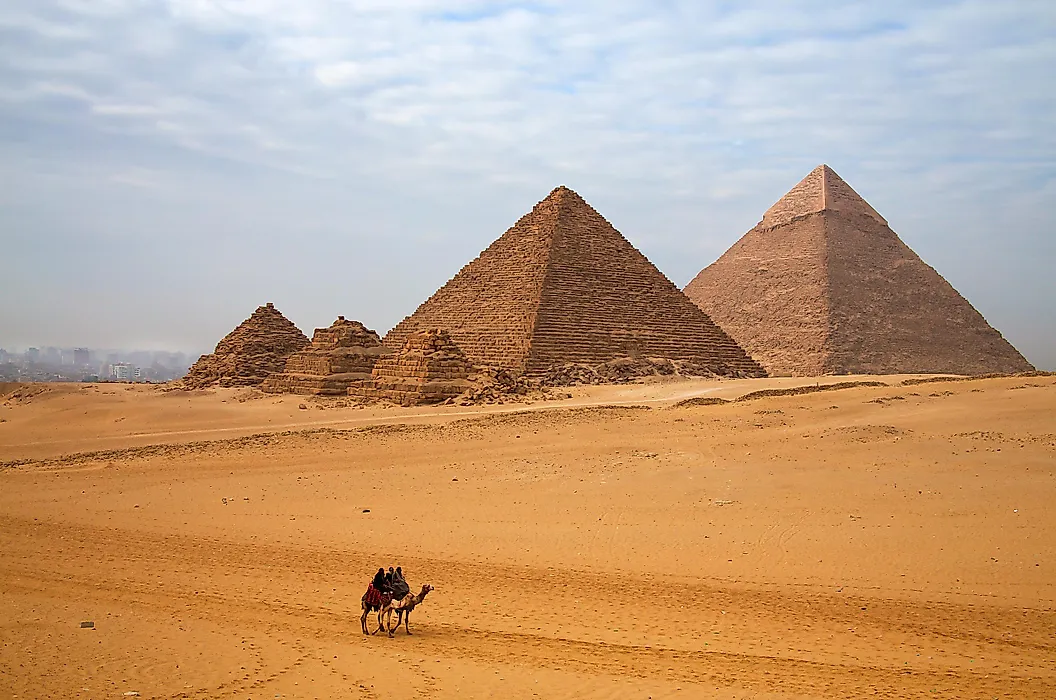
While pyramids continued to be built after this peak, they declined in scale and quality. Despite the religious and political benefits, the economic cost was simply too high to sustain. After the Old Kingdom collapsed around 2181 BCE, pyramid building almost entirely stopped. A few examples followed over the next 500 years, but pharaohs increasingly chose to be buried in hidden rock-cut tombs in places like the Valley of the Kings, partly to deter the persistent tomb robbers who had stripped most of the early pyramids long before any modern archaeologist could examine them intact. The final royal pyramid was built in Abydos by Ahmose I sometime between 1550 and 1525 BCE, though it no longer stands.
Implications And Legacy
The pyramids served as a working component of Egyptian religious and political life for nearly a thousand years. Constructed for explicitly religious purposes, they also organized labor, demonstrated state authority, and unified the populace under royal projects. Their cost meant that consistent construction was unsustainable, and pyramid building had stopped completely by the mid-1500s BCE. The structures themselves remained important religious and political symbols long after the pharaohs who built them were gone, and they remain instantly recognizable monuments to the religion, politics, and engineering capabilities of one of the longest-lasting civilizations in human history.