How Did Religion In Ptolemaic Egypt Work?
Religion in Ptolemaic Egypt was a mosaic of Egyptian and Greek traditions, incorporating threads of both cultures in the tradition of Alexander the Great. This formidable dynasty could be considered "bi-cultural", producing the Septuagint, or Greek translation of the Holy Bible, and consolodating the Library of Alexandria, all while rulers still claimed to be sons and daughters of the Sun God Ra. The tide of culture flowed both ways, and despite Greek influence, much of Egyptian beauracracy and beliefs continued. This intermingled faith provided relative stability for centuries, allowing the Ptolemaic dynasty to survive from 305 BC until the death of Cleopatra VII in 30 BC. Here are some of the key factors of Ptolemaic Egypt's uniquely functional faith structure.
Context of Ptolemaic Egypt

The city of Alexandria, Egypt, founded by Alexander The Great.
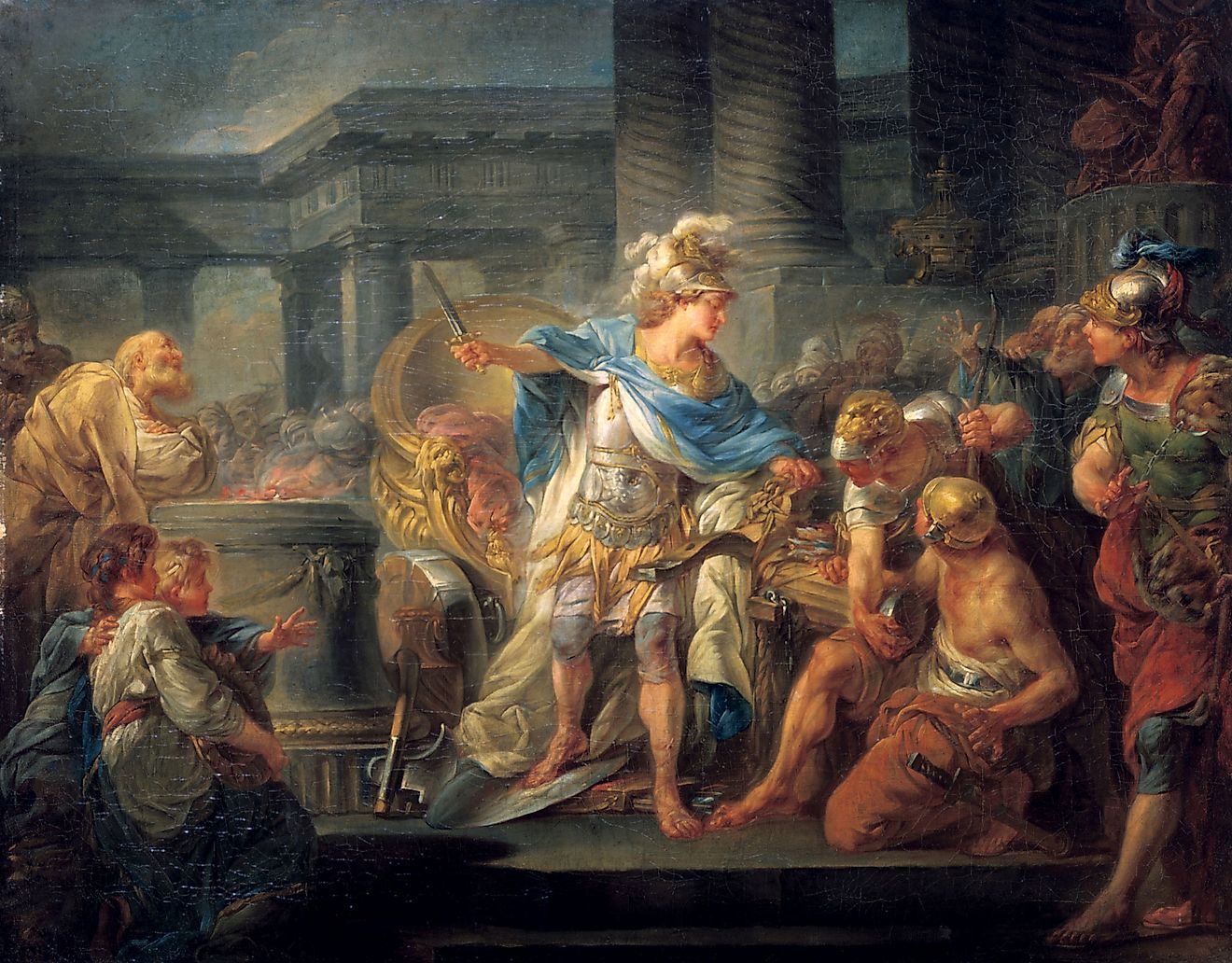
Alexander the Great conquered Egypt in 332 BCE. A welcome change from their previous overlords, the Persians, the Egyptians treated him as a liberator, and many adopted elements of the Greek culture he brought with him. Alexander also founded a city called Alexandria, which would become the main cultural hub of the Mediterranean world.
Not long after, Alexander died in 323 BCE. His empire, which stretched from the Balkans to India, quickly descended into civil war, with his generals fighting for control. One such general was Ptolemy, who established Egypt as his sphere of influence. He began by fortifying Egypt’s defenses. Then, in 321 BCE, he stole Alexander’s body from a funeral procession and placed it in Alexandria. Doing so accomplished two goals. First, it portrayed Ptolemy’s Egypt as the legitimate successor to Alexander’s empire. Second, it ingratiated Ptolemy with the local Egyptian populace, since Alexander was very popular. Ultimately, after a nearly 20-year civil war, Alexander’s empire officially broke up in 305 BCE. Ptolemy promptly declared himself pharaoh of Egypt, thereby establishing the Ptolemaic dynasty.
Egyptian Religious Traditions

The Ptolemaic Temple of Edfu, in what is now the Aswan Governate of Egypt.
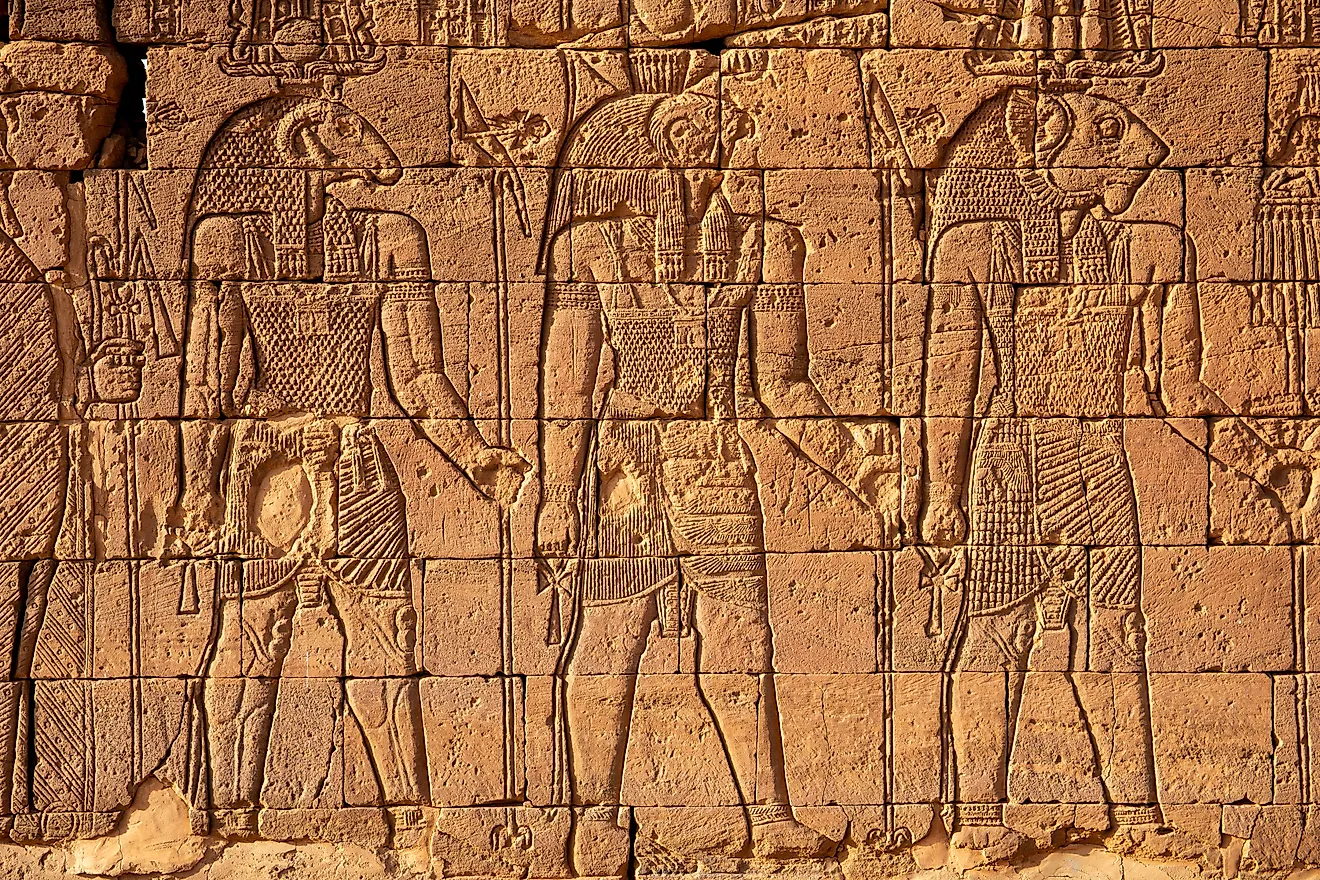
The choice of the title “pharaoh” was deliberate, since it signified that Ptolemy was both the political and spiritual leader of the country. Thus, adopting it was the first step in gaining the respect of people with thousands of years of religious traditions. For instance, in the Old Kingdom of Egypt (roughly 2700 to 2200 BCE), the sun god Ra was the dominant religious figure. Therefore, the pyramids were built as monuments to him. They also helped facilitate the transition of pharaohs to the afterlife. In the Middle Kingdom (roughly 2030 to 1650 BCE), Osiris, the god of the afterlife, gained popularity. Whereas previously it was thought that only pharaohs could travel to the afterlife, everyday people now believed that they could find life after death. Finally, religion in the New Kingdom (roughly 1550 to 1069 BCE) was characterized by a focus on Amun-Re, the “king of the gods”.
A Dual (and Fusion) System

Ruins of the Serapeum of Alexandria. By Zde - Own work, CC BY-SA 3.0, Wikimedia Commons.
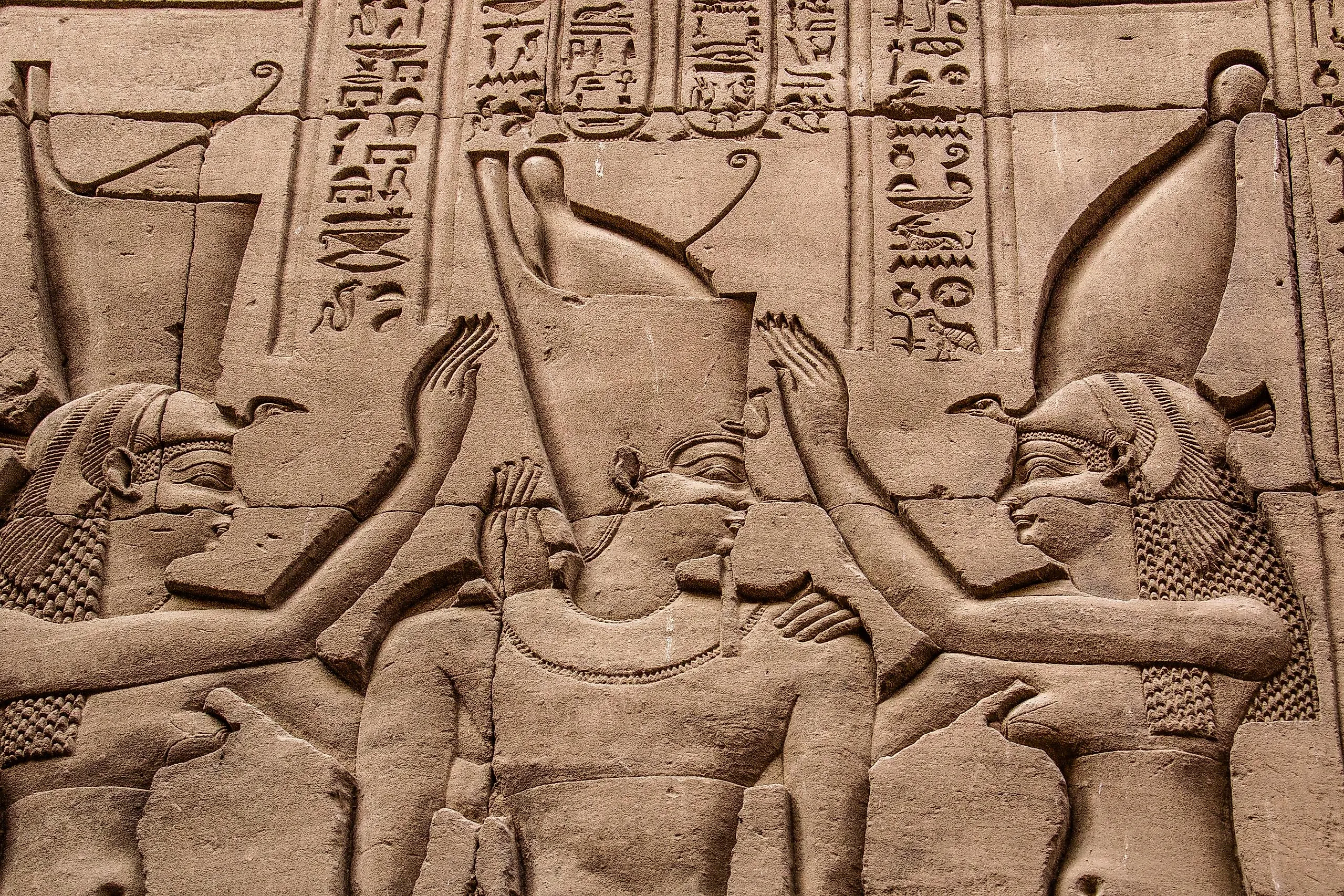
The Ptolemies needed to fully grapple with these millennia of religious traditions to ingratiate themselves with the local Egyptian population. Therefore, they created a dual system. The ruling Greek elites continued to worship traditional Greek gods like Zeus and Athena, and Greek-style temples were erected in major urban centres like Alexandria. On the other hand, the Egyptians were allowed to continue worshiping their gods like Ra and Osiris. The Ptolemies, understanding the need to placate the masses, built Egyptian-style temples to help enable the populace.
While this dual system was useful, the fusion of Egyptian and Greek religious traditions truly stabilised Ptolemaic rule over Egypt. This occurred through the creation of new gods, perhaps the most famous of which was Serapis. A combination of the Egyptian gods Osiris and Apis and the Greek gods Zeus and Hades, he proved immensely popular amongst Greeks and Egyptians. Religious fusion also happened through simple Greek adoption of Egyptian traditions. For instance, the goddess Isis was first worshipped during the Old Kingdom. However, Greeks also began worshipping her during the Ptolemaic dynasty, and Isis's influence subsequently proliferated throughout the Greek world.
An Insufficient Legitimizing Principle

Marble statue of the ancient Egyptian princess Cleopatra, made by Girolamo Masini in 1882. Image credit Wirestock Creators via Shutterstock.
The fusion of Greek and Egyptian religious traditions made religion a source of unity in Ptolemaic Egypt. Nonetheless, religion alone was insufficient for winning favor in the long term. Indeed, Egyptians were still second-class citizens ruled by an elite, Greek minority. They generally occupied less lucrative positions, like farmers and priests, and were also taxed more heavily than Greeks. This led to economic problems, as Egyptians became less productive since they knew that much of their income would simply be taken by the state. Several rebellions also occurred, during which the Ptolemies temporarily lost vast swaths of territory to competing, Egyptian-born pharaohs. The true limit of the Ptolemies' religious authority was finally demonstrated during the reign of Cleopatra VII (often just known as Cleopatra). Despite claiming to be the reincarnation of Isis, this did little to improve her increasingly tenuous grip on power and reliance on Roman aid. Ultimately, she committed suicide in 30 BCE after a massive military defeat, ending the Ptolemaic Dynasty and paving the way for Roman rule of Egypt.
Impact and Legacy
Religion was a defining feature of Ptolemaic Egypt. Inheriting a country with thousands of years of religious history forced the Ptolemies to fuse their own traditions with those of the Egyptians. Doing so legitimized the Greek dynasty in the eyes of many locals, and it also resulted in the proliferation of Egyptian gods throughout the Greek world. However, inequality was the dynasty's undoing, as religion alone could not make up for a two-tiered society in which the Greeks ruled over the Egyptians. Thus, the Ptolemaic dynasty collapsed in 30 BC.