Did The Roman Empire Inspire Future Dictatorships?
The Roman Empire did more to shape the West than almost any other civilization. Its sweeping socio-political influence inspired countless states throughout history, particularly those of the authoritarian ilk. Mussolini’s Italy is perhaps the most obvious example, since he explicitly presented himself as a modern Roman emperor. However, Nazi Germany, the Ottoman Empire, and even the Soviet Union drew inspiration from Rome. Here we'll explore how this ancient empire laid the groundwork for future dictatorships.
Fascist Italy

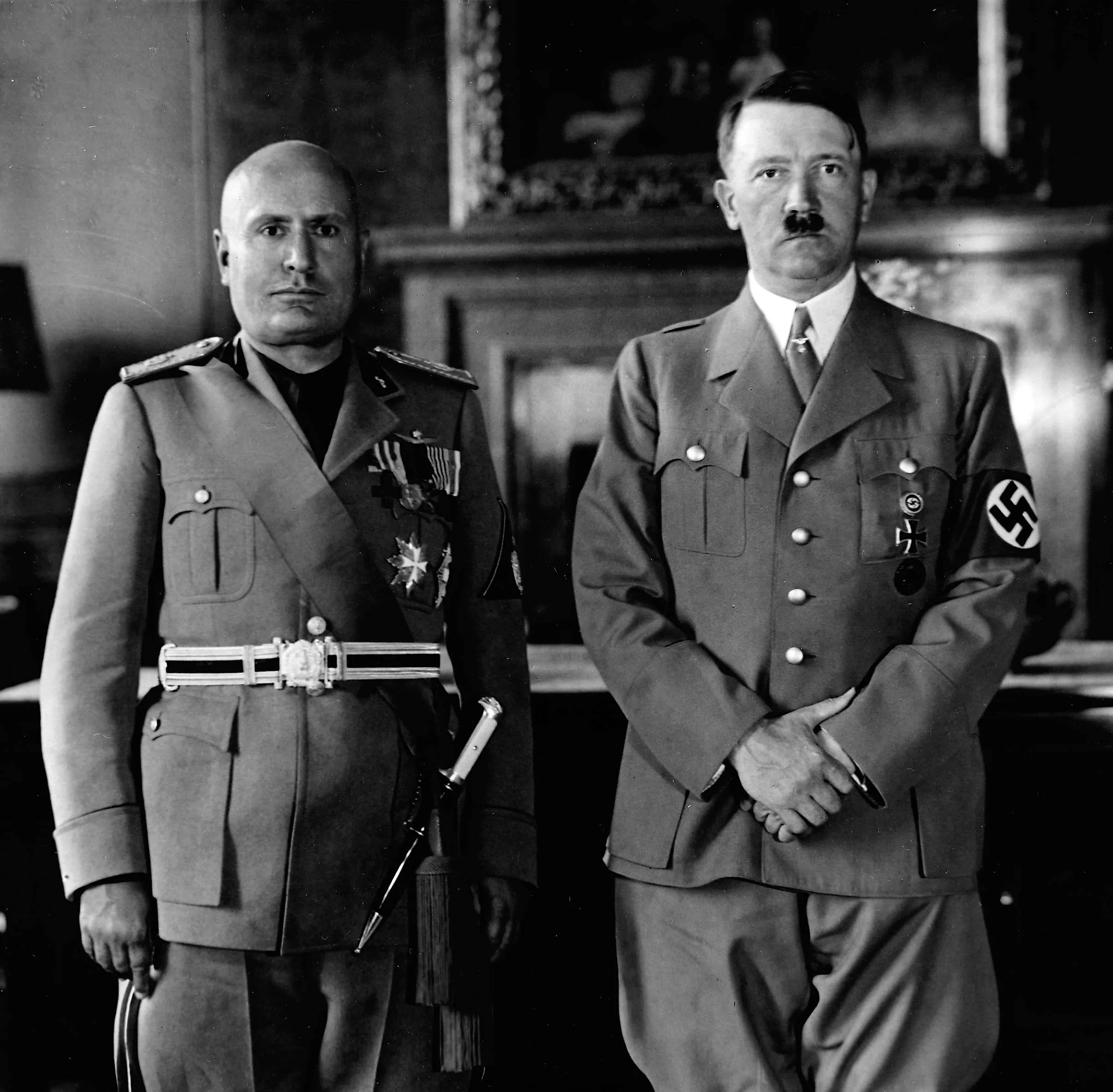
The Roman Empire was one of Fascist Italy’s biggest influences. The word “fascism” comes from the Italian fascio, connected to the Latin fasces: a Roman symbol of bundled rods, often surrounding an axe, representing authority. Mussolini also went by the title “Il Duce”, which came from the Latin word “dux” (leader). In doing so, he modeled himself after famous Roman dictators like Julius Caesar. Fascist Italy promoted what it called the “Roman salute,” presenting it as an ancient gesture even though its actual connection to Roman practice is disputed.
Inspiration went beyond symbols and linguistic continuity. Mussolini’s state-building and foreign policy were explicitly modeled after the Roman example. He often referred to the Mediterranean Sea as “Mare Nostrum” (Our Sea), the same term that the Romans used. The occupation of Albania and campaigns in North Africa and the Balkans fit Mussolini’s dream of Mediterranean dominance, while the invasion of Abyssinia reflected his broader effort to build a Roman-style overseas empire.
Fascist Italy never achieved this level of dominance. Whereas the Roman state, broadly speaking, existed for over 2,000 years, Mussolini’s regime lasted for less than 25 years. During this time, it required frequent military and financial aid from allies like Nazi Germany. Nevertheless, despite never achieving the same level of success, the Roman Empire’s influence on Fascist Italy is indisputable.
Nazi Germany
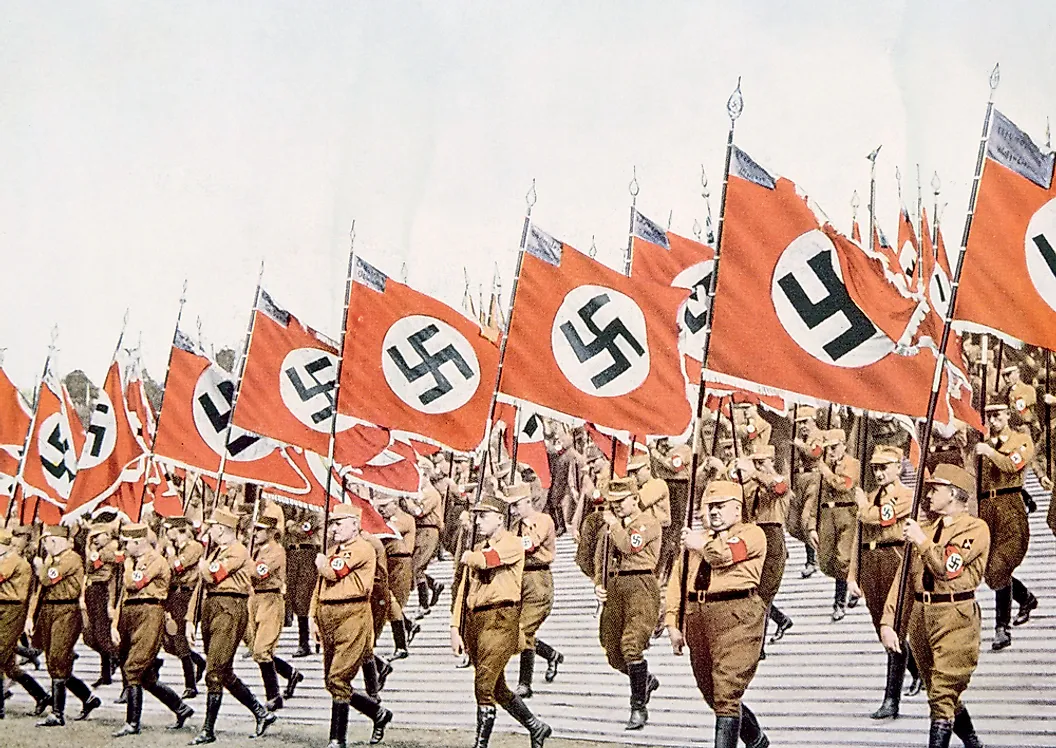
Nazi Germany drew significant inspiration from the Roman Empire. Hitler envisioned the Third Reich as a new German empire that would last for a thousand years, a longevity that rivaled Rome. The Nazis also admired Roman military achievements. Even though the Wehrmacht used more modernized and mechanized tactics during World War II, German military leaders still admired the Roman legions for their discipline, ferocity, organization, and ability to hold vast territories. Finally, Nazi architecture drew heavily on Rome. Hitler’s chief architect, Albert Speer, planned many buildings containing Roman features like massive columns and triumphal arches.
At the same time, Nazi Germany had some consequential disagreements with the Roman Empire, rooted in race. Hitler believed that Rome fell due to its population becoming diluted by foreign peoples. The real story was more complex. Territorial overreach, systemic economic problems, constant civil wars, and incompetent leadership were just some of the reasons why the Roman Empire fell. Nevertheless, Hitler built his empire on this false belief. While the Roman Empire was a multiethnic and multicultural state that granted citizenship to the peoples it conquered, Nazi Germany’s identity was one of racial hierarchy, exclusion, and genocide.
The Ottoman Empire

The relationship between the Ottoman Empire and the Roman Empire was very different from that of Fascist Italy or Nazi Germany. Whereas those two states admired Rome as a historical juggernaut, the Ottomans were responsible for the final collapse of the Eastern Roman state. While the Western Roman Empire fell in 476 AD, the Eastern Roman Empire (known retroactively as the Byzantine Empire) survived for the next thousand years. It only ended when the Ottomans captured its capital, Constantinople, in 1453 AD.
After taking the city, Ottoman Sultan Mehmed II adopted the title Kayser-i Rûm (Caesar of Rome), indicating that he considered himself the new Roman emperor. This belief was not unfounded. The Ottoman Empire stretched across the Balkans, Anatolia, the Levant, and North Africa, encompassing much of the same territory as the Eastern Roman Empire. The Ottomans often maintained Roman administrative practices, including their legal records, professional bureaucracies, and methods of tax collection. Many Roman bureaucrats also entered into the Ottoman government to ensure things ran smoothly during the transition of power. Finally, both the Ottoman and Roman states were universal empires that ruled over vast numbers of different peoples, including Turks, Arabs, Greeks, and Kurds.
The Soviet Union

The Soviet Union (USSR) didn’t openly claim Roman influence. However, there were some subtle yet meaningful commonalities between the two powers. The USSR was a multicontinental empire that stretched across eleven time zones. This sheer size meant that it encompassed many different ethnic groups, required extensive transportation networks, and necessitated significant investments in defense to secure its frontier territories. The Roman Empire had to consider all these factors too.
Authority was heavily centralized in both states. Leaders like Joseph Stalin and Augustus could make decisions from the capital that affected people across the empire. Soviet leaders, particularly Stalin, and Roman emperors had similar cults of personality as well. Like many Roman emperors, Stalin cultivated a public image of supreme authority through portraits, statues, ceremonies, and controlled political language.
The Soviet Union is better understood as a later empire that has often been compared to Rome, rather than one that directly modeled itself on Rome. Soviet scholars studied how economic problems, internal conflict, and territorial overreach all contributed to Rome's collapse. After the USSR dissolved in 1991, many observers drew parallels between its collapse and that of the Western Roman Empire.
An Indelible Legacy
The story of Rome is essential material for students of history. Its legacy offered later rulers lessons on power: how to build, scale, and maintain it in a volatile world. Unsurprisingly, echoes of Roman influence are traceable throughout many later authoritarian dictatorships. While drawing inspiration from Rome didn't make or break any of the above governments, its impact was undeniable. Rome gave ambitious rulers a vocabulary of grandeur, order, conquest, and permanence. Yet its history also carried a warning. The same empire that seemed to embody strength eventually buckled under the weight of internal division, economic strain, and overextension. Later dictatorships often borrowed Rome’s image of authority, but they could not escape one of its central lessons: even the most imposing states are vulnerable to the pressures they create.