Why Some State Parks Have No Snakes At All
Sorry, ophidiophobes, state parks in the United States with no snakes at all are few and far between. Snakes inhabit every single state in the contiguous United States. The exceptions are Alaska, which is too cold for them, and Hawaii, which is too far away for them to reach naturally. Venomous yellow-bellied sea snakes do turn up in Hawaiian waters, although they are seldom seen. Even the most common and widespread reptile in North America, the garter snake, cannot survive Alaska's extreme cold temperatures. Although a handful have been spotted along the Alaska Panhandle, established populations are not confirmed.
That makes Alaska and Hawaii the obvious places to start looking. Elsewhere in the United States, the answer is more complicated. Some parks have very few snakes because of their climate, elevation, habitat, or isolation. Other states, like Maine and Rhode Island, at least have no venomous snakes.
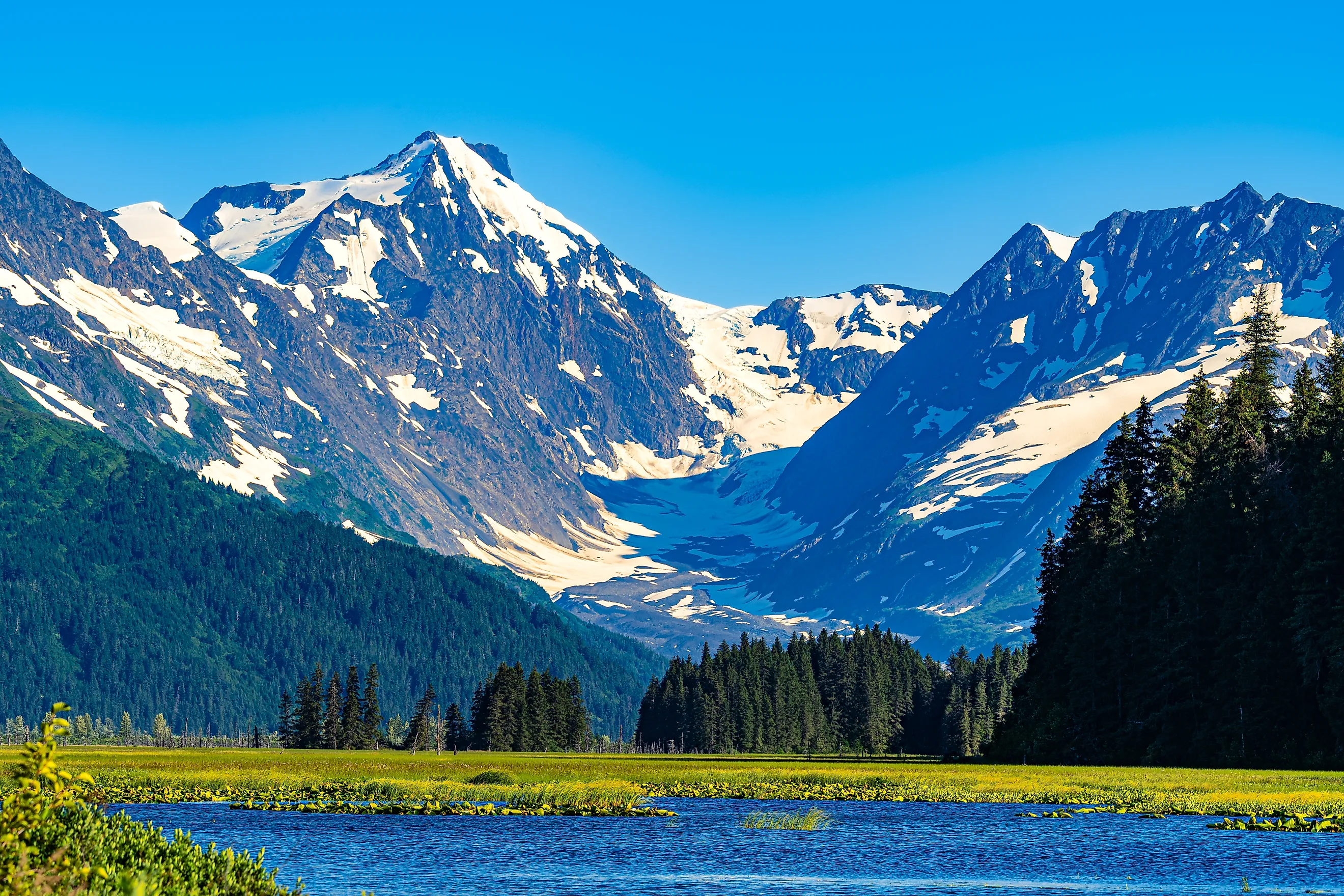
Why Alaska's State Parks Have No Snakes

There are no snakes in Alaska's state parks. There are, however, black and grizzly bears, moose, wolves, and lynx. But many people would rather encounter a snake slithering across the trail than meet a grizzly bear emerging from the bush.
Alaska has 120 state parks (including recreation areas and historic parks), including the largest conventional wilderness state park in the United States, Wood-Tikchik State Park. The park encompasses close to 1.6 million acres, consisting of 12 lakes over 1,000 acres, mountains exceeding 5,000 feet in elevation, and extensive lowlands.
Chugach State Park is east of Anchorage, making it the only large city in the nation with an almost 500,000-acre park as one of its boundaries. The park's diverse ecosystem of glaciers, ice fields, and lakes is boxed in by mountains and ocean. The park is accessible with 16 trailheads granting access to over 280 miles of trails.
Why Hawaii's State Parks Have Almost No Land Snakes

Hawaii's hot and tropical climate may seem like the optimal habitat for snakes, yet they are nowhere to be found. While the yellow-bellied sea snake has occasionally washed up on shore in Hawaii, it is very rarely seen. Hawaii's 50 state parks spread across the main Hawaiian Islands are nearly free from snakes. The chief exception is the tiny, harmless Brahminy blind snake, a worm-like introduced species now established in the islands, along with occasional stowaway reptiles and escaped pets, which are illegal.
Ka'ena Point State Park is at the westernmost tip of O'ahu, known for coastal hiking, native seabird colonies and panoramic ocean views. Hikers often view native seabirds, monk seals, and small marine life inside of tide pools. Waimea Canyon State Park is often regarded as the Grand Canyon of the Pacific, with several trails leading to lookouts of waterfalls, deep gorges, and red and green cliffs.
State Parks where Snakes are Rare

But it is not always practical to fly over the Pacific Ocean to Hawaii or to drive through Canada's remote wilderness to reach Alaska by car. Some state parks in the contiguous United States are easier to get to and have a lack of snakes for various reasons like topography and climate. Roxborough State Park in Colorado is located in the foothills of the Rocky Mountains. As the park's elevation fluctuates between 5,900 and 7,280 feet, it is too high for many snakes. Only four species have been documented in Roxborough State Park, but one of them is the venomous prairie rattlesnake (Crotalus viridis).
Bannack State Park in Montana covers close to 1,600 acres at an elevation of 5,837 feet. It is also the site of Montana's first major gold mine. Aside from over 50 buildings lining Main Street, there are 28 sites on the campground. However, just like Roxborough State Park, rattlesnakes continue to crop up in the rocky crevices even at a higher elevation.
State Parks Without Venomous Snakes

While snakes in general are hard to avoid in the United States, Maine and Rhode Island are not home to any venomous species of snake. Both states were historically home to timber rattlesnakes. In Maine, heavy persecution wiped them out by around 1860, while Rhode Island's population held on until the late 1960s, when bounty hunting and indiscriminate killing finished it off.
This leaves state parks like Grafton Notch State Park, where the Appalachian Trail climbs over Old Speck Mountain past waterfalls and rugged notches. Colt State Park in Rhode Island offers panoramas of Narragansett Bay, also free from venomous snakes. While visitors may encounter garter snakes, brown snakes, and milk snakes, none of these is venomous and poses no threat to humans.
Are There State Parks with No Snakes?
The reason state parks are completely free from snakes is hard to come by because snakes are highly adaptable. Cold keeps them from Alaska, the Pacific Ocean kept native snakes from Hawaii, and elsewhere in high elevations where not much else can survive, rattlesnakes somehow can. For visitors who are just weary of venomous snakes, Maine and Rhode Island are feasible options with very few nonvenomous species, too. But for anyone who cannot bear the sight of a snake slithering across the trail, Alaska is the surest option, since even Hawaii now has the tiny, introduced Brahminy blind snake.