The American Towns That Are Getting Younger
Most American towns got older between the 2010 and 2020 censuses, just as the country did. The national median age climbed from 37.2 to 38.8. Among incorporated towns of 1,000 to 50,000 people, only about one in five got any younger at all. Fewer than 300 dropped by three years or more. Seven of them show how it happens, and no two took the same route. In one it was an oil field, in another an airport, and in a third a retirement community where the age limits came down. The median ages here come from the census counts themselves.
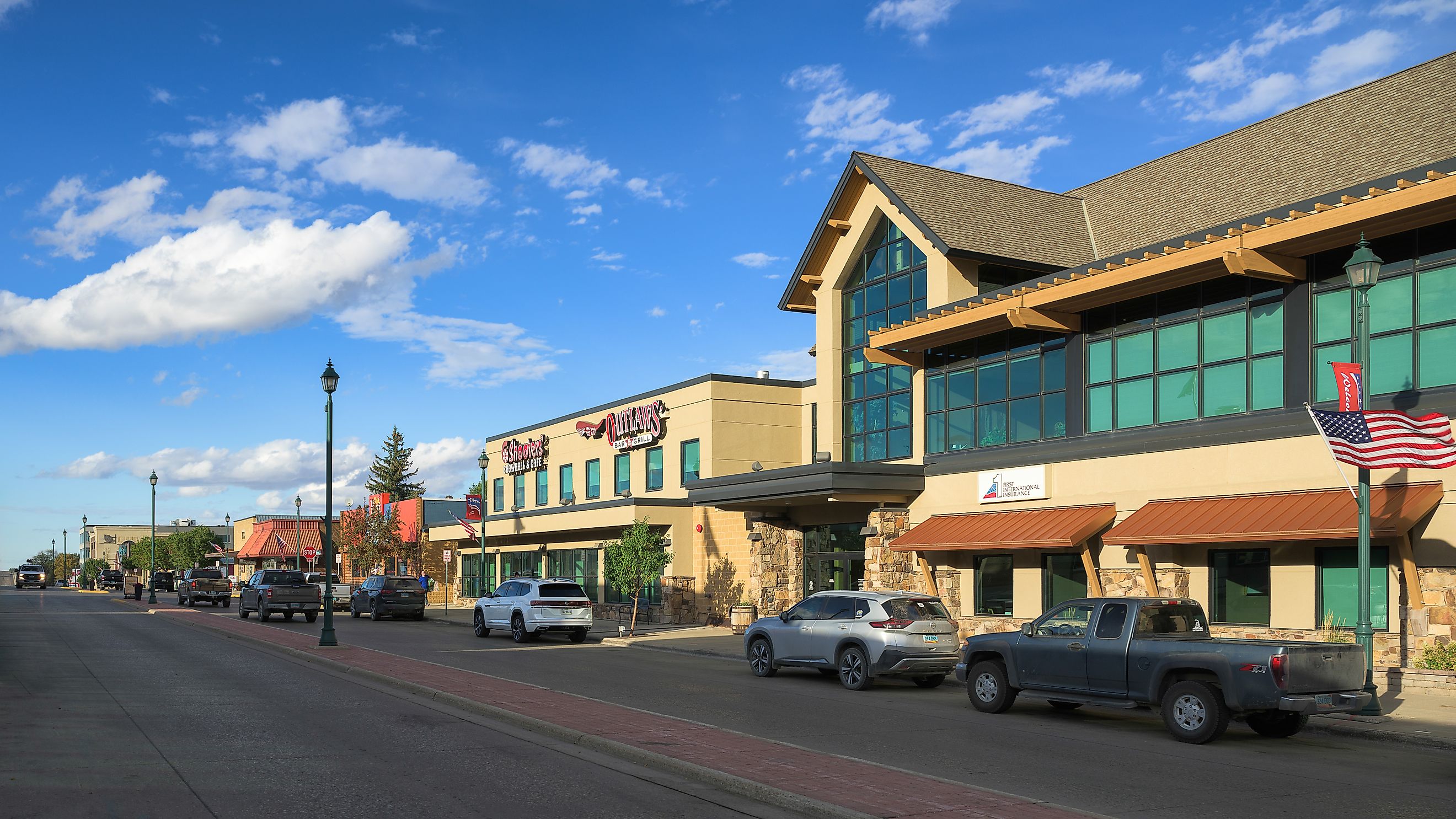
Watford City, North Dakota

At the height of the oil boom, almost 4,000 trucks a day crawled through Watford City, the seat of McKenzie County, North Dakota. The first arrivals were oil field workers, almost all of them men. The change turned up in the next count: the town's median age fell from 40.2 in 2010 to 29.3 in 2020, nearly 11 years younger in a decade when the nation got older.
The oil came out of the Bakken Formation, and the change is visible from orbit. The US Geological Survey keeps a Landsat series of Watford City with images taken between 2002 and 2025.
New school buildings went up to move students out of temporary trailers. McKenzie County School District No. 1 now enrolls more than 2,000 children in two elementary schools, a middle school, and Watford City High School. Wolf Pup Daycare opened in August 2014. The Bakken Area Skills Center opened in 2024 with courses for teenagers and adults alike. By 2021, truck counts through town had fallen to just over 320 a day.
Highfill, Arkansas

Eighty residents voted to incorporate Highfill in 1958, a step that brought natural gas service to town. This corner of Benton County in Arkansas had grown up around a rail depot built for apple shipments, and the line went bankrupt in 1914.
A different kind of transport link came next. In the early 1990s, Highfill annexed 7,000 acres east of its original 1,000-acre townsite, land that became the home of what is now Northwest Arkansas National Airport. Groundbreaking came in 1995, and dedication followed in 1998.
Highfill had 583 residents in 2010 and 1,587 a decade later. Over those same years, its median age dropped to 28.9 from 39.8, a slide of 10.9 years, the same as Watford City's. Growth has continued since, with 862 new residents in a single year, the largest percentage gain in the state, according to Census estimates released in May 2026. The abandoned schoolhouse became the town's community center.
Davenport, Florida

Some pipes in the old part of Davenport had been in the ground more than 100 years when the city replaced 90,000 feet of water line there. The fast-growing west side of this Polk County city in Florida has only new lines.
Davenport more than tripled over the decade, from 2,888 residents to 9,043. The median resident was 41.7 years old in 2010 but just 35.0 by 2020, a swing of 6.7 years against a national rise of 1.6. In early 2022, the city manager put the pace at about 100 new families a month, with single-family permits averaging around 125.
Davenport's older story is still easy to find. The Davenport Historical Society publishes a self-guided walking tour of the historic downtown, along with a driving Citrus Label Tour. About 6,000 people have turned out for the city's Christmas parade.
Williston, North Dakota

A surfing simulator opened on the northern plains in March 2014, inside a 236,000-square-foot recreation center on the Williston State College campus. The Williston Parks and Recreation District built the Williston Area Recreation Center for $64.5 million to keep oil-field families in town, and more than 431,000 visits were logged in its first year.
Inside are a 50-meter competition pool, an indoor water park, four basketball courts, a 200-meter track, and an indoor playground with child care on site. Within a year, new parents were pushing strollers around the walking track, and the building is among the largest park-district-owned indoor recreation centers in the country.
Williston, the seat of Williams County, nearly doubled between the censuses, from 14,716 residents to 29,160, and annexed enough land to triple its footprint, from 7.5 square miles to more than 23. The median age fell from 35.5 in 2010 to 30.8 in 2020. Across Williams County as a whole, the median age dropped 7.1 years between 2010 and 2017, the largest decline of any US county with more than 10,000 people.
Huron, South Dakota
Kindergarten classes in Huron were shrinking fast as the 20th century closed. In under five years, this Beadle County town in South Dakota lost its pork plant, its university, and the headquarters of its utility company.
Turkeys turned things around. Starting in 2002, more than 40 Hutterite colonies pooled their money for the plant that became Dakota Provisions, and the first bird went through in 2005. A recruiter chartered a tour bus that year on a hiring trip, and the first Karen refugees from Myanmar arrived in 2006. Many stayed, and the community has since opened three churches of its own.
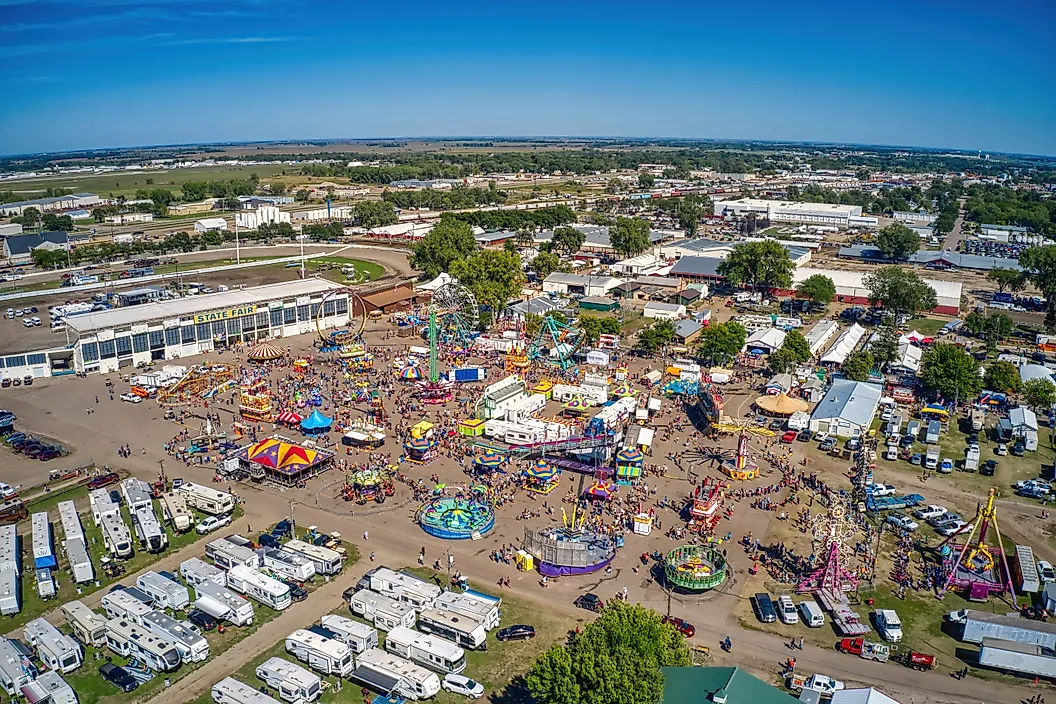
In 2013, a $22 million school bond needed a 60% supermajority and passed with 72%. With that money, the district regrouped seven elementary schools into three buildings sorted by grade. Between the two censuses, Huron's median age slid 4.9 years, to 34.9, while the country's rose. Huron is still home to the South Dakota State Fair, and the World's Largest Pheasant, a giant roadside statue, still stands over the town.
King City, Oregon

King City grew out of a plan for older adults, and it incorporated in 1966. The Tualatin Development Company turned Washington County farmland in Oregon into a community with a golf course, a clubhouse, and pools. The developer put all the utilities underground.
Several original neighborhoods still have an age limit, managed by the King City Civic Association. The city grew around them. In the 1980s, King City opened to all ages, and the Jordan Way subdivision became the first without an age restriction. Newer neighborhoods followed.
The 2010 census put King City's median age at 63.9, and the 2020 count put it at 59.3. That still leaves the town about two decades older than the nation. The city motto now reads "A community for all ages." Its one city-owned park, King City Community Park, runs along the Tualatin River and has been the site of the city's Fourth of July festival.
Arcadia, Wisconsin

Signs at Arcadia Elementary School have gone up in English and Spanish. The district's students were more than two-thirds white in 2011, and by 2019 the superintendent put the Latino share at 70%.
Jobs explain much of the change in Arcadia, which sits in Trempealeau County, Wisconsin. Ashley Furniture Industries keeps its corporate headquarters here and ranks as Arcadia's largest employer. Many of Arcadia's immigrant residents came to work there. By 2019, Main Street had two Mexican grocery stores.
Arcadia's 2010 median age of 32.9 had become 28.7 by 2020, about 10 years younger than the country as a whole and the lowest of these seven towns. Memorial Park covers 54 acres with an aquatic center, an amphitheater, and the Soldiers Walk, a tribute to members of the armed forces.
Seven Ways To Get Younger
None of these towns got younger by standing still. In each, younger workers and families moved in, drawn by oil wells in McKenzie County, a turkey plant in Beadle County, or new subdivisions in Brazoria County. Two very young towns were left off for the opposite reason. Storm Lake, Iowa, and Dodge City, Kansas, both had median ages near 30 when the decade opened, and each was slightly older by 2020.