8 Best Natural Wonders To Visit In The Ozarks This Year
The Ozarks contain some of America's oldest mountains. Scientists believe the core of the St. Francois Mountains formed around 1.5 billion years ago. Today, the mountains and their surroundings offer some of the region's most spectacular natural wonders. The Buffalo National River, for one, is a 153-mile marvel, with the National Park Service managing the lower 135 undammed miles to ensure visitors can explore throughout the year. Johnson's Shut-Ins State Park features a natural water park carved into rock that is more than a billion years old. Devil's Well lets visitors descend into a sinkhole to look straight down at a subterranean lake 100 feet below. These experiences, and many others, continue to draw millions of people to the Ozarks every year.
Buffalo National River

Arkansas's Buffalo National River was the first national river to be designated in America. The area is also known for its fossil record. The nearby Conard Fissure site was excavated in the early 1900s, revealing no fewer than 15 saber-toothed cat specimens, along with other big cats, bears, peccaries, and giant armadillos. The river is also popular with kayakers and hikers. Ozark towns offer outfitters that have everything visitors need to paddle the river. Afterward, the Lost Valley Trail offers a chance to see a cave and waterfall along an out-and-back route. You can also see lots of wildlife, including black bears, and catch fish like smallmouth bass and catfish. At night, when the moon and stars light up the darkness, people can look up to see the Milky Way from various points along the water. Spring is the best time to visit, when water levels are typically highest, and the waterfalls are full. Those who prefer cooler hiking weather or want to go leaf peeping should head to the river between October and November.
Hemmed-In Hollow Falls

Spending a couple of days at the river means plenty of time to explore the nearby Hemmed-In Hollow Falls. The waterfall sits about half a mile from the river and is accessible via a trail starting one mile downstream from the Jim Bluff marker. The waterfall cascades over the Ozark bluffs, 210 feet down, making it the tallest waterfall between the Appalachians and the Rockies. However, the water can dry up when there isn't enough rain, so check the forecast before heading there. The Hemmed-In Hollow Trail is also not meant for beginners. It sits in the wilderness and is very steep, so only experienced hikers should attempt it. The trail descends nearly 1,400 feet to the sandstone bluffs along the river, and when it widens, the views of the river and Ozark Mountains are unmatched. Those up for the challenge should plan their visit for spring or fall, when there is either rainfall or snowmelt.
Ozark National Scenic Riverways

The Ozark National Scenic Riverways protect the Current and Jacks Fork rivers in the Ozarks. Along with these exceptionally clear rivers, the Riverways also offer caves to explore, trails to hike, and the historic Alley Mill. The park extends along the riverbanks, so most sights are accessible by boat. These include Welch Spring, which flows from a cliff and was once thought to contain healing waters. The Alley Mill is a flash of deep red in a setting so green, it looks like something from Oz. From here, people can reach Blue Spring on Jacks Fork, where the water is, coincidentally, deep green, not blue. From the Blue Spring parking area, a dirt road leads to Rocky Falls, where visitors can swim in the summer. The next Blue Spring is actually blue, and from here a trail leads to the top of the ridge for great views. Most people visit the Riverways in the summer for swimming and canoeing. Those interested in seeing the foliage will find reds, yellows, and burnt orange shades everywhere in the fall, starting in September. Winter is great for quiet hikes and wildlife viewing.
Devil's Well
The Riverways also feature Devil's Well near Akers and Eminence in Missouri. It is a quick stop that reveals the largest underground lake in the state. A staircase leads to a wide viewing deck where people can look down at the lake, illuminated by a light. The lake was first explored in 1954, and it was found to be part of a karst system that formed over a long time. The waters are not empty. They are home to species that thrive in the dark, including the blind southern cavefish. For a longer hike, take the 4.6-mile Cave Spring Trail, a loop that begins at Devil's Well and is best for experienced hikers. The site also has a picnic table where families can take a breather after exploring the Riverways. The best time to visit Devil's Well is in the fall, when temperatures are still cool, or in the spring for the wildflowers.
Dogwood Canyon Nature Park

All 10,000 acres of the Dogwood Canyon Nature Park are a natural wonder in Lampe, Missouri. About 6.5 miles of paved paths and 2.5 miles of unpaved nature trails snake through the park, catering to hikers and bikers. Many of these trails pass waterfalls like the Glory Hole Falls. Visitors who do not want to hike can take guided tram tours past the falls and creeks. While exploring the park, visitors might also spot wildlife, including American bison. Anglers can enjoy hours of fly fishing in the various trout streams, and in spring, flowering dogwoods and redbud trees line the creeks. The fall colors the canyon walls in vibrant shades, while summer is best for fishing and tours.
Johnson's Shut-Ins State Park

The Johnson's Shut-Ins State Park is filled with constricted gorges in streams, known as shut-ins. These rock formations date back more than a billion years to ancient volcanic activity in the St. Francois Mountains. When the park is not flooded, visitors can explore these shut-ins. The park is also home to the Black River, which is surrounded by 4.5 miles of trails. These trails are part of the Black River Trail System, where people can mountain bike or hike. The Shut-Ins Loop is another easy way to see the shut-ins, with boardwalks and paved sections. For a more challenging trail, you can go horseback riding along the Goggins Mountain Equestrian Trail, which traverses the Goggins Mountain Wild Area. Other activities include camping in the woods and swimming when the green flags are up. When the red flags go up, access to the river is closed for safety. This usually happens after heavy rains. Late spring to early fall is the best time to visit the park, especially for swimming.
Hawksbill Crag

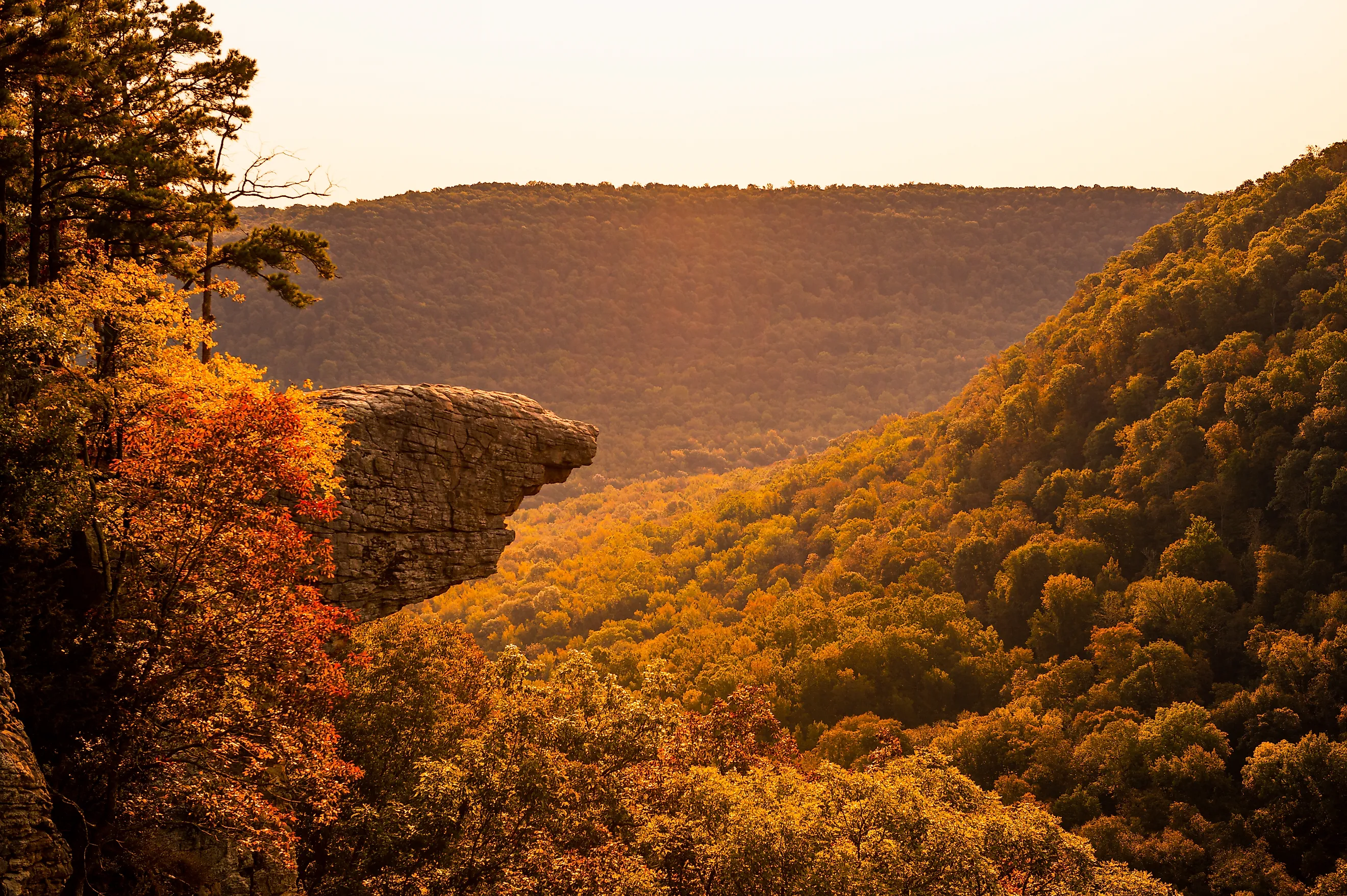
The Ozark National Forest boasts its fair share of natural wonders, including Hawksbill Crag, also known as Whitaker Point. The trail to the crag has an unmarked turnoff, so finding it is the first adventure. As people head up the 2.7-mile trail, the views open before them, revealing the Upper Buffalo Wilderness. The crag is a rocky ledge that looks like a hawk's head and offers even more views, especially during the fall when the trees turn bright gold, red, and orange. Those who hike in spring will also find wildflowers in every shade along the way. That said, from the crag, there is a sheer drop of 100 feet to the forest below. Use caution when moving along the trail and the cliff edges. Most people visit in the fall for the foliage or in the spring to see the wildflowers and waterfalls.
Elephant Rocks State Park

The granite boulders of Elephant Rocks State Park are a huge attraction for those who want to take selfies and enjoy a scenic picnic. During the spring and summer, people flock here to see the boulders, which formed from magma that cooled underground during the Proterozoic Era. Their blush shade comes from pink feldspar in the granite, while erosion over millions of years produced the rounded shapes that earned them the name of elephant rocks. The aptly named "Dumbo" is one of the biggest rocks, weighing 680 tons. Visitors often take the Braille Trail that takes them around the outcrop, where they can reach a spur trail to hike to the top. After enjoying the view at the boulders, visitors can take another spur trail to a lookout point overlooking the ruins of Missouri's oldest recorded commercial granite quarry.
The Ozarks Are Nature's Playground
The Ozarks have ancient foundations that in 2026 offer the chance to see pink boulders, explore underground lakes, and float down sparkling rivers. And the best part is the solitude that this part of the U.S. offers. There are crowds from time to time, but there is always a trail or overlook where peace and quiet reign, right in the heart of nature.