Prairie Rattlesnake
Slithering amidst the sun-scored grasses of the Great Plains, the prairie rattlesnake (Crotalus viridis) uses heat-sensing pits to ambush prey and a distinctive rattle to deter intruders. This venomous serpent has one of the largest ranges of all rattlesnakes, able to withstand Canadian winters and thrive in the summers of the Southcentral United States and Northern Mexico. Subsisting primarily on small mammals and birds and with a tendency to warn first or flee, the prairie rattlesnake is not of significant concern to humans sharing its habitat. However, we need to be mindful of our behavior around them to prevent harm in either direction. Since bites are not unheard of, let's get to know the prairie rattlesnake and how best to coexist across this beautiful and bountiful landscape.
Description

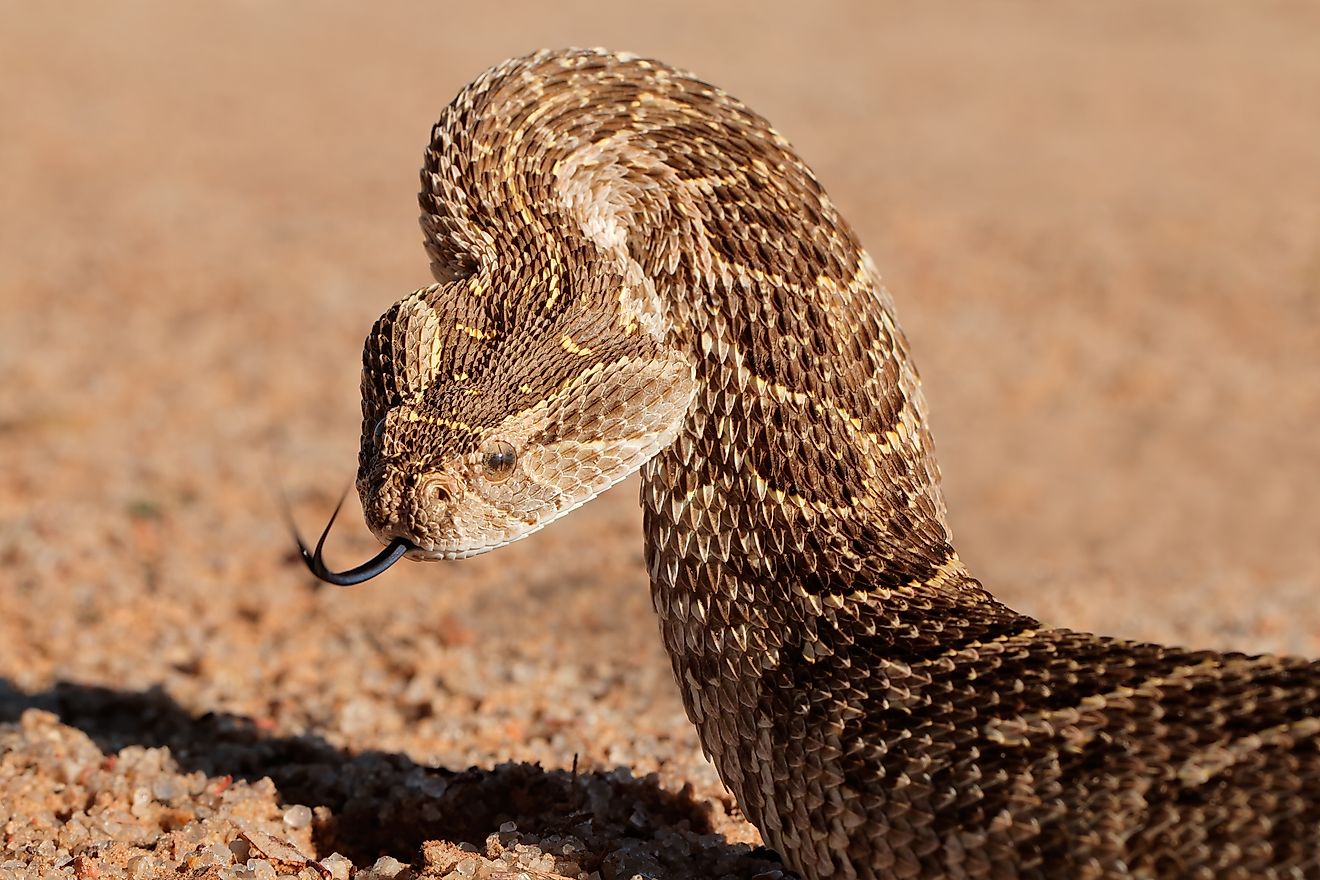
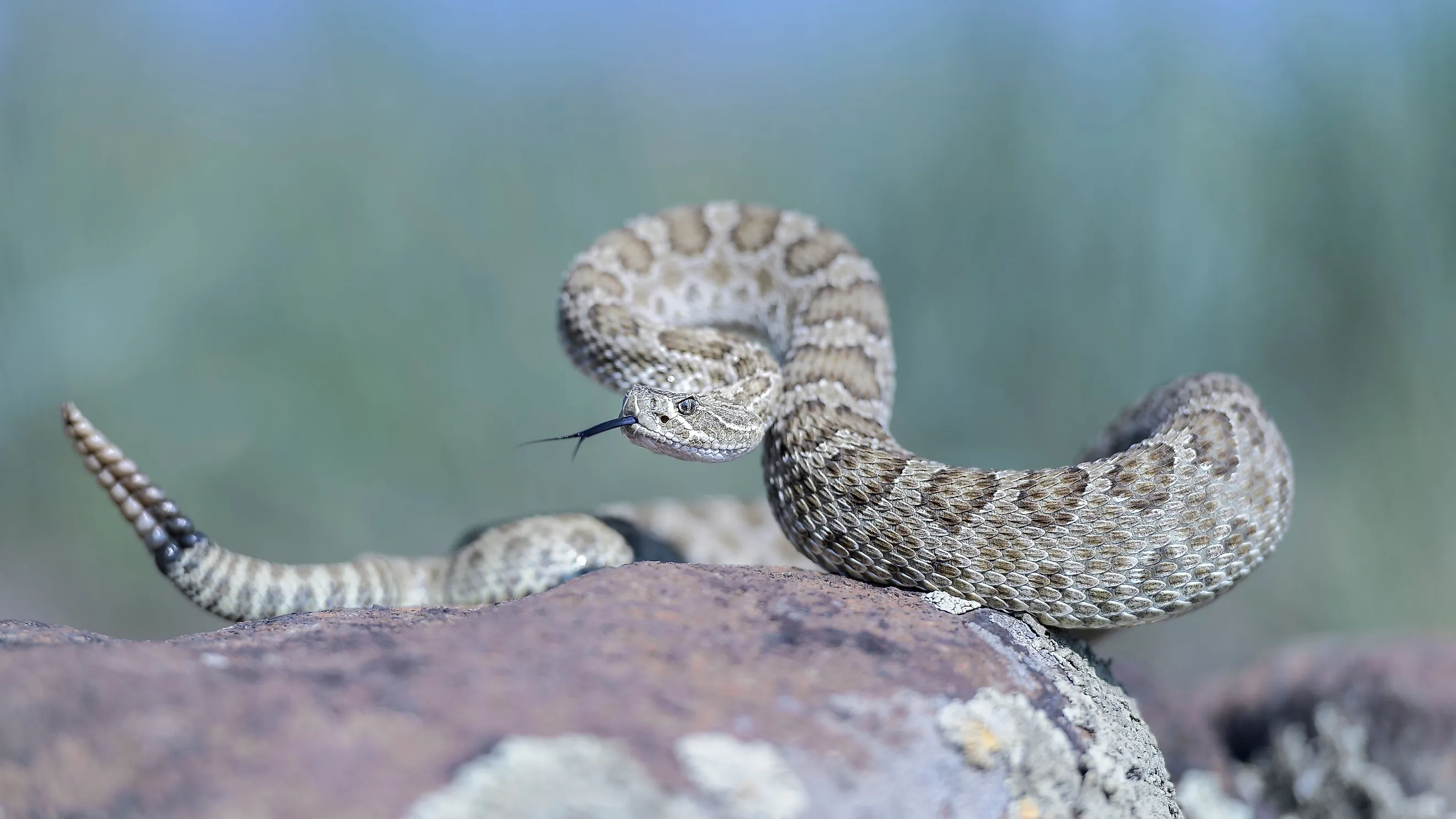
Prairie rattlesnakes are stout-bodied pit vipers, commonly reaching 3.3 feet (one meter) in length, but able to grow in excess of five feet (1.6 meters). This species, like its North American cousins, is bookended by a triangular head and rattle-tipped tail. With light brown/beige/green base tones and darker blotches (sometimes resembling saddles) along their back, which gradually transition into rings as they near the tail, prairie rattlesnakes effortlessly camouflage with their surroundings. This comes in handy when ambushing prey. Upon identifying an unsuspecting critter using their aforementioned "pits" — heat-sensing organs between their eyes and nostrils — they strike fast with two venom-injecting fangs. Unlike constrictor snakes, prairie rattlers then release their prey, and follow it until it succumbs to the hemotoxins and cytotoxins. At this point, the meal is swallowed whole. Head first. Dead or alive.
Distribution

Beginning in the southern portions of the Central Canadian provinces of Alberta and Saskatchewan, continuing south, between the eastern side of the Rocky Mountains and the western bank of the Missouri River, through the Southcentral United States, and into the Northern states of Mexico, the prairie rattlesnake has one of the most impressive distributions of all rattlesnakes. But it isn't just raw acreage that earns the prairie rattler accolades; its habitat range is also noteworthy. This species is found roughly between sea level and altitudes approaching 9,000 feet — commonly in the gentle grasslands and dramatic badlands associated with its name, but also in transition zones between rivers and uplands, and even in mountainous woodlands.
Northern populations of these cold-blooded serpents seek winter refuge in dens, where they brumate with other snakes (even those from other species) from August through mid-September, and again from late-March through early-May. Interestingly, prairie rattlesnakes use the same den each year, which might take the form of an eroded channel, an abandoned burrow, or a rocky outcrop, and can die if their usual spot is destroyed during the summer season.
Diet

Mice, voles, prairie dogs, gophers, small rabbits, squirrels, birds, and amphibians are all on the menu for prairie rattlesnakes, depending on the specific environment. Because they can blend into the grass and rocks and because they experience what researchers suspect is a form of infrared vision, prairie rattlesnakes are adept ambush hunters. Upon sinking their fangs into the soft flesh of their prey, prairie rattlers inject between 20 and 50% of their available venom, which is catastrophic for the cells and tissues of these small creatures.
Lifespan & Reproduction

Prairie rattlesnakes can live up to 20 years in the wild and 24 in captivity. Males reach sexual maturity in three to four years, whereas females take an average of five to six years. Following the outcome of a customary "combat dance," in which two opposing males rise to face each other and attempt to throw the other to the ground, breeding may occur during the spring, near the den, or across feeding grounds later in the summer.
The former timeline results in births that same year, whereas a summer fertilization leads to a pause in embryonic development over the winter to ensure birth the subsequent season. An important caveat is that northern populations tend to reproduce once every second or third year. Litters typically consist of 4-13 live young (depending on the size of the female), but can reach 25. Each ruler-lengthed baby is equipped with fangs and venom, but not yet a rattle — that forms after the first shedding of the skin, and continues to develop with each growth cycle.
Population Status and Threats

The continental population, as a whole, is stable and of "Least Concern." However, the Committee on the Status of Endangered Wildlife in Canada lists it as a "Species of Special Concern." Because northern populations of prairie rattlesnakes forego eating during winter brumation, they can lose up to 14% of their body mass. This leads to higher rates of mortality compared to southern populations. Likewise, because of their deferred reproduction schedule, Canada's prairie rattlesnakes are not achieving population replacement rates. This decline is further exacerbated by habitat loss due to city expansions and increased traffic (snakes of all kinds meet their demise while sunning themselves on roads).
Regardless of the status of sub-populations, all prairie rattlesnakes face daily threats of predation at the jaws and claws of carnivorous mammals, birds of prey, and, in some cases, king snakes.
Snake Encounters

Those roaming the parks and rural landscapes of the North American prairies should be aware of where they place their limbs. If you spot a rattler on the trail or around a campground, give it a berth of at least six feet or two to four meters. Usually, it will simply zip off into the bushes. It may also hold its ground, either slowly slinking off or, if it feels threatened, raising its head and neck to look bigger while rattling and hissing.
Rattlesnakes don't try to chase off potential predators, and even defensive bites are rare. These typically result from stepping on a camouflaged specimen or reaching into its covered resting place without looking (so it may be best to surrender that frisbee or golf ball).
Approximately 20% of bites are not accompanied by the injection of venom (a phenomenon known as a "dry bite"). This makes sense, as venomous snakes need this resource for hunting. Nonetheless, medical attention should be sought immediately to avoid infection and, if necessary, to receive intravenous antivenin.
Parting Thoughts on the Prairie Rattlesnake

Jogging through the striated, fossil-filled badlands of Alberta's Dinosaur Provincial Park, I turned a corner and came across a prairie rattlesnake on the gravel trail. Given the coolness of the summer morning, it had been peacefully sunning itself, but must have been prompted by the vibration of my approaching footfall. Already on the far side of the path, but still just out of striking distance, the snake showed no aggression. Instead, it simply slithered steadily toward the grass. I snapped a quick picture, watched it shift out of sight, and then continued my jog with an added appreciation for this complicated creature.
Prairie rattlesnakes possess potent venom and can look and sound rather intimidating when cornered, but under most circumstances, they are content to keep a low profile. So don't let the presence of this rattlesnake deter you from exploring the vast and serene landscape after which it is named.