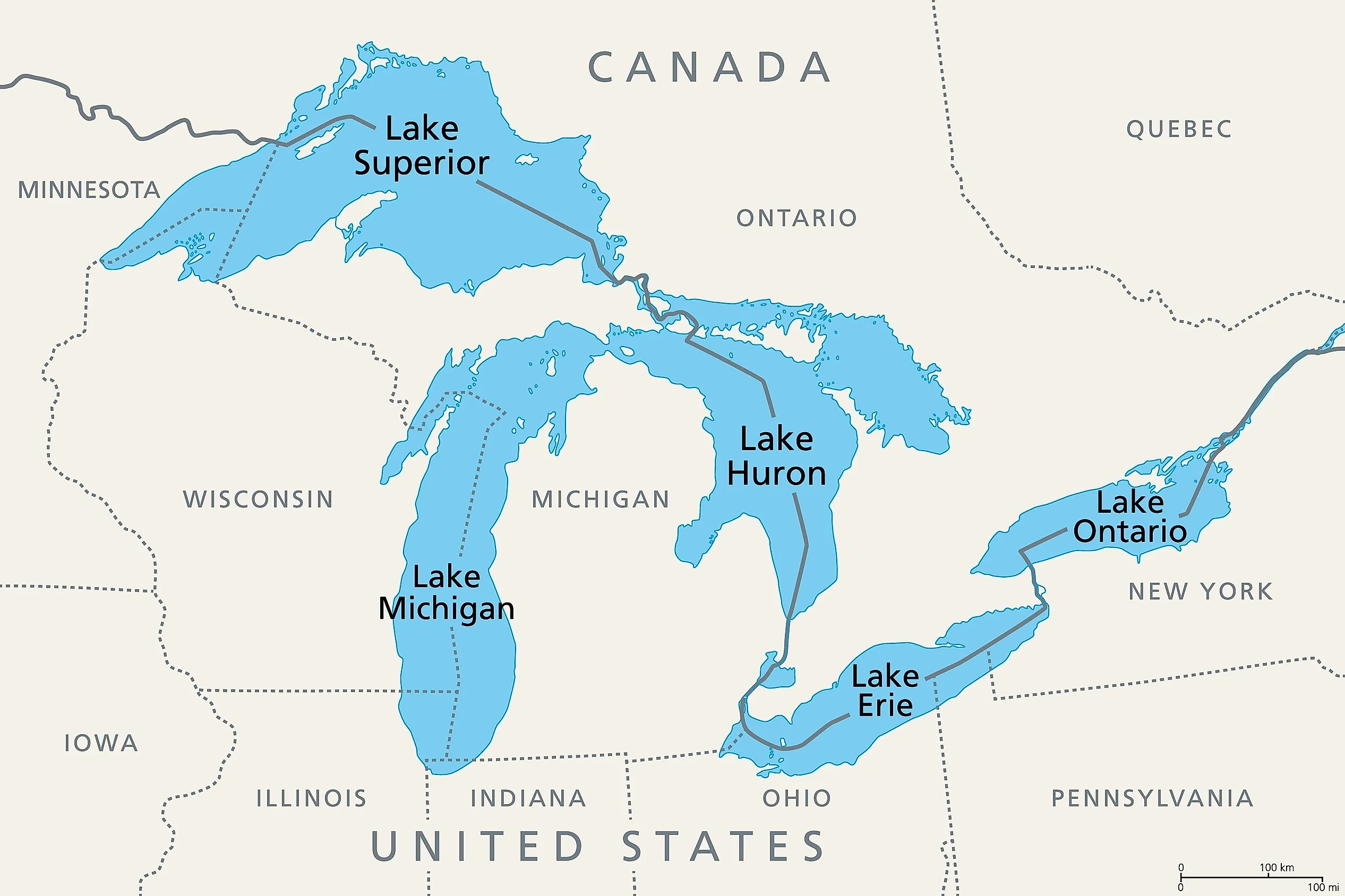
How Lake Vostok Compares To The Great Lakes
Nobody has ever seen Lake Vostok. Not "few visitors make the trip" or "access is restricted." Nobody has laid eyes on it, ever, because it is sitting under two and a half miles of Antarctic ice and was only discovered by radar in the 1990s. It is smaller than every Great Lake by surface area and holds more water than four of them. It is twice as deep as Superior. It has been sealed off from the atmosphere since roughly the time the Himalayas were still growing. And the margin of error on its volume is, by itself, larger than Lake Ontario.
It Loses The One Round Everybody Measures
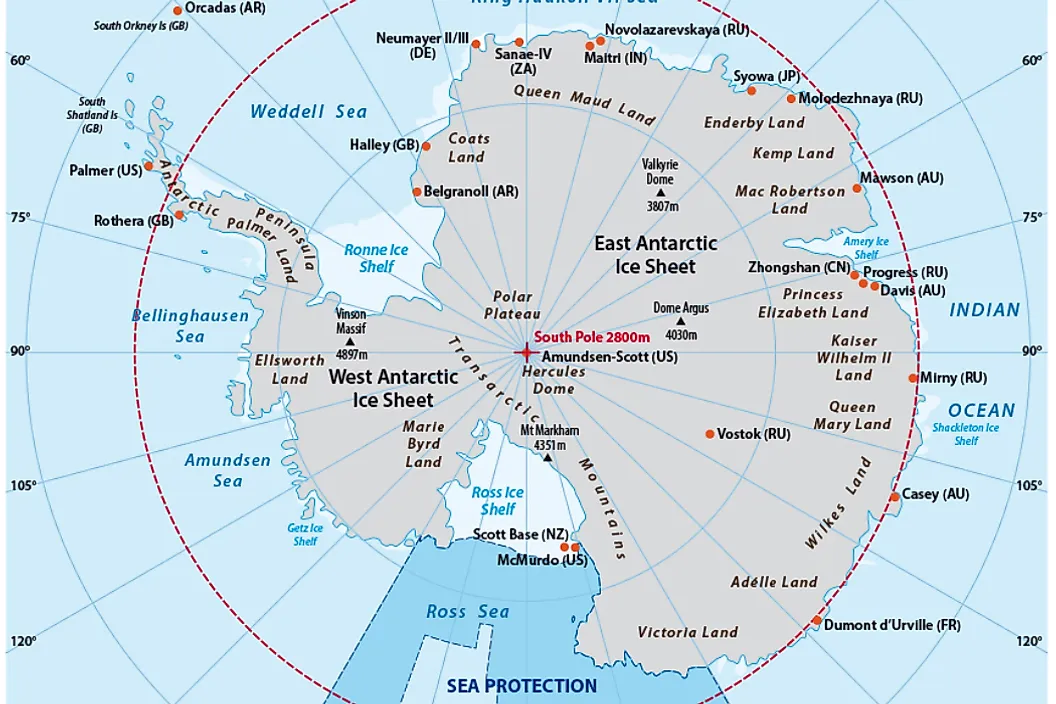
Vostok runs 250 kilometers long by 50 wide, covering roughly 12,500 square kilometers, which makes it the sixteenth largest lake in the world and the smallest thing in this comparison.
Lake Ontario, the runt of the Great Lakes, covers 18,960 square kilometers. Vostok is about two thirds of that. Against Superior it manages 15 percent. On a map it would look unremarkable, which is convenient, because on a map it is invisible anyway.
Then It Wins Everything Else Extremely Rudely
Vostok holds an estimated 5,400 cubic kilometers of water. Lake Michigan holds 4,920, Huron holds 3,540, and Ontario holds 1,640. You can see where this is going.
So the smallest lake here by surface area out-volumes three Great Lakes outright, triples Ontario, and beats Lake Erie by a factor of eleven while covering half Erie's footprint. Only Superior comes out ahead, and Superior needs six and a half times the surface area to manage it.
Vostok is the sixth largest lake on Earth by volume and the sixteenth by area, which is a gap that tells you it is essentially a very deep crack with water in it.
Superior Is Not Even Close On Depth
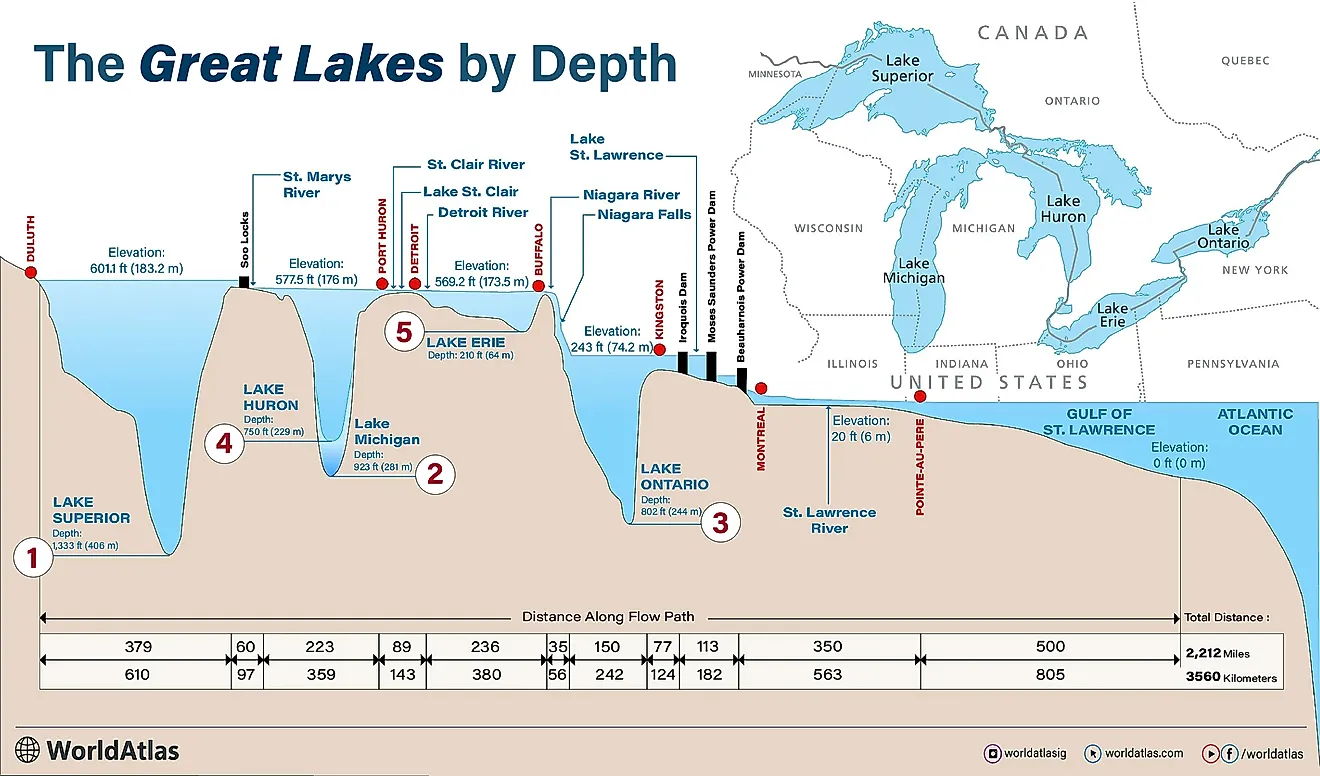
The southern basin bottoms out around 800 meters, with some estimates pushing past 1,000. Superior, the deepest Great Lake and by any normal standard a genuinely serious body of water, stops at 406.
That makes Vostok about twice Superior, three and a half times Huron, and twelve and a half times Lake Erie, which at 64 meters is starting to look less like a Great Lake and more like a large puddle with good publicity.
There Is A Skyscraper's Worth Of Ice On The Roof
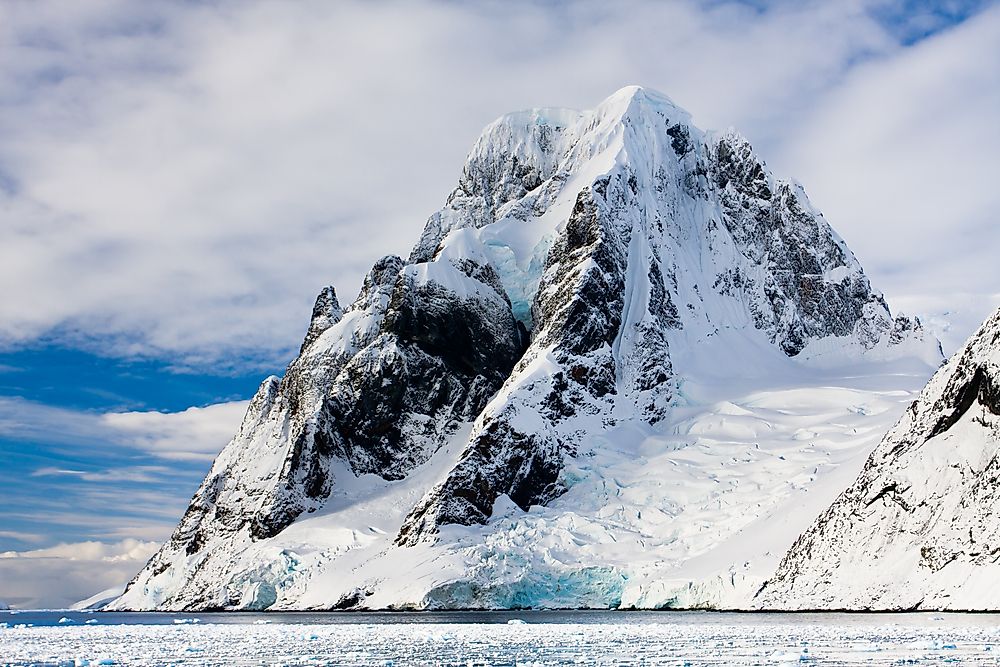
The ice above Vostok runs 3,700 to 4,100 meters thick. That is not snow cover or a frozen surface. That is four kilometers of solid ice standing between the lake and the sky.
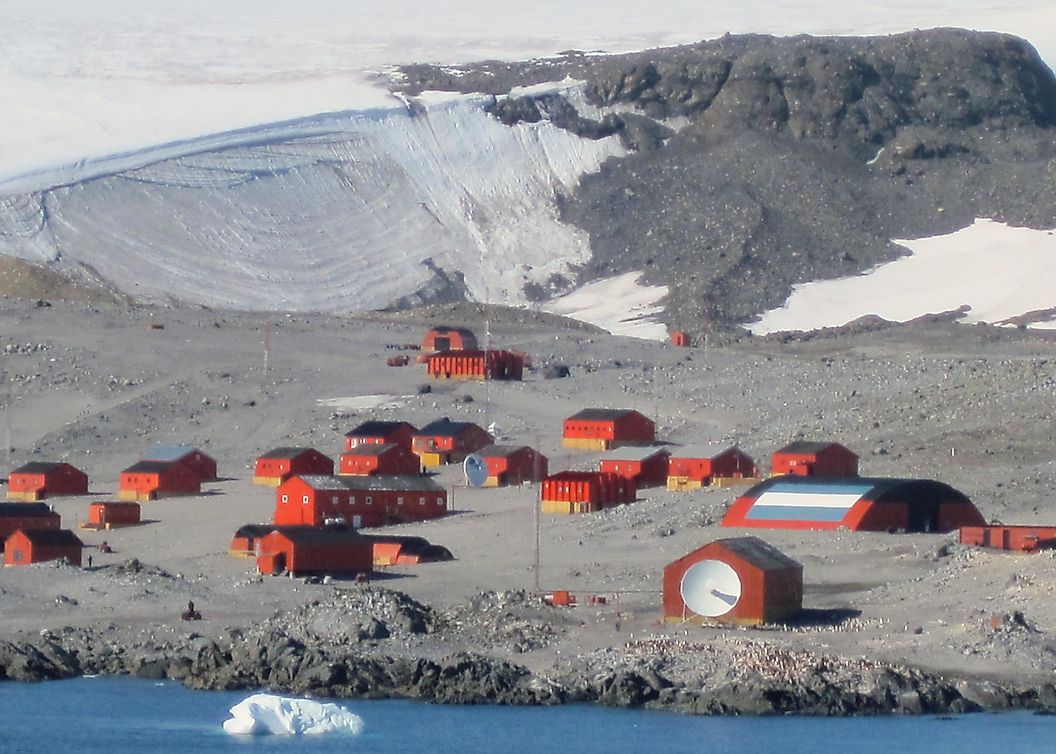
Vostok Station, the Russian base directly overhead, sits at 3,488 meters above sea level, which means the researchers are working at serious altitude while the lake beneath their feet is below sea level. Antarctica is the only place where that sentence makes sense.
It Should Be Frozen Solid And Simply Refuses

The water sits at about minus three degrees Celsius and remains liquid, which sounds like a misprint and is not. Four kilometers of ice presses down with something like 350 to 400 atmospheres of pressure, and pressure that severe pushes the freezing point below zero. Geothermal heat warms it from underneath while the ice sheet insulates it from the air above.
Which is just as well, because the air above is the coldest on the planet. Vostok Station recorded minus 89.2 degrees Celsius on July 21, 1983, the lowest temperature ever measured on Earth. The lake underneath it is a comparatively tropical minus three.
The Water Is Chemically Deranged

Vostok is supersaturated with oxygen at roughly fifty times the level of ordinary freshwater, because the weight of the ice forces dissolved gases into solution. One estimate puts it at 2.5 liters of dissolved nitrogen and oxygen per kilogram of water.
It is also oligotrophic in the extreme, meaning there is almost nothing dissolved in it that anything could eat. Drowning in oxygen while starving to death is not a combination found in any surface lake, and it is why biologists find the place so interesting and so unsettling.
The Water Is Older Than Most Mountain Ranges
The Great Lakes were carved by ice sheets and filled about 14,000 years ago, which in geological terms is roughly last Thursday.
Vostok has been sealed beneath its ice for somewhere between 15 and 25 million years. Its residence time, meaning how long it takes to replace its entire volume, runs to around 13,300 years. In other words, one full turnover of Lake Vostok takes approximately as long as the Great Lakes have existed.
Every drop in Lake Erie has cycled through countless times since the glaciers left. Vostok has managed roughly a thousand changes of water in its entire history and is in no particular hurry.
Getting To It Took Two Decades And Caused An Argument

On February 5, 2012, a Russian team finished the longest ice core ever drilled, 3,769 meters of it, and finally punched through to the lake. The first core of freshly frozen lake ice came up on January 10, 2013, and a cleaner sample followed in January 2015.
Not everybody was thrilled. The obvious problem with reaching a body of water sealed off for 15 million years is that you have to drill through four kilometers of ice to do it, and the drill needs fluid, and the fluid has to go somewhere. Humanity located the most pristine environment on the planet and immediately worried about ruining it, which was the correct concern.
It Is Basically A Rehearsal For Another Planet
The real reason anyone funds research here has remarkably little to do with Antarctica. A sealed body of liquid water under kilometers of ice, warmed from below and cut off from the atmosphere, is the closest available analogue to the subsurface oceans believed to exist on Jupiter's moon Europa and Saturn's moon Enceladus. Whatever manages to live in Vostok is a clue about what might be living out there.
Nobody is using Lake Huron to model Enceladus, is the point.
Every Number Here Has A Wobble
Before anybody takes this article into a pub argument, one warning. The volume estimate is 5,400 cubic kilometers plus or minus 1,600, which means the error bar alone is bigger than Lake Ontario.
Surface area estimates range from 12,500 to 15,690 square kilometers, and average depth from 344 to 432 meters. This is a lake measured by bouncing radar through two and a half miles of ice, rather than by someone in a boat with a rope. The precision reflects the method.
The Scoreboard
Lake Vostok is smaller than all five Great Lakes, deeper than all five, and holds more water than four. It is sixth in the world by volume and sixteenth by area, which is the statistical signature of a lake that went down instead of out.
It has no shoreline, no boats, no beaches, no towns, no waves, no confirmed fish and no view. The Great Lakes comfortably win every practical category available. Vostok wins the only one that matters at parties, which is that it is a vast hidden ocean beneath the coldest place on Earth that nobody has ever actually seen.