How Much Of The Colorado River Mexico Actually Gets
The Colorado River is sliced up among seven thirsty US states and one country at the very end of the line: Mexico. So how much does Mexico, the place where the river finally runs out, actually get? The answer is a precise, decades-old number, a surprisingly small slice of the whole, and a river so thoroughly drained by the time it crosses the border that it dies in the desert before ever reaching the sea.
The Number: 1.5 Million Acre-Feet
The figure comes straight from a 1944 treaty between the United States and Mexico, and it has held firm for 80 years: Mexico is guaranteed 1.5 million acre-feet of Colorado River water every single year, delivered right at the border. It is a fixed, binding promise, and one of the very few hard numbers in the whole tangled, endlessly litigated system of Colorado River law. Whatever else happens upstream, that 1.5 million acre-feet is written down in black and white.
That's Just Under a Tenth of the River
To see how modest that slice really is, line it up against everyone else. The 1922 Colorado River Compact split 15 million acre-feet between the Upper Basin states of Colorado, New Mexico, Utah, and Wyoming and the Lower Basin states of Arizona, California, and Nevada, dividing it 7.5 million apiece. Mexico's 1.5 million, added by treaty two decades later, works out to just under 10 percent of the river's historical flow. As the country sitting at the very bottom of the watershed, Mexico was handed the smallest portion of all, and it has to make every drop count.
It All Stops at Morelos Dam

Mexico's share does not travel far once it crosses the line. Just about a mile south of the border sits Morelos Dam, the very last dam on the entire Colorado River. Under normal operations, it diverts essentially all of the remaining water into the Reforma Canal, which feeds the sprawling farms of the Mexicali Valley. Roughly 1.2 to 1.3 million acre-feet a year irrigate about half a million acres of crops there, while the rest supplies thirsty border cities like Tijuana and Mexicali. In other words, the river's water is spoken for right down to the very last drop.
The River Dies Before the Sea

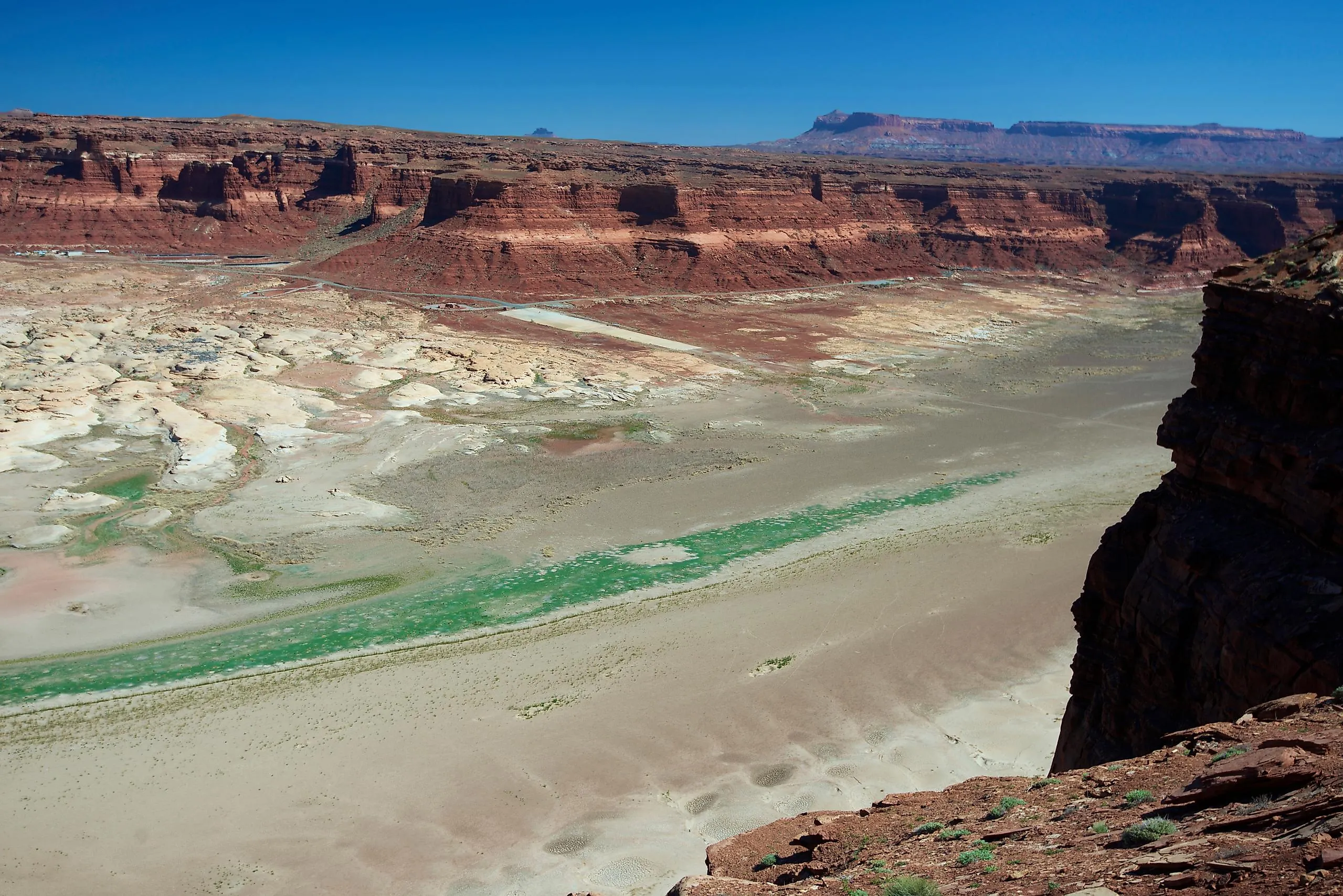
And this is exactly why the Colorado, one of the most storied rivers in all of North America, no longer reaches the ocean. Below Morelos Dam, the channel runs dry, or at best a muddy trickle, for roughly 90 miles before it would meet the Gulf of California. Since the 1960s, nearly every drop has been stored, diverted, or used up long before getting that far, and the river's once-enormous delta, formerly a huge maze of green wetlands teeming with life, has shriveled into cracked mudflats. The mighty Colorado simply expires in the sand.
The Pulse That Reached the Ocean

There have, at least, been glimpses of what used to be. In 2014, under a binational agreement called Minute 319, the United States and Mexico opened the gates at Morelos Dam and deliberately sent a "pulse flow" of about 105,000 acre-feet rushing downstream. For the first time in roughly 20 years, the Colorado River trickled all the way to the sea, briefly greening the delta and drawing back birds and wildlife for a few genuinely remarkable weeks. Follow-up deals have since set aside modest amounts of water to keep reviving stretches of the delta, proving that even a little water goes a surprisingly long way down there.
Less in a Drought

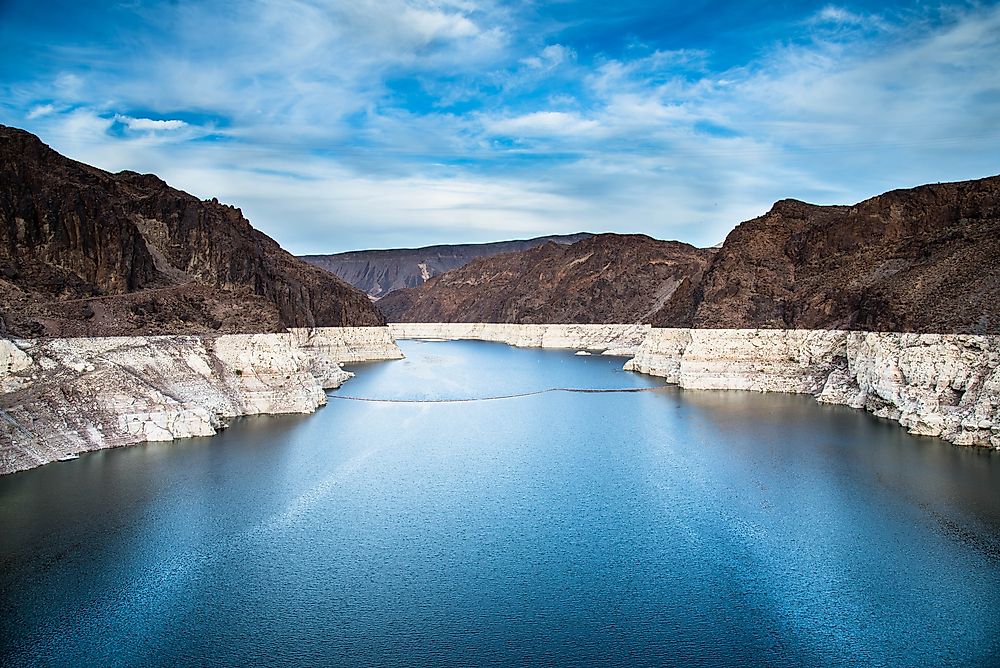
Here is the catch buried in that tidy 1.5 million acre-feet: it shrinks when the times get dry. Under more recent agreements, Mexico now shares in the shortages right alongside the United States, so when Lake Mead falls to critical levels, Mexico's delivery gets trimmed along with everyone else's. In the 2022 cutbacks, for instance, Mexico absorbed a 5 percent reduction. And the deal governing all of this, known as Minute 323, is set to expire in 2026, which means the two countries are right now hammering out how to share an increasingly overdrawn river for the years ahead. So the honest answer to how much Mexico gets is this: 1.5 million acre-feet on paper, nearly all of it consumed on the way, and quite possibly less in the hotter, drier future that is already arriving.