Why Copperheads Are Most Active In Fall
Every autumn, like clockwork, copperhead sightings spike, bite reports climb, and social media fills with warnings that the snakes have suddenly turned "aggressive." Here is the truth: copperheads are not angrier in the fall. What is really happening is a perfect storm of biology, weather, and human habit that pushes snakes and people into the same patch of leaf-strewn ground at the same time. Copperheads are genuinely at their most active in spring and fall, and autumn in particular is when you are most likely to cross paths with one. Here is exactly why, broken down step by step.
It's Peak Mating Season

Copperheads have not one but two mating seasons each year, one in spring and another that runs roughly from August through October. During these windows, the normally sluggish, homebody snakes get restless. Males in particular go on the move, roaming well beyond their usual territory in search of females and occasionally wrestling rival males in slow, twisting bouts of combat. A snake that spends most of the year lying quietly in one spot is suddenly traveling, crossing trails, yards, and roads. More movement means more visibility, and more visibility means more of those startled human encounters that make the local news.
They're Bulking Up for Winter

Fall is also crunch time at the dinner table. Before winter arrives and forces them into a slowed-down state called brumation, copperheads need to pack on fat reserves to survive the lean months ahead. Through September and October, their feeding intensifies noticeably as they hunt mice, small rodents, frogs, and insects like cicadas and caterpillars. All that extra foraging keeps them out and actively prowling rather than hidden away, and it draws them toward the very places where food and cover overlap, like brush piles, gardens, and the edges of wooded yards, which also happen to be places people frequent.
They're Migrating to Their Winter Dens

Here is a behavior most people never realize is happening under their feet. Copperheads are surprisingly social when it comes to winter, gathering in communal dens known as hibernacula, often set into rocky, south-facing slopes that soak up the sun. In spring they disperse to summer feeding grounds, sometimes traveling a mile or more, and in early fall they reverse the journey, heading back toward those shared dens before the cold sets in. This seasonal migration, which usually wraps up around late October or November once temperatures dip below about 60 degrees, means autumn is a time of real travel for copperheads, and they can concentrate in surprising numbers near a good den site.
They Switch Back to Daytime

This one is a huge and underappreciated reason autumn feels like copperhead season. During the blistering heat of summer, copperheads go almost entirely nocturnal, hunting after dark to avoid the scorching daytime sun. But as the weather cools in spring and fall, they flip their schedule, a shift biologists call a diel change, and become active during the daytime instead. They need the daytime warmth to keep their cold-blooded bodies at working temperature, so they bask and hunt when the sun is up. Unfortunately, that is exactly when humans are outside hiking, gardening, and doing yard chores, so the two schedules collide in a way they simply do not in the dead of summer.
Baby Copperheads Arrive

There is also a brand-new generation to account for. Copperheads do not lay eggs; they give birth to live young, typically between August and early October. A single female can produce anywhere from two to eighteen offspring, and every one of those pencil-sized newborns is completely independent from the moment it is born, complete with functional fangs and venom every bit as potent as an adult's. Young copperheads even wave a distinctive bright yellow tail tip to lure in prey. The upshot is that fall does not just bring more active adult snakes, it briefly floods the landscape with a whole crop of tiny, easily overlooked new ones.
The Leaf-Litter Trap

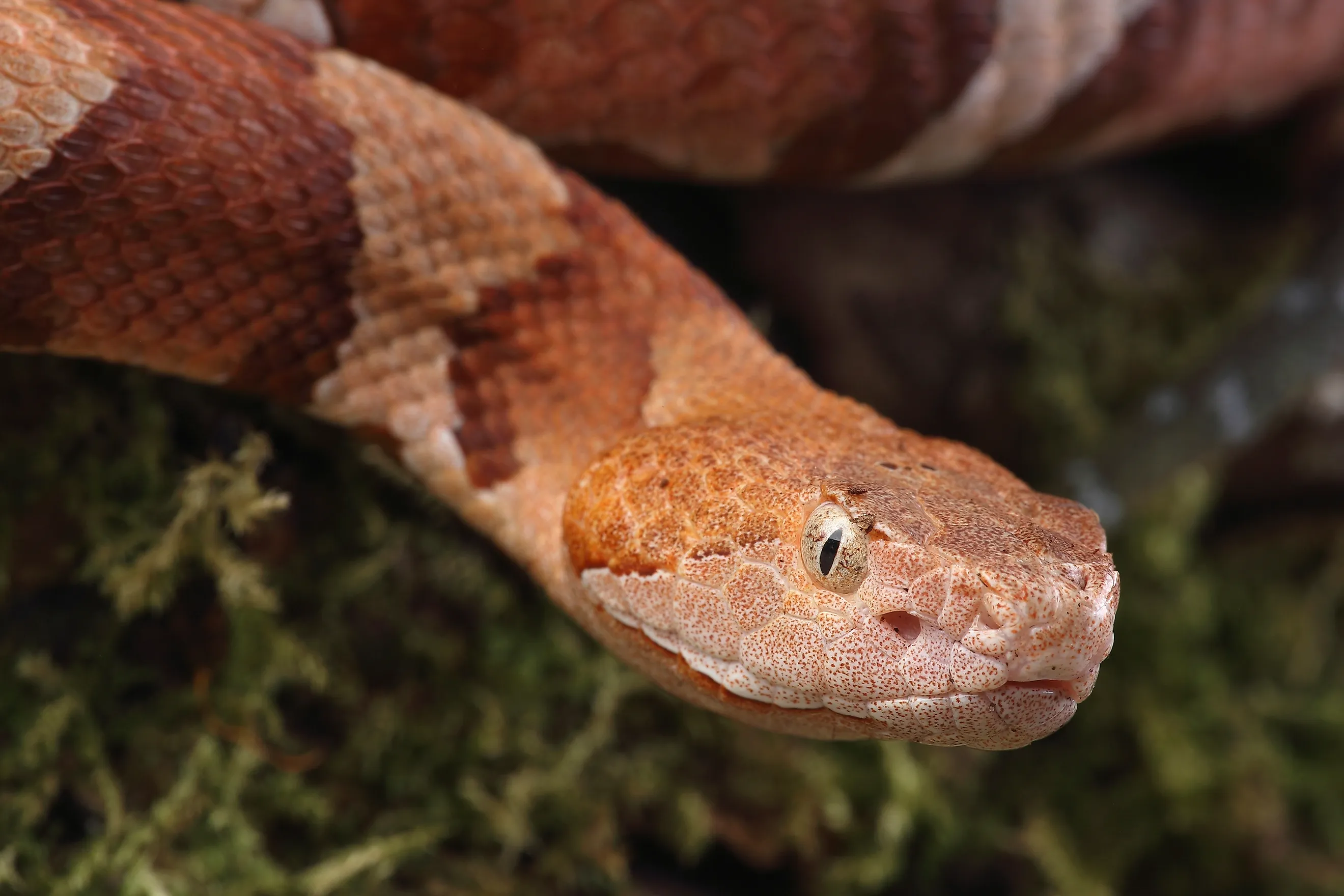
Now add the single most dangerous ingredient of all: autumn leaves. The copperhead's coppery coloring and dark, hourglass-shaped crossbands make for one of the most effective camouflage patterns of any North American snake, and it is tuned almost perfectly to a background of dry, fallen leaves, pine straw, and reddish soil. In fall, that background is suddenly everywhere. Worse, autumn is prime time for exactly the kind of yard work that gets people bitten, raking leaves, stacking firewood, clearing brush, and reaching a bare hand into piles and crevices they cannot fully see. That "blind grab" onto an unseen, motionless snake is the classic fall copperhead bite, and most bites land on the hands and feet as a result. A copperhead can be lying inches from a rake or a boot and read, to human eyes, as nothing more than a scattering of dead leaves.
No, They're Not More Aggressive

So let's put the big myth to rest. Copperheads do not become more aggressive in the fall, and the old tale that they somehow "can't control their venom" this time of year is simply false. Copperheads are not aggressive to begin with; they are often described as downright lethargic. Their entire survival strategy is to hold perfectly still and trust their camouflage, which is exactly why so many bites happen when a snake is accidentally stepped on or grabbed rather than while it is chasing anyone, because they do not chase. The autumn spike in bites is pure arithmetic: more snakes moving, hunting, and denning during daytime hours, plus more people outside in the leaves, equals more accidental run-ins. For the record, copperheads are responsible for the most venomous snakebites in the United States, yet they possess the least toxic venom of any American venomous snake, and their bites are very rarely fatal.
How to Stay Safe This Fall

The good news is that avoiding trouble is mostly about a few easy habits. Watch where you step and, above all, never reach a bare hand blindly into leaf piles, wood stacks, brush, or under tarps, look first, or use a tool. Wear closed-toe shoes and gloves for fall yard work, and carry a flashlight at dawn and dusk, when copperheads are often out. If you spot one, give it plenty of room and leave it alone; it wants nothing to do with you and will almost always stay put or slip away. And if the worst happens and you are bitten, stay calm, remove any rings or tight jewelry before swelling starts, keep the bite below heart level, and get to medical care while calling Poison Control at 1-800-222-1222. Skip the old movie tricks entirely, no tourniquets, no ice, and definitely no cutting. Handled with a little awareness, fall's most active snake is far more of a neighbor to respect than a monster to fear, and one that plays a genuinely useful role keeping the local rodent population in check.