What Would Happen If The Atlantic Conveyor Slowed Down
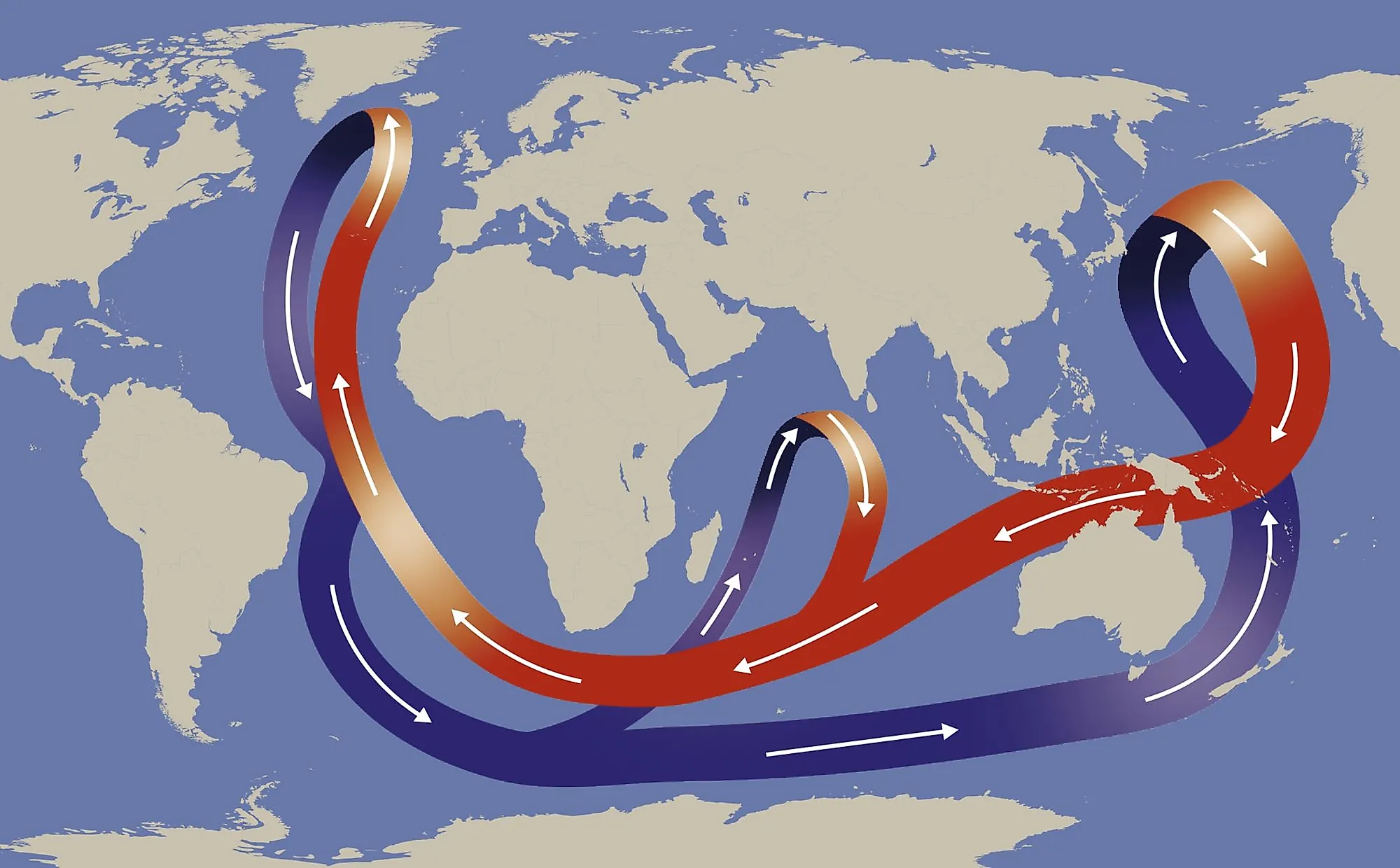
Over the course of 1,000 years, ocean water follows a worldwide journey across a "global ocean conveyor belt", or GOCB. The Atlantic portion is known as the Atlantic Meridional Overturning Circulation, or AMOC, and if it slows down as projected in the 21st century, there will be consequences. A weaker circulation could raise coastal sea levels, increasing the frequency of flooding even without a major storm. It could also change ocean temperatures off the Northeast, reduce the supply of nutrients to some marine ecosystems, and alter weather patterns across the Atlantic basin.
Sea Levels Could Rise Along the US East Coast

One of the clearest consequences for Americans would occur along the Atlantic coast. A weaker AMOC would alter the distribution of heat and water in the North Atlantic, contributing to higher sea levels along the US coastline. NOAA research has linked AMOC variations to sea level changes along the US East Coast. A 2023 study found that AMOC-related changes in ocean heat content contributed to variations in sea level and flood frequency along the southeastern US coast. From 2015 to 2020, AMOC-related ocean heat redistribution was associated with 30% to 50% of the observed increase in flood days in the study area.
A sustained slowdown could therefore add another factor to the sea-level rise already occurring because of warming oceans and melting land ice. NOAA notes that a long-lived slowdown in the Gulf Stream system is expected to accelerate sea-level rise along much of the East Coast, including Florida.
The Northeast Could See Less Ocean Warming

A slower AMOC would also change how heat moves through the North Atlantic. The circulation transports warm water northward, so weakening the system would reduce the amount of heat carried toward the northern Atlantic. The northeastern US is particularly connected to North Atlantic Ocean temperatures. Research in Nature Climate Change found that exceptional warming along the northeastern US coast during the 20th century was influenced partly by changes in North Atlantic sea-surface temperatures associated with a weakening AMOC. A stronger future slowdown could therefore alter the balance between ocean warming and cooling in the region.
Marine Ecosystems Could Lose Nutrients

The AMOC transports heat, and its circulation also moves nutrients between the surface and deep ocean. As water sinks in the North Atlantic and later returns toward the surface elsewhere, the circulation helps redistribute nutrients that support marine food webs. A slowdown could weaken some of the circulation and upwelling processes that deliver nutrients to surface waters along the North American Atlantic coast.
NOAA research describes this connection as an important potential consequence of a weaker AMOC. A slowdown would be accompanied by changes in the Gulf Stream and reduced upwelling of nutrients such as nitrate, phosphate, and silicate along the North American East Coast. That could affect coastal ecosystems, fisheries, and the communities that depend on them.
The effects would not necessarily appear as an immediate collapse in fish populations. Marine ecosystems respond to several environmental conditions at once, including temperature, oxygen, salinity, food availability, and fishing pressure. A weaker AMOC would change one of the physical systems that helps determine those conditions.
Coastal Flooding Could Increase

Higher baseline sea levels would make existing coastal hazards more disruptive for communities along the US Atlantic coast. Even a relatively small increase in average water levels can make high tides reach farther inland, while storm surge from hurricanes and nor'easters would begin from a higher starting point. Areas that already experience occasional nuisance flooding could see those events occur more frequently or reach farther into streets, yards, and low-lying infrastructure.
The Southeast and Mid-Atlantic would be particularly exposed because large portions of the region already experience rising coastal water levels. Communities in Florida, Georgia, the Carolinas, Virginia, and Maryland could face more frequent flooding during high tides and coastal storms if AMOC-related sea-level changes add to long-term sea-level rise.
High tides can also flood roads and neighborhoods even during otherwise calm weather, while heavier rainfall can become more difficult to drain when coastal waters are elevated. Higher seas can also allow storm surge to travel farther inland, increasing pressure on drainage systems, roads, and other infrastructure.
The Gulf Stream Will Go On

The Gulf Stream is one component of the AMOC, but it is also influenced by winds and the larger circulation of the North Atlantic. NOAA reported in 2026 that satellite observations showed the Gulf Stream intensified from 2014 to 2023 after a period of weakening from 2005 to 2014. The agency also emphasized that changes in the Gulf Stream cannot be directly equated with changes in the broader AMOC.
Direct observations of the Florida Current provide another example. A NOAA study found that this important part of the AMOC remained remarkably stable over roughly 40 years, and researchers said there was no clear observational evidence of a significant AMOC slowdown during that period.
A Slowdown Differs From a Collapse
Scientists expect the AMOC to weaken during the 21st century, but a gradual slowdown and an abrupt collapse are very different scenarios. The IPCC assesses with high confidence that the AMOC will decline, while giving medium confidence that an abrupt collapse will not occur before 2100.
A slowdown could gradually alter sea levels, ocean temperatures, nutrient movement, and regional climate patterns. An abrupt collapse would produce much larger changes across the Atlantic and beyond. For Americans, the most immediate reason to watch the AMOC is much closer to home than the cold waters where its deep circulation forms. Its strength helps influence the height, temperature, and productivity of the Atlantic along the US East Coast. Even without anything resembling a Hollywood-style shutdown of the ocean conveyor, a weaker AMOC could make those coastal waters noticeably different.