How Deep The Titanic Wreck Actually Sits
Most people picture the Titanic wreck at the very bottom of the ocean, as deep as the sea can possibly go but thats not entirely the case. The ship sits roughly 12,500 feet, 3,800 meters, beneath the North Atlantic, a depth confirmed by both the National Oceanic and Atmospheric Administration (NOAA) and the Woods Hole Oceanographic Institution (WHOI), the same U.S. research institutions whose team found the wreck in 1985.
That is deep enough to crush a submersible not built for the pressure, as the world learned in June 2023 when the Titan imploded during an expedition to see the wreck. Yet, it is nowhere near the ocean's actual floor.
The true deepest point on Earth lies nearly three times farther down, in the western Pacific southwest of Guam. Here is what "12,500 feet down" really means, how that number was measured, and how it stacks up against the rest of the ocean.
The Exact Depth, And Why The Numbers Vary Slightly
NOAA's Ocean Exploration program lists the Titanic's resting depth as 3,800 meters, or 12,467 feet, while WHOI rounds the same measurement to 12,500 feet. Both figures describe the same spot: roughly 370 miles southeast of Newfoundland, Canada, in international waters.
The wreck was located there on September 1, 1985, by a joint American-French expedition, with WHOI's Robert Ballard working alongside Jean-Louis Michel of the French oceanographic institute, IFREMER. They found it not by searching for the hull directly, but by tracking a debris trail scattered across the seafloor, a technique Ballard had developed specifically for locating deep shipwrecks.
Slight variations between sources, such as 12,467 feet versus 12,500 feet, for instance, come down to rounding a metric measurement into imperial units, but not disagreeing about where the ship actually lies.
What 12,500 Feet Down Feels Like
At that depth, the Titanic sits in what oceanographers call the midnight zone, the layer of ocean below roughly 3,300 feet where sunlight never reaches at all. The water hovers barely above freezing, and according to Scientific American, the surrounding pressure runs about 375 atmospheres, the equivalent of roughly 5,500 pounds of force pressing on every square inch of anything down there.
That number became more than an abstraction on June 18, 2023, when the Titan submersible, imploded partway through its descent to the wreck, instantly killing all five people aboard. The National Transportation Safety Board's final report, released in October 2025, found that faulty engineering had produced a carbon fiber pressure vessel riddled with anomalies that never met the necessary strength and durability requirements, and that damage accumulated over earlier dives caused the buckling failure that destroyed it.
A U.S. Coast Guard investigation two months earlier had already called the implosion preventable. Both were a grim demonstration of exactly what 12,500 feet of seawater is capable of doing to a thing not built to handle the pressure.
How That Compares To The Ocean's True Extremes
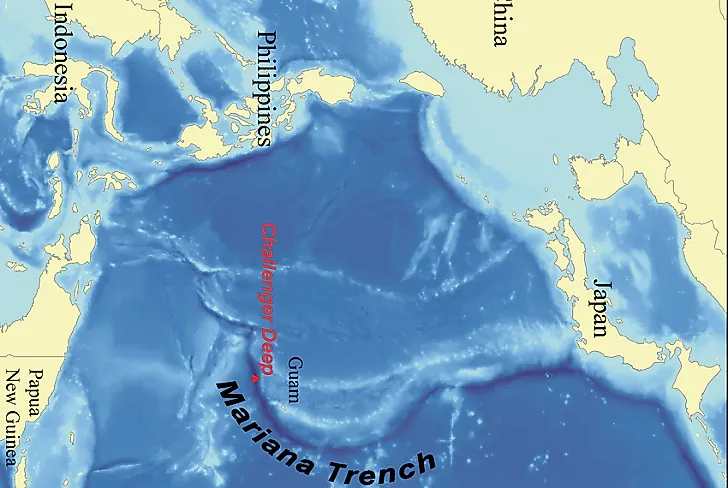
As crushing as the Titanic's depth is, it represents only a fraction of how deep the ocean actually goes. The Mariana Trench's Challenger Deep, the deepest known point in any ocean, drops to approximately 35,876 feet, based on the 2019 Five Deeps Expedition measurement now used consistently by NOAA and marine researchers.
The Titanic rests at only about a third of the way to the ocean's absolute floor, even though its depth already exceeds what most deep-sea submersibles are built to survive. Put another way, if the Titanic's resting place were the ocean's deepest point, more than 23,000 additional feet of water, close to two more Titanic-depths stacked on top of the first, would still separate it from the bottom of the Mariana Trench.
The Wreck Itself: Two Pieces, Scattered Across A Debris Field

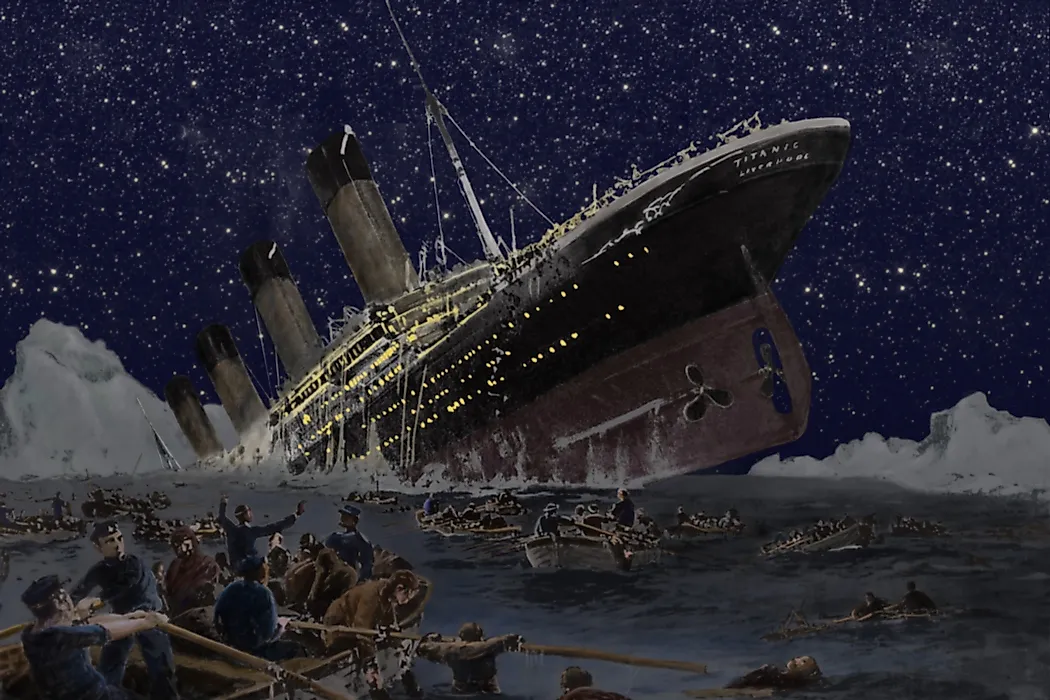
The Titanic did not sink and settle in one piece. Its bow and stern sections broke apart at the surface as the ship went down and now rest roughly 2,000 feet apart on the seafloor, according to Britannica. Between the sections, researchers have found a scattered debris field of boilers, cargo, and personal belongings.
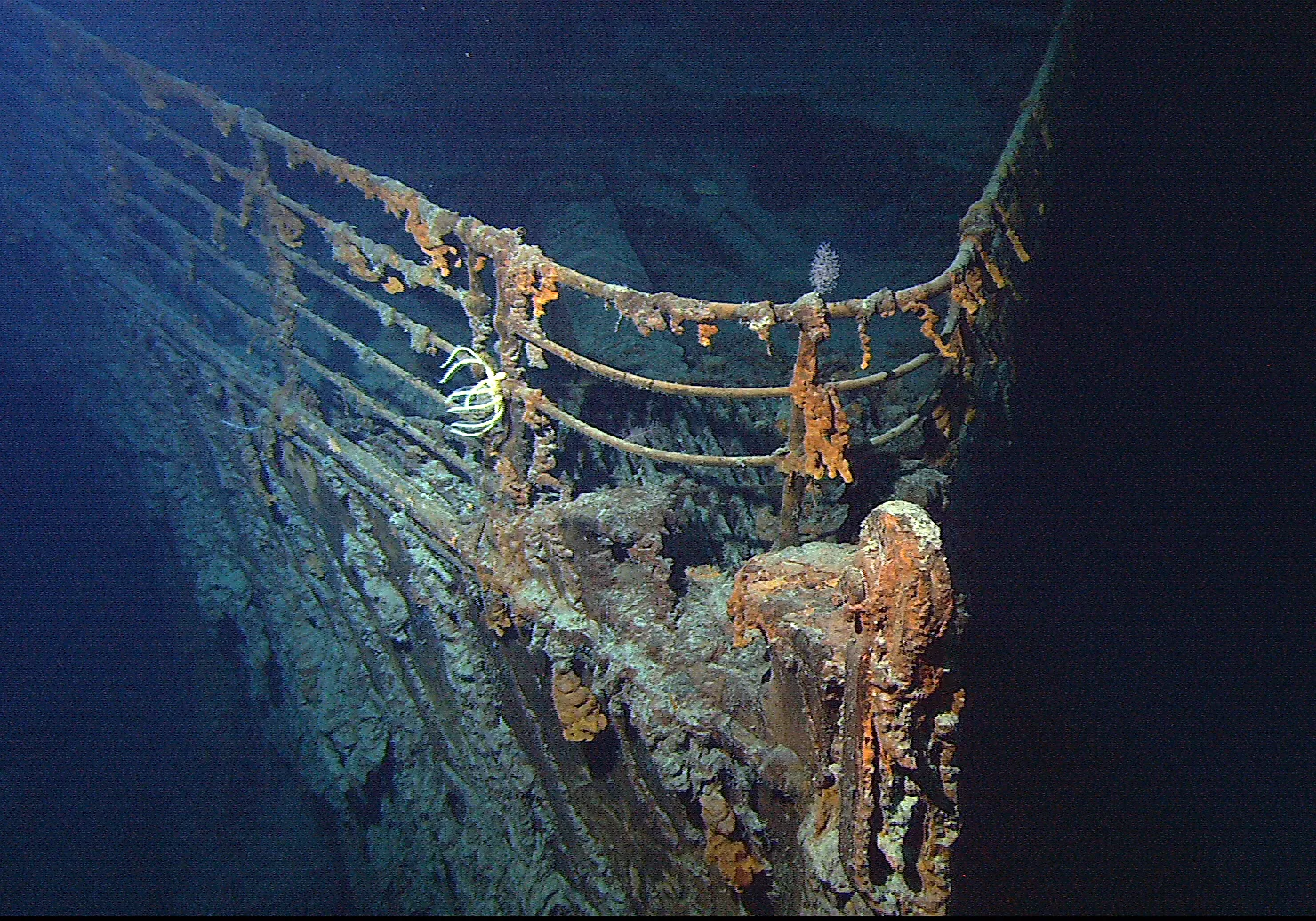
The bow, the more intact of the two sections, is partially buried, with its hull driven an estimated 55 feet into the sediment on impact. The stern fared far worse, twisted and collapsed by the pressure and force of its own descent. NOAA notes that exploring or disturbing any of it requires federal authorization.
Section 113 of the Consolidated Appropriations Act, 2017, signed that May, bars anyone under U.S. jurisdiction from research, exploration, or salvage that would physically alter the wreck site without the Secretary of Commerce's approval. It implements an agreement negotiated with the United Kingdom, France, and Canada that treats the wreck as a protected maritime memorial rather than a site open to salvage. The agreement entered into force for the United States and the United Kingdom in November 2019.
A Wreck That Is Still Changing
The Titanic is not a fixed monument frozen in 1912. It is actively decaying, consumed in part by a bacterial species called Halomonas titanicae. First identified on the wreck and named for it, which feeds on the ship's iron hull and produces the reddish, icicle-like rust formations, called rusticles, documented by the Smithsonian.
That decay is more visible year over year. When RMS Titanic Inc., the company that holds salvage rights to the wreck, returned in the summer of 2024 for its first expedition since 2010, researchers documented that a roughly 15-foot section of the bow's iconic railing, the stretch made famous by the 1997 film, had collapsed since their last full survey.
The same expedition also photographed a bronze statue of Diana of Versailles from the ship's first-class lounge, unaccounted for since divers last saw it in the 1980s, a reminder that even after decades of study, the wreck still holds surprises for the people mapping it.
A Ship Suspended Between Two Worlds
The Titanic's depth is what makes it such an unusual site: deep enough to be genuinely hostile to human visitors, virtually sealed in cold and total darkness under nearly 375 atmospheres of pressure. Yet, its shallower compared to the deepest ocean sites, as it's not resting at the bottom of the sea.
The wreck is resting partway down, in the same water column where a submersible can still fail trying to reach it, while the actual floor of the ocean sits thousands of feet farther below, largely untouched by comparison. That gap between 'very deep' and 'as deep as the ocean gets' is easy to lose track of, and the Titanic sits squarely inside it.