The Most Snake Infested Rivers In Washington
The state of Washington is better known for its salmon runs and rain than it is for reptiles, but its rivers hold plenty of snakes. There are about a dozen snake species in Washington, though only the western rattlesnake delivers a dangerous bite. Most riverside encounters involve garter snakes, gopher snakes and racers, which are harmless and like to hunt along the banks. The best snake country is east of the Cascades, where dry basalt canyons offer basking spots, rodent prey and areas perfect for denning.
Columbia River

The Columbia River is the largest waterway in the state and has the most diverse snake habitat. It runs for more than 1,200 miles from British Columbia through Washington and into the Pacific, with spots suitable for nearly every snake species in the state. The snakes make use of the edge habitat along riverbanks, reservoirs and rocky shorelines.
Garter snakes are the most common, with two of the state's three garter species living on the Columbia Plateau. They are naturally drawn to water sources like streams, lakes and rivers. The Columbia also has Washington's only dangerously venomous snake, the Northern Pacific rattlesnake. It is seen throughout central and eastern Washington, including the eastern end of the Columbia River Gorge.
Visitors can encounter rubber boas and ringnecks in the Gorge as well. Snake activity is consistently richer along the warmer, drier stretches. Parks like Columbia Hills Historical State Park, with over 3,300 acres of basalt ridges and sagebrush near the river, are hotspots for reptiles.
Snake River

The Snake River isn't named for snakes, but it lives up to its name. It's the Columbia River's biggest tributary, running over 1,000 miles across four states. It begins in Wyoming and follows the Idaho-Oregon border before reaching the Columbia in Washington, entering near Kennewick. It is full of Northern Pacific rattlesnakes and gopher snakes.
The river's course takes it from cool, forested canyons to hot sagebrush. Garter snakes are common in the riparian zones, and the warm, rocky bluffs support Northern Pacific rattlesnakes and racers. The canyons near Asotin and Clarkston are especially good for rattlesnakes. Gopher snakes are frequently mistaken for rattlesnakes. They lack the signature rattle, but they will shake their tails in dry brush to mimic the sound, so the narrower head and round pupils are a better giveaway. Rafters and hikers should watch their footing in the brush and on banks near the mouth of Hells Canyon and other rattlesnake hot spots, though, since the Northern Pacific rattlesnake is the only dangerously venomous snake in Washington.
Yakima River

The Yakima River is about 214 miles long and is the longest river that lies entirely within the state. In the spring, garter snakes and racers become active along the banks between Ellensburg and Benton City.
The most well-known stretch is the Yakima River Canyon. Its rugged ridges and grasslands make it classic rattlesnake territory. An abundance of rodents keeps the snakes fed, and rattlesnakes can be easier to spot in the spring when they come out of hibernation and bask near their dens.
The canyon becomes busy with people rafting and camping in the summer, and visitors should watch their step around rock outcrops and brush where a resting rattlesnake may be hidden. Rattlesnakes typically leave their dens in March or April and return to them in the fall.
Klickitat River

The Klickitat rises near Gilbert Peak and runs south for roughly 96 miles to meet the Columbia River in the Gorge. It is often listed as one of Washington's longest free-flowing rivers, running through steep canyons, and the Klickitat Trail follows the river for about 13 miles.
The trail is where many snake encounters happen, since it's popular among hikers, paddlers, and campers. The most common snakes found in the area include gopher snakes and western yellow-bellied racers, though the river's rocky canyons also house Northern Pacific rattlesnakes. These rattlesnakes often lie out on the open trail to bask, which puts them into conflict with hikers. Racers are fast, slender, and harmless, and they often disappear into the grass rather than confront passersby. Gopher snakes may hiss and vibrate their tails, but they are also harmless.
Skagit River

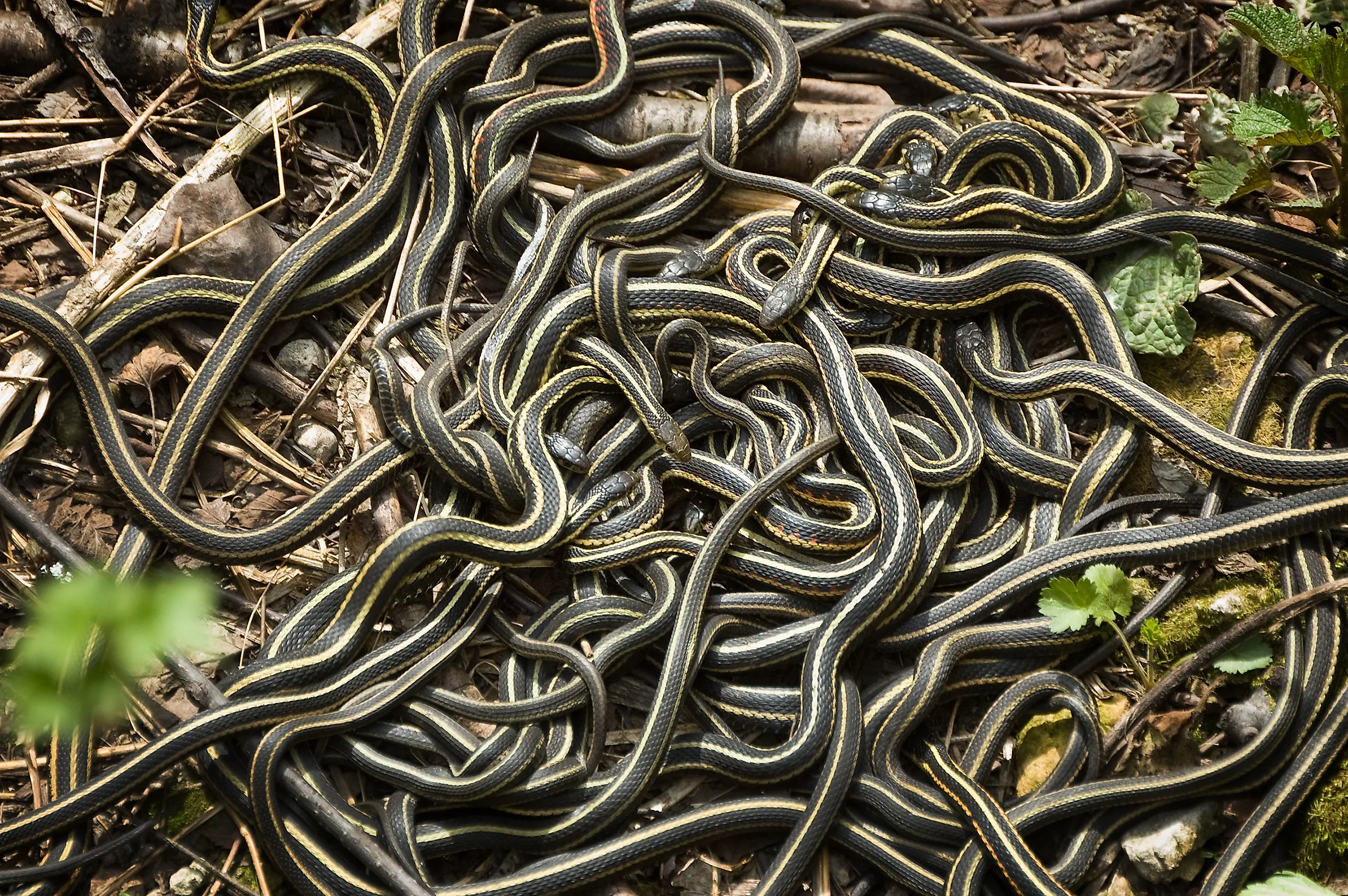
West of the Cascades, the Skagit River changes things from the rivers so far discussed. There are no rattlesnakes in the Skagit basin. Instead, it's garter snake territory. The Skagit is one of Washington's longest rivers, draining much of the state's northwest, and supports wet meadows, marshes, and braided channels that garter snakes love. Most of the garter snake diversity is concentrated in the western lowlands, with several species calling the basin home.
Common garter snakes are fantastic swimmers and depend on aquatic habitats for food, eating amphibians and fish. The northwestern garter snake, found only in the western half of the state, lives in the meadows and brushy areas away from the water. In the winter, garter snakes den along the banks and hibernate together.
These snakes are also beneficial. They help the ecosystem by keeping populations of amphibians, fish and invertebrates balanced, as well as serving as prey for mammals and birds. The common garter snake is the most widespread snake in the state and is both harmless and helpful.
Palouse River

The Palouse River runs 167 miles southwest, mainly through the Palouse region, and drops about 200 feet over Palouse Falls before entering the lower Snake River. Pleistocene floods carved its canyon, which reaches up to 1,000 feet deep, providing the basalt cliffs and sun-warmed ledges snakes favor. Rattlesnakes are one of the main snakes here, and a cause for concern. Hikers and paddlers are warned to watch out and give these snakes plenty of room. Across the broader Palouse, Northern Pacific rattlesnakes share large hibernation sites in basalt cracks and rocky hillsides, with dozens and sometimes more than a hundred of them using the same den.
Gopher snakes are also a common sight. They enjoy the open grassland where they can stay hidden from predators and hunt.
Since visitors and snakes both enjoy the falls and canyon at the same time, tourists should be careful and stay in the designated viewing areas near the canyon rim, since the trails into the canyon are closed.
Methow River

The Methow Valley, carved by the Methow River, is a well-studied rattlesnake country in Washington. Rattlesnakes are found mostly on the valley floor, though some live higher in the hills. Good dens are well ventilated and sheltered from rain and snow, and many sit on talus slopes among rock outcrops. These snakes face a severe climate, having to survive harsh winters. Dens can hold hundreds of rattlesnakes, with historical records of several hundred at a single site. They come out of their dens in April and are usually all out by mid-May, so spring is the time to be the most aware if you're hiking or camping.
Gopher snakes are also common, rattling their tails as a way to imitate a rattlesnake and scare off predators.
Okanogan River

The Okanogan River runs south from British Columbia to the Columbia River through one of Washington's main reptile regions. The Okanogan Highlands, which extend across the Canadian border, support important reptile populations with their dry, boulder-covered foothills and river valleys. Northern Pacific rattlesnakes are the dominant venomous species, seen out on the warm rocks.
The state wildlife agency includes the Okanogan in the rattlesnake's range. Northern Pacific rattlesnakes are found in the East Cascades, Columbia Basin, Okanogan, and Blue Mountain ecoregions. Rattlesnakes in these areas cope with long winters by denning together, sometimes in groups of hundreds. Encounters with these rattlesnakes are more likely early in the day in summer, when they come out to warm up in the open or partly hidden. Gopher snakes are also common and are often mistaken for rattlesnakes. Boaters and anglers are encouraged to be careful around rocky banks and gravel bars.
Grande Ronde River

The Grande Ronde crosses Washington's far southeast corner, but that small stretch runs through some of the state's most rugged snake country. The river runs 182 miles to the Snake River, starting in northeast Oregon, flowing into Washington, and joining upstream from Lewiston and Clarkston. It meets the Snake near the same canyons where that river is known for its rattlesnakes.
Steep canyon walls rise 3,000 to 4,000 feet, with grassy slopes giving way to conifer forests. Rafters on the river see snakes often, with rattlesnakes appearing on beaches and near riverside campsites. Much of the rattlesnake territory is in Oregon, but the same canyon conditions continue into Washington. Campers are encouraged to shake out bags and shoes and use a flashlight at night to avoid any unwanted encounters.
Washington's rivers that appeal to snakes fall into two groups. There are the warm, rocky canyons that cater to rattlesnakes and gopher snakes, such as the Columbia, Snake, Yakima, and Klickitat, and there are the lush lowlands of the Skagit, home to garter snakes. Every snake in the state is harmless except for the rattlesnake, and even rattlesnakes prefer to avoid confrontation as much as possible. Watching your step around rocks and brush, keeping hands out of crevices, and giving any snake you see plenty of space can help make sure that both parties enjoy the environment without incident.