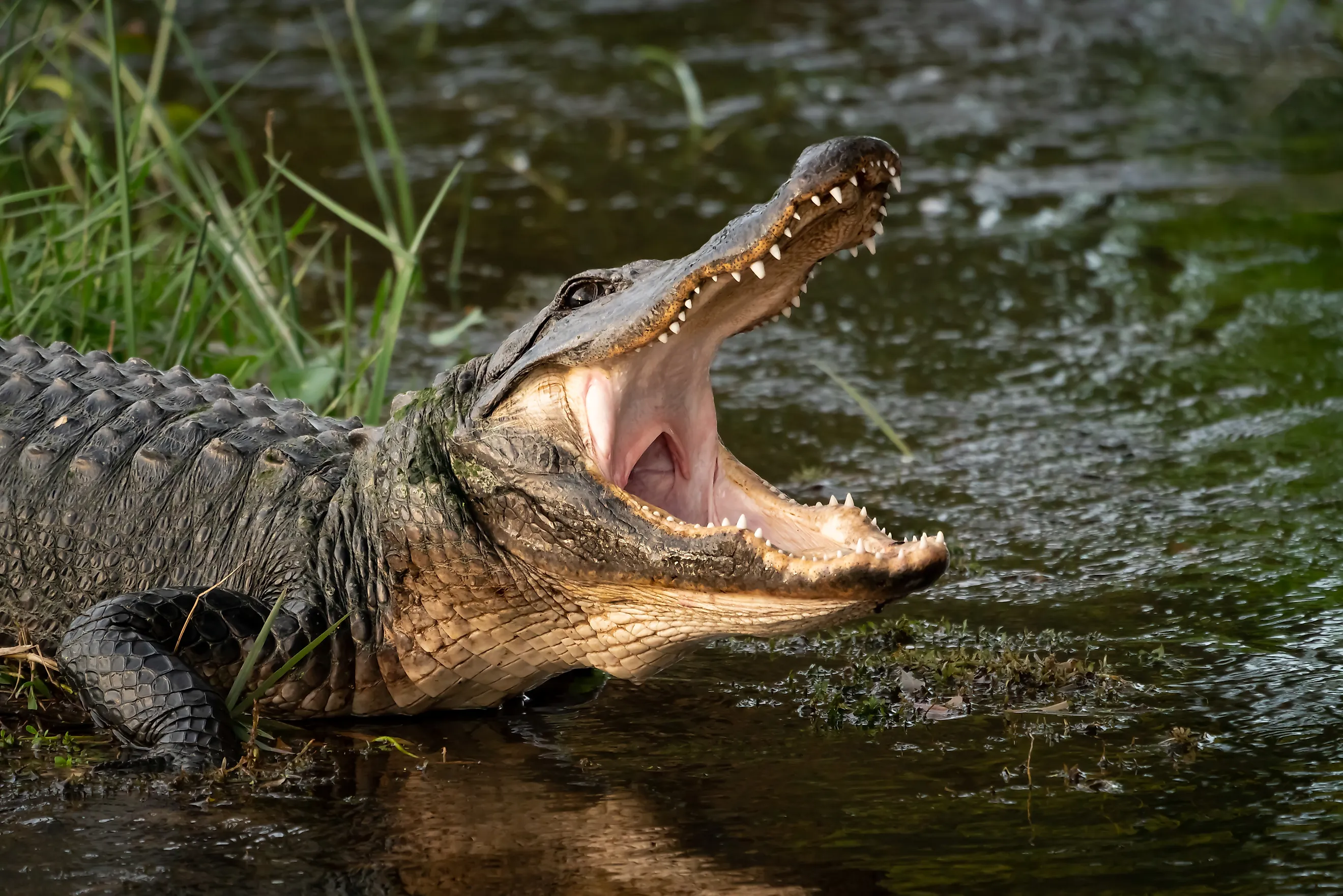
How Far North Alligators Live Along Atlantic Coast Rivers
In January 2024, the water froze around a group of alligators at a park on the North Carolina coast until only their nostrils showed above the ice. Two days later, they were back to normal.
On the Atlantic coast, cold decides where the American alligator can live. A sudden drop in temperature can kill one. In North Carolina, alligators grow much more slowly than those farther south, and their growing season runs a month shorter than in Louisiana. When researchers searched the state's coastal waters at night, they found fewer alligators the farther north they looked, and past one sound, they turned up at a single spot.
The trail north starts on the Savannah River, where a nuclear site once gave some alligators a winter without the cold.
Savannah River, Georgia And South Carolina

Nuclear reactors on the Savannah River Site, on the South Carolina side of the river, once discharged warm effluent into cooling reservoirs, and in the warm areas of Par Pond, a 2,840-acre reservoir on the site, alligators basked less often in cooler months, while larger males stayed active through the winter. Scientists from the University of Georgia's Savannah River Ecology Laboratory have followed these alligators since the late 1960s. The heated discharge ended by the mid-1980s, and the population then nearly doubled, to about 200.
Downstream, where the river separates Georgia from South Carolina near the coast, alligators keep winter's schedule. At Savannah National Wildlife Refuge, they are easiest to see along the Laurel Hill Wildlife Drive when they bask in spring and fall, and they can even be seen there on warm, sunny winter days.
Santee And Cooper Rivers, South Carolina

A sudden drop in temperature can kill an alligator, according to Morgan Hart, who leads the alligator project at the South Carolina Department of Natural Resources, and South Carolina has at least 100,000 of them to carry through each winter. Once water temperatures start to fall below 70°F, alligators "stop eating, they stop moving very much," Hart said. Every bit of energy they burn after that counts against them, because "the more energy they expend, the more likely they are to not make it to the spring." The state's 2023 public hunting season opened September 9 and closed October 14, in the last weeks before that shutdown.
When the weather warms, the Santee and Cooper rivers have easy places to watch them. At Santee National Wildlife Refuge, on Lake Marion, a reservoir on the Santee, alligators can be seen basking in the sun or swimming at one stop along the Wildlife Drive. Near the Cooper River, at Cypress Gardens in Berkeley County, boats head into the swamp self-guided or with a guide for an extra fee, past turtles, birds, lily pads, and alligators.
Waccamaw River, South Carolina And North Carolina

The Waccamaw River runs across the line between the Carolinas. It ends in Georgetown County, South Carolina, where the freshwater lake at Huntington Beach State Park is, in the park's words, "a sure-fire place to see alligators and sometimes even a mink or two." The river rises at Lake Waccamaw, on the North Carolina side, where alligators were off-limits to hunters from 1970 until the state allowed limited hunting in 2018. The animals on that side of the line run smaller. Males in North Carolina can reach 13 feet, and alligators in southern states sometimes reach 15.
Shallotte River, North Carolina

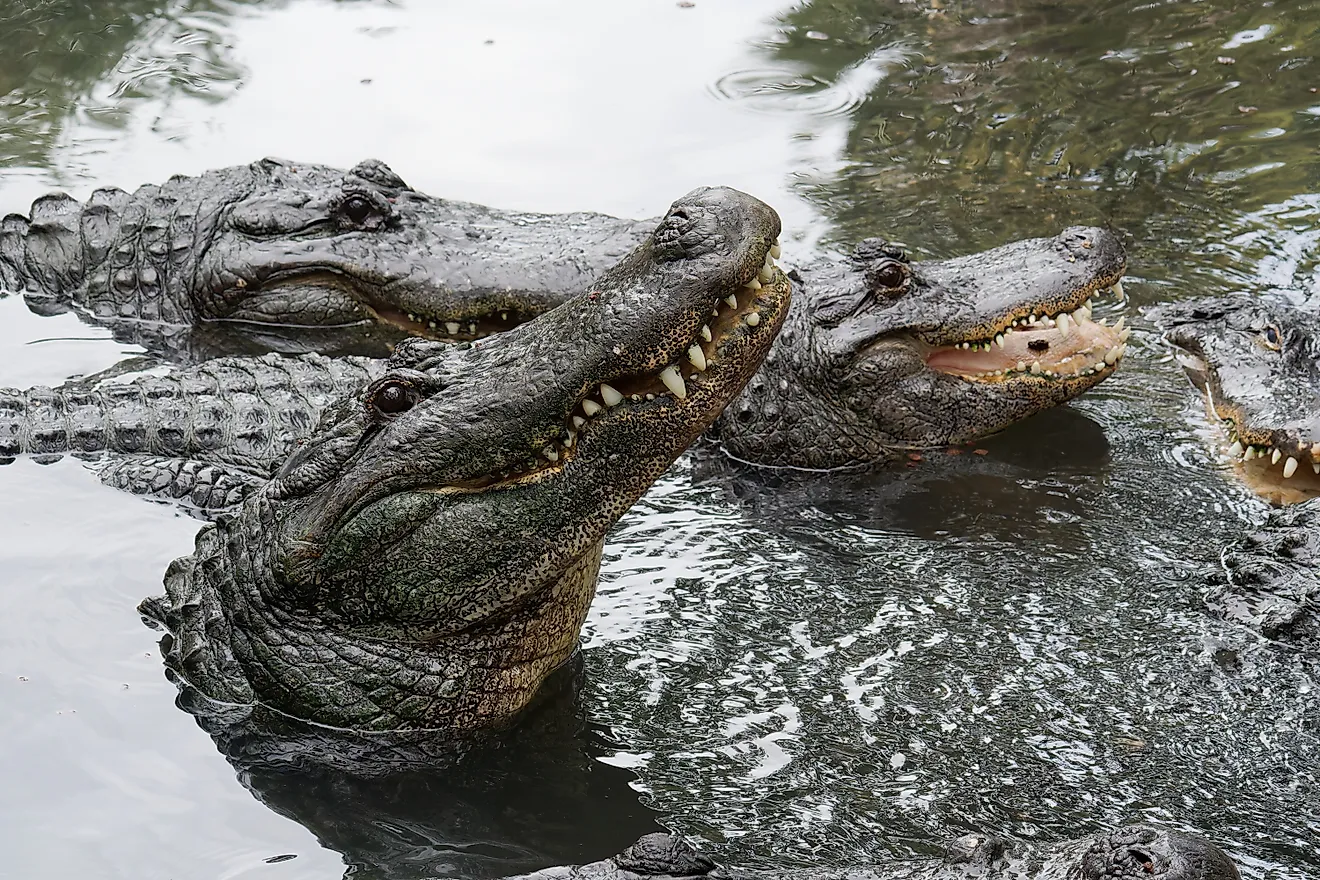
The alligators frozen into the ice in January 2024 live at The Swamp Park, formerly Shallotte River Swamp Park, in Ocean Isle Beach near the South Carolina line, where temperatures that week fell into the teens. "They are in full brumation right now," general manager George Howard said. The park's 12 alligators came in as nuisance animals or rescues and had been deemed unable to return to the wild, and the county around them, Brunswick, holds one of the largest wild alligator populations in North Carolina.
The park first posted video of alligators in the ice during a January 2018 cold snap. In January 2019, 18 of its alligators froze in and thawed out days later with no apparent injuries. During the 2024 freeze, Howard described one alligator about 9 to 10 feet long: "The entire body is suspended under the water. Pretty fantastic."
Holding the snout above the ice keeps an alligator breathing for hours to a few days, according to Greg Skupien of the North Carolina Museum of Natural Sciences. In a 1982 South Carolina study, an alligator kept a hole open in 0.6-inch ice for several days, then died when its body temperature dropped to 39°F.
Cape Fear River, North Carolina

Most calls to the state wildlife commission's hotline about alligators come from Brunswick and New Hanover, the two southernmost coastal counties in North Carolina, which sit on either side of the lower Cape Fear River around Wilmington. Encounters rise through early summer, because May and June are mating season and alligators move around more.
In Wilmington itself, Greenfield Lake is a city park with a paved path around the water and canoes, kayaks, and pedal boats out on it. An alligator there may cruise the shallows with "only its eyes and nose poking above the surface," as the area's tourism bureau describes it. Swimming in the lake is not advised.
Neuse And Pamlico Rivers, North Carolina

In 2021, alligators turned up at Jack's Creek and Moss Landing on the Pamlico River, and the local paper noted that alligators are a rare sight on that river. One river to the south, Craven County, on the lower Neuse around New Bern, holds one of the largest alligator populations in North Carolina. Both rivers empty into Pamlico Sound, and the drop between them follows the pattern the coastal surveys found across eastern North Carolina, where the chance of finding alligators and the estimated numbers both fell the farther north the researchers looked.
Alligator River, North Carolina

On the southern side of Albemarle Sound, more than 15 miles of color-coded paddling trails start on Milltail Creek, at the end of Buffalo City Road in Alligator River National Wildlife Refuge. The refuge covers about 152,000 acres of mainland Dare and Hyde counties, alligators are on its list of wildlife to watch for, and the Sandy Ridge Wildlife Trail begins at the same launch for anyone who would rather walk.
This corner of the coast is where the state wildlife commission's northernmost district lies, and the commission says alligators there are most likely to be spotted in Dare, Tyrrell, or Hyde counties. Populations grow slowly at this northern edge of the species' range, according to the commission, and Hyde County's alligators form a population separate from the rest. North of Albemarle Sound, the coastal night surveys of 2012 and 2013 detected alligators at only one location.
Bennetts Creek And Merchants Millpond, North Carolina

Across Albemarle Sound, Gates County borders Virginia, and it was once thought to be too far north for a population of alligators to survive. North Carolina's state park system now says visitors have spotted the American alligator at Merchants Millpond State Park, "at the northernmost point of its range," and the NC Science Trail describes the population there as healthy.
The 760-acre millpond, more than 190 years old, is a dammed stretch of Bennetts Creek, which flows to the Chowan River. Canoes and kayaks can be rented to paddle into Lassiter Swamp, where old-growth cypress trees are hung with Spanish moss, and canoe trails lead out from the visitor center and boat ramp to three canoe camps. The 7-mile Lassiter Trail loops through the park on foot.
Alligator mating season here runs through May and into June, and in the Carolinas a female may nest only every other year.
Virginia's Rivers

Virginia's alligator records start in 1969, with one at Lake Smith in Virginia Beach. The U.S. Geological Survey lists the species as nonindigenous in the state, with later records that include Lake Anna in Louisa County in 1978 and Aquia Creek in Stafford County in 1982, and no further evidence of an established population. There are no reports of breeding in Virginia and no fossil evidence that alligators ever lived there naturally.
In 2018, the state wildlife agency said a 2-foot alligator seen in Great Dismal Swamp National Wildlife Refuge was probably a released pet. In 2022, an alligator owned by a traveling animal show went missing in Chesapeake for about three weeks before animal control removed it from a backyard pool. A 2018 study of alligators and climate projected that by the 2050s and 2070s, suitable habitat could expand north along the coasts of North Carolina, Virginia, Maryland, and Delaware as a patchy network of small populations.
The clearest measure of what cold costs these animals came from a reservoir in South Carolina. While reactor water kept parts of Par Pond warm, alligators there basked less in cooler months and larger males stayed active through the winter. Farther up the coast, alligators get no such break. Researchers surveying eastern North Carolina noted that alligators there can become extremely cold stressed and can die of hypothermia, and the state wildlife commission says populations at the northern edge grow slowly. At Merchants Millpond, in a county that touches Virginia, alligators live under those limits in a cypress swamp on Bennetts Creek. Across the line, the alligators reported in Virginia are generally traced to escaped or released captives, and none has been found breeding there.