The Busiest Ferry In America
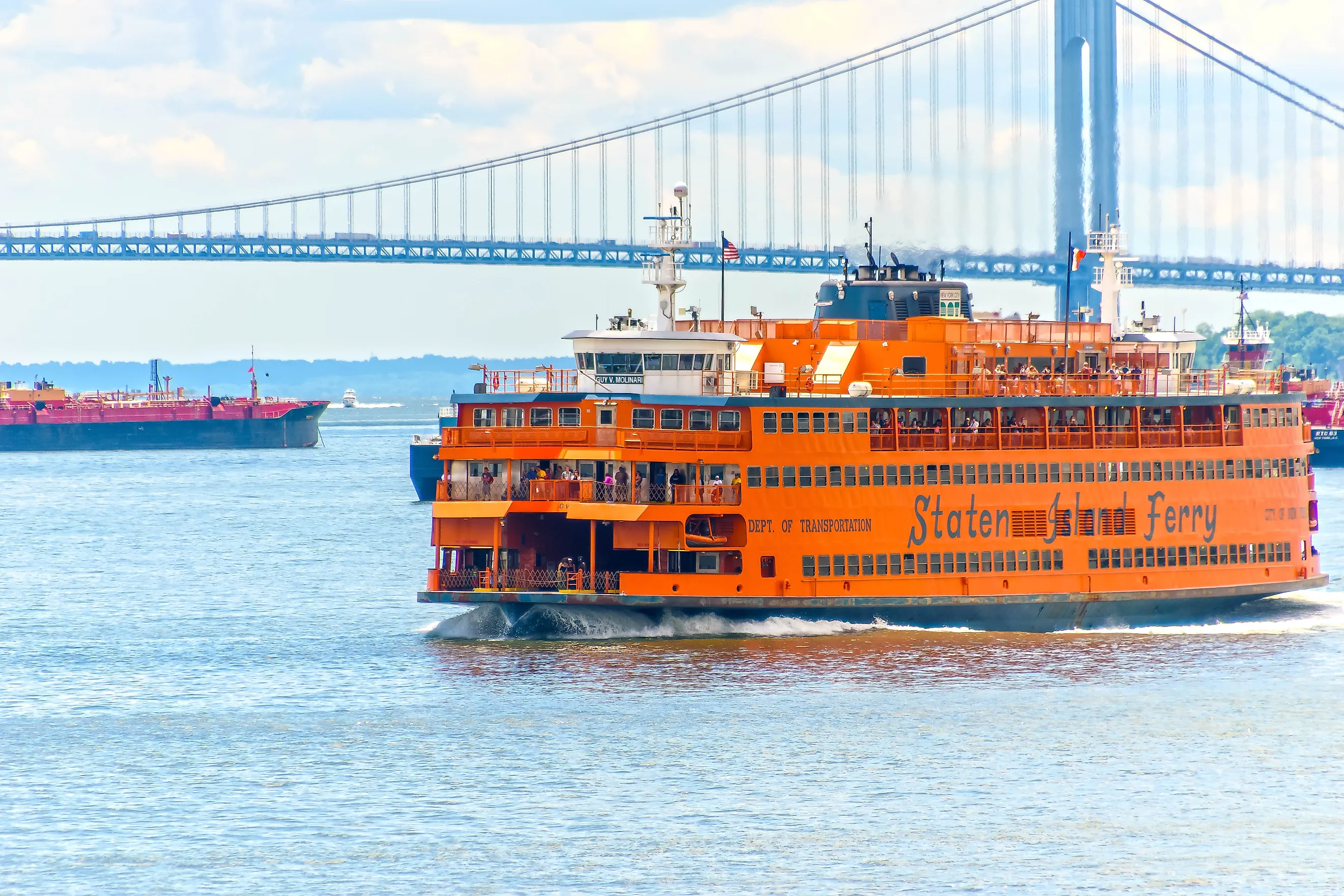
At three in the morning, while most of NYC sleeps, an orange boat pulls out of Lower Manhattan for a free ride across New York Harbor. The Staten Island Ferry is the busiest ferry route in the United States by passenger trips. New York City counted 16.7 million rides in fiscal year 2026 on the 5.2-mile run between Whitehall in Manhattan and St. George on Staten Island.
The runners-up aren't close. Seattle's crossing to Bainbridge Island, the busiest route in Washington's state ferry system, carried 5.2 million riders in 2025. The ferry between Galveston and Port Bolivar in Texas moves close to 5 million passengers a year, and the boats from Woods Hole to Martha's Vineyard carried more than 2.4 million. Staten Island pulls ahead on sheer frequency and connections. Boats leave every 15 minutes at rush hour, and both terminals sit at the end of a train line. Sightseers ride for the front-row view of the Statue of Liberty. For a Staten Islander riding the railway to a job in Manhattan, those 25 minutes on the water connect the last stop on one train line with the first stop on another.
The Staten Island Ferry, From Sailboat to Rush Hour

Staten Islanders have been commuting by water for more than two centuries. In 1810, a 16-year-old Cornelius Vanderbilt started carrying passengers to the Battery in a periauger, a shallow two-masted sailboat he bought with birthday money. Steam power arrived in 1817, when the Richmond Turnpike Company put the Nautilus on the run. For most of the 1800s, the boats belonged to private operators and then to the railroads running trains across the island. Riders soured on that arrangement after the railroad-owned Northfield collided with another ferry while leaving Whitehall in 1901 and sank within minutes. Under pressure from residents, New York City took over the route on October 25, 1905, launching a fleet of new boats named for the five boroughs.
On a weekday morning, the 8 a.m. boat pulls away from St. George bound for Manhattan. By the time it ties up at Whitehall about 25 minutes later, the 8:15 boat is already out on the harbor behind it. Departures every 15 minutes are how the ferry handles about 45,000 passenger trips on a typical weekday. Once the morning rush clears, crews squeeze in much of the fueling and maintenance before commuters start heading home.
One of the boats hauling that crowd is the Dorothy Day, named for the Catholic Worker activist who lived on Staten Island. In service since 2023, it holds 4,500 passengers, and its outdoor promenade wraps all the way around the upper deck. On the Manhattan-bound run, that railing is a prime spot for watching Lady Liberty slide past. But, don't plan on hopping off. Going ashore on Liberty Island takes a separate ferry operated by Statue City Cruises.
How the Staten Island Ferry Went Free

That boat to Liberty Island charges for a ticket. The Staten Island Ferry hasn't charged a pedestrian anything in nearly three decades. Until July 4, 1997, a round trip cost 50 cents. New York dropped the fare the same day it rolled out free transfers between city buses and subways, and the city figured a regular commuter would save $120 a year. Tourists got the same deal, even if they never bought a MetroCard or set foot on a city bus.
Today, a rider coming up from the 1 train at South Ferry can walk into the Whitehall terminal and catch the next boat without buying a ticket or tapping a card. The ride still has a price tag for the city. In fiscal year 2026, each passenger trip cost an average of $13.09.
Seattle to Bainbridge Island

Clear across the country at Colman Dock in downtown Seattle, drivers and foot passengers board the same boat for the 35-minute crossing of Puget Sound to Bainbridge Island. The route accounts for more than a quarter of the 20.1 million riders Washington State Ferries carried across its whole system in 2025. Add up every route in the state and the total tops Staten Island's, though no single Washington crossing comes close.
Bainbridge also leads the state in walk-on passengers. In Seattle, they reach the terminal on an elevated walkway from the street. On the island end, generations of riders stepped off the boat onto a wooden overhead passage that had passed the 50-year mark by the time a steel and concrete walkway replaced it in 2024. Down on the vehicle deck, the boats carried more than 1.6 million vehicles in 2025. That is plenty of cars, but Washington's heaviest vehicle traffic crosses farther north, between Mukilteo and the town of Clinton on Whidbey Island.
Galveston to Port Bolivar

In Texas, the ferry is simply the next stretch of highway. Drivers following State Highway 87 toward Crystal Beach roll up to a ferry ramp on Galveston Island, where the road's next 2.7 miles cross Galveston Bay by boat in 20 minutes or so. Once underway, passengers can climb out of their cars to watch the shipping traffic, and one vessel out there hasn't budged in a century. Part of the Selma, a concrete ship sunk off Pelican Island in 1922, still stands above the water.
When the route opened in 1930, the boats made only six round trips a day, all in daylight. These days the ferries run through the night, and Texas doesn't charge a dime. In summer, vacationers bound for Crystal Beach share the deck with peninsula residents headed to work or to a hospital appointment in Galveston. All told, the ferry carries around 5 million passengers and 1.5 million vehicles a year.
Woods Hole to Martha's Vineyard

Up on Cape Cod, the Steamship Authority's ferries leave Woods Hole for the 45-minute trip to Martha's Vineyard. In the warmer months, passengers get to pick their island port: Oak Bluffs takes boats from May through October, and Vineyard Haven stays open all winter. Between the two, more than 2.4 million passengers passed through Woods Hole in 2025, along with some 550,000 vehicles, including freight trucks making deliveries to the island.
For Vineyard residents, landing a spot on the car deck can decide whether they make an appointment on the mainland. Drivers need advance reservations, so the Steamship Authority holds back some vehicle space for islanders whose plans come together at the last minute. An eligible resident who needs to see a doctor on Cape Cod can still try for one of those spaces the day before the crossing.
Where the Road Meets the Water
The ferries in Texas, Washington, and Massachusetts are essential to the people who use them, but none carries passengers on Staten Island's scale. Free fares, 24-hour service, and train connections at both terminals keep the route busy, with 16.7 million passenger trips recorded in fiscal 2026. That makes the Staten Island Ferry the busiest ferry route in America, and even at three in the morning, another orange boat is crossing New York Harbor.