The Single District That Holds The Most Colorado River Water In America
Ask who really controls the Colorado River, and most people picture big states or thirsty cities like Los Angeles, Phoenix, and Las Vegas. The true answer is stranger than that: the single largest claim on the entire river belongs not to a state or a metropolis, but to one rural farm district baking in the California desert. The Imperial Irrigation District holds rights to roughly 3.1 million acre-feet of Colorado River water every single year, which is more than entire states are allotted. It is a staggering amount of water for a place most Americans have never heard of, and it sits at the dead center of the West's escalating water wars. Here is the story of the single district that holds the most Colorado River water in America.
The Answer: Imperial Irrigation District

The Imperial Irrigation District, or IID, serves the Imperial Valley in the far southeastern corner of California, pressed right up against the Mexican border. Its entitlement to about 3.1 million acre-feet of Colorado River water per year is the single largest right held by anyone on the entire river. To put that into perspective, it is roughly as much water as the states of Arizona and Nevada receive combined, and it works out to around 70 percent of California's entire Colorado River allocation. One agricultural district, in other words, lays claim to more of the river than most of the states that depend on it. ProPublica once pointed out that just twenty farming families in the valley use more river water than three entire Western states put together.
A Desert Turned Into a Farm Empire

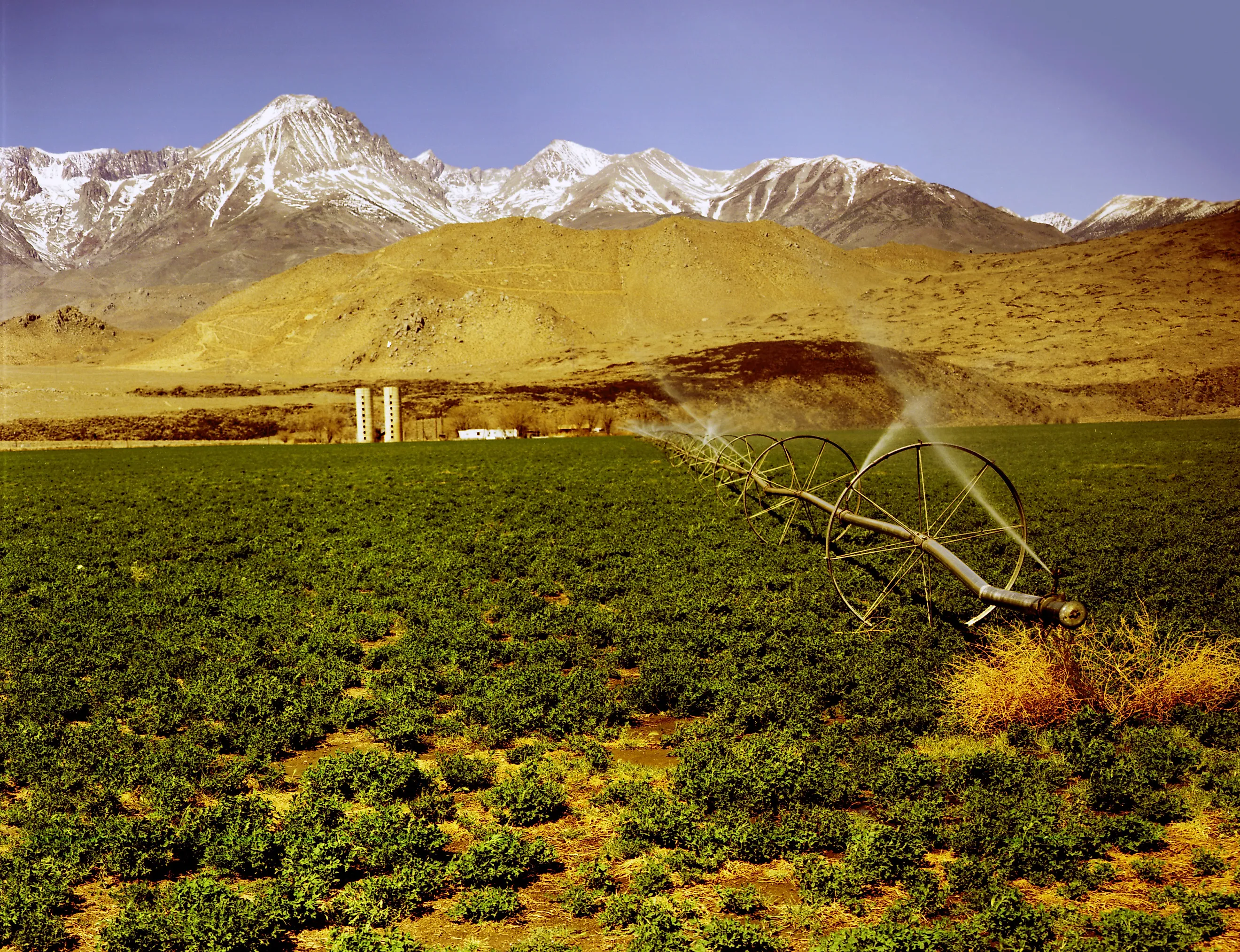
What makes this truly remarkable is where all that water actually goes. The Imperial Valley is a genuine desert, parts of it below sea level, blisteringly hot, and bone-dry, receiving only about three inches of rain in a typical year. Yet thanks entirely to Colorado River water, it has become one of the most productive agricultural regions on the planet, with roughly half a million acres under cultivation. In winter, when much of the rest of the country's farmland lies frozen and dormant, the Imperial Valley just keeps growing, supplying a huge share of America's lettuce, carrots, broccoli, and other fresh winter produce, which has earned it the nickname of the nation's winter salad bowl. It also grows vast fields of alfalfa and other cattle feed; by some accounts, the valley's feed crops alone drink more water each year than the entire state of Utah does.
The All-American Canal

None of it would be possible without one astonishing piece of engineering: the All-American Canal. Stretching about 80 miles from the Imperial Dam on the Colorado River near Yuma, Arizona, west across the dunes and open desert, it is the largest irrigation canal anywhere in the world. It carries the district's full 3.1 million acre-feet almost entirely by gravity, without a single pump, and it moves more water than the Central Arizona Project and the Colorado River Aqueduct combined. From the main canal, the water fans out through more than 1,400 miles of smaller canals to reach the valley's fields. It is the lifeline that turns raw desert into farmland, and it is the physical reason a single district can hold such an outsized share of the river.
Why It Holds So Much: Senior Rights
The secret to IID's enormous share comes down not to size or politics but to timing. Water rights on the Colorado follow the old Western doctrine of "first in time, first in right," which means the earliest users hold the most secure claims. The Imperial Valley began diverting river water all the way back in 1901, long before the big cities and much of the modern Southwest even existed, and that early start handed it some of the most senior rights on the entire river. Most of IID's entitlement is protected as what the law calls Present Perfected Rights, the oldest and strongest class of claim there is. Those rights were later locked in by agreements among the basin states and affirmed by the US Supreme Court in 1964. The practical consequence is enormous: when the river runs short and cuts are handed out, senior holders like IID are the very last in line to lose any water at all.
A Flashpoint in the Water Wars

That seniority has turned IID into the single most important, and most contested, player on the river. As the Colorado shrinks under a decades-long megadrought, the fast-growing cities badly want more water, but they cannot simply seize the valley's senior rights, which the law treats as a form of property. Instead, the cities pay the district to use less. Under the 2003 Quantification Settlement Agreement, the largest agricultural-to-urban water transfer in US history, IID agreed to conserve water on its farms and send the savings on to coastal Southern California, including San Diego. Since then it has conserved well over nine million acre-feet, and it has kept cutting back voluntarily, saving hundreds of thousands of acre-feet a year. The upshot is that no durable deal to rescue the river is possible without the district's cooperation. One farm district, in effect, holds a quiet veto over the water future of the entire Southwest. That leverage has only grown as the basin fights over who absorbs the next round of cuts, with states now taking the dispute to court, and IID insisting any reductions respect its senior priority rights.
The Salton Sea Problem

There is a painful catch to all of this conservation. For more than a century, the runoff from the valley's irrigated fields drained into a low desert basin and sustained the Salton Sea, California's largest lake, which was itself created by a Colorado River irrigation accident back in 1905. As IID conserves more water and ships it off to the cities, less runoff reaches the sea, and it has been steadily shrinking and turning saltier for years. The retreating shoreline exposes mile after mile of dry lakebed laced with decades of accumulated farm chemicals, and desert winds whip that sediment into toxic dust that threatens the health of nearby communities, even as a once-vital bird habitat collapses. So the district's water decisions never really stop at the edge of the farm. They ripple outward into a slow-motion environmental and public-health crisis, a stark reminder that on the Colorado River, no drop of water is ever truly free. California has committed hundreds of millions of dollars to dust control and habitat projects around the sea, but the fixes have been slow, and the lake keeps receding faster than the plans can keep up.