How Lake Toba Compares To The Great Lakes
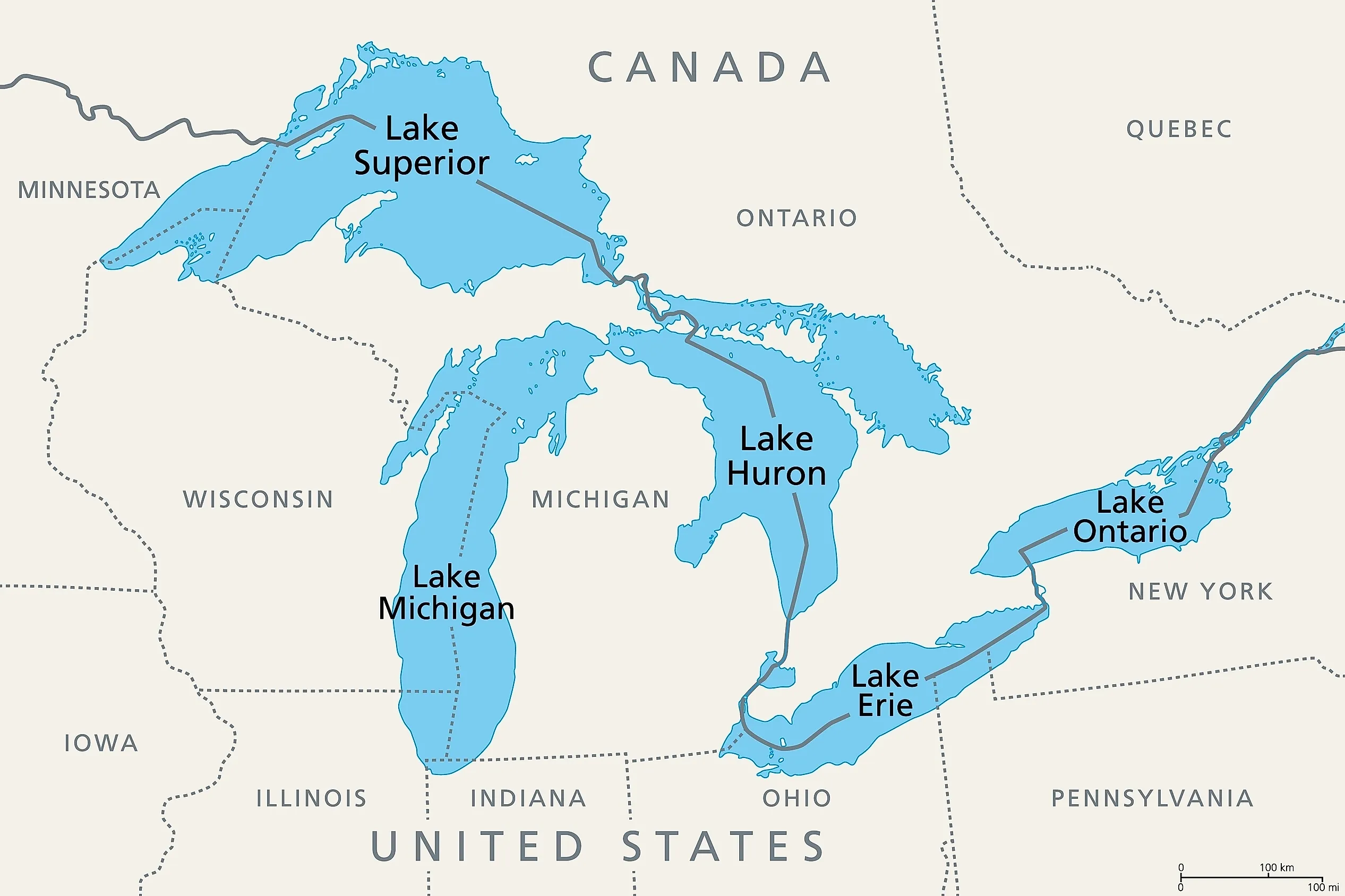
Lake Toba holds the title of largest volcanic lake on Earth, and it would finish dead last in the Great Lakes on surface area by a margin that is frankly embarrassing. Lake Ontario covers nearly 17 times as much. Superior covers nearly 73. It would also be the deepest lake in the group by 99 meters, beating Superior comfortably and beating every single one of them on average depth as well. A lake that fits inside Erie 23 times over goes further down than anything in North America, which tells you it is not really behaving like a lake at all. It is behaving like what it is, which is a hole.
On Surface It Is Not Close

Toba is the largest volcanic lake anywhere and would still come last here without a serious argument. At 1,130 square kilometers it is 16.8 times smaller than Ontario, 22.7 times smaller than Erie, and 72.7 times smaller than Superior. All five together are more than 200 Lake Tobas, which means the word largest is doing an enormous amount of work in that title and should probably be paid overtime.
The lake measures 100 kilometers long by 30 wide. That sounds substantial right up until the moment it has to stand next to Lake Huron, at which point it starts looking like a decorative water feature.
On Depth It Beats All Of Them

Flip to the vertical axis and the result reverses completely. Toba reaches 505 meters at its deepest point, at the northeastern end. Superior, the deepest Great Lake, reaches 406. Ontario manages 244, Michigan 281, Huron 229 and Erie just 64.
So Toba is 99 meters deeper than the deepest Great Lake and 441 meters deeper than the shallowest. Nothing in the largest freshwater system in North America goes down as far as a lake that would barely register on a map of it.
Its Average Beats Their Maximums

The average depth figure makes the point more brutally than the maximum does.
Toba averages 216 meters across its whole surface. That is deeper than the maximum depth of Lake Erie at 64 meters, more than three times over. It also exceeds Superior's average of 147.
An average spot on Lake Toba is further from the surface than the single deepest point in Lake Erie, three times over. Pick a random place on Toba, drop a stone, and it falls past the bottom of Erie before it is a third of the way down.
Volume Is Where Reality Returns

Multiply the two dimensions together and surface area wins, because there is so much more of it.
Toba holds 240 cubic kilometers. Erie, with its 64-metre maximum depth, still holds twice that at 484, simply by being 23 times wider. Ontario holds 6.8 times more, Huron 14.8, Michigan 20.5 and Superior 50.4.
Depth is spectacular and area is decisive. A very deep small lake loses to a shallow enormous one every time, which means Erie finally gets to win something, and it has earned it.
Crater Lake Does It Better And Smaller

Before Toba gets too comfortable with the depth title, North America has its own caldera and it is not impressed.
Crater Lake in Oregon reaches 594 meters, which is 89 meters deeper than Toba, in a lake covering about 53 square kilometers. That is a twentieth of Toba's surface going a fifth deeper.
Crater Lake is not a Great Lake and does not enter this comparison officially. It is mentioned here purely so that Toba does not leave the room thinking it is the deepest hole in the conversation.
The Crater Is The Whole Story

The reason for every number above is one event roughly 74,000 years ago. The Toba eruption rated VEI 8, the maximum on the Volcanic Explosivity Index, and ejected around 2,800 cubic kilometers of material. It was the largest known explosive eruption on Earth in the last 25 million years, with pyroclastic flows destroying at least 20,000 square kilometers and ash deposits up to 600 meters thick near the vent.
The caldera left behind is 100 by 30 kilometers, the largest Quaternary caldera on the planet, and the lake simply moved into it afterwards like a tenant taking a flat that came with a very alarming history.
It Ejected More Than It Now Holds
Here is the comparison the Great Lakes cannot offer at all.
The eruption threw out about 2,800 cubic kilometers of rock and ash. The lake that now sits in the hole contains 240 cubic kilometers of water.
Toba expelled almost twelve times more material than the lake now holds in water. The hole is considerably bigger than the thing filling it, and the resulting volcanic winter is estimated to have dropped global temperatures by 3 to 3.5 degrees Celsius for several years. The eruption itself lasted perhaps two weeks.
There Is An Island In It The Size Of Singapore

The interior feature is proportionally unlike anything in the Great Lakes. Samosir Island covers 630 square kilometers, roughly the size of Singapore, and is the largest island within an island anywhere on Earth. It occupies about 56 percent of the lake's surface area.
Isle Royale, the largest island in the Great Lakes, covers a fraction of one percent of Superior. Samosir takes up more than half of Toba, which raises the reasonable question of whether Toba is a lake with an island in it or an island with a moat.
And A Lake On That Island

The nesting goes one level further than most people expect. Lake Sidihoni sits on Samosir Island, which sits in Lake Toba, which sits on the island of Sumatra. That is a lake on an island in a lake on an island.
Samosir is also a resurgent dome rather than ordinary land. Lake sediments found on it show it has been shoved upward at least 450 meters since the eruption by magma refilling the chamber underneath, which means the island is not sitting in the lake so much as slowly climbing out of it.
The Lake Is Also Shrinking
While the island goes up, the water goes down, which is a combination no lake enjoys.
Research on Toba reports that the water level has gradually and significantly decreased over the past six decades, with sharp fluctuations on scales from months to years. Low water disrupts the boat services that connect Samosir to the mainland, because the only road to an island in a volcanic crater is a ferry.
Causes under discussion include El Nino cycles, climate change and water extraction. So the lake is being squeezed from below by magma and from above by everything else.
It Is Still Rising

The structural difference between Toba and a Great Lake is that one of them is geologically finished and the other is not.
Toba is probably the largest resurgent caldera on Earth, meaning the floor continues to be pushed upward by magma below. The Great Lakes basins were gouged by ice and have been quietly rebounding ever since, which is a far gentler process.
One system was carved by a glacier that left. The other was blown out by a volcano that is still underneath it, pushing. The Great Lakes are a finished landscape. Toba is a work in progress with a deadline nobody knows.
The Scoreboard

Lake Toba loses to every Great Lake on surface area and on volume, finishing last on both by considerable margins. It beats all five on maximum depth and on average depth, going 99 meters further down than Superior.
It also holds an island the size of Singapore covering more than half its surface, that island has a lake on it, that island is rising, and the entire arrangement sits in a crater made by an eruption that ejected twelve times more material than the lake now contains water. The Great Lakes are bigger in every direction that gets measured on a map. Toba is the one with the better story and a volcano still attached.