The American Rivers With The Most Dangerous Rapids
All across the United States, adrenaline seekers find the toughest whitewater rapids to take on. Rapids are classed by difficulty, from Class I, the easiest and gentlest, to Class VI, extreme and potentially life-threatening. Powerful currents, steep drops, narrow channels, and submerged rocks make these rapids challenging. On the Gauley River, a section of the river crashes into undercut rocks that have trapped people before. On the Colorado River, the water has claimed others by sucking them under the moment their raft flips.
Below are six rivers with rapids classed from V to VI. Each one is for experienced rafters only, not the weak of heart. These waters demand respect, or you'll end up hurt, or worse.
Colorado River, Arizona

Hundreds of thousands of years ago, the Uinkaret Volcanic Field deposited massive lava flows into the Grand Canyon. These deposits dammed the river until the Colorado River finally broke through those natural dams. You can still see enormous basalt deposits on the riverbed as you finish the rapid known as Lava Falls.
Lava Falls is classed as V to V+. It is known for large waves, turbulent waters, and technical challenges. The major challenges are the Ledge Hole and the Cheese Grater. The Ledge Hole is a sharp, wide drop that easily flips oar boats and traps water in a churning hole.
Submerged rocks just below the surface create dangerous channels. Flipping in these waters greatly increases the danger. The sharp rocks make it easy to get caught. Because of this, Lava Falls is considered one of the most notorious and formidable rapids in the world.
Gauley River, West Virginia

The Upper Gauley is a top destination for Class V rapids. There are dozens of huge waves that require the technical skill of advanced rafters. Rapids in this area on the Gauley River include Insignificant, Pillow Rock, Lost Paddle, Iron Ring, and Sweet's Falls. Every year, releases from the Summersville Dam upstream determine the river's water levels. Without these releases, the rapids lose much of their power.
On scheduled release days each fall, the river runs at about 2,800 cubic feet per second, or cfs. The first major rapid people meet has two drops, and the second drop is where the real danger lies. The second drop funnels water into a constricting crack between undercut rocks. The bottom is blocked by a stone, and that slot has been the site of two drownings in the past.
Farther down at Pillow Rock, the rapids pick up speed again, and the rocks on the right shore make it dangerous. Waves hit at odd angles, making it hard to stay in one section.
Upper Animas River, Colorado

Being knocked around is common on the Upper Animas River between Silverton and the bottom of the Rockwood Box. The run is 24.2 miles long with a steep gradient. Like the others on this list, the rapids start off easygoing, reaching Class III for a little while. That is, until you reach Class V, where falling into the water has proven fatal. The water swallows people and doesn't let them up without a fight.
With frigid water and several nonstop rapids, bring extra food, clothes, paddles, and emergency gear. Wetsuits and paddle jackets are a minimum, but a drysuit is recommended for staying warm. Water levels vary throughout the season and range from 500 cfs to over 2,000 cfs.
Three Class V rapids are Ten Mile, No Name, and Broken Bridge. Each one has its own challenges and calls for an experienced rafter.
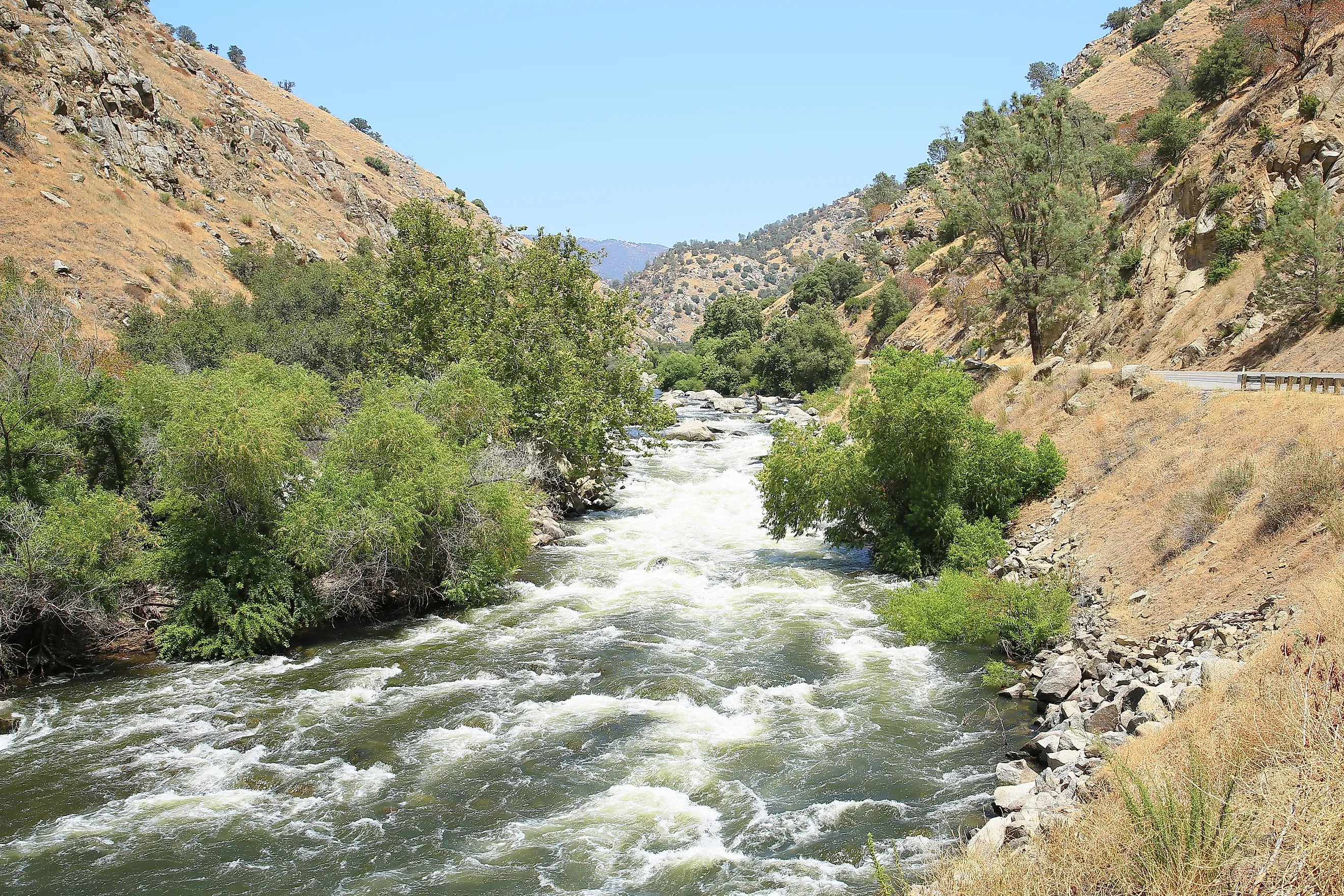
Kern River, California

California's Kern River has the nickname "Killer Kern" for a reason. It has a cumulative death toll of 348 people recorded since official record-keeping began in 1968. The Kern River's currents are dangerous because they are deceptive. The water near the surface often looks calm, but strong undercurrents churn rapidly.
Not all of the Kern River is deceptive. It is home to the Forks of the Kern. These are almost continuous Class IV rapids with big Class V drops. It is one of the most difficult commercially run stretches of whitewater in the United States. The three biggest hitters are the Vortex, Confusion, and Carson Falls. The Vortex alone is dangerous because of a concave hole that recirculates water aggressively and creates a powerful vacuum that easily traps kayaks and rafts.
It is also home to the Royal Flush. This is not a rapid anyone should take on, as it sits at Class VI. On high-flow days, massive, house-sized holes can easily swallow a kayak or raft. The flow here can easily reach 4,000 cfs.
Colorado River Through Gore Canyon, Colorado

Gore Canyon, on the Colorado River, has three sections that truly test rafters' determination without the haunting nickname of being a killer. The rough rapids and reliable summer flow draw people from around the world to pump their adrenaline through Class V rapids. The gradient averages 101 feet per mile between the top of Applesauce and the bottom of Kirschbaum. The flow rate is generally between 800 and 1,300 cfs, mid-July through mid-October.
Immediately after Gore Rapid come two more rapids with big holes where it is easy to get stuck and topple over. A mile downstream is Tunnel Falls, a big drop named after a nearby railroad tunnel. The rapids are fast, and the drop is known to batter riders.
While it does have a death toll, often it comes from riders who were pinned in the rapids or those who weren't wearing the proper gear.
Cherry Creek, California

Cherry Creek, on the upper Tuolumne River, is often called one of the most difficult commercial rafting trips in the US. The whitewater is rated Class V+ throughout, with fast-flowing rapids, plunges, and waterfalls. The water is so wild that rafting season often doesn't start until July. This is for experienced paddlers only. Rafters also have to pass basic swimming tests before they can even embark on the trip.
The waters are dangerous, with water dropping more than 100 vertical feet per mile. You have to navigate through narrow boulders, more than a dozen churning rapids, and water moving so swiftly that it is easy to get swept away. Unexpected swims in the icy water are the norm, and at one point rafters may hop along the boulders while guides run the empty rafts through a passage too treacherous for a full boat.
Respect The Water
Respecting these dangerous waters is the only way to stay safe. These rivers make for an exciting time for those prepared to take them on. The deadly history of the Kern and the fast waters of Cherry Creek show that these rivers are as dangerous as they are thrilling.