How Many Feet Lake Mead Has Dropped Since 2000
Lake Mead stood at 1,214.14 feet on January 10, 2000, and 1,037.60 feet on October 9, 2026. That is a fall of 176.5 feet in twenty-six years, which averages out to about 6.8 feet a year. The average is the least useful number in this article, because the decline was nothing like steady. In 2011 the reservoir gained 46.6 feet in a single calendar year, more than a quarter of everything it has since lost, and then gave all of it back. The honest shape of the last quarter century is a staircase with several landings, and the landings matter.
The Headline Number

Two reference points are worth keeping separate, because both get quoted as the drop. Against where the lake actually sat in 2000, the fall is about 176.5 feet. Against full pool at 1,229 feet, which the reservoir has not reached in decades, it is 191.4. The 2000 figure is the more meaningful of the two, because that is the water that genuinely existed and has since gone.
The all-time high was 1,225.83 feet in July 1983. Measured from there, the lake is down more than 188 feet.
2011 Is The Year That Breaks The Trend Line
Anybody drawing a straight line from 2000 to now erases the most interesting year in the record. Reclamation's own annual table shows Lake Mead starting 2011 at 1,086.24 feet on January 2 and finishing it at 1,132.83 on December 31. That is a rise of 46.59 feet inside twelve months, following an exceptional Rocky Mountain snowpack.
For scale, that single year's gain equals about 26 percent of the entire 2000-to-2026 decline. The lake proved it could still recover substantially, and then spent the following decade losing all of it again plus more.
The 2023 Rebound Was Real Too

The second landing is more recent, and it gets forgotten because of what followed. Lake Mead hit what was then a record low of 1,040.58 feet on July 28, 2022. Wetter winters followed, and the reservoir finished 2023 near 1,068 feet, a gain of roughly 27 feet. By December 2024 it had risen about 16 feet over two years.
Then it fell again, and in 2026 it went below the 2022 mark. That is the pattern in miniature: a genuine recovery that does not reach the previous level before the decline resumes.
Where It Is Now

The current numbers are very recent and all of them are records. Lake Mead broke the 2022 record on August 6, 2026, kept falling every day from July 31, and reached 1,040.34 feet on August 8. It carried on down to 1,038.50 on September 16 and 1,037.60 by October 9, holding roughly 26 percent of capacity.
Reclamation's 24-month study has projected an end-of-year elevation near 1,034.74 feet.
Seven Of The Ten Lowest Years Are Recent

Ranking the annual minimums makes the clustering obvious in a way the yearly swings hide.
The ten lowest annual minimums on record are 2026 at 1,038.50 feet, 2022 at 1,040.58, 2023 at 1,044.91, 2025 at 1,054.07, 2024 at 1,060.83, 2021 at 1,064.91, 2016 at 1,071.61, 2015 at 1,074.71, 2018 at 1,076.38 and 2017 at 1,078.92.
Seven of those ten fall in the six years from 2021 to 2026. The staircase has landings, but every landing is lower than the one before it.
The Reason Is An Arithmetic Gap

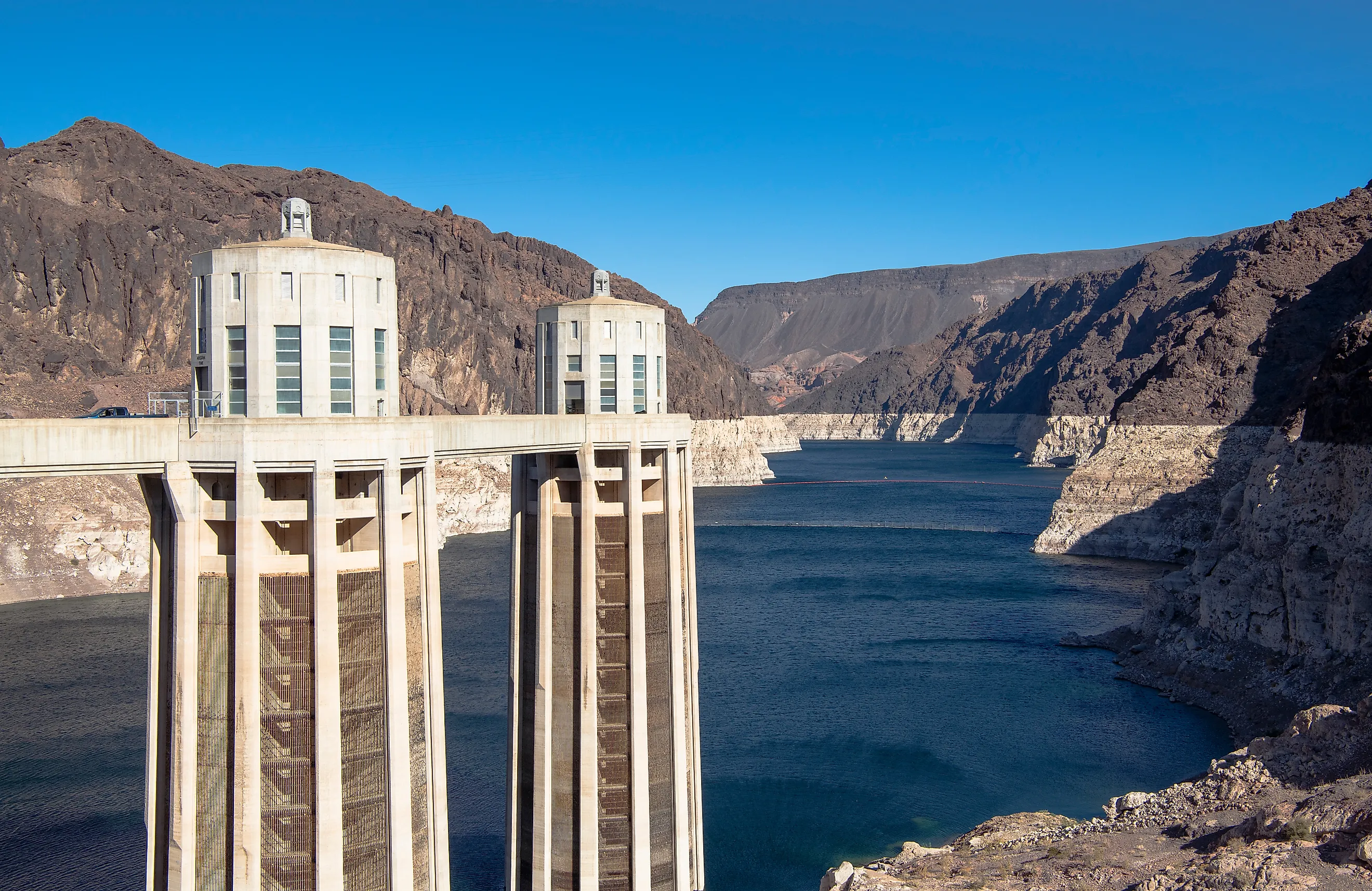
Underneath the year-to-year noise sits one figure that explains why the recoveries never finish the job. The Lower Basin runs a structural deficit of roughly 1.2 million acre-feet a year, meaning more water is promised and released downstream than actually arrives. Releases from Hoover Dam have exceeded 9 million acre-feet annually, which is what has driven the decline since 2000.
A single wet winter cannot erase a 1.2-million-acre-foot annual gap. It can offset one or two years of it, which is precisely what 2011 and 2023 did.
Why The Average Misleads
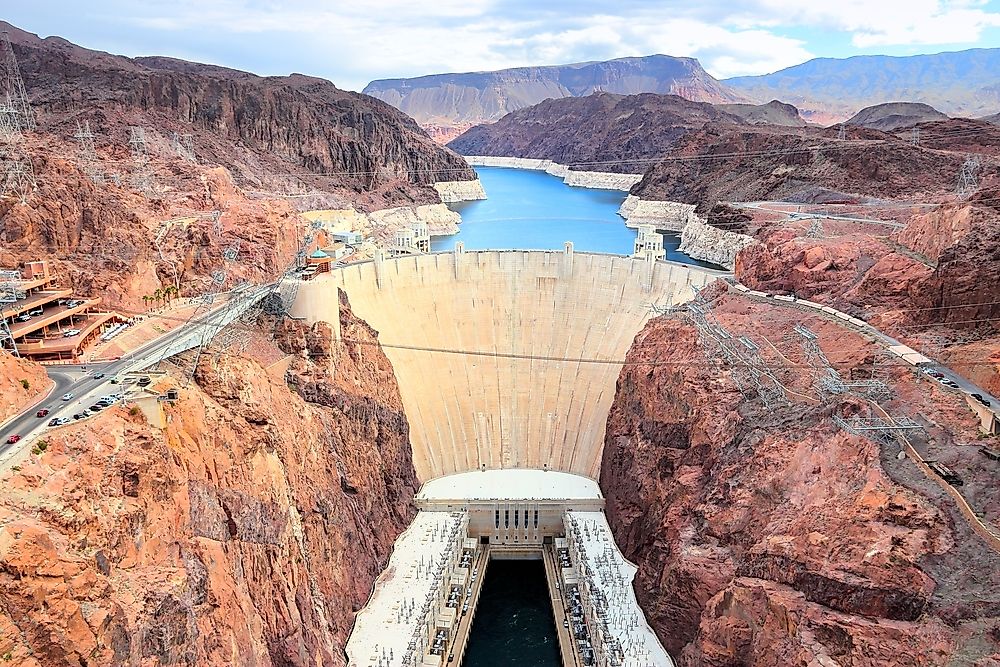
Dividing 176.5 feet by 26 years gives 6.8 feet a year, and that number describes no year that actually happened.
Some years the lake rose 46 feet. Some years it fell more than 15. The early 2000s saw the steepest sustained losses, the 2010s were punctuated by partial recoveries, and the 2020s have produced the lowest readings in the reservoir's history.
Treating it as a smooth slope also produces bad forecasting, because it implies the next decade will look like the last one at the same rate. The record says the lake moves in jumps determined by individual snowpack years.
Seasonal Swings Sit On Top Of All This

One more layer complicates any single reading, and it explains why two reports months apart can disagree sharply about the same reservoir.
Mead falls hardest through spring and early summer as irrigation demand peaks, then flattens or recovers slightly in autumn and winter. In 2022 the annual high was 1,067.34 in January and the low was 1,040.58 in July, a 27-foot swing within one year.
So a figure quoted in February and one quoted in August are not comparable. Comparing annual minimums, as the ranking above does, is the honest way to track the trend.
What The Drop Has Exposed

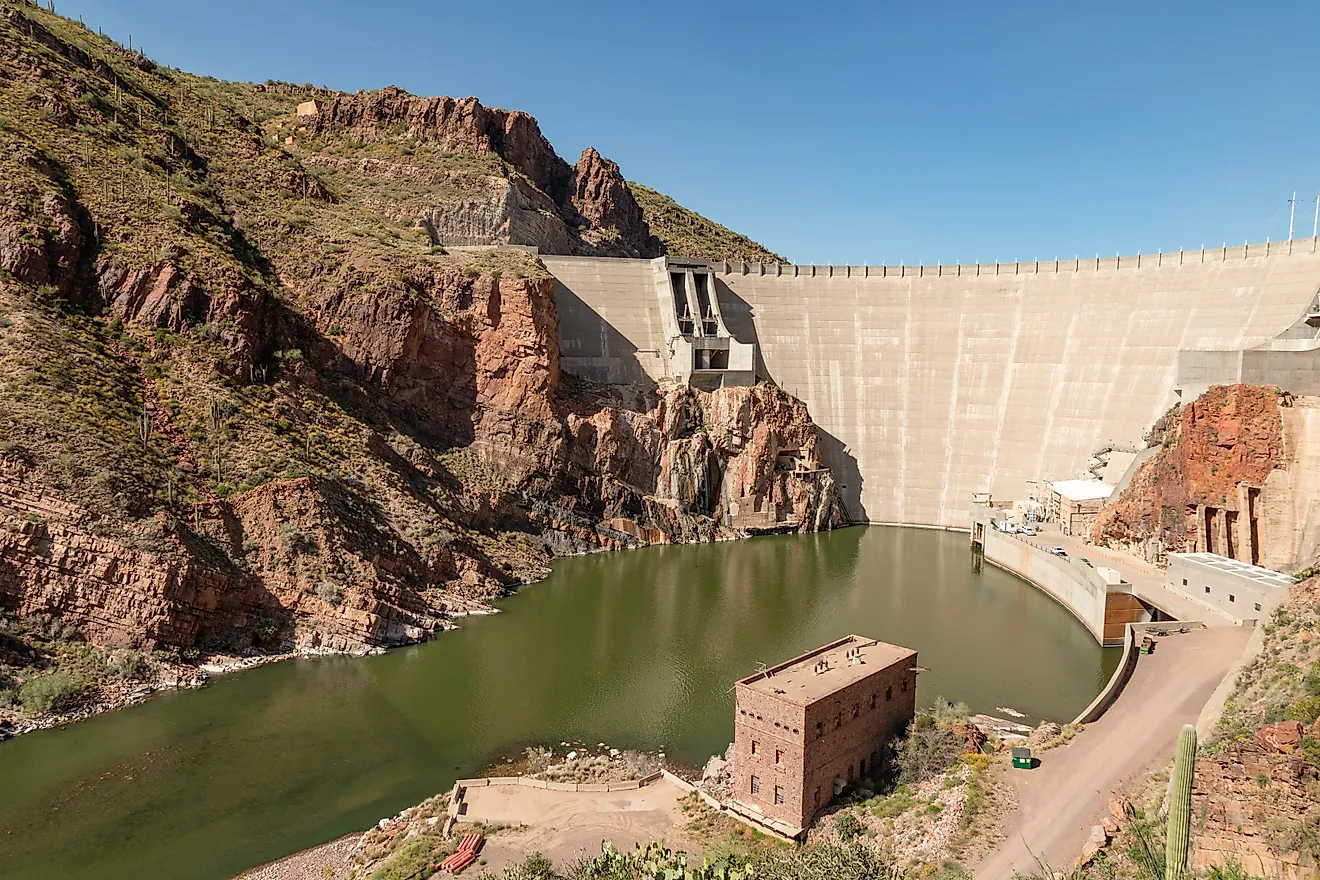
The physical evidence of 176 feet is easier to grasp than the figure itself. The 2022 low made national news when the receding shoreline exposed sunken boats, a World War Two-era aircraft and human remains. The ruins of St. Thomas, a town flooded when the reservoir filled, became reachable by dirt road and hiking trail.
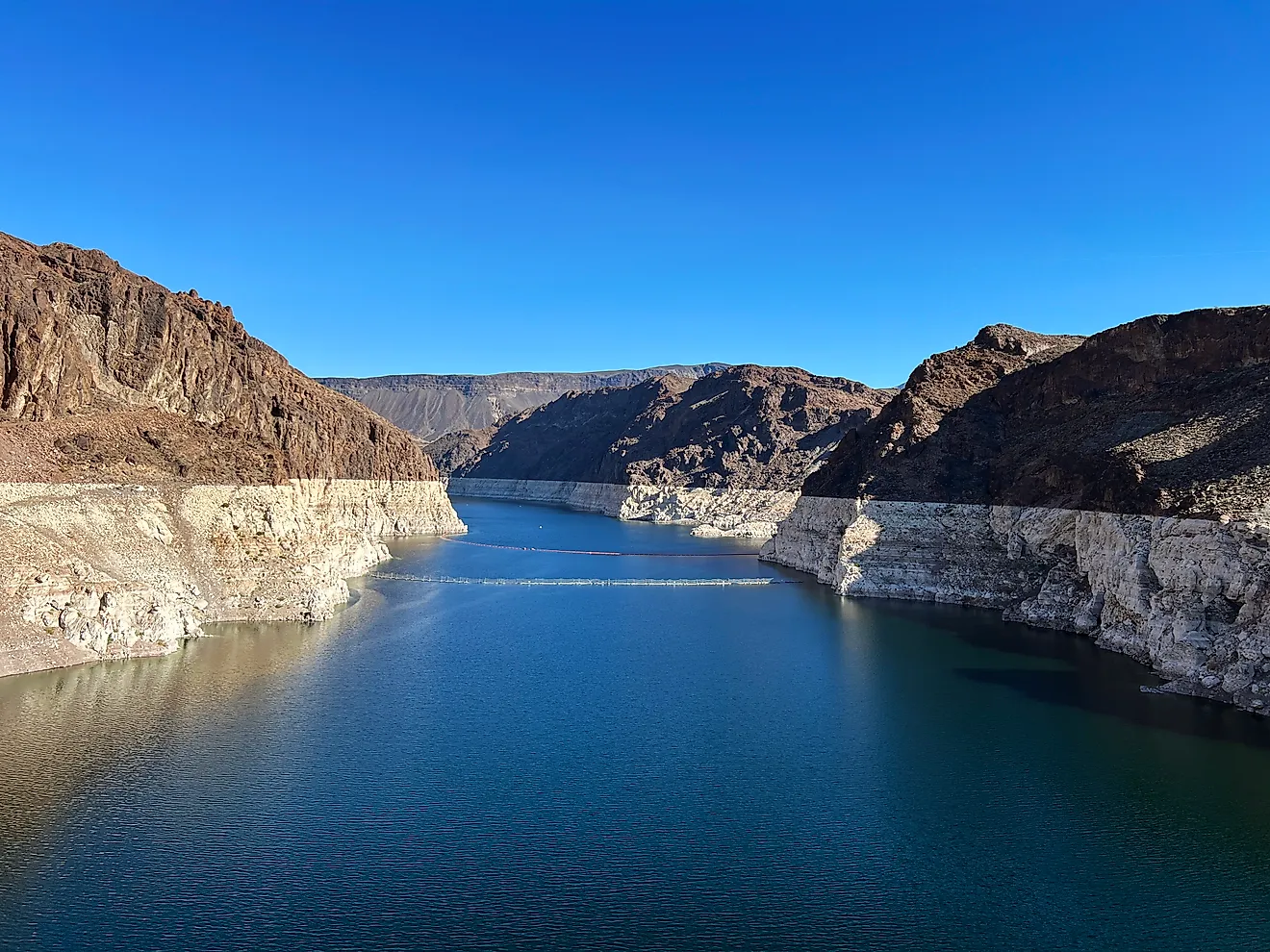
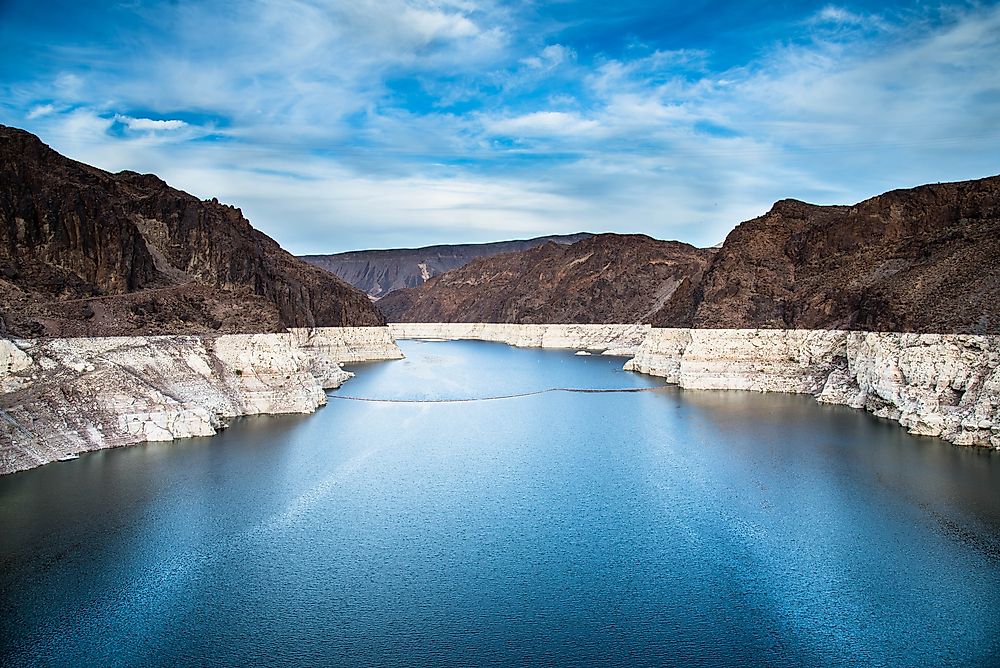
The white mineral band around the shoreline, the bathtub ring, marks where the water used to sit. It is roughly 180 feet of bleached rock, and it is the most legible climate graphic in the United States.
The Short Answer
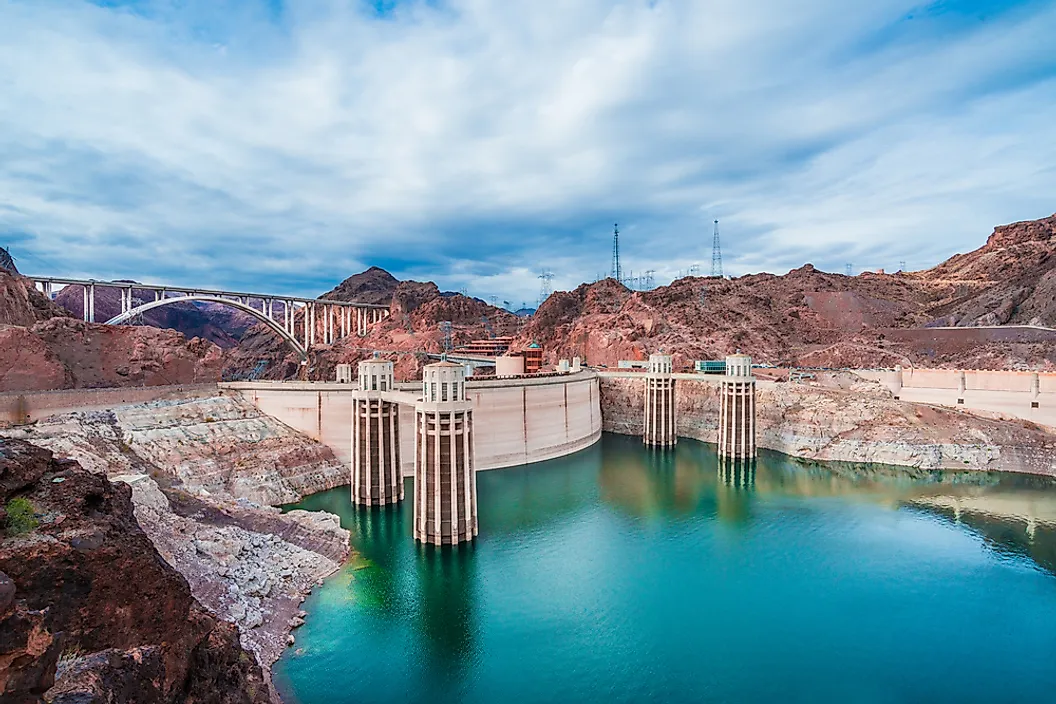
Lake Mead has dropped about 176.5 feet since January 2000, and sits roughly 191 feet below full pool and 188 below its 1983 record high.
It did not get there in a straight line. The reservoir gained 46.6 feet in 2011 and 27 feet across 2023, and both times the recovery stopped short of the previous level before the decline resumed. The trend is downward, the path is a staircase, and the useful thing to watch is not this month's reading but whether each year's low comes in above or below the last one. Since 2021, it has mostly come in below.