The US Lakes With The Most Water Moccasins
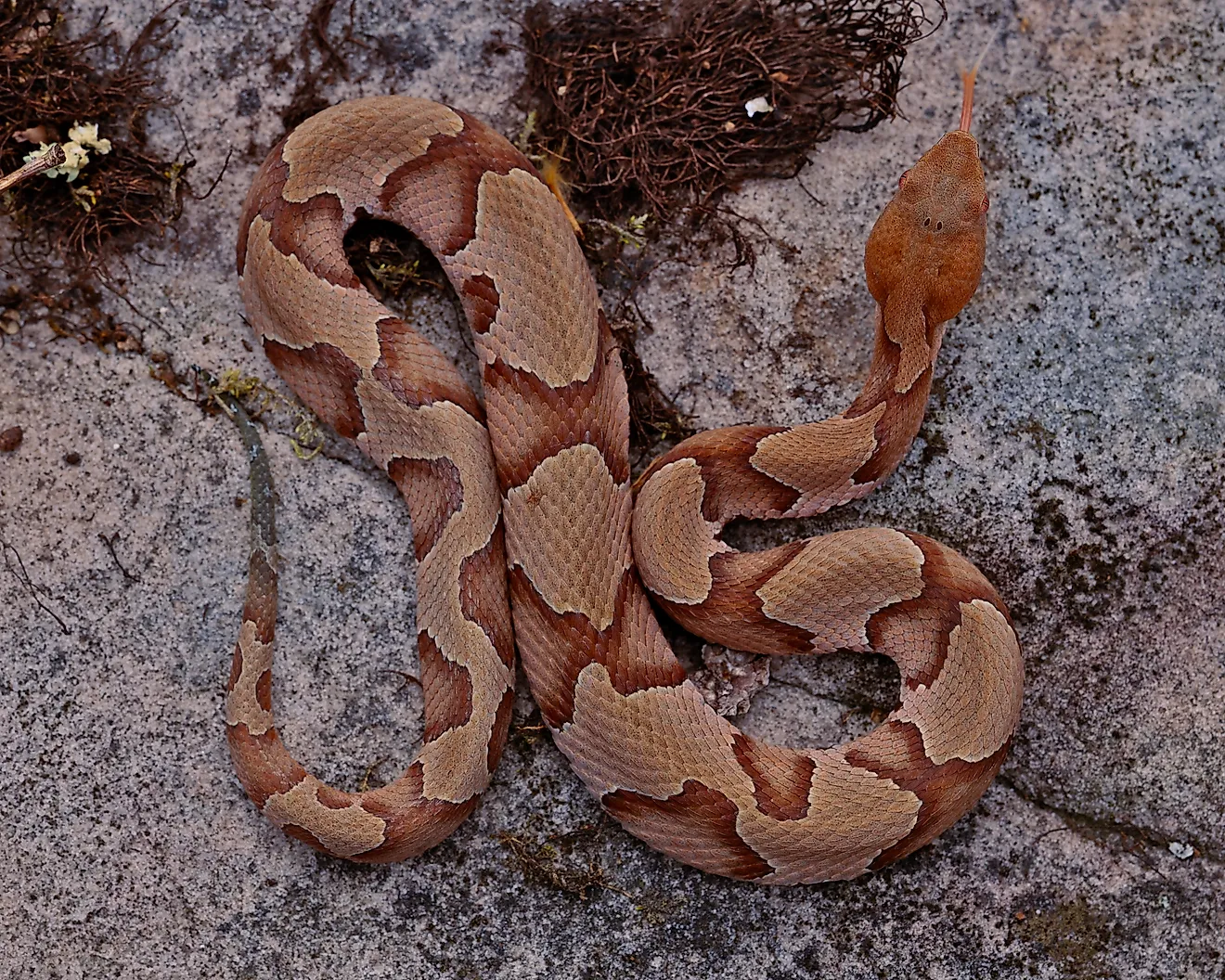
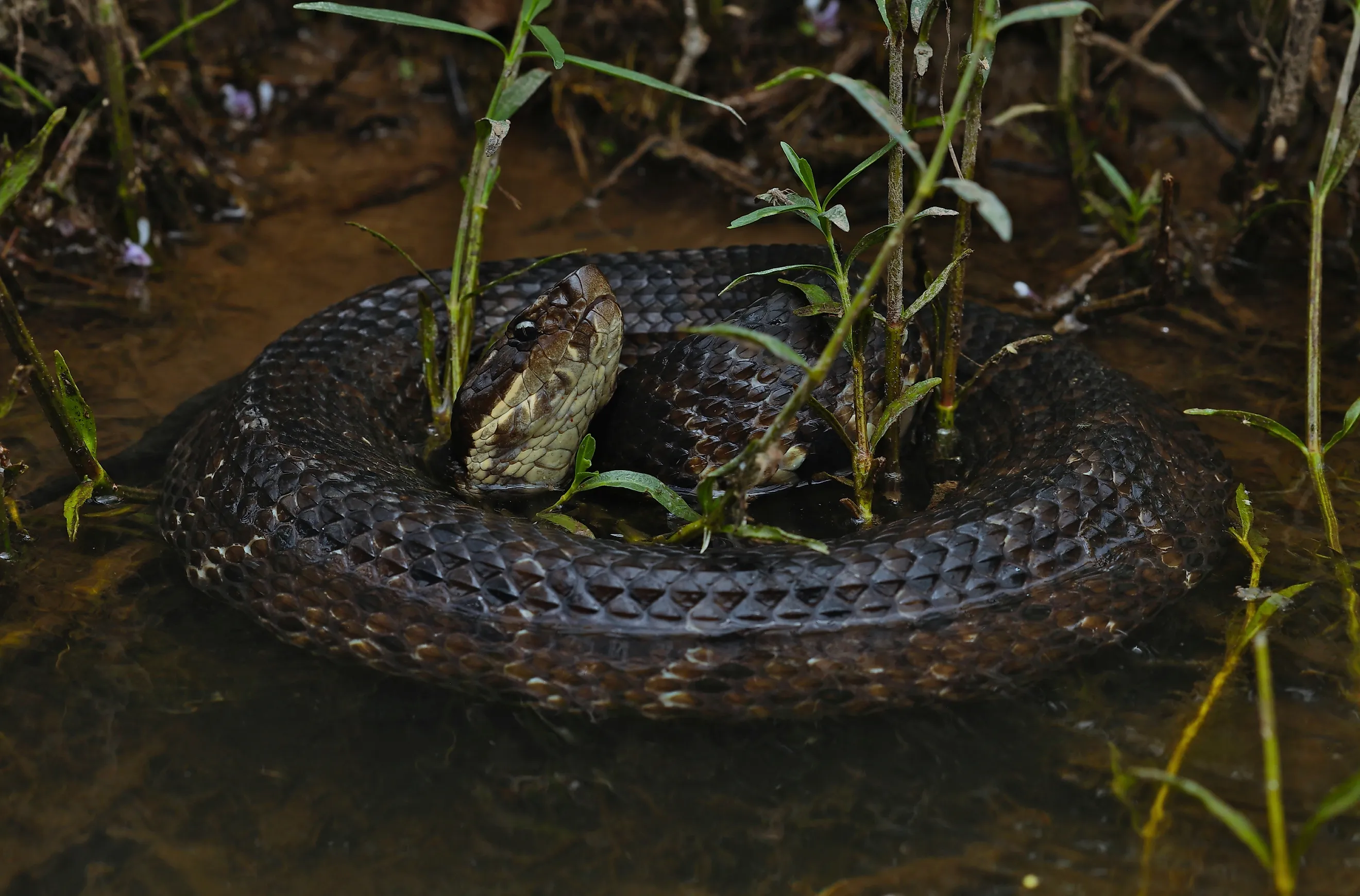
Water moccasin and cottonmouth are the same animal, Agkistrodon piscivorus, and only the second name is reliable. Cottonmouth means this species and nothing else, while water moccasin gets applied loosely to harmless watersnakes that share the same lakes. With that settled, here is the thing that shapes this list. The species has one advantage over every other snake in the American South, which is that it tolerates brackish water. That single trait lets it occupy coastal lakes and deltas where other snakes cannot follow, and it is a large part of why this list reaches places the copperhead and rattlesnake versions never get to.
Caddo Lake, Texas And Louisiana

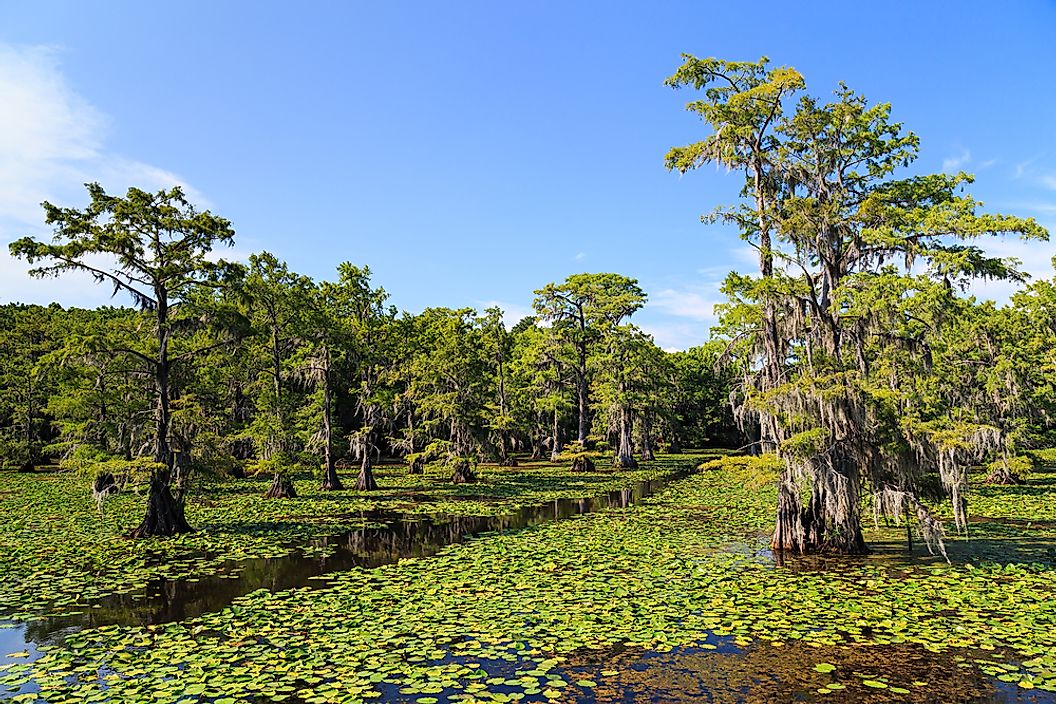
If you designed a cottonmouth lake from scratch you would build Caddo, and its credentials are extraordinary. It covers 25,400 acres straddling the Texas and Louisiana line, holds the largest cypress forest in the world, and is one of very few natural lakes in Texas that is not an oxbow. It is also a Ramsar-protected wetland, and its watershed carries the greatest variety of native aquatic wildlife in the state.
Surveys put 32 snake species in and around the lake. The northern cottonmouth is among the most commonly encountered, alongside the western ratsnake and the North American racer, with timber and pygmy rattlesnakes in the surrounding woods.
Reelfoot Lake, Tennessee

Reelfoot exists because of an earthquake, which is unusual enough on its own and also explains the habitat. The New Madrid earthquakes of 1811 and 1812 dropped a stretch of northwest Tennessee and the Mississippi flooded it, creating a shallow lake full of standing timber. Two centuries later it is cypress swamp, marsh and flooded forest, with water lilies and aquatic plants lining the entire shoreline.
The northern cottonmouth is the only venomous water snake in Tennessee, and Reelfoot is where the state's semi-aquatic species concentrate. The lake also sits on the Mississippi Flyway, which delivers an enormous seasonal prey base.
Toledo Bend Reservoir, Texas And Louisiana

The largest artificial body of water in the South runs about 181,600 acres along the Sabine River and reaches 110 feet at its deepest.
Size alone is not the point, because cottonmouths do not use open water. What Toledo Bend offers is an enormous quantity of vegetated, timbered margin, and at least seven snake species are documented there including eastern cottonmouths, southern copperheads, Texas coral snakes and prairie kingsnakes.
Canebrake rattlesnakes and western pygmy rattlesnakes occupy the surrounding ground, making this one of the more venomous-species-rich reservoirs in the country.
Brackish Water Is The Cottonmouth's Edge
This is the trait that separates cottonmouth distribution from every other snake in the region, and it gets far less attention than it deserves.
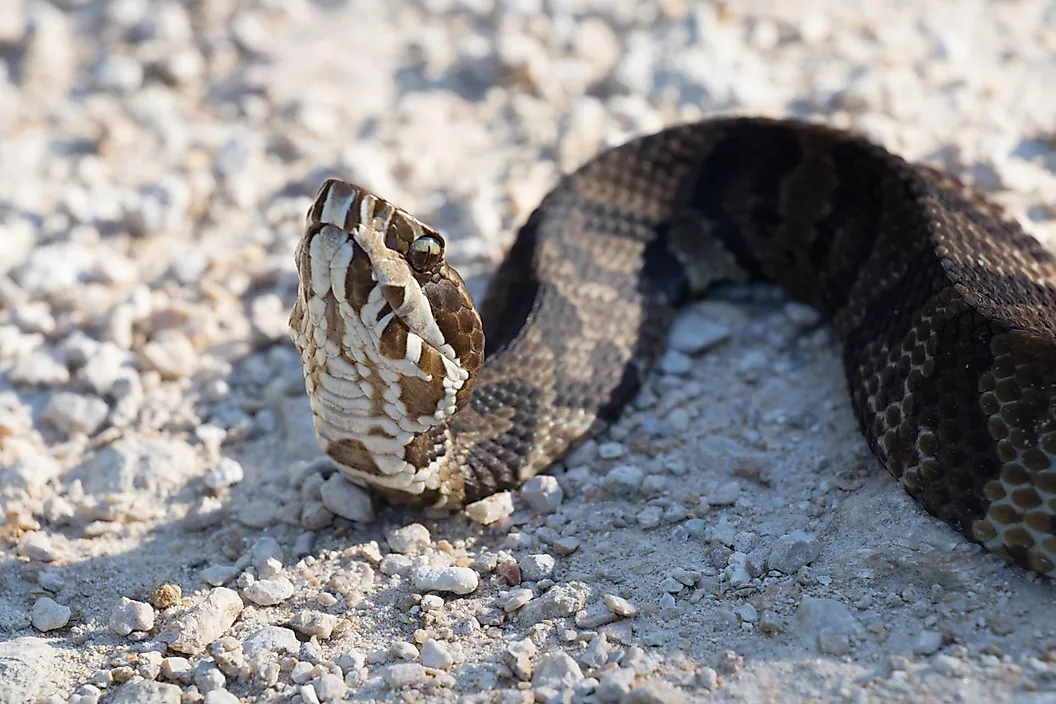
Cottonmouths tolerate brackish water considerably better than most snakes. In the Mobile-Tensaw Delta in Alabama they are described as especially abundant for exactly that reason, occupying reaches where freshwater species thin out or disappear.
That tolerance pushes them into coastal lakes, tidal creeks and estuarine margins across the Gulf, and it means a lake does not have to be fresh to hold them. It only has to be warm, slow and full of cover.
Lake Pontchartrain And Lake Maurepas, Louisiana
The pair of brackish lakes north of New Orleans demonstrate the point directly. Pontchartrain is credited with at least 24 snake species, among them the northern cottonmouth, eastern copperhead and pygmy rattlesnake. Maurepas, just west of it and covering around 15,000 acres, is ringed by dense cypress and tupelo swamp that supports cottonmouths along with ribbon snakes, racers and watersnakes.
Pontchartrain is a brackish estuary rather than a freshwater lake, which would exclude most snakes and does not exclude this one.
Calcasieu Lake, Louisiana

Further west, Calcasieu is a large brackish estuarine lake behind the Gulf coast, and it holds roughly 26 snake species.
The list includes the northern cottonmouth, eastern copperhead, timber rattlesnake, Texas coral snake, pygmy rattlesnake and the glossy swamp snake. That is an unusual concentration of venomous species for a single coastal lake.
Louisiana as a whole holds more than 50 snake species, and the ones that do best are the ones that cope with water that is neither fresh nor sea.
What The Lakes Actually Share

Four features recur, and together they explain this list better than geography does. There is standing timber and cypress, which provides basking platforms at water level and cover underneath. There are warm shallows, because a cottonmouth hunts in water it can move through rather than open depth. There is heavy prey, meaning fish, frogs and small mammals in quantity. And there is slow or still water, since a fast channel gives an ambush predator nothing.
Dense cover, warm shallows and heavy prey concentrate snakes far beyond what open water would, which is the pattern across every entry here.
They Are On The Edges, Not The Middle

One practical point follows from all that habitat, and it should reassure anyone with a boat. Cottonmouths use margins rather than open water: log jams, cypress knees, undercut banks, floating vegetation and the shallow backwaters off the main body. On sunny days in spring and autumn they bask on logs and low branches overhanging the water.
Which means paddlers and bank anglers encounter them far more often than swimmers in open water do, and a boat passing a basking snake is in no danger whatsoever.
Most Of What You See Is Not One

Here is the correction that applies to every lake on this list, and it explains why sighting reports run so high. Harmless watersnakes occupy the same lakes in far greater numbers, swim boldly across open water, and collect the folk name water moccasin wherever they go. Diamondback watersnakes are the most commonly spotted species at several of the lakes named above.
The behavioral tell is useful. A watersnake disturbed on a log usually drops in and swims off fast. A cottonmouth is more likely to hold position and gape, showing the white mouth lining that gives the species its better name. That gape is a warning inside a longer sequence of gaping, tail vibration, body flattening and musk release, all of which come before any strike.
The Short List

Caddo Lake leads on habitat quality, with the world's largest cypress forest and 32 snake species across 25,400 acres. Reelfoot follows as an earthquake-made cypress swamp on a major flyway, then Toledo Bend on sheer vegetated margin, with Pontchartrain, Maurepas and Calcasieu holding the brackish coastal end.
The thread running through all of them is that a cottonmouth does not need a lake so much as a lake edge, and it will take one with salt in it that no other snake in the region can use. That tolerance is why this list reaches the Gulf coast while the copperhead and rattlesnake versions stop inland.