7 Most Snake Infested Rivers In Ohio
Ohio doesn't usually come to mind when someone thinks of snake country, but the state's tens of thousands of miles of rivers and streams are home to many of them. In fact, there are more than two dozen snake species in the state, and several are closely tied to water. Nearly all of them are harmless. Ohio is home to only three venomous snake species, none of which are watersnakes, and despite frequent reports, cottonmouths don't live in the state. The rivers that follow show which snakes live along each waterway and where the state's few venomous species occupy the surrounding hills and wetlands.
Scioto River

At more than 230 miles, the Scioto is one of Ohio's longest rivers and flows entirely within the state. It rises in west-central Ohio and runs south through Columbus, Circleville, and Chillicothe before joining the Ohio River at Portsmouth. Along the way, it takes in the Olentangy River, Big Walnut Creek, and Big Darby Creek, and passes through floodplains, fallen timber, calm backwaters, and oxbows that attract a range of snakes.

Northern watersnakes live along the river, including around Columbus, where they may be spotted basking on the restored downtown riverfront. Queensnakes turn up in stony sections, gartersnakes use the river corridor, and gray ratsnakes climb trees along the banks. Big Darby Creek, which joins the Scioto south of Columbus, is known for its diverse fish and freshwater mussels, and its waters supply prey for snakes and other wildlife. As the lower Scioto cuts through the hills of southern Ohio, it enters copperhead country, where endangered timber rattlesnakes live in the forested uplands of the broader region. Anyone camping or hiking along the river should watch where they step, particularly in heavily wooded or rocky areas.
Ohio River

The Ohio River forms the state's southern border and part of its eastern border, running 981 miles from Pittsburgh to the Mississippi. Ohio's portion passes through Marietta, Portsmouth, and Cincinnati, a mix of backwaters, islands, side channels, and wooded hillsides, giving snakes room to hunt both in the water and along its edges.

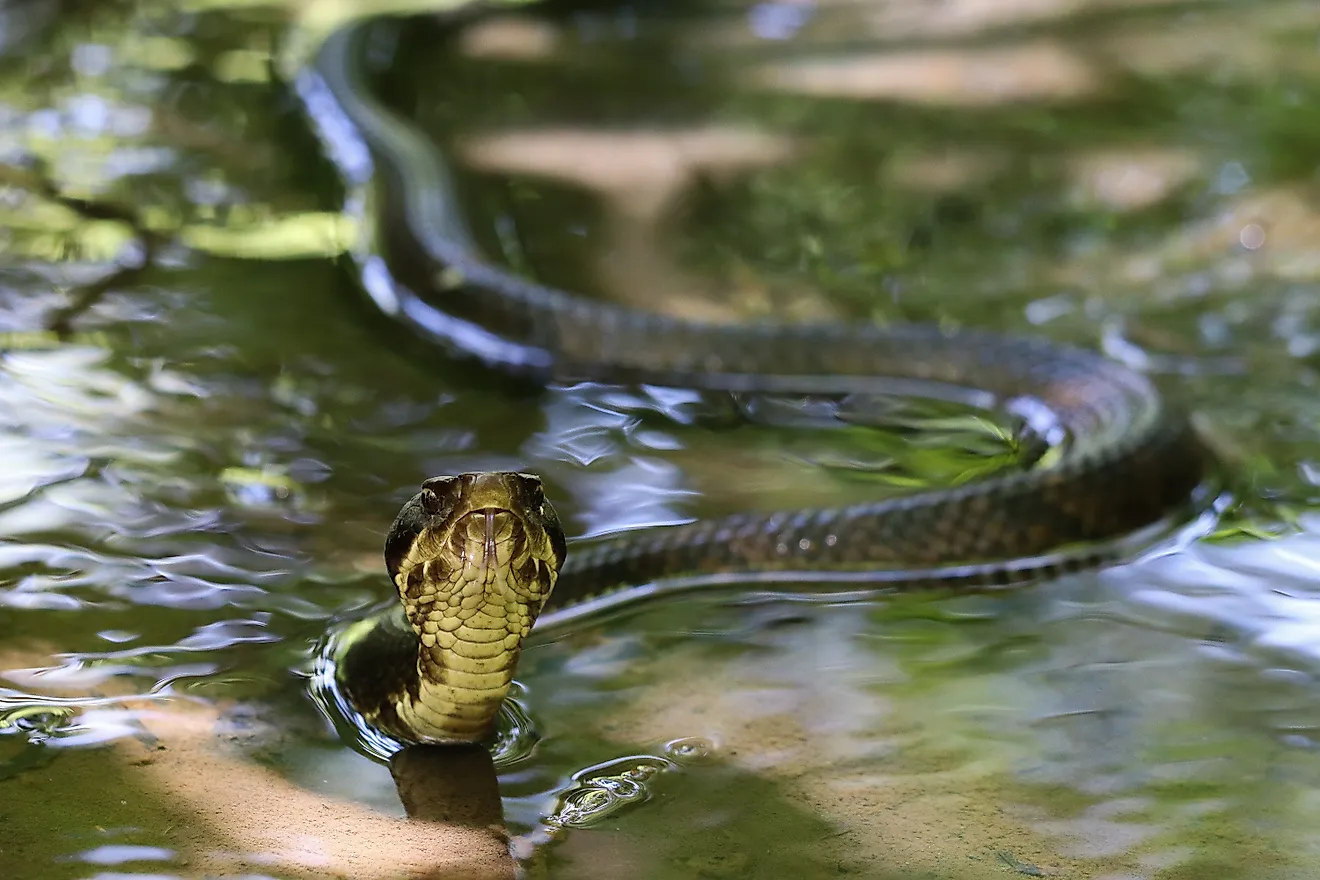
The most common watersnake here is the northern watersnake, a thick-bodied, banded snake that can grow to about four and a half feet long. It basks above the surface and slips back into the water when people come near. Queensnakes hunt crayfish in the stony shallows of tributaries, gartersnakes work the banks, and gray ratsnakes turn up near the water in the southern counties around Shawnee State Forest. Those southern hills are also where caution comes into play: copperheads live in the forests above the river, and Shawnee State Forest has one of the state's last populations of endangered timber rattlesnakes. Both are more likely to be met in the woods or on rocky slopes than in the water itself.
Muskingum River

Beginning in Coshocton, where the Tuscarawas and Walhonding rivers meet, the Muskingum River winds about 111 miles through southeastern Ohio to join the Ohio River in Marietta. Its historic navigation locks and dams create long, slow pools and brushy banks where northern watersnakes and common gartersnakes are at home, while queensnakes hunt crayfish in the stony tributaries.

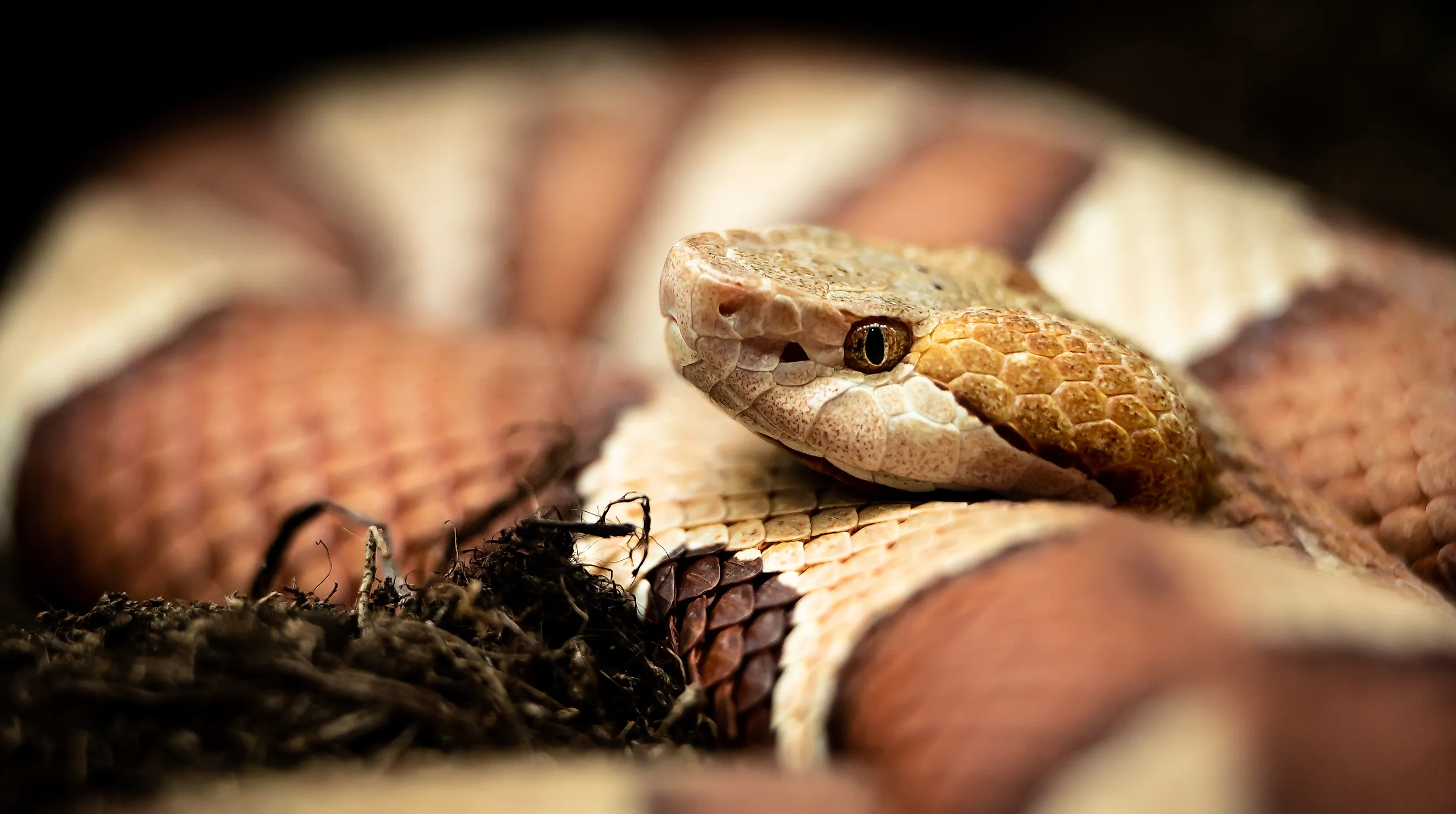
Because the river flows through southeastern Ohio, the hills above it fall within the range of the eastern copperhead. Copperheads blend into leaf litter with their brown hourglass-shaped bands, and adults usually measure two to three feet long. They aren't aggressive, but they tend to stay still rather than flee, so bites happen when someone steps or reaches near one without seeing it. Anglers scrambling down wooded banks to reach the water should look before they step.
Cuyahoga River

The Cuyahoga River was once famous for catching fire due to industrial pollution, but today it supports more than 60 fish species and flows through Cuyahoga Valley National Park between Akron and Cleveland. The park's wetlands, forests, meadows, and marshes shelter a variety of reptiles, and the National Park Service has documented eleven snake species there.

As with the previous rivers, northern watersnakes are among the most visible species, seen on logs, rocks, and low branches near or on the water. Gartersnakes feed in the surrounding fields and along trail edges. Eastern ribbonsnakes, though uncommon, hunt frogs and small fish in the wetlands, and gray ratsnakes live in the forests along the banks. Queensnakes hunt along rocky stretches, where they depend on crayfish for food. No venomous snakes have been documented in the national park, though any snake can bite if handled or provoked.
Maumee River

The Maumee River begins at Fort Wayne, Indiana, and flows northeast across the farmlands of northwestern Ohio before emptying into Lake Erie at Toledo. Its slower stretches, wide floodplains, and wetlands give aquatic snakes room to hunt, and northern watersnakes take fish and amphibians in the shallows. Near the river's mouth and Maumee Bay, the river blends into Lake Erie's coastal wetlands, and farther offshore, the Lake Erie watersnake has recovered on the western islands after previously being listed as federally threatened. Eastern hognose snakes, known for flattening their necks and playing dead when threatened, favor sandy areas, while eastern foxsnakes use the region's marshes.

In the wider Maumee watershed, Williams County has Ohio's only known surviving population of copperbelly watersnakes, a federally threatened subspecies of the plain-bellied watersnake. These snakes live in wetlands and woods along the St. Joseph River drainage rather than the Maumee's main channel. Ohio has lost about 90% of its original wetlands since European settlement, including much of the Great Black Swamp that once spread across the Maumee basin, and that loss and fragmentation have contributed to the copperbelly's decline.
Grand River

The Grand River runs for about 103 miles through northeastern Ohio before emptying into Lake Erie. In 1974, it became Ohio's second designated wild and scenic river. Its aquatic life is among the most diverse of Ohio's Lake Erie tributaries, with wooded gorges, riffles, gravel bars, and forested banks along its course.

Queensnakes do well here, since they depend heavily on crayfish and favor streams with rocky bottoms. Northern watersnakes also live in the river, gartersnakes use the forested banks, and tributaries such as Paine Creek add more snake territory. Copperheads and timber rattlesnakes are not generally found this far north in Ohio, although Ashtabula County has isolated populations of endangered eastern massasauga rattlesnakes in its wetlands. These snakes are rarely encountered and are unlikely to be seen by paddlers and anglers on the main river.
Little Miami River

The Little Miami River flows for about 111 miles through southwestern Ohio, passing through limestone and dolomite gorges near Clifton and Yellow Springs before joining the Ohio River east of Cincinnati. It became Ohio's first state-designated scenic river in 1969 and received its initial National Wild and Scenic River designation in 1974. Today, it draws anglers, paddlers, and hikers throughout the warmer months.

Its waters support more than 80 fish species, as well as amphibians and reptiles such as watersnakes. Northern watersnakes can be seen along the banks, disappearing into the water when people get too close. The river's rocky stretches suit queensnakes, which hunt crayfish in the shallows, while gartersnakes, ribbonsnakes, and ratsnakes live in wooded areas and nearby meadows along the corridor.
Staying Safe Around Ohio's River Snakes
The snake most likely to be encountered in Ohio's rivers is the northern watersnake, a widespread, nonvenomous species found on every waterway on this list. Although it generally retreats when approached, it bites if grabbed or cornered. Northern watersnakes are sometimes mistaken for cottonmouths, which do not naturally occur in Ohio. The safest approach is to observe snakes from a distance without trying to handle them or identify them up close. Watch your footing on rocky slopes, wooded riverbanks, and areas with fallen debris, and wear sturdy footwear when exploring shorelines. Venomous or not, Ohio's snakes play important roles in local ecosystems as both predators and prey.