5 Copperhead Snake Hotspots In Ohio
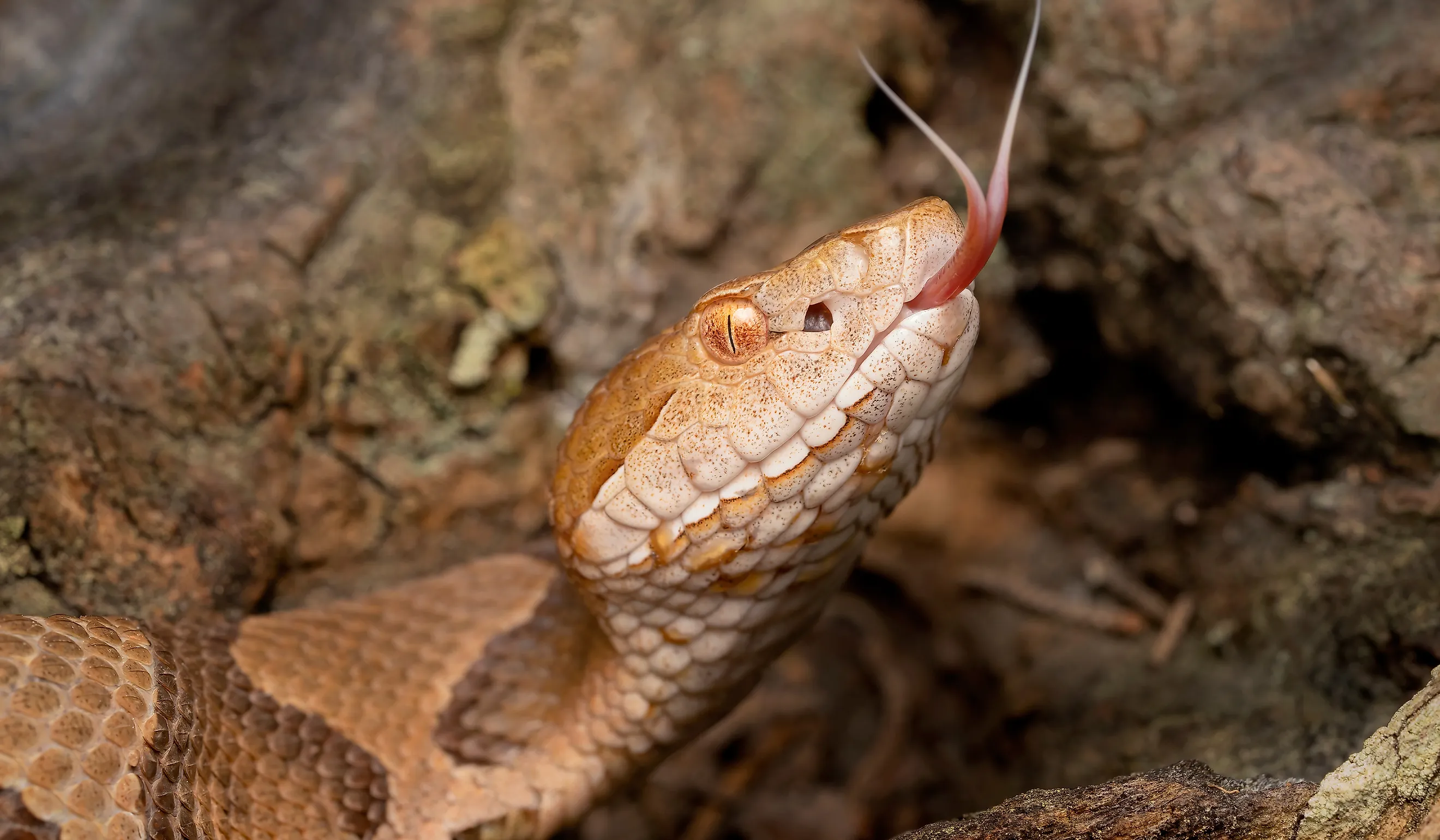
Ohio is home to 3 different species of native venomous snakes, one being the northern copperhead. These 2 - 3 foot long snakes, with iconic Hershey kiss-like markings on their bodies and namesake copper-colored heads, are mainly found in the southern half of the state, where wooded slopes and rocky terrain give them the cover and basking surfaces they prefer.
We will cover 5 areas in Ohio where copperheads are most often encountered, along with more detail about the snake's typical behaviors and other relevant info.
Hocking Hills State Park

On top of being one of the state's most popular outdoor recreational areas, Hocking Hills State Park is also one of the most reliable places in Ohio to encounter copperheads, particularly around its steep sandstone formations and shaded ravines. Areas like Old Man's Cave and Ash Cave provide the exact conditions these snakes prefer: rocky ledges for shelter, damp microclimates, and steady prey movement.

Copperheads are often encountered by visitors along trails where forest meets exposed rock, especially in late spring through early fall. Moreover, the park's often dense visitor traffic doesn't necessarily increase sightings more than other regions; instead, snakes tend to remain motionless and well camouflaged among leaf litter, going unnoticed more often than not.
However, hikers who step off marked paths or climb around rock outcrops are far more likely to see a snake or two at close range, with early morning and dusk tending to produce the best results.
Wayne National Forest

Wayne National Forest, particularly its southern units, holds some of the most consistent copperhead habitats in Ohio. This over 240,000-acre federally-run forest boasts a diverse mix of second-growth hardwoods, abandoned logging roads, and rocky hillsides, creating ideal circumstances for both copperheads and rattlesnakes to hunt and shelter in.

Plenty of south-facing slopes with loose rock and sun exposure are especially intriguing, as they provide basking sites and quick access to cover alike. Also, zones near seasonal streams and small drainages tend to concentrate prey like rodents and amphibians, drawing these snakes into narrow corridors where they can often be seen by anglers and hikers.
Unlike more heavily trafficked parks in the state, many sections of Wayne National Forest see relatively low foot traffic, decreasing the rate of unwanted encounters. If you do find yourself exploring the area in depth, though, late afternoon into early evening is the best window during warmer months to catch a glimpse of copperhead snakes, when these sometimes elusive reptiles like to move between cover and open ground.
Tar Hollow State Forest

Tar Hollow State Forest supports a stable copperhead presence with its remarkable rugged terrain and limited development. The forest is home to seemingly countless steep ridges, narrow hollows, and scattered rock outcrops, all features that provide cover, as well as a mix of warm and cool zones.

Resident copperhead snakes in Tar Hollow are most often encountered along old service roads, dry streambeds, and transitional zones where hardwood forest meets open clearings. With that in mind, they rely on camouflage rather than escape, so they are frequently overlooked even in areas with regular human use. In other words, always watch your step here! Especially in tall grasses. Sections with downed timber and leaf accumulation also tend to hold higher densities, especially during warmer months.
Edge of Appalachia Preserve System

The Edge of Appalachia Preserve System in southern Ohio presides over a large, continuous stretch of rugged terrain, where fair amounts of copperheads have been documented from spring through to fall most years. Its blend of prairies, hardwood forests, and rugged dolomite and sandstone outcrops notably creates strong temperature gradients within short distances, an aspect that most kinds of cold-blooded reptiles appreciate.
Because much of the preserve is managed for conservation rather than pure recreation, low visitor use means copperheads are less often disturbed, meaning individuals are more likely to remain in place when encountered. Individuals are often found coiled near cover rather than fully exposed.
Shawnee State Forest

Shawnee State Forest, also deep in southern Ohio, contains some of the most extensive wilderness habitat in the state, especially across its remote ridge systems and dry, rocky slopes. The forest's unbroken hardwood canopy and steep elevation changes further create a network of warm, well-drained hillsides where a variety of snakes can thermoregulate and remain concealed.

A network of trails that follow high ridgelines or cut across exposed slopes tends to produce more sightings than valley-bottom routes. But besides that, areas with especially high amounts of rocky debris fields and sunlit edges along fire roads are known as den areas as well.
This region also experiences fewer visitors than most state parks in Ohio (a commonality with snake strongholds here), which reduces disturbance. However, local copperheads here are most often encountered during dusk or early morning as temperatures stabilize, though individuals may remain partially exposed on warm, yet overcast days.
Ohio's collection of copperhead hotspots follows a consistent pattern: rocky slopes, pristine forests, and usually lesser-developed terrain in the southern part of the state. Knowing where those specific conditions occur will let you know in the future, whether you're in the Buckeye State or somewhere else in the Midwest, where these slithery critters can likely be found. Careful footing, general awareness, and timing your visits will also help reduce the risk of an unwanted bite, while likewise improving your chances of a sighting that protects both you and the snake.