How Deep a Loaded Great Lakes Freighter Sits in the Water
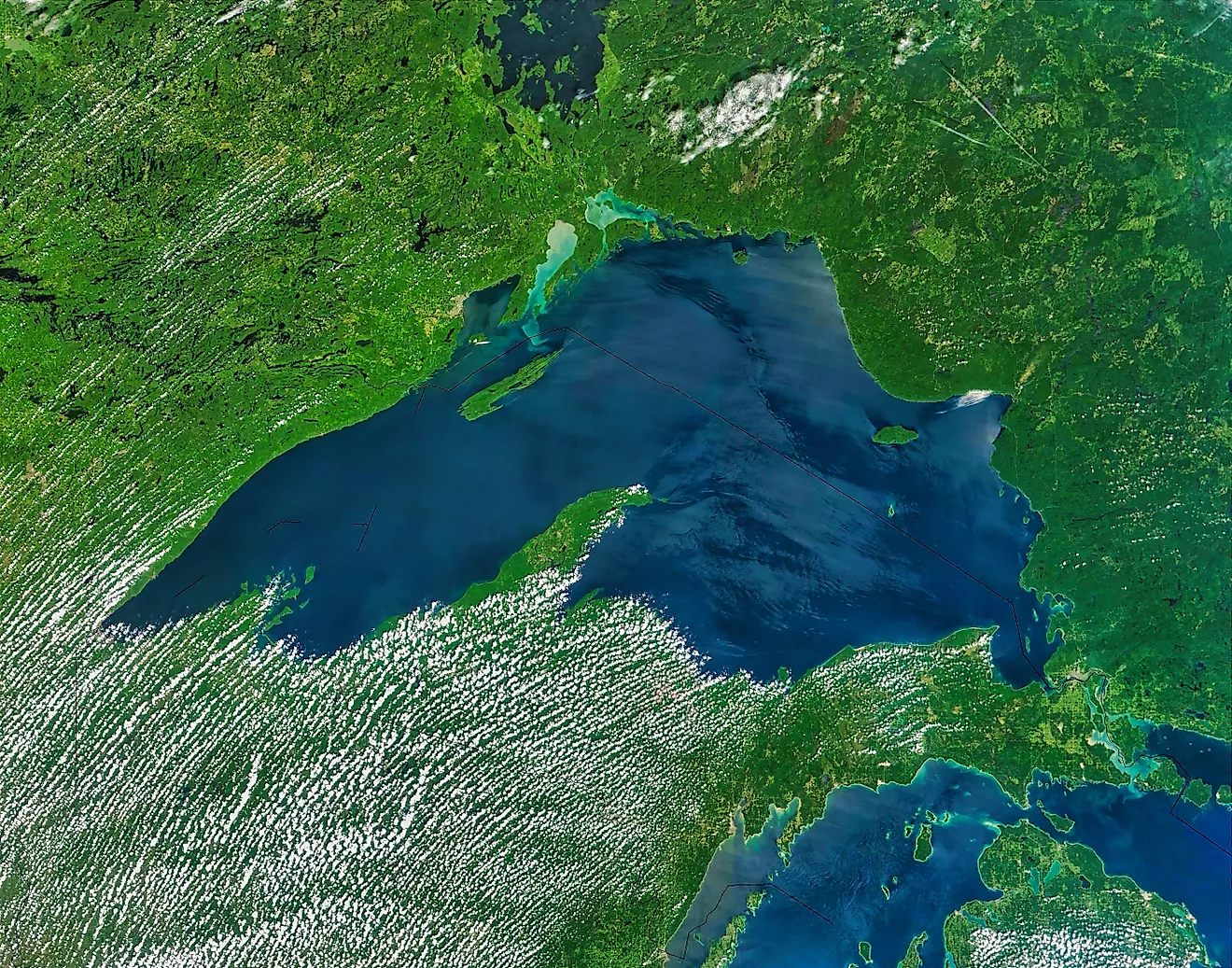
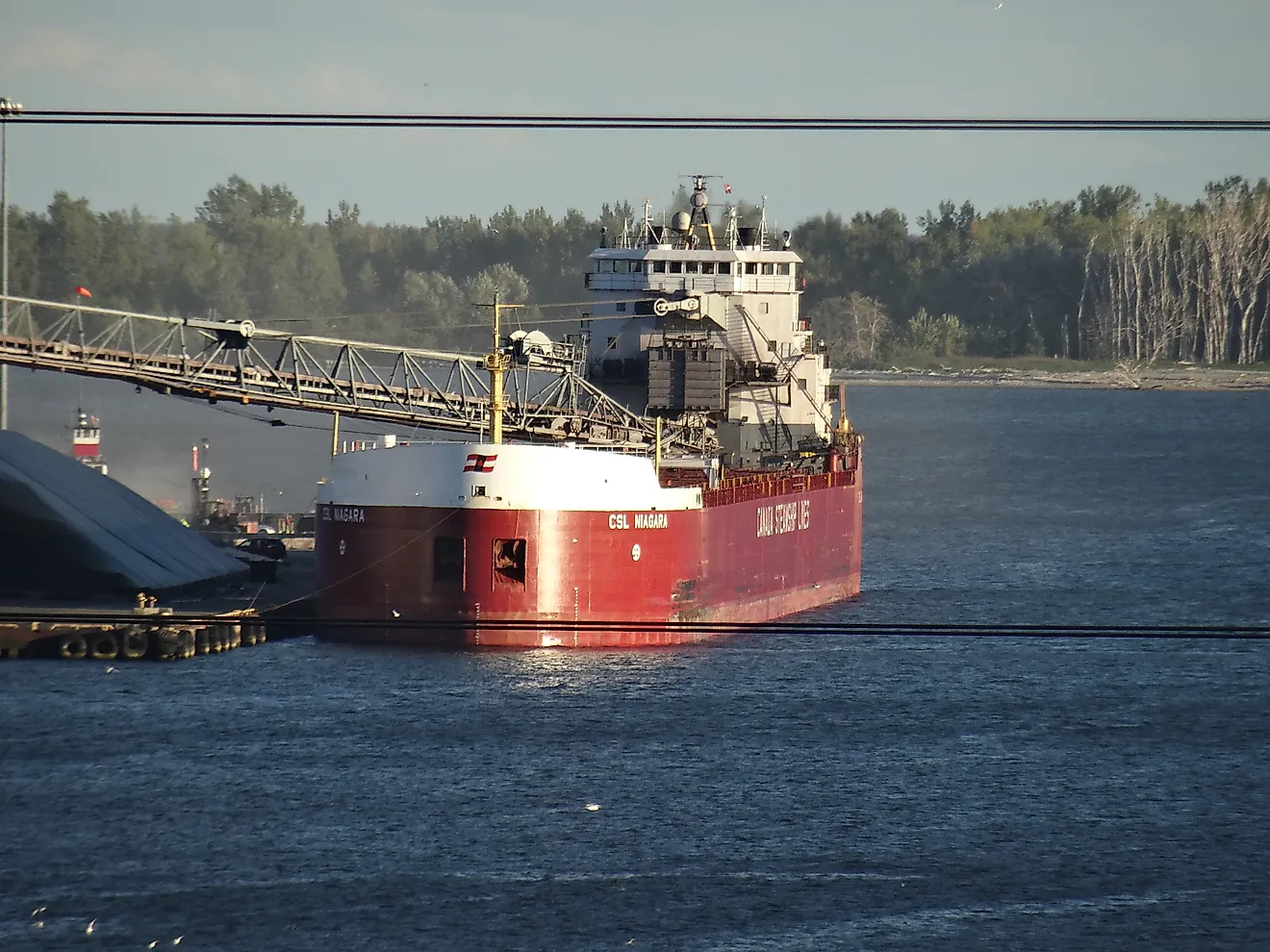
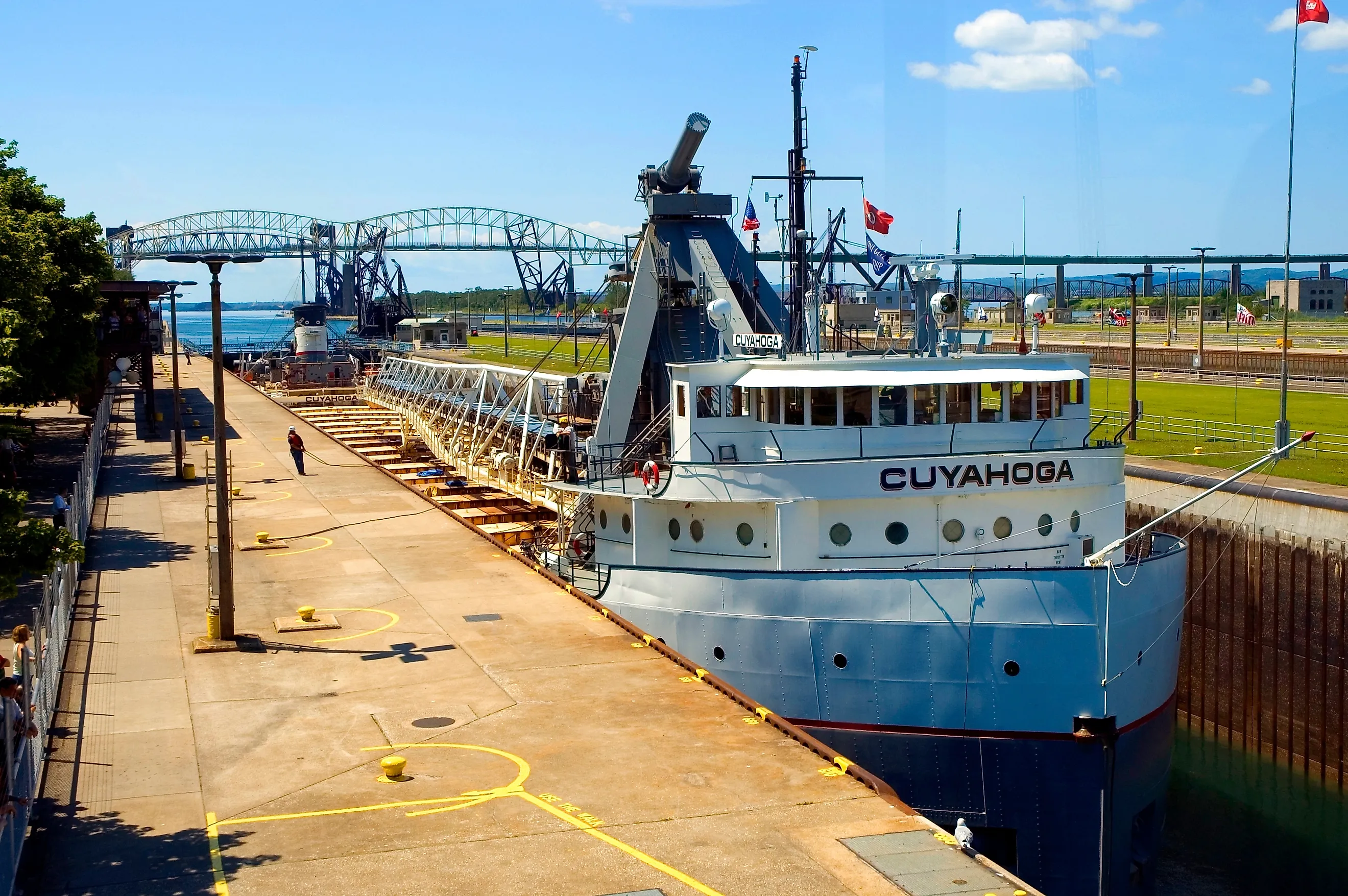
The Great Lakes are the largest system of freshwater lakes by surface area, holding over 20% of the world's surface freshwater. The five lakes are connected through a network of both natural waterways, navigation locks, canals built for travel between the lakes, and into the St. Lawrence River. The Great Lakes-St. Lawrence Seaway System is an approximately 2,340-mile (3,700 km) shipping route extending from the Atlantic Ocean to the western end of Lake Superior. The Great Lakes fleet is not limited to ocean-going ships but is a specialized industrial transportation system, and ships are designed for navigation through locks and channels. Smaller freighters come through the St. Lawrence Seaway, while larger freighters remain in the Great Lakes at all times. With the largest freighters exceeding the Seaway's permitted vessel dimensions. A Seaway-sized vessel has a maximum permitted draft of around 26 feet 6 inches, while the largest freighters draw around 30 to 32 feet when fully loaded. The depth a freighter can sit below the waterline will depend on the vessel's size, cargo load, and overall design.
The Main Types Of Great Lakes Freighters

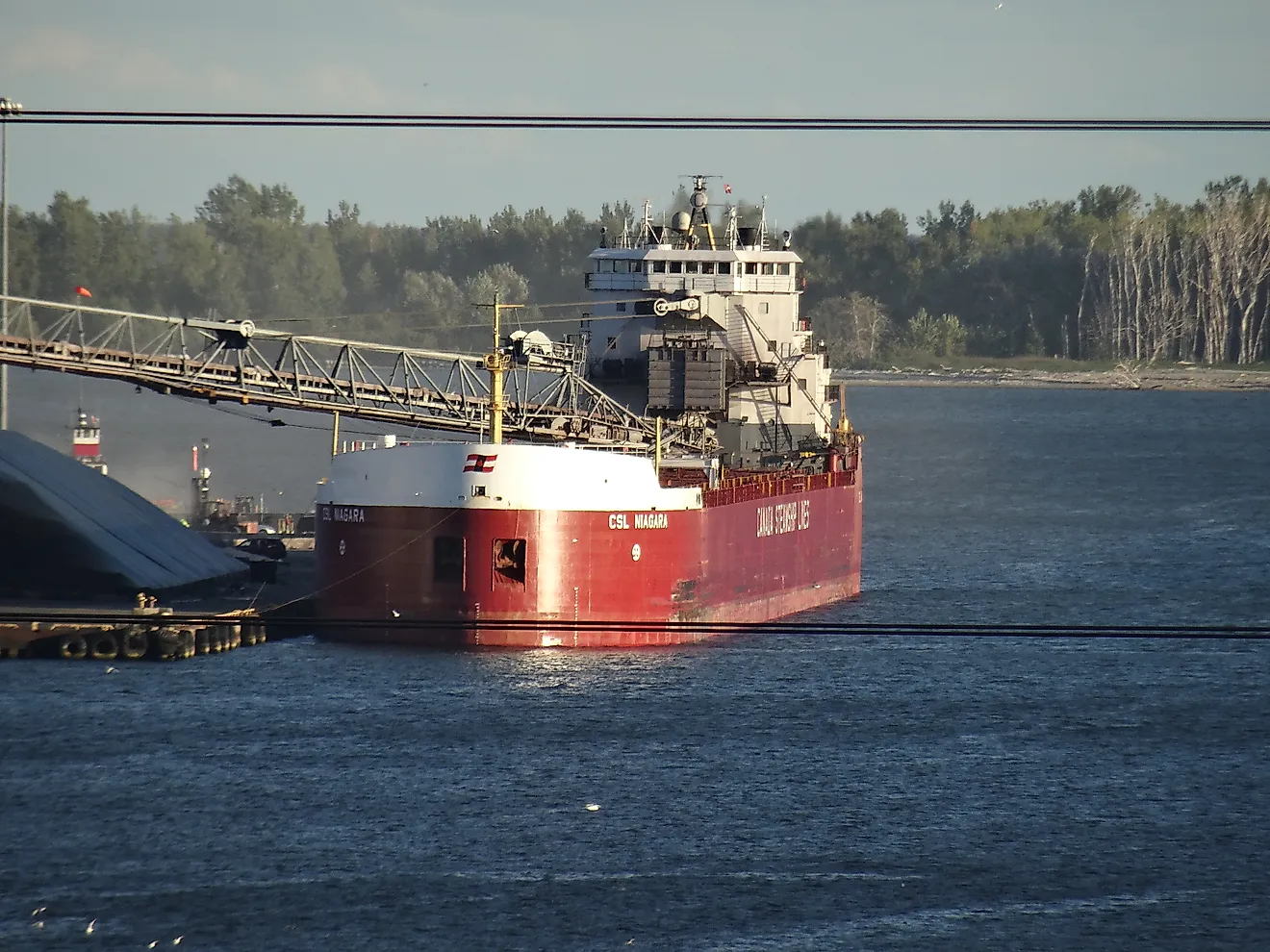
There are two main types of Great Lakes freighters. The largest vessels are called lakers, bulk carriers that are among the largest ships in inland freshwater. These freighters are limited to the Great Lakes and are built and remain within the system. Their dimensions prevent them from passing through the St. Lawrence Seaway locks. At approximately 1,000 feet (305 meters), their load capacity is typically around 60,000 to 70,000 tons. They are mostly used for moving iron ore, coal, limestone, and grain. The other type of vessel is smaller freighters that can fit through the locks of the St. Lawrence Seaway, sometimes called salties. The maximum length of these vessels is approximately 740 feet (225.5 m), with a maximum beam (width from port to starboard) of approximately 78 feet (23.8 m). The maximum permissible draft of the smaller freighters is around 26 feet 6 inches (8.08 m) below the waterline.
With these maximum dimensions, the salties can fit through all the locks and canals of the Great Lakes system and can travel to ports on the Atlantic. The smaller freighters meet ocean-going safety limits and can travel the open ocean and into ports in Europe, the Middle East, and Africa, although they are much smaller than typical ocean freighters and container ships, which can reach over 1,200 feet (366 m) in length, with a beam of over 160 feet (49 m), and drafts of over 50 feet (15 m). These smaller freighters carry a larger variety of cargo than lakers. One of the most famous ships of the Great Lakes fleet was the ill-fated SS Edmund Fitzgerald. When it was built in 1958, the Edmund Fitzgerald was the first Great Lakes freighter built to the maximum dimensions of the newly constructed St. Lawrence Seaway, according to the Great Lakes Shipwreck Historical Society. The vessel had a length of 729 feet (222.2 m), a beam of 75 feet (22.9 m), and a loaded draft of approximately 25 feet (7.6 m). When the Edmund Fitzgerald sank on November 10, 1975, it was fully loaded with approximately 26,116 long tons (29,250 short tons) of taconite iron ore pellets.
Fully Loaded

The variables for the drafts of Great Lakes freighters are many, and will depend on the ship's dimensions and its cargo. A fully-loaded Seaway-sized freighter will have a different draft from a fully-loaded laker. When heavily loaded, a laker can draw up to 30 feet but only around 15 to 20 feet when sailing with a light ballast. The difference will depend on the vessel and operating conditions. A fully-loaded Seaway-sized freighter will have an approximate draft of 26 feet and 6 inches (8.1 m), while a large laker can have an approximate draft of 29 to 32 feet (8.8 to 9.8 m) when fully loaded.
When a freighter unloads tens of thousands of tons of cargo, such as limestone or iron ore, the loss of that weight is compensated with ballast tanks. These tanks are compartments inside the ship's hull that hold water to maintain its stability, trim, and draft. It takes on ballast water to compensate for some of the lost weight. They help to control the vessel's balance, stability, and position in the water and are important for cargo ships such as the Great Lakes freighters. The cargo on a freighter can change drastically from one destination to another, as heavy cargo is unloaded and the ship rises in the water. A properly weighted ship keeps the propellers submerged and prevents bow or stern elevation, thus keeping the length of the ship level. This helps in maintaining stability in waves and rough weather, while ensuring the vessel's handling and maneuverability. The Lake Carriers' Association, the advocacy body for US-flagged ships on the Great Lakes, has documented ballast systems with capacities of tens of thousands of cubic meters on the largest Great Lakes vessels.
What The Freighters Carry

The Great Lakes fleet is a crucial part of the North American economy. They are one of the world's major inland transportation systems, connecting the industrial centers of the United States and Canada with Atlantic shipping routes and international markets. The lakes are an important means of transporting materials, such as steel, agricultural products, manufacturing, and energy. The Great Lakes-St. Lawrence region is a major center of economic activity, with the combined regional GDP estimated at over US$6 trillion, making it one of the world's largest economies, according to the report on Economic Impacts of Maritime Shipping in the Great Lakes-St. Lawrence Region, published in 2023 by the Great Lakes St. Lawrence Seaway Development Corporation (GLS) and the Canadian St. Lawrence Seaway Management Corporation (SLSMC). According to the American Great Lakes Ports Association (AGLPA), a single large freighter can carry tens of thousands of tons of cargo, with the largest lakers transporting more than 70,000 tons on a single voyage. Principal cargoes include iron ore, taconite pellets, limestone, coal, grain, salt, cement, and sand. These are important for use in steel production, construction, industrial uses, energy generation, and food exports.
The History Of Great Lakes Freighters

Commercial shipping on the Great Lakes began in the 17th century with French explorers, fur traders, and missionaries using canoes and small vessels to move goods between settlements. Larger ships began to be constructed for use on the Great Lakes, for carrying commodities from the interior to settlements. By the 19th century, steam-powered vessels appeared on the Great Lakes; the first of such steamboats on the upper lakes was the Walk-in-the-Water, starting operation on Lake Erie in 1818. Sailing vessels were soon replaced by steamships for freight shipping and passenger travel. Port communities along the shore of the Great Lakes grew. With the opening of the first Welland Canal in 1829, the expansion of canal and lock systems made travel through the Great Lakes easier.
The demands created by industrialization necessitated the transportation of iron ore, coal, grain, and lumber, and larger steel-hulled vessels began to replace wooden ships. The late 19th century saw the development of iron and later steel hulls, allowing for much larger and stronger freighters. The first iron-hulled bulk freighter, the Onoko, was launched in 1882, and this influenced the design of modern lake freighters, with ships becoming highly specialized for bulk commodities such as iron ore. Mechanical dockside unloading improved efficiency by the early 20th century, and new ship designs made the transportation of enormous quantities of goods more economical. In 1959, the St. Lawrence Seaway was opened, and the Great Lakes were connected directly with the Atlantic Ocean for ocean-going vessels. International ships were now able to travel into the Great Lakes.
The Importance Of A Sufficient Draft

The largest lakers traveling the Great Lakes can have drafts up to 32 feet when fully loaded, but it is crucial to remember that when unloaded, the ship's ballast makes up for that huge loss of weight. With no cargo and no ballast water, the ship would ride too high, making it unstable and difficult to control, especially in bad weather conditions. Ships are designed to operate within a specific range of weight and water displacement, and without sufficient weight, less of the hull is submerged, exposing more of the sides of the vessel above the waterline. The propeller would be exposed, reducing propulsion efficiency; the rudder would be insufficiently submerged, and the bow would ride too high. With the strong winds and large waves of the Great Lakes, a ship riding too high in the water would be difficult to navigate and would not normally be permitted to depart from a port unless it meets its required operating and stability conditions.