Where Great Lakes Freighters Go To Be Scrapped
At sunrise one September day in 2022, tugs pulled a 95-year-old freighter out of Green Bay, Wisconsin. The S.T. Crapo had barely moved in 25 years. It spent most of that time tied to a dock on the Fox River, packed with cement and working as a storage silo. Now it was leaving on one last trip, and it was never coming back.
The tugs were taking it to a yard where old ships are cut apart and their metal is sold. Sooner or later, most freighters on the Great Lakes end up somewhere like it. Getting there can mean a short tow across one lake or a long haul across an ocean. For the very biggest ships, some of those routes are closed for good. Many of these final trips end in the same small Canadian town on Lake Erie.
Retired Lakers Head to Port Colborne, Ontario

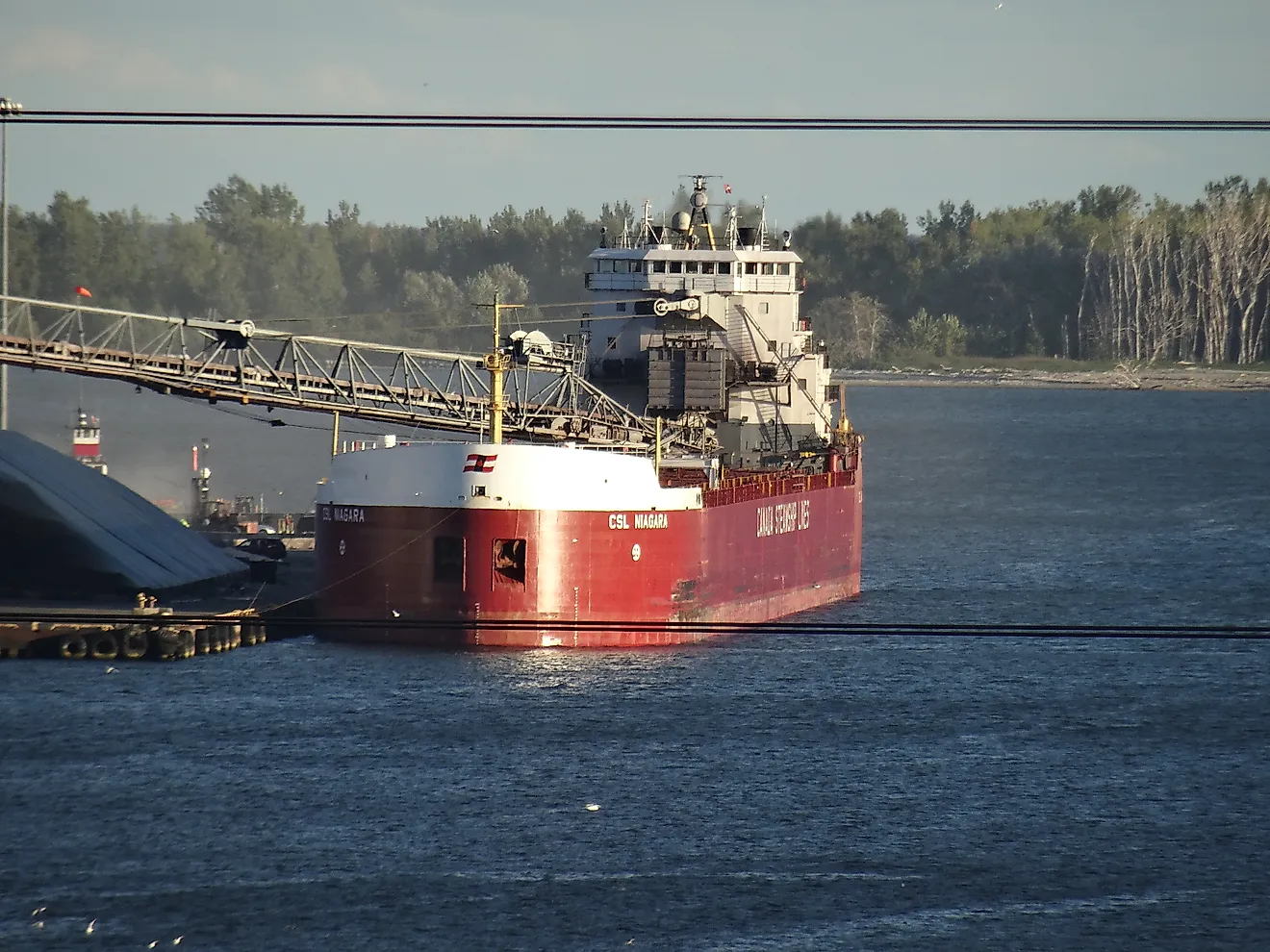
Port Colborne sits on the north shore of Lake Erie, at the southern entrance to the Welland Canal. The canal carries ships between Lake Erie and Lake Ontario, and Marine Recycling Corporation runs its yard right at its mouth, where a retired ship can arrive across Lake Erie from the upper lakes or climb the canal's locks from Lake Ontario. The company has dismantled lakers, tugs, barges, and ferries there for about 50 years, and more than 100 Great Lakes vessels have been recycled at the yard.
American Steamship Company's American Fortitude came by the longer route. The 690-foot ship, which sailed for years as the Courtney Burton, had been anchored at Oswego, New York, on Lake Ontario since November 2014. In May 2015, it was towed up through the Welland's locks to Port Colborne.
Lakers From Ohio Ports Are Towed Across Lake Erie to Port Colborne

Most lakers reach the yard without using their own engines. For a ship going in under tow, the preparation begins at its last berth, where all fuel and oil have to be pumped out or removed before the tow can start. The Sarah Spencer, a laker that had been cut down into a barge, left Toledo in tow for Port Colborne in October 2019, a trip that never left Lake Erie.
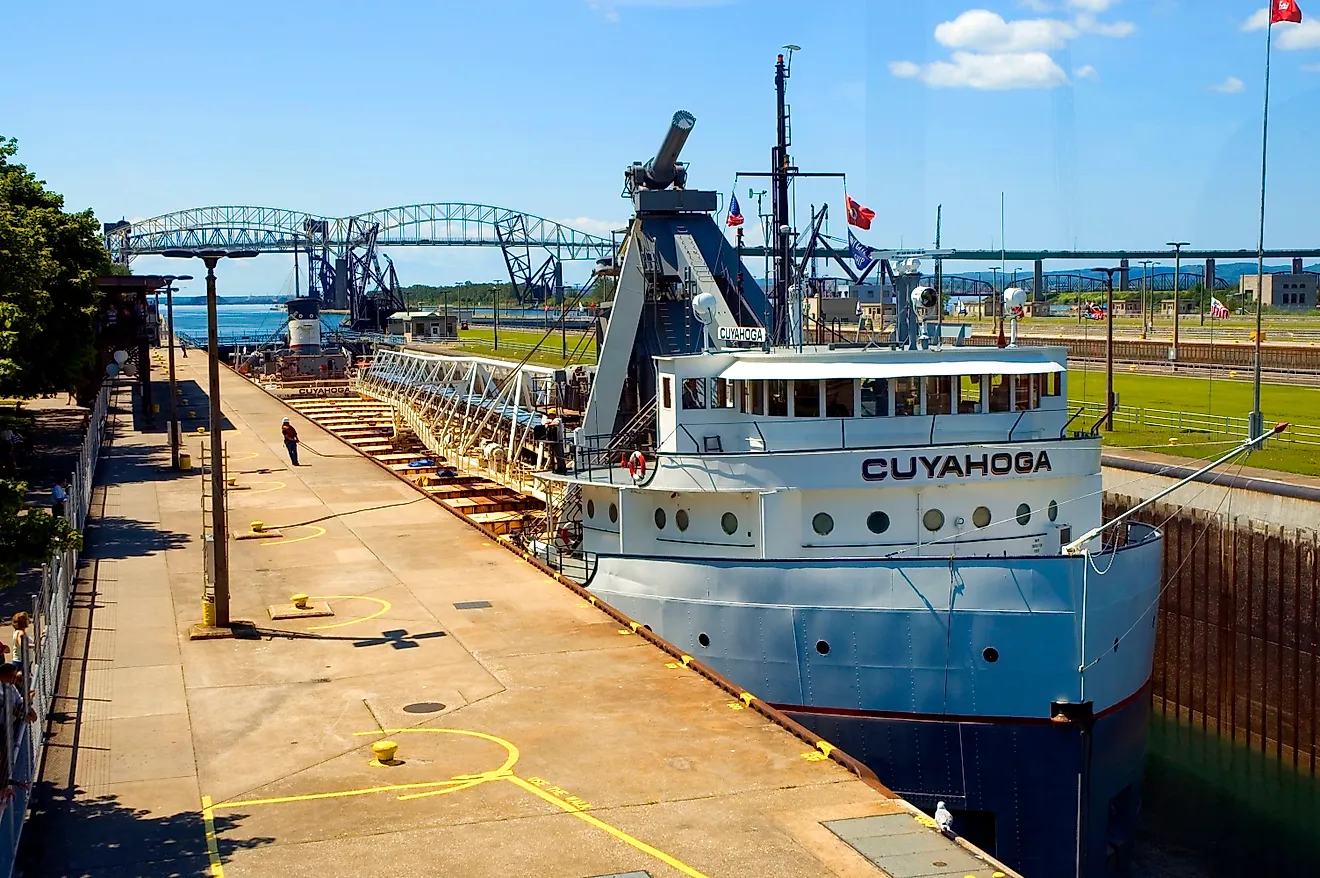
Some ships head for the yard sooner than their owners planned. The Cuyahoga, built in 1943, was the oldest Canadian-flagged laker in service when fire broke out aboard during winter layup at Ashtabula, Ohio, on March 15, 2024. The ship was declared a constructive total loss, meaning repairs would have cost more than it was worth. It stayed at Ashtabula until July 2025, when tugs pulled it across Lake Erie to Port Colborne at about 82 years old.
Their Steel Ends Up in Canadian Mills and Foundries

Before any steel leaves Port Colborne, the ship it came from is stripped. Crews clean out the living quarters and tanks and remove hazardous materials, including asbestos and PCBs, the oily industrial chemicals once common in electrical equipment. Engines and other machinery are taken apart to recover their valuable metals, and the hull is dismantled in sections. Wayne Elliott, who founded the company, prefers to work on about three ships at once. In 2022, one of them was the St. Clair, a self-unloader launched in 1975 for American Steamship Company. Metal recovered at Port Colborne is sold to Canadian steel mills and metal foundries.
Sault Ste. Marie and Duluth Have Scrapped Lakers Too

Two other ports on the upper lakes have taken retired freighters. In Sault Ste. Marie, Ontario, Purvis Marine dismantled Lower Lakes Towing's Mississagi, which was towed there from layup at Sarnia, Ontario, up the St. Clair River and across Lake Huron.
The J.B. Ford ended up at the far western end of the system. The old freighter was too expensive to turn into a museum, and in 2015 it went to Azcon Metals in Duluth, Minnesota, to be scrapped.
Some Lakers Are Towed Across the Atlantic to Turkey

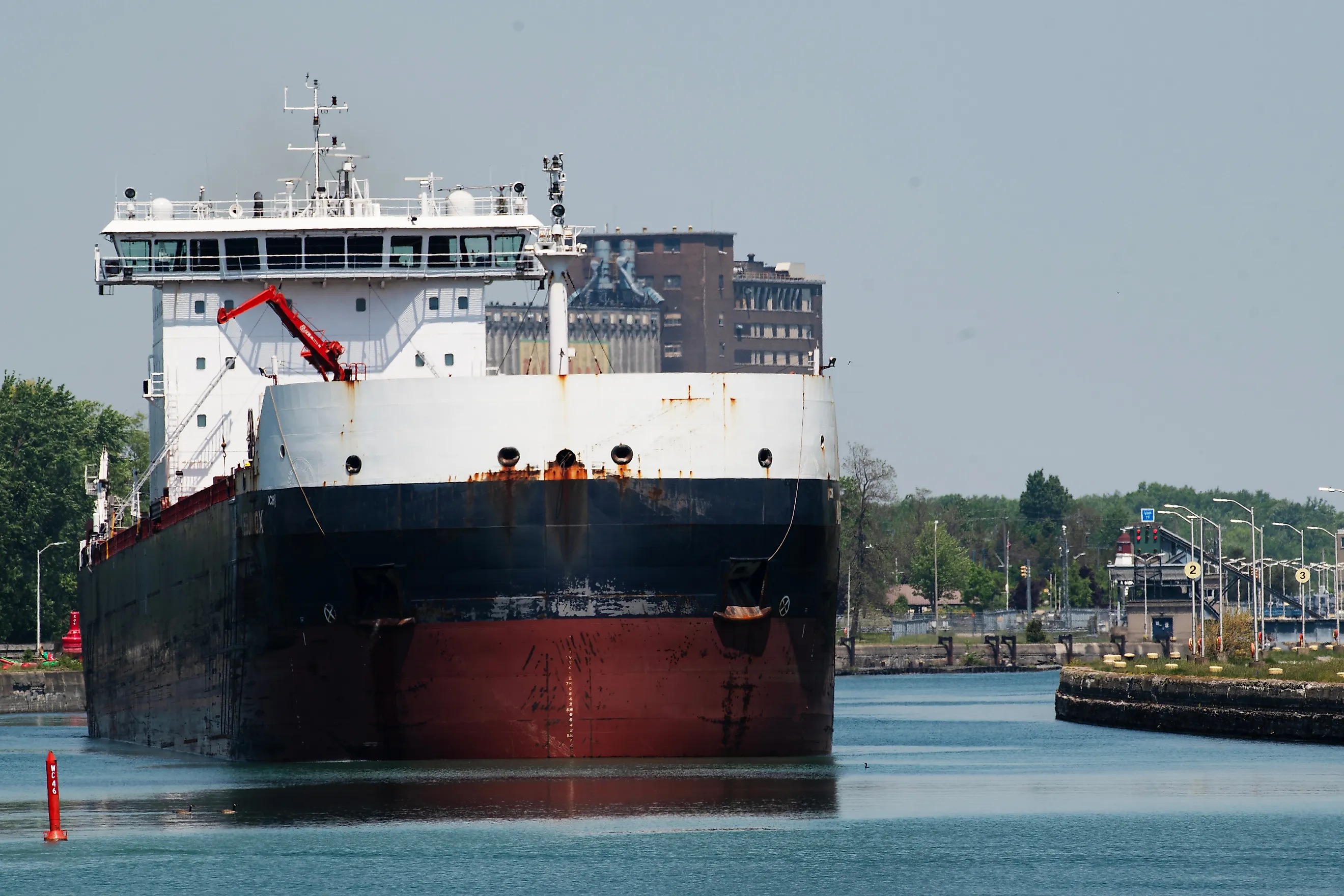
Each lock on the St. Lawrence Seaway, which includes the Welland Canal, is 766 feet long and 80 feet wide, and the largest ship allowed through measures 740 feet by 78 feet. A retired laker within those limits can leave the lakes entirely. Some have been towed across the Atlantic to Aliağa, on Turkey's Aegean coast, a regular destination for old lakers.
CSL's Cedarglen was 60 years old when it left Montreal for a recycling yard at Aliağa on July 21, 2019. Algoma had sent the Algoma Provider the same way in 2013, as the company's newer ships used less fuel and required less maintenance.
Thousand-Footers Can Only Be Scrapped Above the Welland Canal

Those same dimensions keep the largest freighters inside the lakes. The Paul R. Tregurtha measures 1,013.5 feet by 105 feet. It fits the Poe Lock at Sault Ste. Marie, Michigan, which is 1,200 feet long and 110 feet wide, so it can travel between Lake Superior and Lake Erie, but the Welland Canal's locks are far too small for it.
Thirteen of these 1,000-foot freighters were launched between 1972 and 1981, and all 13 are still working. Modern lakers are usually designed for a service life of 45 to 50 years. When the first thousand-footer is retired, its last tow will have to begin and end on Lake Superior, Michigan, Huron, or Erie, the four lakes above the Welland Canal's locks.
A Few Lakers Go to Museum Docks or Become Barges

Turning a laker into a museum is costly, which is why the J.B. Ford went to Duluth's scrapyard. In Toledo, the Col. James M. Schoonmaker, a freighter launched in 1911, became a museum ship instead. Cleveland-Cliffs had renamed it the Willis B. Boyer, and it took back its original name in 2011, 100 years after its launch. Since 2012, it has been docked beside the National Museum of the Great Lakes, which opened in the spring of 2014.
The Valley Camp has been a museum ship in Sault Ste. Marie, Michigan, since 1968, two years after its working life ended. Duluth has the William A. Irvin, launched in 1938, and neighboring Superior, Wisconsin, has the Meteor, the last surviving whaleback, a freighter design with a rounded hull. The William G. Mather, built in 1925, is open to visitors in Cleveland's North Coast Harbor.
The St. Marys Challenger avoided both the scrapyard and the museum dock. Built in 1906, it sailed under its own power for 107 years before going to Bay Shipbuilding in Sturgeon Bay, Wisconsin, in late 2013 to be cut down into a barge pushed by a tug.
The S.T. Crapo's final tow never passed through a lock, because Green Bay and Port Colborne both lie above the Welland Canal. A ship of 740 feet by 78 feet or smaller has more choices, since it can reach Port Colborne from Lake Ontario or leave through the Seaway for Aliağa. The 13 biggest freighters can travel no farther east than Lake Erie. The youngest of them, launched in 1981, has sailed for 45 years, the low end of the service life modern lakers are designed for, and the Stewart J. Cort, launched in 1972, is past the high end. When the first of them is retired, its last tow will start and finish on the same four lakes it spent its whole career crossing.