How Great Lakes Freighters Turn Around In A Narrow River
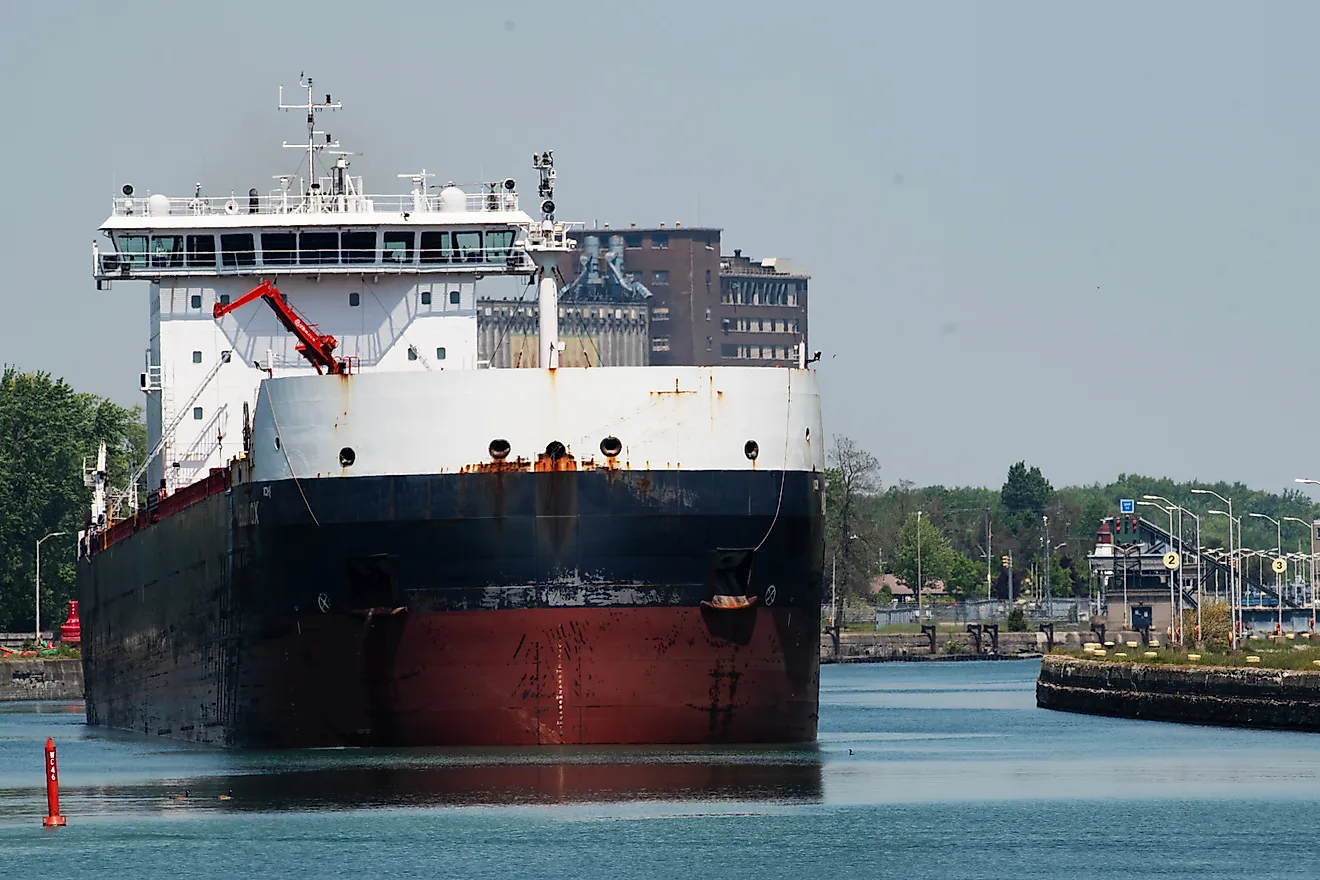
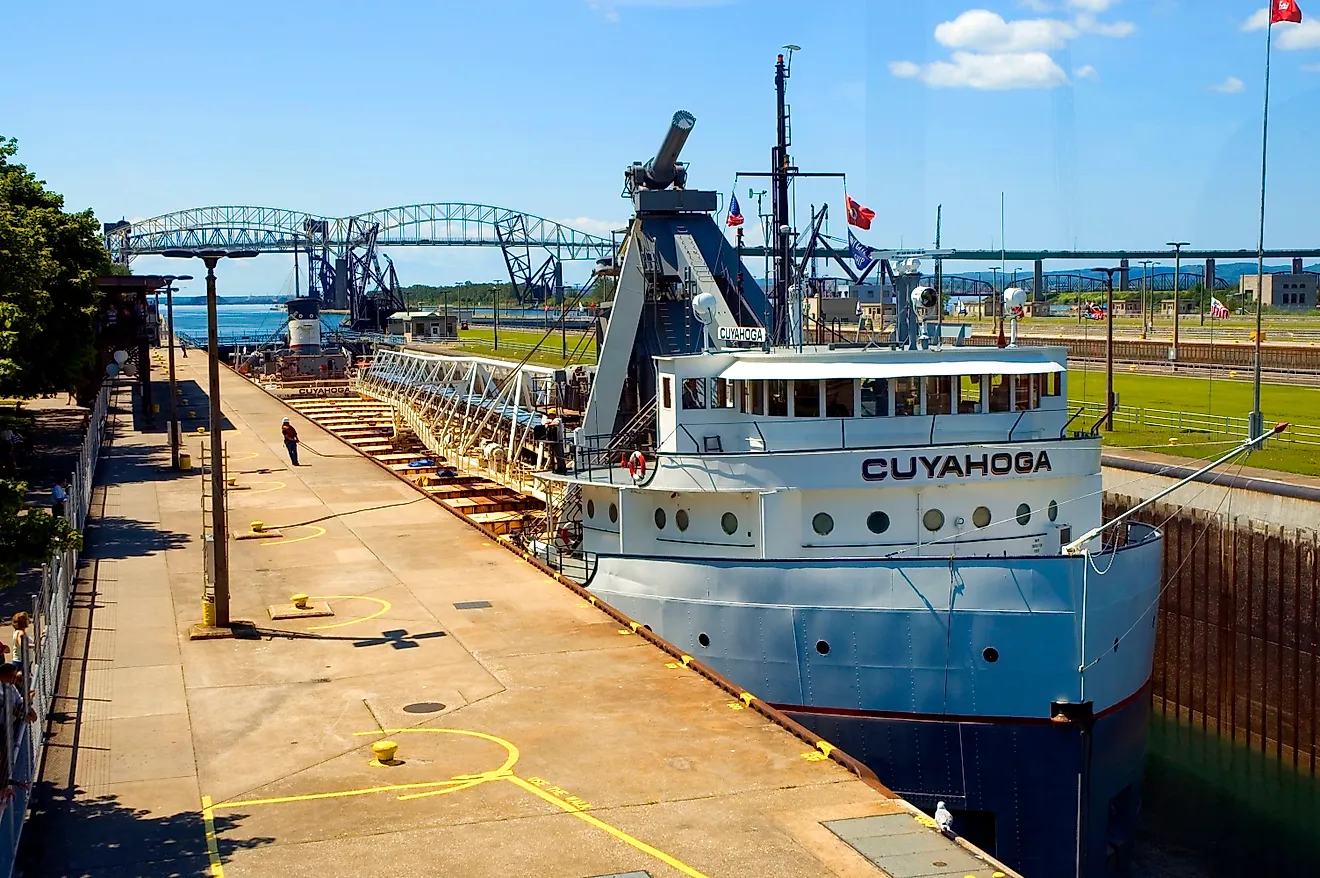
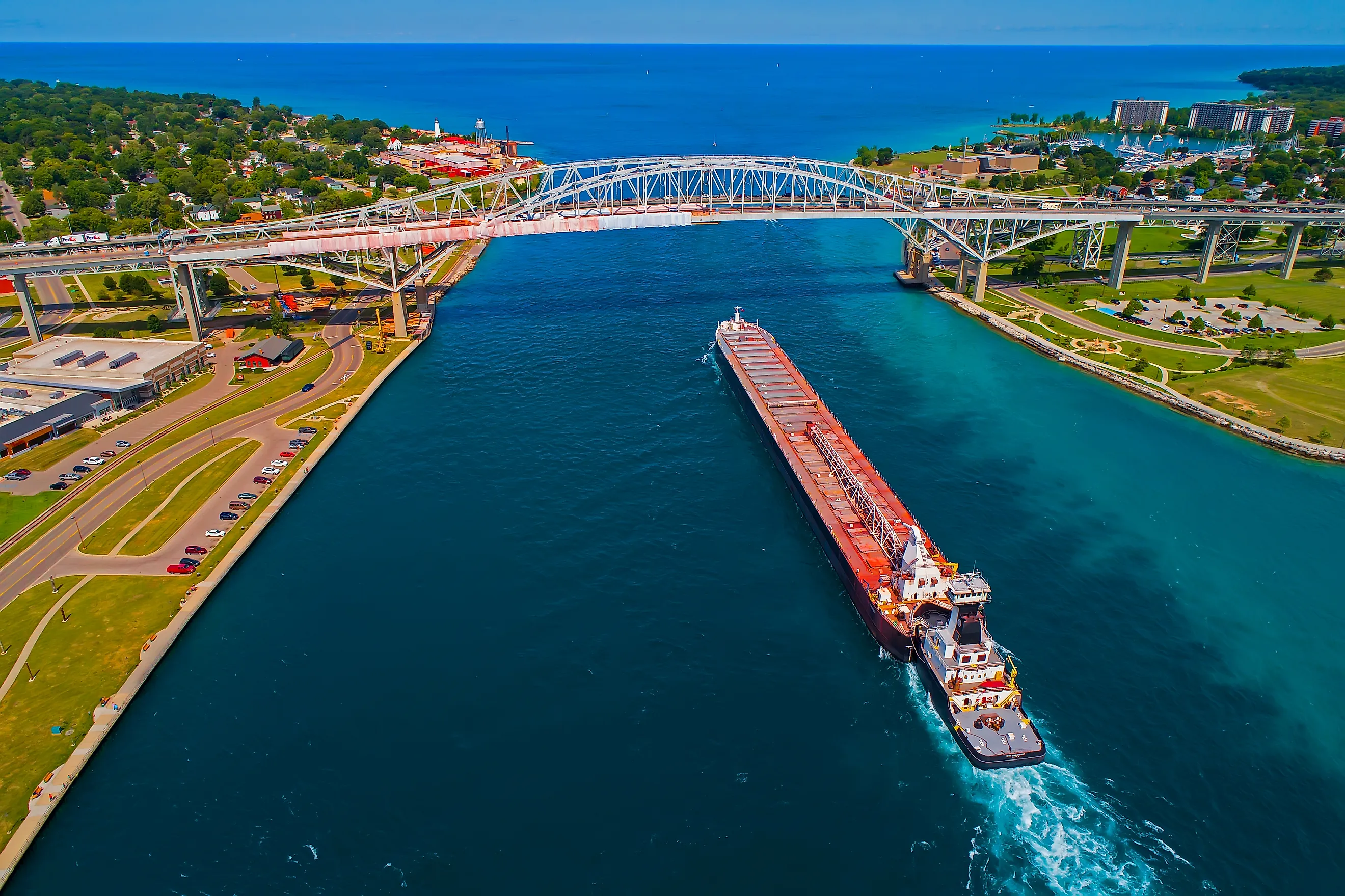
Freighters more than 600 feet long sail 5.6 miles up Ohio's Cuyahoga River, through a channel that narrows to as little as 45 yards, about 135 feet. At that pinch point, the 639-foot Mark W. Barker is more than four times as long as the channel is wide. The route bends 90 degrees at Superior Bend and 60 degrees at Collision Bend. "There's no turning around in a river this tight," a Cleveland Magazine writer noted after riding the Barker upriver.
Every ship that sails up still has to get back out to Lake Erie. On Michigan's Saginaw River, freighters face the same problem in a channel 200 feet wide, past docks that line both banks for 18 miles above the mouth. Getting out comes down to finding water wide enough to move in, and to what a crew does when there is none close by.
A Freighter Turns Where the River Widens Into a Basin

The usual place to turn is a turning basin, a stretch of river dredged wide enough for a ship to swing end for end. On the Saginaw, the U.S. Army Corps of Engineers keeps the river channel 200 feet wide from the mouth up toward Saginaw and widens it at five basins along the way. Two of them, at Bay City and just upstream of the Sixth Street Bridge in Saginaw, are 650 feet wide and 1,000 feet long.
Of those two numbers, width is the one a turning ship runs up against. A ship turning end for end pivots around its middle, and as it swings, its bow and stern sweep a circle about as wide as the ship is long. The basin has to be wider than that circle. At 650 feet, the Sixth Street basin can turn the 630-foot Manitowoc, which has swung around there before heading out for the lake, while a ship much longer than 650 feet cannot turn there at all.
Thrusters Push the Bow and Stern Sideways

To make that swing, a laker uses thrusters. A bow thruster is a propeller mounted in a tunnel that runs crosswise through the hull near the bow, and it forces water through the tunnel to push the ship sideways, to port or to starboard. Many lakers carry a second one at the stern. When the bow thruster pushes the front of the ship one way and the stern thruster pushes the back the other way, the two ends move in opposite directions and the hull rotates around its middle.
The Algorail, a salt carrier that worked the Saginaw River, had a 600-horsepower thruster at the bow and a 1,000-horsepower one at the stern. That stern thruster alone matched one of the two main engines on the Great Lakes Towing Company's harbor tug Cleveland, each rated at 1,000 horsepower.
Without a Basin Nearby, a Freighter Backs Down to One

A ship tied up at a dock between basins has to reach one before it can turn, and it often gets there stern first, with its bow still pointed upriver. The Mississagi has backed down the Saginaw to a basin, turned, and headed out for the lake. Sometimes the nearest basin is too small for the ship at the dock. Essexville's basin, up to 1,850 feet long, is 600 feet wide, and when the Indiana Harbor finished at a dock in Essexville, it did not turn there. It backed out of the river and into Saginaw Bay, all the way to Light 12, a navigation light out in the bay, and turned in open water before heading for the lake. The Frontenac has made the same backward run out to Light 12.
Captains Wait for the Current to Ease Before They Turn

Backing and turning happen at very low speed, which leaves a ship exposed to the river pushing on its side. On July 16, 2017, the 767-foot Kaye E. Barker was backing out of the Fox River at Green Bay, Wisconsin, when its captain met more current than he expected near the Ray Nitschke Memorial Bridge. The current set the ship to port, pushing the hull sideways. He applied full bow thruster, and the freighter struck a moored powerboat, then hit the bridge's east fender, the protective barrier around the bridge pier, roughly amidships.
On the Saginaw, current has kept ships from turning at all. On June 1 and 2, 2013, it ran strong enough to keep vessels from turning around safely and heading out for the lake, and in May 2014 the current trapped the Lewis J. Kuber at a dock in Bay City for a week.
A Tug Can Turn a Ship or Bring It In Backward

When thrusters cannot do the job alone, a tug supplies the extra push. During that same strong current on the Saginaw in June 2013, the tug Manitou and the Olive L. Moore helped turn the 630-foot Manitowoc in one of the river's basins.
A tug also lets a ship skip the turn by arriving backward. The 663-foot Manitoulin traveled stern first up the Buffalo River, with the tug Washington helping, to deliver grain to the ADM Standard elevator in Buffalo's Old First Ward. Coming in stern first leaves the bow pointed downstream, so once the grain is out, the ship can head back toward the lake bow first. On this river, the Coast Pilot, the federal government's navigation guide for mariners, leaves it to each captain to decide whether a tug is needed to pass a bridge.
On the Cuyahoga, Some Freighters Turn in the Lake First

In Cleveland, a turn can come before a freighter enters the river at all. In 2016, Capt. Daniel Franklin backed the 636-foot Sam Laud away from the Cleveland Bulk Terminal into open lake water, then swung it around, much like a driver making a three-point turn, so it could approach the mouth of the Cuyahoga head-on.
The trip upriver to the ArcelorMittal steel mill was expected to take three and a half hours. At the Center Street swing bridge, the Sam Laud passed with 12 feet of clearance on either side, while a mate called out the shrinking gap between the stern and the east bank bulkhead: "Thirty-six and closing."
The river does have one place to turn partway up, a turning basin near the Carter Road Bridge, where the Nautica Queen dinner boat swings around and freighters nose in too. Its captain, Jim Dale, told Professional Mariner that his worst scenario is "to be up at the turning basin and have a freighter poke its nose in."
The Newest Cuyahoga Freighter Was Built to Steer Through the Bends

The Mark W. Barker, which joined Interlake Steamship's fleet in 2022, was designed to navigate the Cuyahoga's tight bends. Its flap rudder, a rudder with a hinged section along its back edge, turns to about 70 degrees, where most ships' rudders reach 40 to 43. It also carries 1,000-horsepower thrusters at both the bow and the stern, and Great Lakes Now reported that they make the ship maneuverable without the aid of tugboats. "I've never had a boat turn too fast in the Cuyahoga until I'd driven this one," said Capt. Vince Hagman.
A turning ship needs a stretch of water wider than it is long, so the width of a river's basins caps the size of ship that can turn in it. A 650-foot basin at Saginaw can turn the 630-foot Manitowoc, but it could never swing the 1,013.5-foot Paul R. Tregurtha. On the Cuyahoga, the limit has been on paper for decades. A 1980 port development study for Green Bay listed a ship type called the "Cuyahoga River Laker," 630 feet long and 68 feet wide, with dimensions "limited by Cuyahoga River at Cleveland, Ohio." The Barker is 9 feet longer and 10 feet wider than that, and it runs the same 5.6 miles of bends.