Where Beavers Go When Lakes Freeze
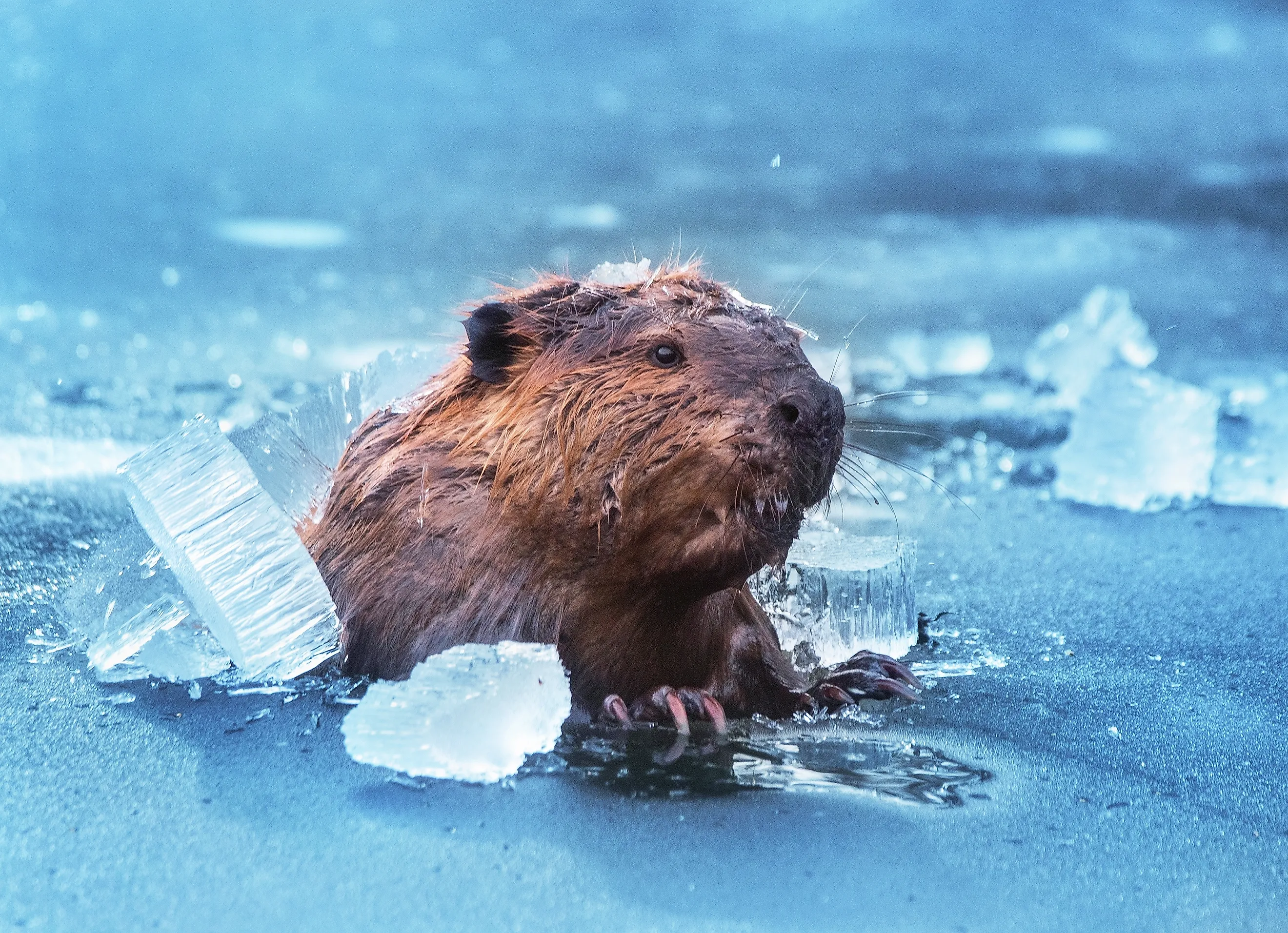
Jordan Pond in Maine's Acadia National Park reaches a depth of 150 feet, but its surface typically freezes over during the winter months. Along its shoreline, beaver lodges remain visible even when the surrounding water turns to ice. These large piles of sticks and mud might appear abandoned, but the animals inside are still active. Rather than migrating or hibernating, beavers spend much of winter sheltered inside their lodges, occasionally swimming beneath the ice to retrieve food. Their survival depends on preparation, insulated shelters, and a food supply gathered before the first hard freeze.
Do Beavers Hibernate in the Winter?

Beavers don't hibernate. These semi-aquatic mammals remain active throughout the year, although they spend considerably more time resting during winter. When temperatures drop and ponds freeze, they reduce their activity and rely on food and fat reserves accumulated during warmer months.
During summer and fall, beavers feed on aquatic plants, leaves, bark, and twigs. As winter approaches, they store additional fat, including in their broad, flattened tails. Their thick fur also helps them tolerate freezing conditions. A dense inner layer traps insulating air, while longer outer hairs help protect the body from cold water. Regular grooming keeps their coats in good condition.
Unlike hibernating mammals, beavers maintain a relatively stable body temperature throughout winter. Research has identified modest seasonal changes in their metabolism and body temperature, but they do not enter the prolonged periods of inactivity associated with true hibernation.
Where Do Beavers Go When Lakes Freeze?

When the surface freezes, beavers spend much of their time inside lodges constructed from sticks, mud, and other vegetation. These structures are separate from the dams beavers build to control water levels. The most recognizable lodges resemble large mounds rising from the water, with an interior chamber where the animals sleep, groom, and care for their young.
A typical lodge has one or more underwater entrances connected to a dry living chamber above the waterline. These entrances allow beavers to swim beneath the ice without exposing themselves to predators on the frozen surface. Some beavers live in burrows excavated into riverbanks or shorelines instead of freestanding lodges.
The walls of a lodge provide substantial insulation. Beavers coat much of the exterior with mud, which freezes into a hard protective barrier during winter. The upper portion remains sufficiently porous to allow air to circulate. On especially cold days, warm, moist air escaping from an occupied lodge may produce visible vapor above the roof.
Temperatures inside occupied lodges can remain near or above freezing even when the surrounding air is much colder. The thick walls, insulating snow, and body heat produced by the beaver family all contribute to keeping the living chamber warmer than the outside environment.
How Beavers Find Food Beneath the Ice

Beavers are herbivores, feeding on bark, twigs, leaves, roots, and aquatic vegetation. They particularly favor deciduous trees such as willow, aspen, cottonwood, birch, and maple. During warmer months, they also consume grasses, water lilies, and other soft vegetation. However, many of these foods become unavailable once winter arrives.
To prepare, beavers collect branches during fall and store them underwater near their lodges. These piles, known as food caches, are anchored in mud or weighed down by heavier branches. Cold water helps preserve the stored vegetation throughout winter.
When hungry, beavers leave their lodges through underwater entrances, swim to the cache, and retrieve branches. They carry the food back to the safety of their living chamber, where they strip away the bark and consume the softer portions. They can also feed on submerged roots and stems of aquatic plants when available.
Beavers have another advantage when eating woody vegetation. Specialized microorganisms in their digestive systems help break down cellulose, allowing them to obtain nutrients from plant material that many other mammals cannot digest efficiently. This process operates throughout the year but becomes particularly useful when their winter diet consists largely of bark and twigs.
How Beavers Survive Until Spring

Winter changes more than a beaver's food supply. Inside a dark lodge, the usual cues provided by sunrise and sunset become difficult to detect. Studies suggest that beavers living beneath frozen ponds can develop activity cycles that no longer follow a strict 24-hour schedule. They spend much of their time resting, grooming, and eating, conserving energy by reducing unnecessary movement.
When they do venture underwater, beavers can remain submerged for several minutes, with dives lasting as long as approximately 15 minutes under favorable conditions. They can slow their heart rate while diving, helping conserve oxygen until they return to the lodge's air-filled chamber.
Survival also depends on maintaining access to unfrozen water. Beavers build dams partly to create ponds deep enough to provide underwater access to their shelters and food. If water becomes too shallow, ice can obstruct entrances or trap food caches, creating dangerous conditions. An inadequate food supply can also lead to starvation during especially harsh winters.
As temperatures rise and the ice begins to melt, beavers gradually increase their activity outside the lodge. They return to feeding on fresh vegetation, repairing dams, and gathering building materials. Spring also brings the arrival of new kits, which generally remain with their parents for approximately two years.
Where to See Beaver Lodges at Jordan Pond

Jordan Pond offers an opportunity to observe beaver habitat without disturbing the animals. The National Park Service reports that lodges can be seen from the Jordan Pond Path, a roughly 3.3-mile trail encircling the water. Beavers are most likely to be spotted around dawn or dusk, although sightings are never guaranteed.
The pond typically develops ice cover between early January and early April, although the timing varies considerably from year to year. Visitors exploring the area during winter may see snow-covered lodges protruding from the ice. The trail can become slippery or hazardous, so winter hikers should check conditions and carry appropriate traction equipment. Visitors should remain on designated trails and never approach or disturb occupied lodges.
Life Beneath The Ice
A frozen lake may look lifeless from above, but beavers continue feeding, resting, and moving through the water beneath its surface. Their lodges provide protection from predators and freezing temperatures, while underwater food caches supply the vegetation they need until spring. At Jordan Pond and other northern waterways, the arrival of ice doesn't send beavers elsewhere. Their winter homes are already waiting beneath it.