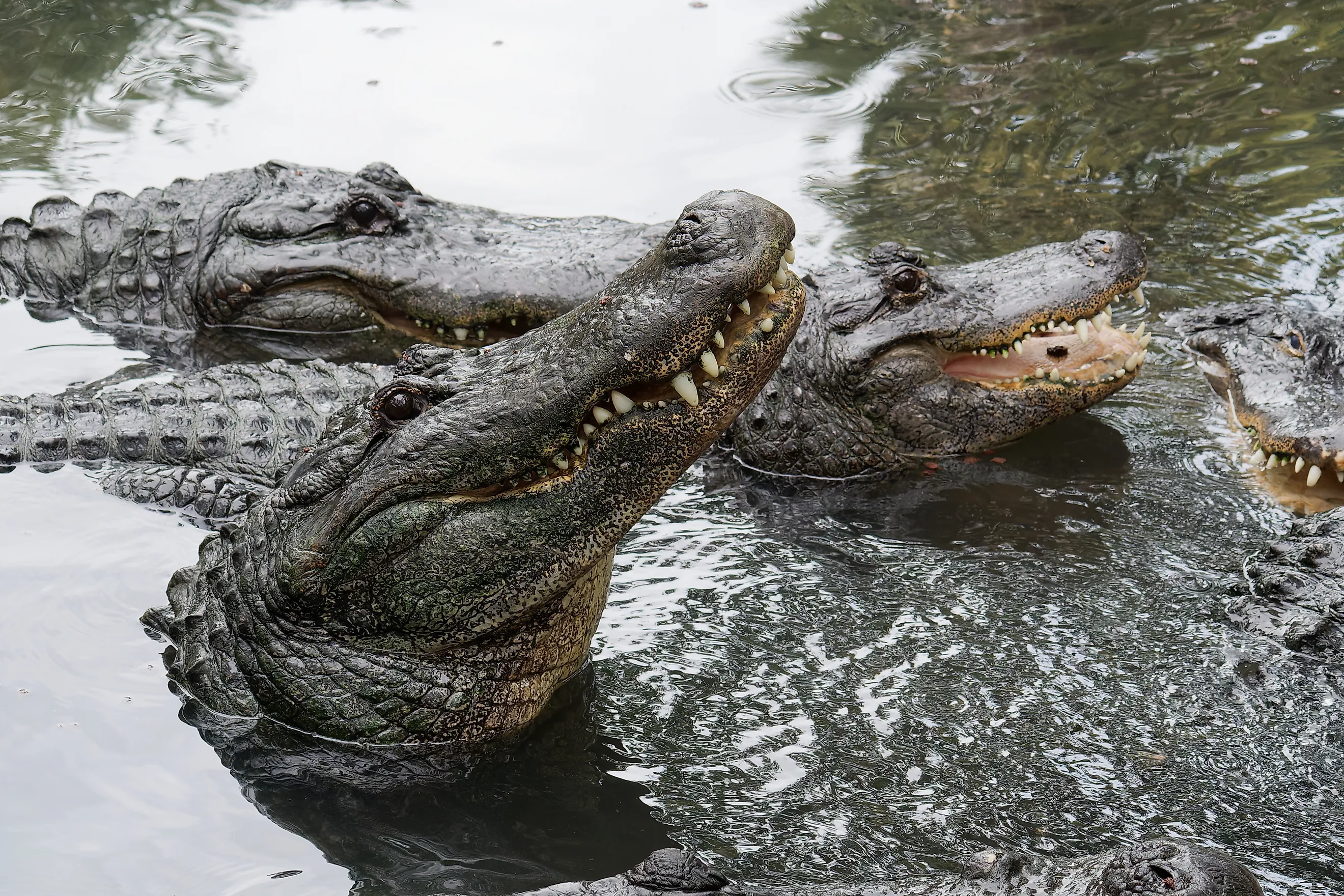
5 Most Alligator Filled Rivers In North Carolina
North Carolina marks the northern edge of the American alligator's range. The North Carolina Wildlife Resources Commission identifies the species in freshwater areas, mostly east of Robeson County and north to Gates County, with the largest populations in the coastal counties of Brunswick, New Hanover, Craven, Columbus, Onslow, and Pender. This list follows five river systems across that range, each connected to the counties, refuges, and parks where state and federal agencies track alligators. Classified as endangered in 1967, the species has since recovered, and the commission now describes the state's alligator populations as secure.
Cape Fear And Northeast Cape Fear Rivers

The Cape Fear basin is the densest alligator country in the state. The Encyclopedia of North Carolina says alligators are concentrated in the lower Cape Fear and Neuse River Valleys. New Hanover and Brunswick, two of the counties the commission credits with the state's largest alligator populations, sit on the lower river. In Wilmington, alligators regularly turn up in the marshes near the Battleship North Carolina, which is moored in the Cape Fear River. A commission estimate reported by Wilmington public radio station WHQR in 2018 put the number at three or four in the area, with at least one about 10 to 12 feet long.

Alligators also often migrate up the Cape Fear and wander into feeder creeks, according to a 2008 WRAL report. The station noted a four- to five-foot alligator beneath the Cliffdale Road bridge in Fayetteville that June, and an eight-footer in a creek north of Lillington shortly after. The Northeast Cape Fear River, a nearly 130-mile tributary that joins the main river north of Wilmington, also provides a known shelter for them. Coastal Review reported in 2013 that the American alligator is among the protected species living along it.
Lumber River

The Lumber River sits on the western edge of North Carolina's alligator range. The commission places the species mostly east of Robeson County, and the Encyclopedia of North Carolina says alligators have reached as far west as Robeson and Cumberland Counties. Even so, the US Fish and Wildlife Service confirms that American alligators, federally listed as threatened in North Carolina, live in the river, and it notes that an alligator's grunt can occasionally be heard there.

The Lumber was designated a National Wild and Scenic River on September 25, 1998, protecting 81 miles, 60 of them classified as scenic and 21 as recreational. Lumber River State Park spans Columbus, Robeson, Scotland and Hoke Counties and protects the only blackwater river in the state with national wild and scenic status. Sightings here are not guaranteed. A Carolina Canoe Club trip on the river in November 2024 reported no alligator sightings and no local history of trouble with them.
Waccamaw River

The Waccamaw River begins at Lake Waccamaw in Columbus County, one of the counties the commission identifies as having the state's largest alligator populations. Lake Waccamaw State Park, about 40 miles west of Wilmington, names the American alligator among its notable features, and the Waccamaw Dam is the headwaters of a river about 140 miles long.

The lake drew attention in June 2025, when a 12-foot alligator injured a 12-year-old girl who was playing in about four feet of water. The commission described the animal's behavior as unusual but not predatory and classified the event as an incident rather than an attack. The commission's protocol is to euthanize any alligator that makes contact with a person, and this one was later killed. Such dramatic encounters are rare. WHQR reported in 2018, citing the commission, that only three people had been bitten in the state in the previous 50 years, all while feeding or trying to catch the animal.
Alligator River

At Alligator River National Wildlife Refuge, alligators live at the edge of the habitat the species can handle. The refuge, established in 1984, spans almost 154,000 acres of pocosin wetlands on the mainland of Dare and Hyde Counties, on the Albemarle Peninsula. Coastal Review reported in 2014 that the most common question at the refuge is whether it really has alligators. It does, at the northern limit of the species' range. The same report noted that 90 to 95 percent of the refuge sits less than two feet above sea level, so even a half-inch rise in sea level can flood a large area, pushing saltwater into the freshwater habitat that alligators rely on.

Alligators turn up in brackish water here as well. Carolina Country magazine reported one photographed just inside Oregon Inlet in June 2015, and it reported that a 12-foot, 672-pound alligator was struck and killed by a van in Dare County in May 2014. The Encyclopedia of North Carolina places alligators around Albemarle Sound in Dare, Tyrrell, Hyde, and Currituck Counties. In 2017, the commission asked the public to report sightings so researchers could study how alligators respond to habitat change, including saltwater intrusion.
Black River

The Black River flows nearly 70 miles through Sampson, Pender, and Bladen Counties before emptying into the lower Cape Fear, where the Encyclopedia of North Carolina says alligators are concentrated, and Pender is one of the six counties the commission names for the state's largest alligator populations.

The river is better known for its ancient trees. The Nature Conservancy has protected more than 16,000 acres in the Black River basin since the 1990s. A bald cypress nicknamed Methuselah dates to 364 CE, and a 2019 study dated another tree along the river to at least 2,624 years old. Public boat access at Ivanhoe Road in Sampson County and at Hunt's Bluff, about 20 miles downriver in Bladen County, opens the river to paddlers who pass many cypress more than 500 years old.
How Far North The Alligator Can Go

Alligator country in North Carolina is a story of the beasts' limits. The Encyclopedia of North Carolina says the stress of living at the northern edge of the range has limited alligator survival, growth, and reproduction in the state. This fits a commission estimate, reported by WHQR in 2018, that a six-foot alligator here is about 15 years old. Some bulls still reach formidable size, with the commission putting large males at up to 13 feet and 500 pounds or more. Sightings have been reported as far inland as Fayetteville and as far north as Gates County. For people who live along or visit these rivers, the rules are simple. Feeding alligators is illegal in North Carolina, hunting is limited to population-reduction hunts requested by local governments, and the commission has asked residents to report what they see.