4 Of The Most Snake Infested Rivers In Kansas
Kansas has approximately 133,956 miles of rivers coursing through it, with the principal rivers being the Arkansas River and the Kansas River, each with its own tributaries. The Kansas River, for example, is of utmost importance as it provides drinking water, offers recreational activities, and serves as a habitat for many species of animals, including snakes. 42 species of snakes are native to Kansas, some of which are venomous, and others call Kansas’ rivers their home. These are the most snake-infested rivers in Kansas.
Kansas River

The confluence of the Republican River and the Smoky Hill River at Junction City forms the Kansas River. It flows east towards Manhattan, where the Big Blue River joins, and it continues to flow east until it enters the Missouri River in Kansas City, after a total distance of 170 miles.

One of the most common species of snake found along riparian corridors of the Kansas River, and is rarely found far from them, is the Common Garter Snake (Thamnophis sirtalis). These snakes are prevalent in habitats featuring moist vegetation, such as marshes, wet meadows, floodplains, and woodlands. Their diet primarily consists of frogs and earthworms, but they have also been known to consume slugs and snails, toads, small mice, and sometimes even other snakes.
Neosho River

The Neosho River originates north of Council Grove, where it flows southeast into Oklahoma and merges with the Arkansas River after a total course of approximately 460 miles, encompassing a drainage area of 12,660 square miles. The upper basin in eastern Kansas features limestone and shales, which are characteristic of the Flint Hills region, where the rivers' headwaters are located. The Neosho River drainage basin provides ample habitat for one of Kansas’ venomous snakes.

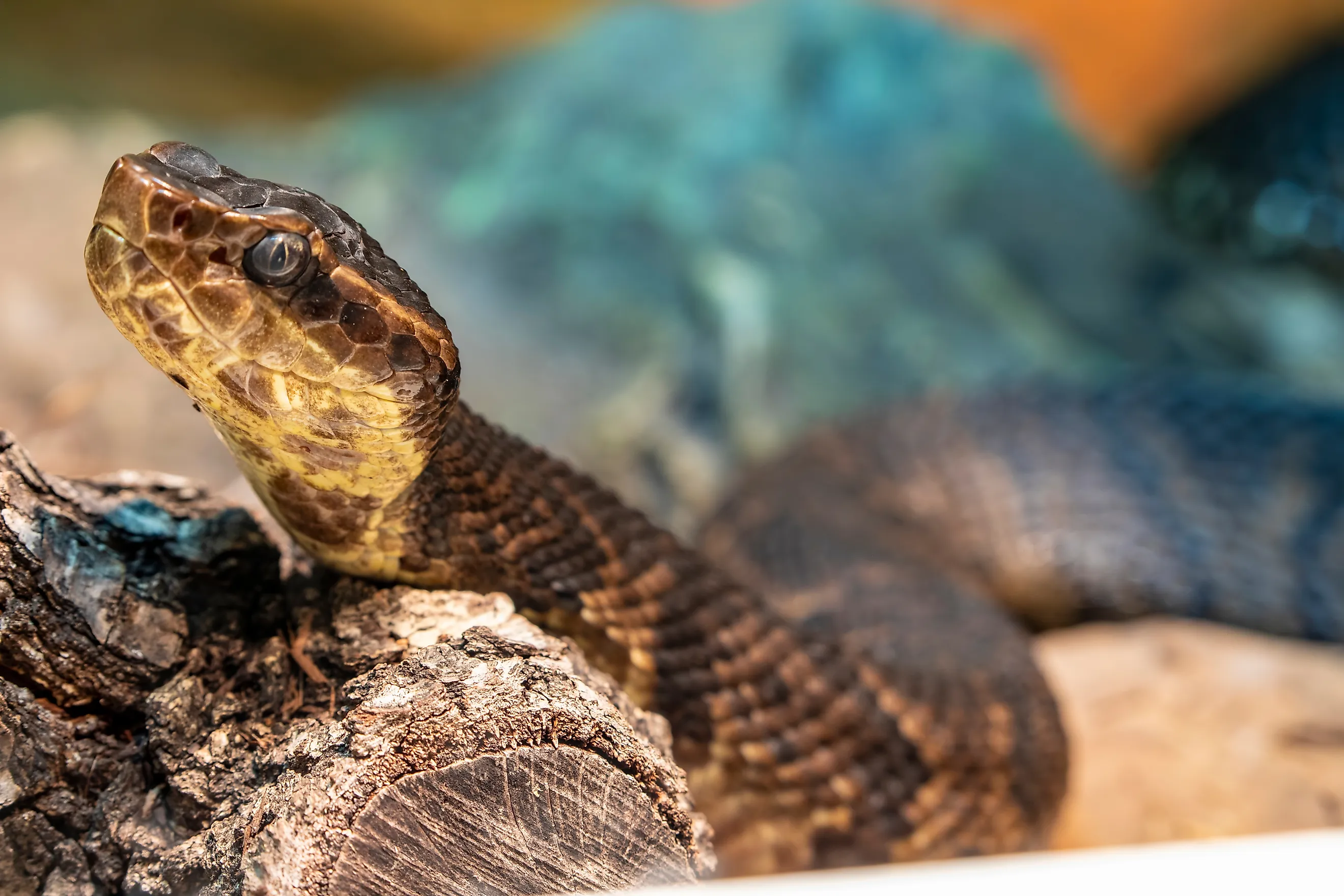
The Eastern Copperhead (Agkistrodon contortrix) occurs northeast and throughout the Neosho River Basin in small, isolated populations. It predominantly inhabits woodlands and meadows with dense brush and leaf litter, which allows it to camouflage effectively within its environment. They are the only banded venomous snake in Kansas that lacks a rattle on its tail. The effects of the venom could result in loss of life or a limb, depending on the location of the bite.
Verdigris River

The Verdigris River is a major tributary of the Arkansas River, formed by the confluence of its north and south branches. It flows southwest across Kansas before crossing the state line into Oklahoma and eventually joining the Arkansas River. The Verdigris River flows through diverse terrains, including limestone hills, sandstone ridges, and alluvial plains. Its drainage area spans 8,100 miles across counties in both Kansas and Oklahoma. Its watershed includes prairie grasslands and woodlands, which support habitat for wildlife.

The Northern Cottonmouth (Agkistrodon piscivorus) is found close to the border between Oklahoma and Kansas in the counties of Chautauqua, Montgomery, and Labette. It is believed that during the spring and fall, it is most active during the day, coiled along the edges of water while it waits for prey. They become nocturnal in the summer when the weather is warmer, and they frequent oxbow lakes, actively hunting for prey.
Arkansas River

The Arkansas River is a major tributary of the Mississippi River, originating in the Rocky Mountains of central Colorado. It flows for 1,460 miles through Kansas, Oklahoma, and Arkansas before it enters the Mississippi River. Until it flows through Great Bend in Kansas, the river’s channel is generally wide and shallow, passing through dry areas. Heavy rainfalls from farther upstream will sometimes cause flooding. Southeast of Great Bend, the river flows through more humid areas that are considerably wider and deeper.

It is past Great Bend that the Diamondback Watersnake (Nerodia rhombifer) occurs. They are often found in lakes, marshes, swamps, and the backwaters of rivers, with a preference for slow-moving waters or backwaters rather than fast rivers. It is predominantly seen between March and September, where it can be observed basking on vegetation, logs, and the banks of the water’s edge. In the winter, it will hibernate in the dens of mammals, such as muskrats, to escape the colder temperatures.
Snakes are the most diverse group of reptiles in Kansas. Some of them are found statewide, while others are limited to the western portion of the state, some to the eastern third, and others, like the ones on this list, thrive in Kansas’ rivers. Snakes may be encountered while hiking through prairies, woods, canyons, or even along the edges of rivers. Regardless of where you encounter a snake in Kansas, it is essential to remember that they are misunderstood creatures that would rather move peacefully away from you than engage in any confrontation.