5 Snake-Filled Waters In West Virginia
West Virginia’s rivers and lakes support a surprising number of snakes, particularly species adapted to freshwater environments that see four distinct seasons each year. Slow-moving rivers, shallow coves, and heavily wooded shorelines in this interior state create ideal conditions for these cold-blooded reptiles, making hunting and nesting easy. Among the most commonly encountered species in these waters are northern water snakes, common garter snakes, rat snakes, and, in some areas, copperheads and timber rattlesnakes.
Anglers, paddlers, and general outdoor adventurers often encounter West Virginian snakes in many of the region's most popular parklands, especially during the busier summer months. This article highlights some of the most snake-filled waters you may encounter in these beautiful Appalachian landscapes, focusing on locations where habitat, food sources, and water conditions consistently support higher-than-average snake activity.
Summersville Lake

Summersville Lake covers roughly 2,700 acres and has over 60 miles of shoreline, making it the largest lake in West Virginia and an ideal environment for shoreline-dwelling snakes. Particularly, northern water snakes, common garter snakes, and northern copperheads thrive along its rocky shoreline and shallow coves. The lake’s extensive shoreline, combined with submerged logs sourced from surrounding forests and dense aquatic vegetation, provides ideal hunting and hiding grounds for these reptiles.
Fishermen and boaters frequently spot snakes basking in the sun or slipping silently into the water. But beyond its serpentine population, Summersville Lake is renowned for said recreational opportunities: paddling, fishing, and cliff diving are all popular here. The nearby Gauley River National Recreation Area also offers ample space for hiking and camping, drawing sizable crowds every summer.
Tygart Lake

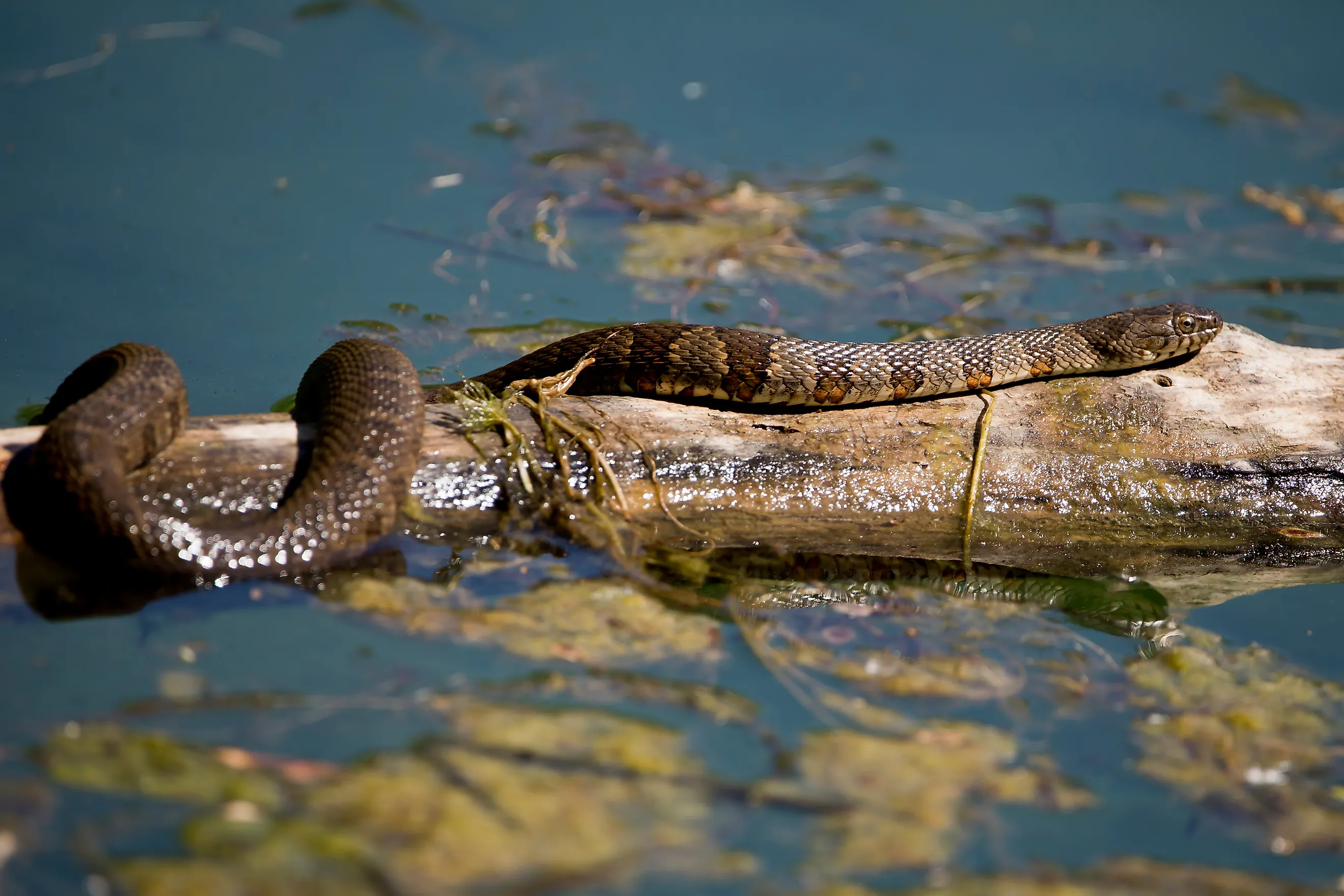
Tygart Lake, located near Grafton in north-central West Virginia, is known for its steady snake presence, especially the northern water snakes that patrol the lake’s shallow edges and coves. Northern water snakes dominate the shoreline here, identifiable by their dark bands and habit of basking low over the water, where they hunt fish and amphibians before retreating quickly into cover. The diverse mix of vegetation, rock-covered banks, and quiet inlets here creates ample space for these reptiles to move in peace, making sightings common for paddlers and hikers alike who know where to look.
Tygart Lake State Park isn’t just for wildlife observation; it's also a popular destination for boating, fishing, and camping along its shores, with several other developed recreation areas nearby providing picnic spots and hiking trails. This surrounding state park features forested hills (especially beautiful in autumn) and scenic overlooks, adding to the lake’s appeal as a vacation spot. However, anyone visiting its waters should always remain alert to the abundant snakes that call the region home, which coexist with numerous fish, turtles, and birds in this rich ecosystem.
Cheat Lake

Cheat Lake, formed by the damming of the Cheat River near Morgantown, sits along West Virginia’s northern border in Monongalia County and is closely associated with timber rattlesnakes. The lake’s rocky slopes, wooded ridgelines, and nearby protected lands provide ideal habitat for this venomous species, particularly in areas surrounding Coopers Rock State Forest, where recent research has confirmed a healthy rattlesnake population. These snakes favor sun-warmed ledges and forested terrain rather than open water and typically avoid human activity unless disturbed.
Fortunately, timber rattlesnakes around Cheat Lake are closely monitored by wildlife biologists working with the nearby Snake Hill Wildlife Management Area and are not considered a threat to visitors. Beyond its snake population, the lake supports a broader local ecosystem that includes bass and catfish. At the same time, its shores feature parks, trails, cottages, and boat launches that remain popular throughout the warmer months.
Beech Fork Lake

Beech Fork Lake encompasses about 720 acres and features more than 30 miles of shoreline, much of it irregular and heavily indented by coves. Northern water snakes are prevalent at Beech Fork Lake, where their strong swimming ability and preference for shallow, vegetated water make them effective predators of frogs, small fish, and salamanders. However, copperheads are also known to hide in the nearby forested areas, so keep an eye out when hiking.
This U.S. Army Corps of Engineers-made reservoir's irregular shoreline, with multiple coves and peninsulas, creates concentrated areas where snakes like to congregate, making sightings more common than in open-water sections. Beech Fork Lake also supports recreational fishing for bass, catfish, and crappie, and the surrounding Beech Fork State Park hosts several trails, picnicking areas, and camping facilities. With that, kayakers and anglers usually report these cold-blooded creatures moving through the water or sunning themselves on logs near popular fishing holes.
Monongahela River

The Monongahela River, flowing north through West Virginia into neighboring Pennsylvania, provides an ideal range of zones for rat snakes, timber rattlesnakes, northern water snakes, copperhead snakes, and common garter snakes. Its slowly moving stretches, backwaters, and undeveloped banks create ample space for a variety of water-dwelling animals. Snakes, however, are more often than not sighted near shallow edges and docks, particularly during warmer months when they are out of winter dormancy.
Surrounding landscapes along the river, including Pricketts Fort State Park and numerous other nature preserves, along with countless unnamed forested riverbanks, contribute to a healthy ecosystem that supports turtles, waterfowl, small mammals, and snakes. For wildlife enthusiasts, the Monongahela River offers consistent opportunities to observe local fauna in both rural and suburban environments, highlighting their adaptability in one of the state's busiest waterways.
Know Where to Find the Mountain State's Snakes this Summer
The many bodies of water across West Virginia's notably mountainous landscapes provide quiet, stable habitats where water snakes thrive alongside popular recreation areas. Understanding where local snakes are most active helps you stay aware while fishing, boating, or hiking. It offers insight into how closely these reptiles are tied to healthy freshwater ecosystems in this former industrial hub. These waterways also support a wide range of prey species, from fish to amphibians, which helps explain why snake populations remain strong in certain locations.