The Most Snake Infested Rivers In Delaware
Snakes are a regular presence along Delaware’s major waterways, where marshes, floodplains, and wooded riverbanks provide ideal habitat. The Delaware River, Nanticoke River, and Brandywine River all support snake populations drawn to calm water, dense vegetation, and abundant prey. While Delaware is home to 19 snake species, only one is venomous, and most encounters occur near slow-moving rivers and wetlands rather than developed areas. These river systems offer the clearest examples of where snakes are most commonly found across the state.
Delaware River

The Delaware River flows generally south throughout most of its course, and for a few miles, it forms the border between Delaware and New Jersey. It flows for a total distance of 405 miles, passing through the Catskill Mountains, Appalachian valleys, and the Delaware Water Gap. At Trenton, New Jersey, the Delaware River widens as it meets tidewater, where it transitions into an inlet with many marshes, broadening more into Delaware Bay and eventually emptying into the Atlantic Ocean.

The Eastern Garter Snake (Thamnophis sirtalis sirtalis) frequents the Delaware River. Garter Snakes are highly adaptable and can be found in a wide variety of habitats, including forests, shrublands, wetlands, fields, rocky areas, and shared spaces with humans; however, they have a preference for habitats close to water, such as ponds, rivers, streams, and marshes. These habitats usually have an abundance of Garter Snakes' main prey, which is fish and amphibians.
Nanticoke River

The Nanticoke River is the largest tributary of the Chesapeake Bay that flows for a total course of 64 miles from its origin in southern Delaware to Tangier Sound on Maryland’s eastern shore. The river winds through marshlands, forests, and farmlands with its total watershed comprising 725,000 acres, which includes over 50,000 acres of tidal wetland that provides wildlife habitat for many species, including snakes.

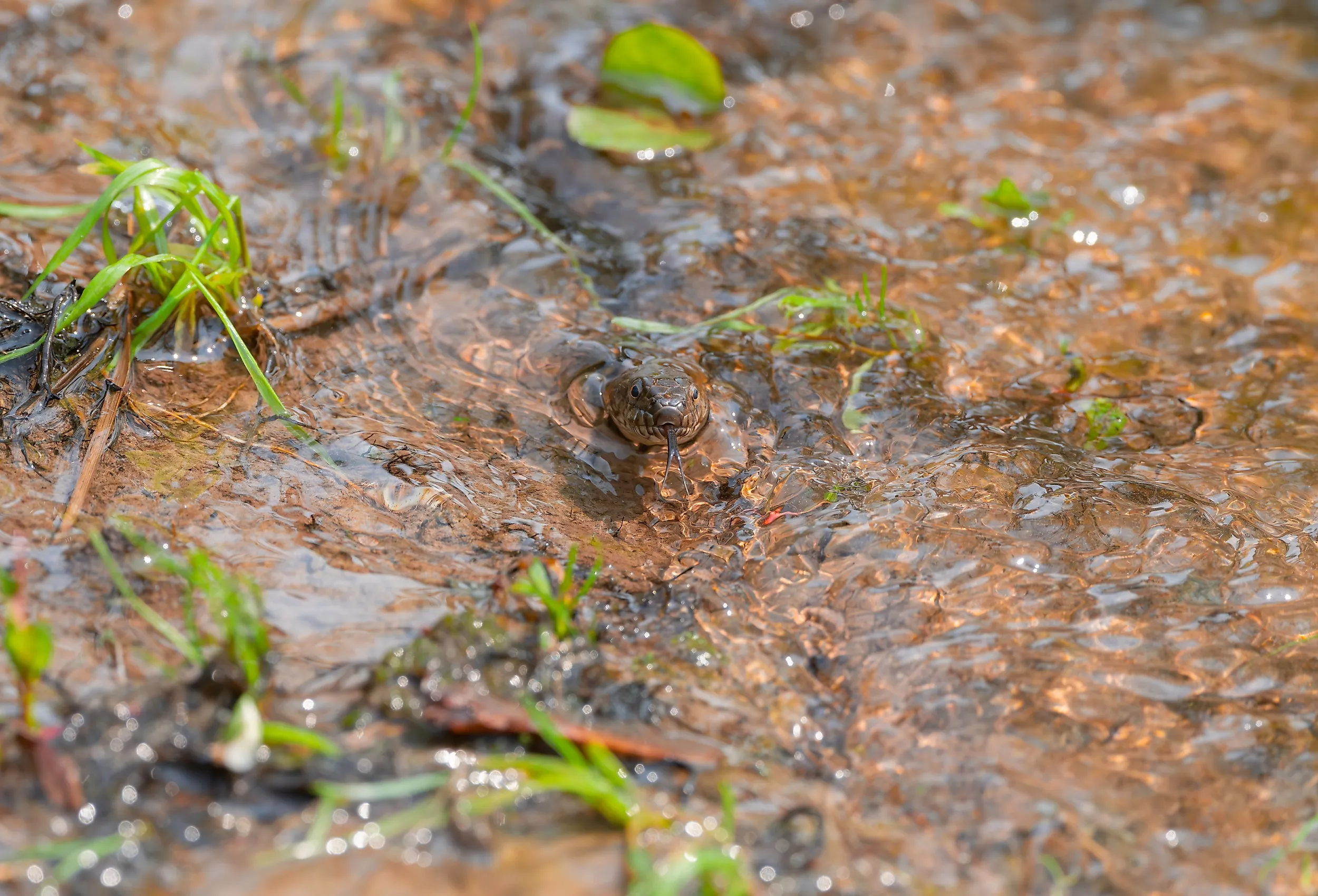
The Northern Watersnake (Nerodia sipedon) lives in virtually all aquatic habitats, ranging from lakes, swamps, and marshes to ditches and freshwater streams and rivers, and can live in brackish waters as well. These snakes can often be observed basking on rocks or vegetation by the water's edge during the day, and at night, they swim to hunt for fish and amphibians. While not venomous, they are willing to bite if they feel threatened or are captured.
Brandywine River

The Brandywine River is a tributary of the Christina River located in southeast Pennsylvania and western Delaware. The river watershed flows from the piedmont region of Pennsylvania into the Atlantic Coastal Plain in Delaware, where the lower portions of the river are tidal. The Brandywine River Valley is inhabited by Delaware’s only venomous snake, the Eastern Copperhead (Agkistrodon contortrix).

Copperheads occupy a variety of habitats ranging from hilly forests with rocky outcrops to floodplains at the edges of swamps. These snakes will hibernate communally in dens among rocks, caves, animal burrows, or debris piles such as logs in the colder winter months. They will emerge in the spring, where mating takes place. Their diet consists of small mammals and birds, amphibians, and even other reptiles.
Delaware's Slithering Serpents
Snakes may be fairly common in Delaware, but they are nothing to worry about. While many snakes, like Garter Snakes, live alongside humans, they actually serve as natural pest control, helping manage populations of slugs and snails. While Delaware has a venomous snake native to it, it is the least venomous of all venomous snakes in the United States, with death from a Copperhead bite an extreme rarity. That said, all wild animals should be respected, and if you are bitten by a snake and are unable to identify it, seek appropriate medical attention.