5 Snake-Filled Waters In Maryland
Maryland is home to 27 species and subspecies of snakes, including two venomous vipers, the timber rattlesnake and the copperhead. These reptiles are an important part of the state’s fauna, helping control populations of fish, frogs, and rodents. With an abundance of waterways, from rivers and reservoirs to wetlands and lakes, Maryland provides an ideal habitat for many snake species. Among these waterways are five locations where snakes are especially common and can be observed in their natural environment.
Gunpowder River

Flowing east of Baltimore and through the Gunpowder Falls State Park, the Gunpowder River empties into Chesapeake Bay and acts as a tidal (fresh-to-brackish) habitat for snakes, particularly in its marshes, floodplains, wetlands, and upper tidal zones.

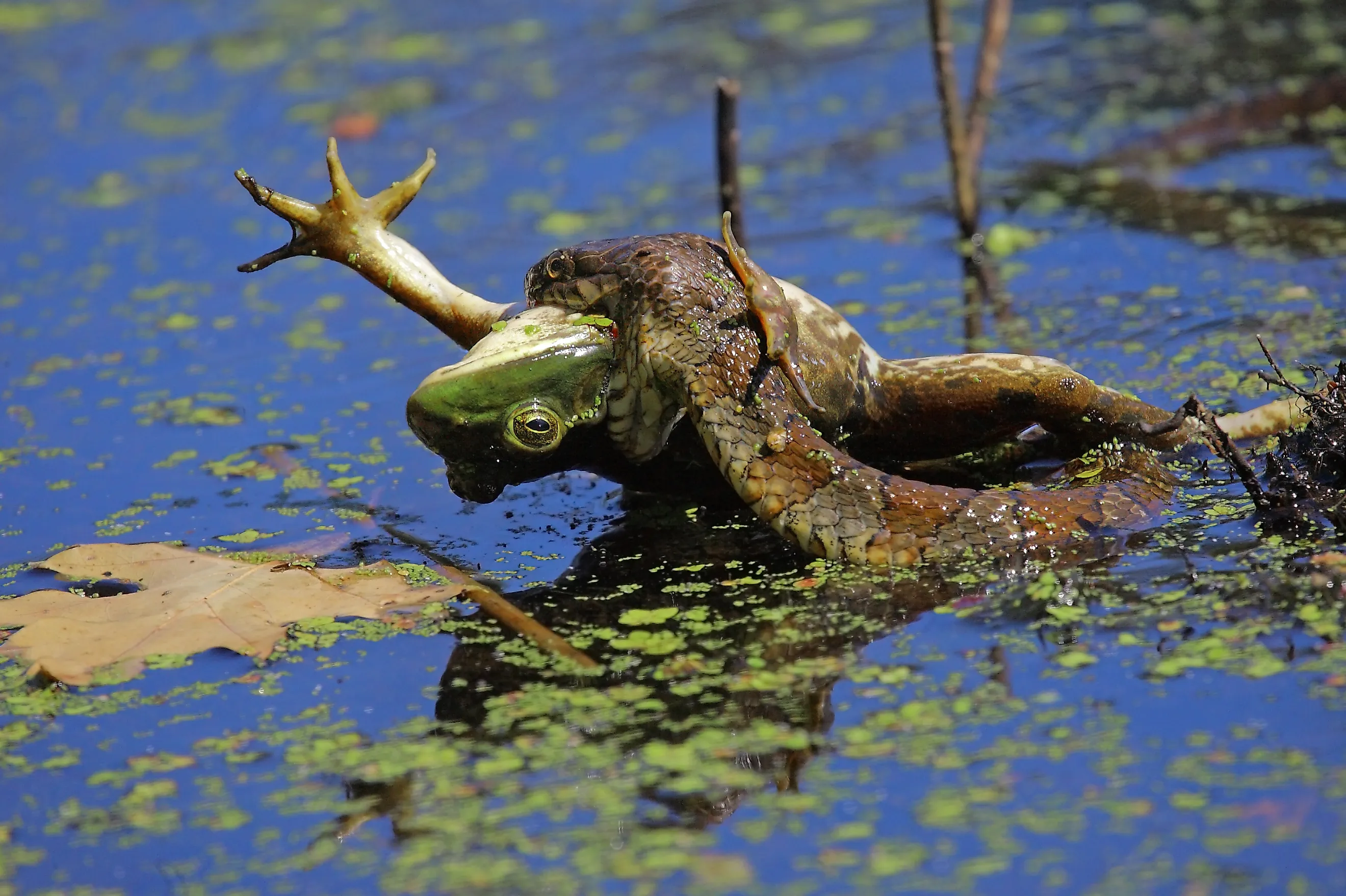
The most common species are non-venomous ribbon snakes, garter snakes, and black rat snakes, which can grow up to 7 feet long, and the only venomous species in the area, the eastern copperheads. Snakes in the area feed on amphibians and fish and can often be spotted navigating the water in search of prey. Visitors kayaking, hiking, or fishing in the area often encounter these species.
Patuxent River

Like the Gunpowder River, the Patuxent River flows into Chesapeake Bay. It runs southeast of Washington, D.C. Patuxent is thinner and longer than Gunpowder and flows past dense forest. It is also Maryland’s longest river.

The area can include venomous copperheads, but non-venomous species that live along its shores include the northern water snake, eastern garter snake, and queen snake. The northern water snake is often confused with the copperhead, but it is completely harmless and can often be seen entering the river in search of fish.
Blackwater National Wildlife Refuge

Located in Dorchester County, Blackwater National Wildlife Refuge has 28,000 acres of freshwater canals, wetlands, and forest uplands. Suffice it to say, the ecosystem is an ideal habitat for amphibians and reptiles alike.

Non-venomous snakes such as the eastern garter snake, redbelly water snake, northern water snake, and rough green snake can be found in the region. The snake population in the area is healthy because of the availability of prey and safe vegetative cover. The area is also home to venomous snakes like the copperhead, but in much less abundance than the non-venomous species.
Mattawoman Creek

Mattawoman Creek is a 1,300-acre natural wetland and forest, which, like the Patuxent River, is home to a few species of non-venomous snakes. It is a tributary of the Potomac River and is the ideal habitat for snakes with its wooded floodplains and expansive wetlands. Because the waters in this region are slow-moving, with abundant vegetation, it is easy for hikers and snake lovers to spot these slithery creatures.

Maryland Department of Natural Resources designates it as the Mattawoman Creek Natural Area. Common garter snakes, northern water snakes, and eastern ribbon snakes can be found around the area.
Deep Creek Lake

Deep Creek Lake is Maryland’s largest freshwater lake, attracting both human and slithering visitors every year. The lake has 65 miles of shoreline, a 180,000-acre watershed, and 3,900 acres of water, which conceal venomous and non-venomous snake species.

Common snakes found in the area include the non-venomous green snake, or grass snake; the semiaquatic queen snake; and the brown-splotched common water snake. Venomous snakes that can be found around the lake include the copperhead and timber rattlesnake, while hog-nosed snakes are also present in the area. The lake has two designated swimming beaches that are safe for visitors looking to take a dip, but avoid stepping on and being bitten by snakes in the area.
Snake Activity and Waterway Awareness
Most species of snakes in Maryland, particularly the non-venomous kind, tend to avoid humans and are beneficial for the ecosystem, helping keep populations of amphibians, fish, and invertebrates under control. However, there are a few species of venomous snakes, like rattlesnakes and copperheads, that can pose a threat to hikers and off-leash pets, particularly around rocky or forested areas. When visiting these 5 snake-filled water bodies in Maryland, it’s best to take precautions like keeping pets leashed and watching your step. If you’re an avid snake lover and visit these areas to spot snakes, it’s best to do so in late spring when prey is abundant, and temperatures rise for the best viewing experience.