5 Snake Hotspots In Arizona
With lots of land, relatively few people, year-round warmth, and, according to its Game & Fish Department, 57 species of snakes, Arizona is a statewide snake hub. But while you can see serpents almost anywhere in AZ, from its deepest canyons to its highest peaks, you have a better chance of snake-spotting at the following locales. Many such locales are split into smaller parks and preserves, meaning that each is more like a locale upon a locale upon a locale upon a locale. Uncover the Russian nesting dolls of snake hotspots in already snaky Arizona.
Organ Pipe Cactus National Monument

Much smaller than the previous two hotspots, the Organ Pipe Cactus National Monument became legendary among snake-seekers ("herpers") after appearing in Carl Kauffeld's 1957 book Snakes and Snake Hunting. In particular, Kauffeld cited the Ajo Road, which winds around the monument and a town called Ajo, as a thoroughfare for snakes as much as it is for motorists. On summer nights, when desert temperatures become bearable, all manner of ectotherms cross the road to the dismay of ordinary drivers and the delight of road-cruising herpers. Approximately 22 species of snakes live within a 10-mile radius of small-town Ajo. As for Organ Pipe, which spans 330,000ish acres along Mexico's border, roughly 25 species of snakes, including six species of rattlesnakes, call it home.
Coconino National Forest

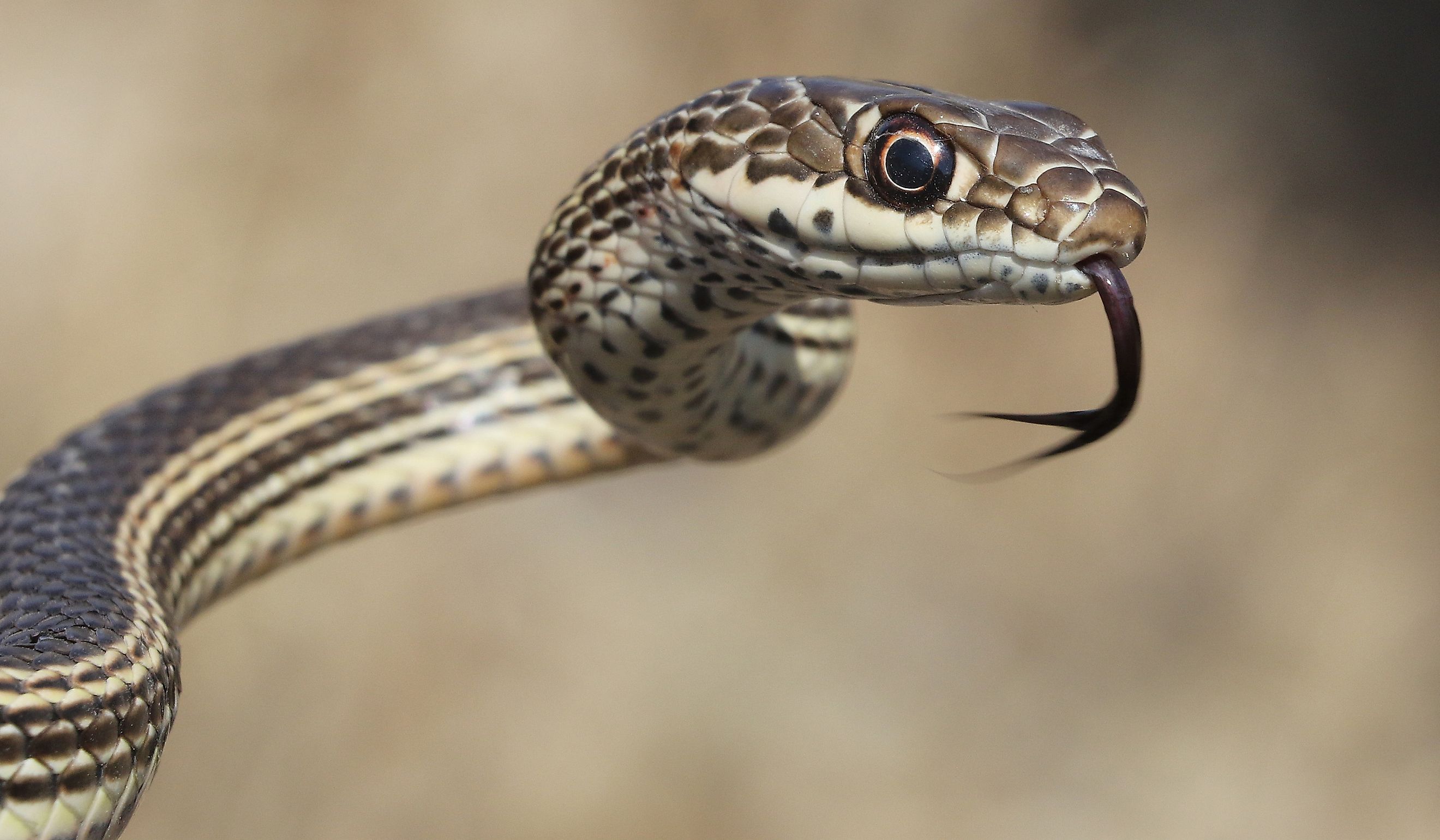
The Coconino National Forest spans nearly two million acres of north-central Arizona. It is divided into three districts, each of which preserves distinct but excellent snake habitat. The Flagstaff Ranger District, clumping the city of Flagstaff with the state's tallest mountains, attracts high-elevation herps (vernacular term for "reptiles" from the Ancient Greek herpetón) like the Arizona mountain kingsnake (Lampropeltis pyromelana) and Arizona black rattlesnake (Crotalus cerberus), both of which slither to 9,000 feet. The Mogollon Rim Ranger District, sitting southeast of Flagstaff and forming the Colorado Plateau's southern border, reveals a riparian valley rife with the striped whipsnake (Masticophis taeniatus) and western terrestrial garter snake (Thamnophis elegans). And the Red Rock Ranger District, surrounding the city of Sedona southwest of Flagstaff, offers rocky refuge for the likes of the Sonoran coral snake (Micruroides euryxanthus) and the western diamondback rattlesnake (Crotalus atrox).
Sky Islands

Sky Islands refer to the isolated mountain ranges that jut from the sand-seas of southeastern Arizona. Seventeen "islands" are managed by the Coronado National Forest and, together with the Coconino National Forest, total nearly two million acres. But the Sky Islands could just as well be called Snake Islands for the surplus serpents on their slopes. No island is snake-free, but some are snakier than others. Among the snakiest are the Huachuca Mountains, which straddle Mexico's border and, counting only a small section called the Coronado National Memorial, harbor 36 species of reptiles (its website calls this "moderately diverse") including the Texas blind snake (Rena dulcis) and western black-tailed rattlesnake (Crotalus molossus); Chiricahua Mountains, which run parallel to New Mexico's border and are also "moderately diverse" with over 30 kinds of snakes; and Santa Catalina Mountains, which so overflow with serpents that Tucson, cradled below, is one of the snakiest cities in America.
Tonto National Forest

Situated south of the Coconino National Forest and adjacent to Phoenix, the Tonto National Forest covers nearly three million acres, making it the largest national forest in the state. Mountains, lakes, canyons, streams, plains, cliffs, ponderosa woods, part of the Mogollon Rim, a slice of the Sonoran Desert, and even the outskirts of Phoenix are all preserved within Tonto's far-reaching borders. Naturally, such diverse ecosystems support diverse serpents. At the Tonto National Monument, which comprises just 1,120 acres in the southern portion of the forest, 16 species of snakes slither around its Indigenous cliff dwellings. They range from the highly venomous western diamondback rattlesnake to the non-venomous but rattlesnake-mimicking gopher snake (Pituophis catenifer) to the quick-as-a-whip coachwhip (Masticophis flagellum) to the tiny, subterranean southwestern blackhead snake (Tantilla hobartsmithi).
Saguaro National Park

Protecting almost 100,000 acres of the Sonoran Desert and its unique flora and fauna is Saguaro National Park. Counting the namesake cactus, which can grow up to 50 feet tall, SNP boasts over 3,500 species of plants, plus approximately 200 species of birds, 70 species of mammals, and 50 species of reptiles, half of which are snakes. Among the park's serpentine staples are the Mojave rattlesnake (Crotalus scutulatus), which is considered the park's most toxic rattler; California kingsnake (Lampropeltis californiae), which, being resistant to rattlesnake venom, famously feasts on rattlers; and sidewinder (Crotalus cerastes), whose iconic sidewinding tracks speckle Sonoran dunes. SNP consists of two disconnected districts: the Rincon Mountain District on the namesake Sky Island and the smaller Tucson Mountain District about 30 miles to the west. In the middle is Tucson, further strengthening its case as the snakiest city in America.
No matter where you stand in Arizona, a snake is not too far away. Fifty-seven species, nearly the top among states, occupy AZ, making it a snake hotspot unto itself. However, even in Arizona, the aforementioned locales stand out for their serpentine abundance. Visit the Coconino National Forest, Sky Islands, Organ Pipe Cactus National Monument, Tonto National Forest, and Saguaro National Park, plus their ancillary memorials and monuments, for a near-certain chance at seeing spectacular snakes.